
Country Club Mahjong Tablescape: Design Ideas & Essentials
Last updated: Nov 23, 2026
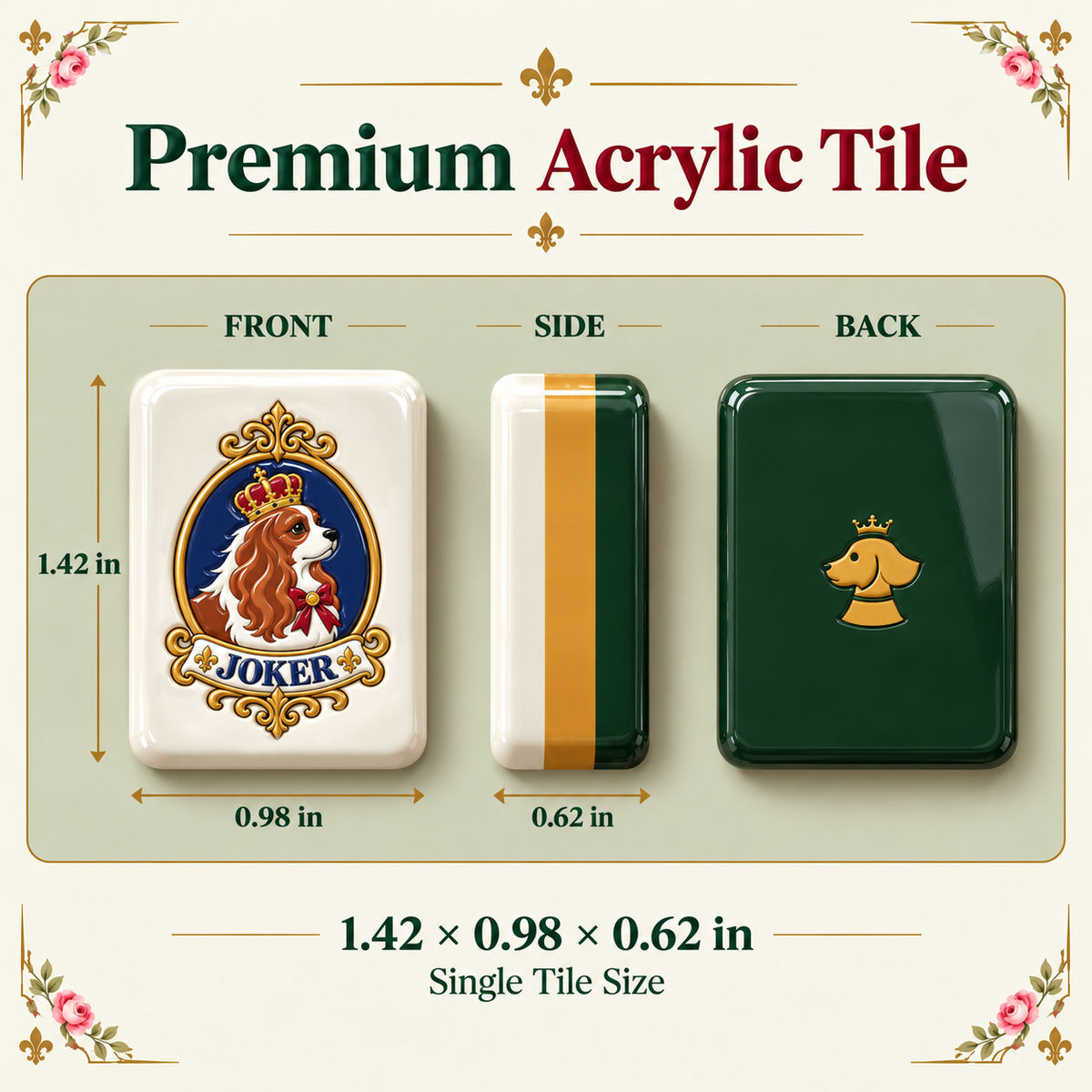
A country club mahjong tablescape combines an American mahjong set (152 tiles plus 8 jokers), a mat sized to your table, racks with pushers, and lighting and seating that lets four players sit comfortably for 2–3 hours. Most country clubs choose engraved acrylic sets for durability and prestige, paired with a machine-washable mat that protects the wood and absorbs spill. Budget depends on tile finish and mat size; the essentials—a solid set, mat, and racks—can be sourced as a coordinated package from specialist retailers like Mahstead. Avoid thin mats that bunch, sets with loose jokers, and seating that forces players to reach across the table; these create friction during games and shorten your setup's life.
Why does a country club need a dedicated mahjong tablescape?
Country clubs host mahjong weekly or monthly, often with consistent players who value ritual and comfort. A permanent or semi-permanent tablescape signals investment in the game, reduces setup time, and creates a branded space that players trust. Unlike home games, a club table is shared; quality components wear better and last longer under frequent use. Engraved or logo-bearing sets also build club identity and make the space feel intentional rather than borrowed. Most clubs leave mats and racks on the table or in a nearby cabinet, ready to deploy.

What are the non-negotiable components of a tablescape?
The core is always a mat, a complete set, and racks with pushers. The mat protects the table surface and gives tiles a consistent, quiet playing surface; thin or roll-up mats tend to shift or bunch mid-game, breaking concentration. A full American mahjong set must include exactly 152 playing tiles (Bams, Craks, Dots, Winds, Dragons, Flowers) plus 8 jokers; any gaps mean hands cannot be completed legally. Racks with pushers let each player organize and draw tiles without blocking others' view. Lighting (overhead or task lamp) prevents eye strain during long sessions. Chairs with low backs and good armrests allow four players to sit at equal height and reach the table without strain. A wall clock or sand timer helps manage pacing between rounds. Our best-selling mahjong sets include acrylic designs that withstand years of club use.
🀄 Shop best-selling mahjong sets →
How do you choose a mat size and material for a country club table?
Mat size depends on your table dimensions—most club tables are 32" × 32" or larger. Measure your table's playing surface (the flat top where tiles sit) before ordering; a mat that's too small leaves edges exposed, and one too large bunches or hangs off. Material matters: acrylic-backed mats with felt or velvet playing surfaces are durable, machine-washable, and absorb spill without warping. Neoprene backing grips the table and prevents sliding. Avoid thin vinyl or paper-backed mats; they tear, crack, and bunch quickly under weekly use. Color should be neutral (dark green, navy, or burgundy) to reduce glare and allow tile colors to pop. Choose a mahjong mat based on your table size and lighting; if uncertain, measure first and ask the retailer for a recommendation.
Component | Country Club Priority | Why It Matters |
Mat | Durable, washable, sized to table | Protects wood, lasts years, absorbs spill |
Set (152-tile acrylic) | Consistent quality, engraved optional | No loose jokers, reads clearly under lights |
Racks with pushers | Heavy-duty wood or acrylic | Supports frequent handling, prevents crowding |
Lighting | Overhead + task lamp | Reduces eye strain during 2–3 hour games |
Seating | Low-back chairs, armrests, height-matched | Prevents back strain and reach conflicts |
What design aesthetic works best for a country club setting?
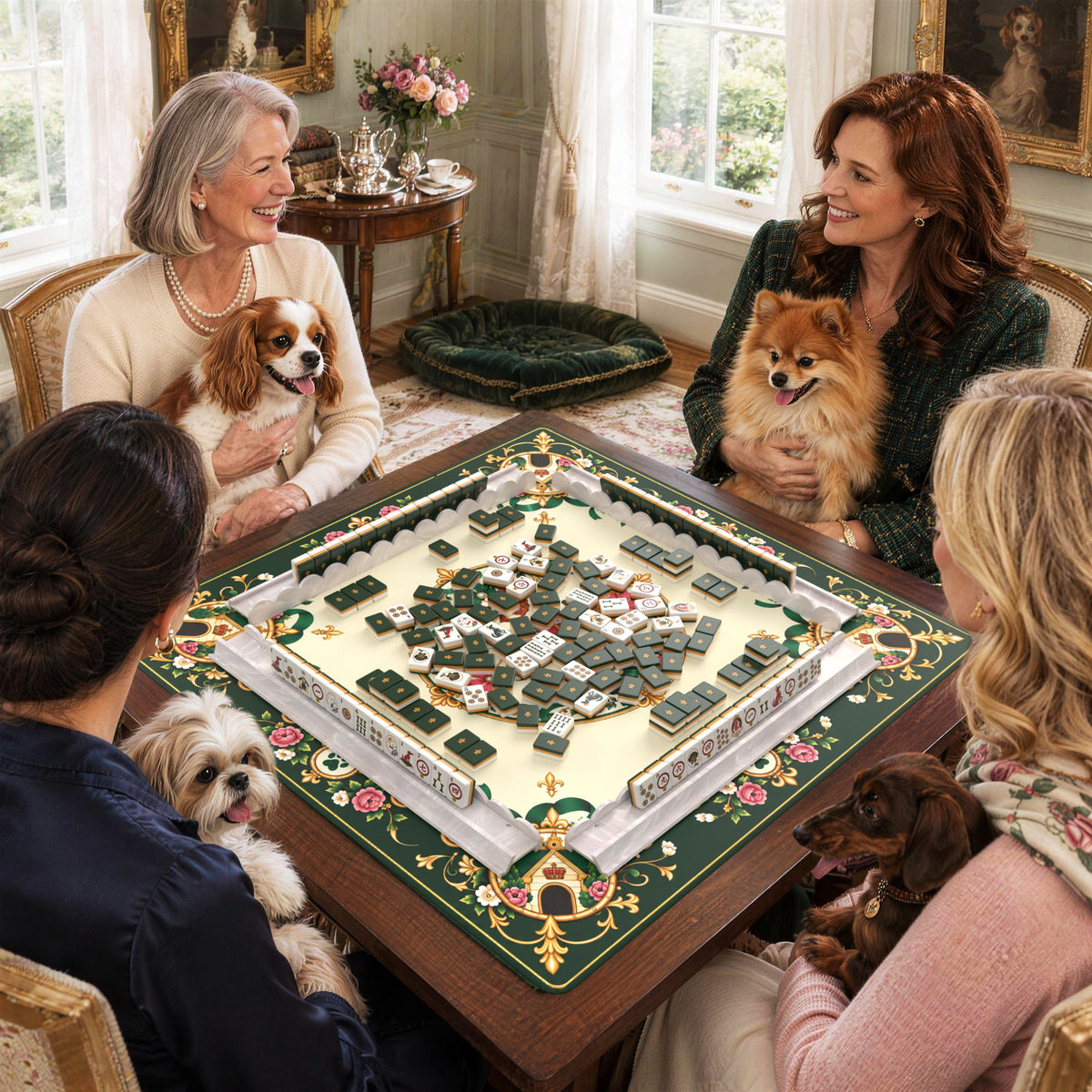
Country clubs typically favor understated elegance: monochrome or natural-wood toned sets, engraved with the club's name or logo. Bright neon or novelty designs feel casual at home but clash with a club's formal atmosphere. Acrylic sets in cream, jade, or burgundy tile read well under overhead lighting and project professionalism. Engraved American mahjong sets with the club's initials or crest add prestige without overwhelming the space. Keep mats in jewel tones (forest green, navy, burgundy) or neutral grays; avoid busy patterns that distract players. Store racks and cases in a coordinating color or wood finish. This aesthetic signals to newcomers that mahjong here is taken seriously, which often boosts attendance and player loyalty.
🎁 See our most-loved mahjong sets & accessories →
What mistakes do clubs make when setting up a tablescape?
The most common error is underestimating mat durability. Clubs often buy cheap thin mats thinking they'll save money; within months, the mat shifts, tears, or loses its grip, forcing a costly replacement and disrupting games. A second mistake is mixing sets—using leftover tiles from old sets because a few jokers went missing. This creates illegal hands and frustrates players mid-game. A third is poor seating: chairs of different heights, arms that collide with a neighboring player's reach, or inadequate legroom make the game feel tense. Lighting is often forgotten; a dark table with glare from windows makes tile reading impossible and causes eye fatigue. Finally, clubs sometimes choose novelty designs (holographic tiles, bright plastics) that look fun in photos but are hard to read under lights and feel unprofessional after a few weeks. Stick to muted, time-tested aesthetics and invest in sturdy basics.
What to check before you buy:
[ ] Measure your table (length × width) and confirm mat size
[ ] Verify set includes exactly 152 tiles + 8 jokers (no loose pieces)
[ ] Check racks fit four players without crowding
[ ] Confirm mat material is washable (acrylic or neoprene backing)
[ ] Test lighting: can you read the dots and characters clearly?
[ ] Arrange seating and confirm all chairs are same height
[ ] Confirm your country club allows engraving (e.g., club name/logo)
✨ Find your Mahstead set — free US shipping →
How do you maintain a tablescape across seasons?
Store mats flat or loosely rolled (never creased) in a cool, dry place when not in use. Acrylic or neoprene-backed mats can be wiped with a damp cloth and air-dried; machine washing works for removable felt overlays, following the care tag. Acrylic tiles don't need cleaning (dust with a soft cloth), but store them in their original case or bag to prevent chips. Racks and pushers should be inspected monthly for cracks or splintering; sand and refinish wood racks as needed. Replace jokers if they become faded or bent; loose jokers are a leading source of mid-game complaints. Test the set once per season by dealing a hand and confirming all tiles are present and readable. Winter dryness can make wood shrink slightly; if racks become loose, have a woodworker tighten the joints. If your club experiences humidity (coastal or tropical locations), store mats in a sealed container with silica packets to prevent mildew.
FAQ
Can we engrave our country club's name on the tiles?
Yes. Most acrylic American mahjong sets can be engraved with text, logos, or initials before purchase. Specify the club name, location, or year during ordering, and the engraver will apply it to the tile case or selected tiles. This adds prestige and deters casual removal from the club.
What's the difference between a mat and a table cover for a country club?
A mat (felt or velvet with acrylic or neoprene backing) is placed on the table for each game, then removed and stored—it protects the table and absorbs spill. A table cover is a fitted cloth left on the table permanently or long-term, protecting against dust but not from daily play wear. Most clubs prefer mats because they're washable, portable, and easy to swap if damaged. See the comparison of mat vs. table cover for more detail.
How many sets should a country club keep on hand?
Keep at least two complete 160-tile sets (so one plays while the other is cleaned or repaired). If your club hosts multiple tables simultaneously, stock one set per table plus one spare. Always have spare jokers, because jokers wear fastest and go missing most often—they're essential to play.
Should we buy individual sets or a bulk package?
Buy from a retailer that offers coordinated components (set, mat, racks, case) so everything matches aesthetically and fits together physically. This also simplifies reordering when components wear out; you know exactly what works.
What lighting setup prevents tile-reading errors in a country club setting?
Overhead ceiling lights (preferably LED, 3000–4000K color temperature, at least 400 lux) combined with a focused desk or task lamp near the center of the table prevent glare and shadow. Avoid warm yellow bulbs (they fade tile colors) and avoid windows behind or opposite the table (they create glare and shadows).
Can we leave the tablescape set up all week if the country club is open daily?
Yes, if the room is climate-controlled and secure. Use a fitted dust cover over the mat and set during non-game hours to prevent spill and dust accumulation. Store jokers and racks in a locked cabinet at close of play. Check the mat and tiles weekly for damage or missing pieces before the next game.


View More
View More
View More
