
Mahjong as a Hobby: How to Start Playing Today
Last updated: Nov 23, 2026
Mahjong as a hobby means joining a community of players who gather weekly or monthly to play a 4-player tile game that blends strategy, probability, and pattern recognition. In American mahjong, you use 152 tiles across three suits (Bams, Craks, Dots), winds, dragons, and flowers to build hands from the current year's National Mah Jongg League card—a laminated guide that changes every spring. A typical game takes 1–2 hours; serious hobbyists play year-round. You'll need a quality set with readable tiles, a mat to organize your hand, and racks to hold tiles upright during play. The barrier to entry is low—most communities offer beginner classes—and the social and cognitive rewards keep people playing for decades.
Why Do People Make Mahjong a Lifelong Hobby?
Three reasons drive people back to the table week after week. First: mental engagement. You're managing 13–14 tiles, tracking discards, reading probabilities, and adapting strategy in real time—your brain stays sharp. Second: social structure. Unlike solitaire games, mahjong requires four players, so it anchors friendships and creates accountability. Third: the learning curve never flattens. Even after 10 years, you'll encounter new patterns, refine your timing, and discover subtler winning strategies. Players we host with regularly say the game never becomes boring—it becomes deeper.

Where Do You Find Your First Game?
Look for mahjong in places where communities gather: public libraries often host beginner nights; community centers run organized leagues; synagogues and country clubs maintain active tables; and online platforms connect remote players. Start by searching your city plus "mahjong beginner" or "mahjong class." Check local meetup boards and Facebook groups for casual weekly games. Many established players welcome newcomers and teach during play. If your area has no visible scene, you can host your own: invite three friends, buy a best-selling set, and follow online tutorials. That's how many hobby groups begin.
What Skills Do You Actually Need?
You don't need any prior experience. American mahjong rewards three learnable skills:
Tile recognition: Memorize the three suits and their visual symbols (Bams = bamboo, Craks = cracks, Dots = circles). New players get fluent in one game.
Card reading: The National Mah Jongg League card lists all valid hands. You learn which patterns exist, not memorize them.
Discard judgment: Watch what other players discard and pick up. Over time, you recognize which tiles are "safe" and which are risky.
No math beyond basic counting. No vocabulary beyond English. Beginners win hands on their second or third session.
How Long Until You're Competent?
Here's a realistic timeline:
Milestone | When | What It Means |
First win | Session 1–3 | You complete one hand and recognize when you've done it |
Comfortable reading the card | Session 4–6 | You find hands quickly; fewer "wait" moments |
Strategic awareness | Session 10–15 | You think about which tiles to discard, not just what's possible |
Competitive play | 20+ sessions | You calculate probabilities and adapt mid-game |
Most hobby players reach "comfortable" within a month of weekly play. Mastery—winning more than you lose—takes 6–12 months of consistent play. After that, improvement is ongoing and incremental.
🀄 Shop best-selling mahjong sets →

What Equipment Do You Need as a Beginner?
Start small, upgrade as your commitment grows. Minimum: a 160-tile set with clearly printed or engraved tiles (unreadable tiles sink morale fast); a mat to organize your hand; one rack to hold a few tiles while you sort. Nice to have: a second rack and pushers so you don't bend tiles; a travel bag if you host or attend games in different locations; dice for randomizing seating. Quality matters here—a beginner set with worn or blurry tiles teaches you to squint instead of play.
Our mahjong mats are marked with scoring tracks and organized zones so you focus on the game, not remembering where to put exposed tiles. Racks with pushers let you hold 13–14 tiles without fatigue and keep them hidden from other players. A travel bag means you're not carrying loose tiles and a mat by hand. None of these are mandatory, but each one removes friction and lets you enjoy the game.
What Makes a Good Hobby Set vs. a Casual One?
A good hobby set has tiles you can read across a table without leaning in, stands the weight of regular play without chipping, and includes enough jokers and spares so you never pause mid-game hunting for a lost tile. American mahjong uses exactly 152 playing tiles plus 8 jokers; our 160-tile sets include spare tiles for durability and replacement.
Compare:
Value casual sets: Lighter plastic, smaller tile faces, minimal artwork. Fine for occasional home play; frustrating after a few hours of squinting.
Hobby-grade sets: Acrylic or composite tiles with deep engraving or professional printing, larger faces, substantial heft. Readable under any lighting, comfortable to hold, visibly age well over years.
Premium personalized sets: Custom engraving (family names, sayings, wedding dates) turns a set into a keepsake. Common in gift-giving and for groups that play together decades.
If you're serious about weekly play, invest in a best-selling mahjong set with readable faces and sturdy construction. The cost difference is modest, but your comfort and accuracy improve immediately. After a season of regular play, you'll notice.
🎁 See our most-loved mahjong sets & accessories →
How Do You Avoid Common Beginner Mistakes?
Watch for these early pitfalls:
Buying an unreadable set. Tiny tiles, faded print, or low contrast ruin the learning phase. You spend time squinting instead of thinking. Upgrade early if this happens.
Not using a mat and rack. Tiles scattered on the table and bent in your hand slow you down and frustrate others. A mat and one rack cost far less than rebuilding confidence.
Ignoring the card. New players memorize hands instead of learning to find them on the card. The card is your tool—use it every game.
Overthinking every discard. Early on, play fast and loose. Speed comes first; strategy follows after 10+ games.
Joining a table without knowing the betting or scoring system. Ask the host before you sit. American mahjong scoring is learnable but not obvious.
Stopping after one session. Your first game is bewildering. Your third is fun. Commit to at least four sessions before deciding.
Read our mahjong for beginners guide for deeper rules and the how to play American mahjong walkthrough.
What to Check Before You Buy Your First Set
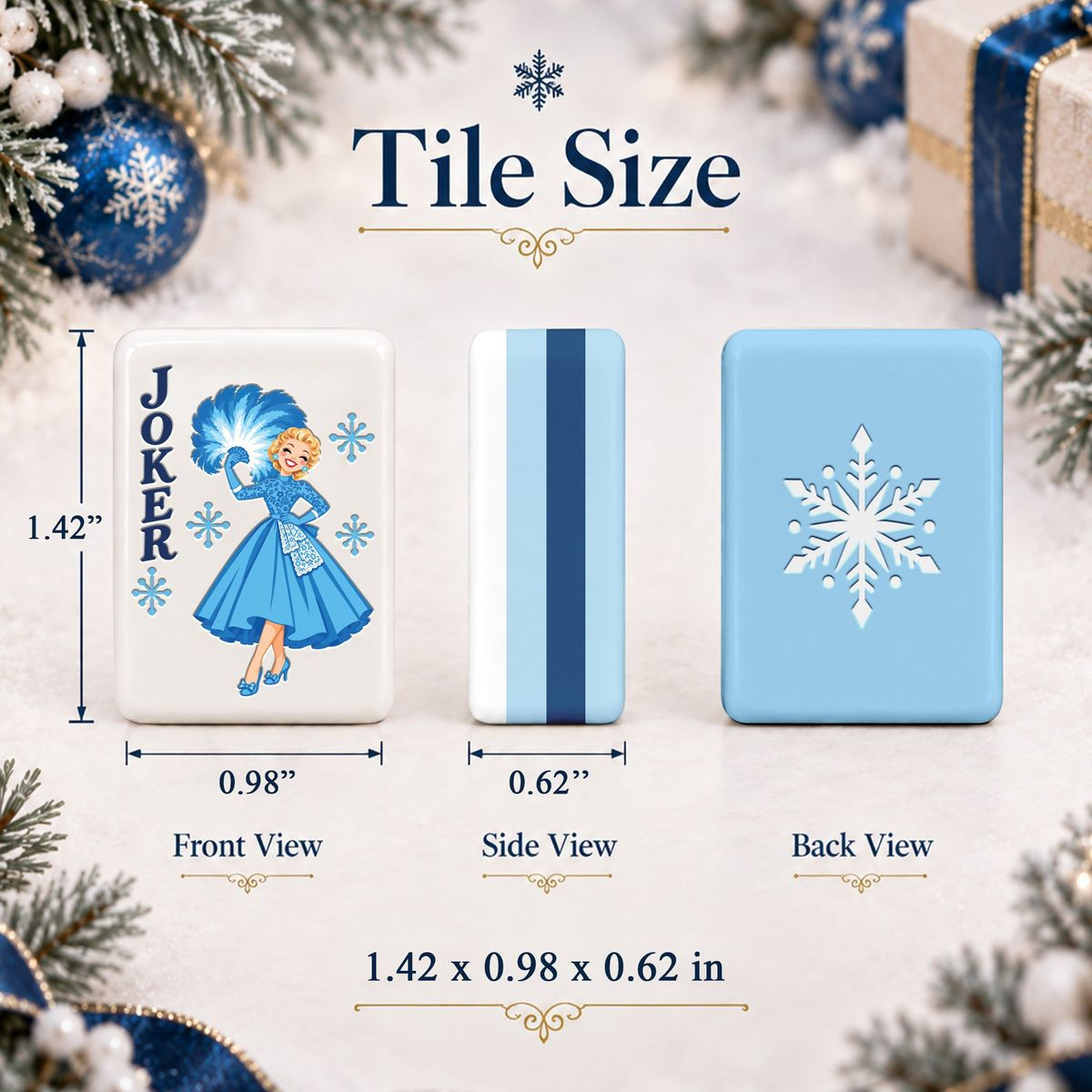
Tile size: Can you read a tile from three feet away without straining?
Tile weight: Does it feel solid and pleasant to hold, not flimsy?
Joker and spare count: Does the set include 8 jokers for play plus spares? (160-tile sets include them; check before ordering.)
Storage: Does it come with a bag or case, or do you need to buy one separately?
Mat and racks: Are these included, or do you need to purchase separately?
Returns: Can you try it risk-free if tiles aren't as readable as expected?
Most hobby players own multiple sets—different artwork, colors, or engravings for different groups. Your first set doesn't need to be perfect; it needs to be readable and sturdy enough to survive 20–30 games while you develop taste.
✨ Find your Mahstead set — free US shipping →

FAQ
Can I learn mahjong from videos alone, or do I need a teacher?
Videos teach rules; a live teacher or experienced player at the table accelerates learning by answering real-time questions and showing you hand patterns as they appear. Most beginners combine both—watch tutorials before your first game, then learn by playing.
How much does it cost to start mahjong as a hobby?
A quality set with a mat and one rack runs modest; see the best-selling collection for current pricing. Most games involve no money or friendly stakes. Organized leagues have annual fees. Total barrier to entry is low.
Is mahjong the same in other countries, or is American mahjong different?
American mahjong is a distinct variant using the National Mah Jongg League card and specific rules for exposing tiles and using jokers. Chinese, Hong Kong, and Riichi mahjong have different tile sets, hand types, and scoring. American is easier to learn if you're in the US and want to join local games.
Do I need to host my own game, or can I join an existing group?
Existing groups welcome newcomers at libraries, community centers, and clubs. If none exist nearby, hosting your own at home with three friends is simpler than you'd think—many successful hobby groups started exactly that way.
How often do people play if it's a real hobby?
Serious hobbyists play weekly or biweekly for years. Casual players might meet monthly. Once you enjoy it, the social commitment often matters as much as the game itself.
What's the difference between a mat and a table cover?
See our detailed mat vs. table cover guide. Mats are portable, marked with zones, and used on any table; covers stay on a dedicated mahjong table. For hobby play, a mat is more flexible.


View More
View More
View More
