
How to Choose Mahjong Racks: The Complete Buyer's Guide
Last updated: Nov 23, 2026

A mahjong rack is a wooden or acrylic stand that holds your 13 tiles at eye level, hidden from opponents and positioned for easy play. We host weekly games and can tell you that the right rack depends on your hand size, whether you want pushers (small sticks that help move tiles smoothly), and how often you travel. Racks come in two main styles: traditional slotted wood (narrow slots for individual tiles) and modern bracket-style (a frame that holds a row of tiles upright). Most racks hold exactly 13 tiles and cost based on material and detail—our mahjong racks collection ranges from simple to engraved designs. Beginners often pick bracket racks because they're forgiving; experienced players often prefer slotted wood for precision and speed. Common mistakes: buying a rack too short (tiles lean or fall), too narrow (tiles jam), or without testing it with your actual tile size first. The best rack is one you'll actually use every week.
A mahjong rack is more than convenience—it's part of winning strategy. When your tiles are properly angled and hidden, you can see the board, read tile counts, spot players' discard patterns, and manage your hand without telegraphing what you're holding. We've watched countless games where a poorly chosen rack cost someone focus and speed.
The decision often comes down to three questions: How do your hands feel most comfortable? How often do you move your tiles? And do you want a rack that pairs with your mat and set, or a purely functional one?
What size rack fits your hand and tiles?
Rack depth (front to back) and the distance between slots directly affect comfort. If slots are too tight, tiles jam and cracking happens; if too loose, tiles tip sideways mid-game. Test a rack with your actual tile set before ordering, if possible—some players have larger hands and need wider spacing, while others find narrow slots faster for speed play.
Most American mahjong tiles are roughly 1 inch wide and 1.3 inches tall. Standard racks accommodate this with slots spaced 1.1 to 1.2 inches apart. If you're buying from a new set for the first time, check whether the tiles come from a best-selling mahjong set—standard tile dimensions are consistent, but decorative or oversized tiles may not fit all racks.
🀄 Shop best-selling mahjong sets →
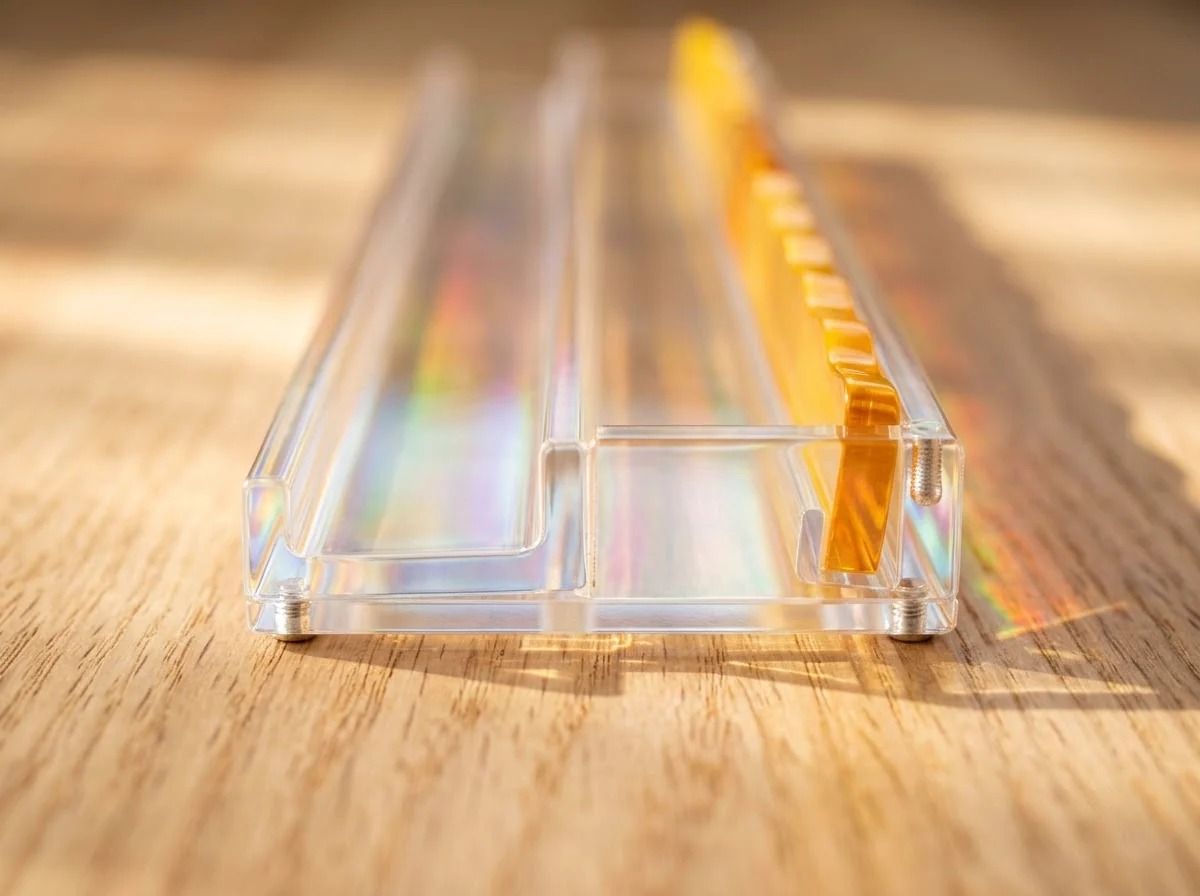
Should you get a rack with pushers or without?
Pushers are small wooden or acrylic rods (usually 2–4 per rack) that sit alongside or within the rack slots. You push them forward to move your entire row of tiles toward the center of the table, a critical play mechanic in speed rounds. Without pushers, you move tiles by hand, which is slower and can accidentally expose your hand to opponents.
Rack type | Who it's for | Key benefit | Trade-off --- | --- | --- | --- Bracket with pushers | Speed players, tournament hosts | Move 13 tiles as one unit; cleaner table | Slightly heavier; pushers can shift if not snug Slotted wood with pushers | Experienced players | Precision, traditional feel, durability | Requires steady hand; higher cost Bracket without pushers | New players, casual games | Affordable, lightweight, easy to learn | Tiles moved one or two at a time Slotted wood without pushers | Players with smaller hands | Elegant look, compact | Slowest tile movement
Most of us add pushers within the first month of regular play. If you're hosting weekly games, every player should have access to a rack with pushers so speed stays even.
✨ Find your Mahstead set — free US shipping →
How does rack height and angle affect gameplay?
A rack tilted at 30–45 degrees keeps your hand hidden while allowing you to see all tiles without moving your head. Too upright (nearly vertical), and tiles press against your face; too flat, and other players can peek over. Height matters too: if the rack sits too low on the table, you'll hunch; too high, and reaching becomes awkward during long draws.
Most racks are sized to position the top of your tiles roughly at chin level when seated normally. If your table is unusually tall or short, or you have mobility considerations, mention this when browsing our racks with pushers collection—some designs are more adjustable than others.
Which material lasts longest: wood, acrylic, or bamboo?
Material | Durability | Weight | Aesthetic | Best for --- | --- | --- | --- | --- Solid wood (walnut, cherry) | 10+ years with care | Medium to heavy | Warm, traditional | Serious players; home players who travel rarely Acrylic | 5–8 years (can cloud over time) | Lightweight | Modern, translucent | Travel, casual games, easy cleaning Bamboo | 5–7 years (splinters if damaged) | Lightweight | Natural, eco-conscious feel | Players who like organic look; occasional use Laminated wood | 7–10 years | Light to medium | Traditional outside, practical inside | Balance of aesthetics and portability
Wood cracks if dropped or exposed to extreme humidity shifts—we've seen racks split after a summer in a humid garage. Acrylic can cloud or yellow with age and sun exposure, but it survives drops better and wipes clean instantly. Bamboo is beautiful but splinters more easily than hardwood if a tile crashes into a slot.
For our weekly games, we've chosen a mix: solid wood racks that never leave the dining room, and acrylic racks that travel in our mahjong bags and cases to tournaments or friends' homes.
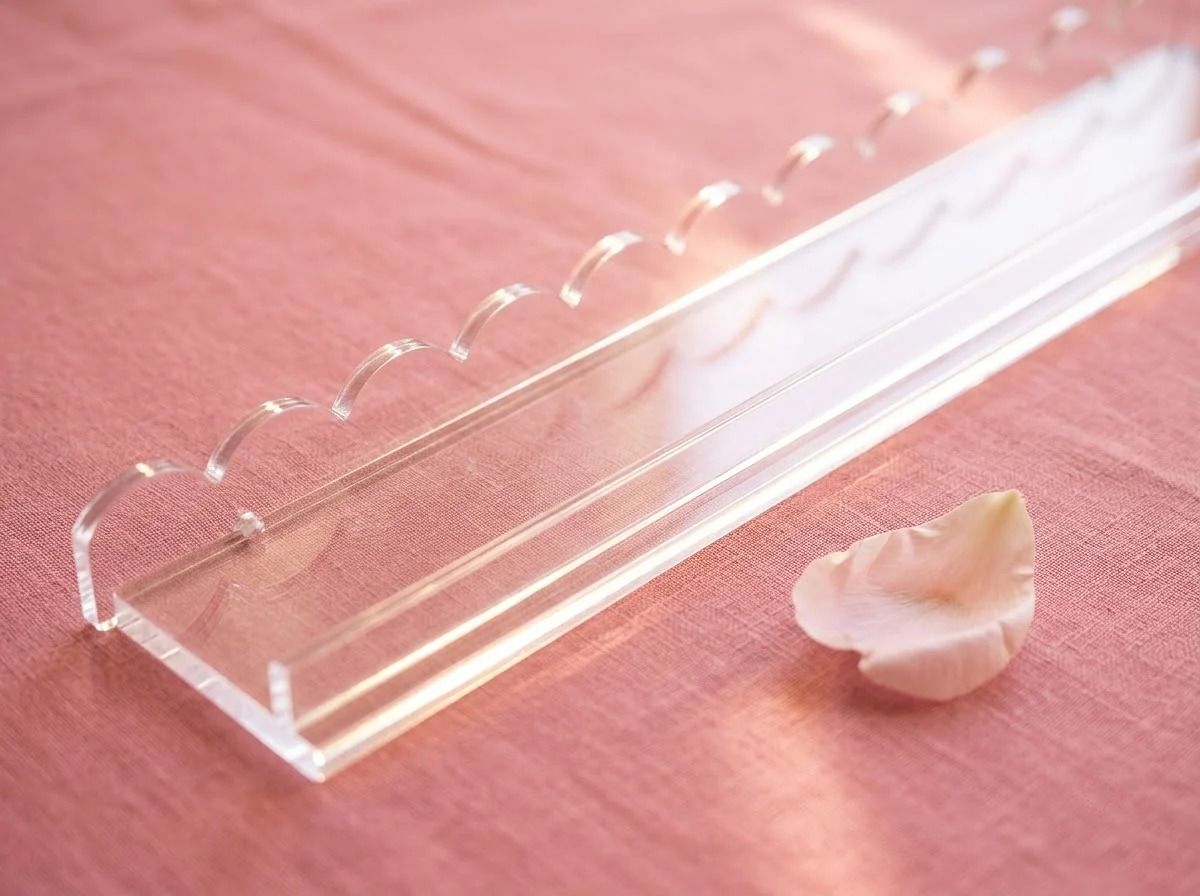
What details should you check before ordering?
1. Tile fit: Confirm the rack works with standard American mahjong tiles (1 inch wide). If your set is non-standard, ask the maker.
2. Slot count: Verify the rack holds exactly 13 tiles—no more, no fewer—so you never accidentally set aside a 14th.
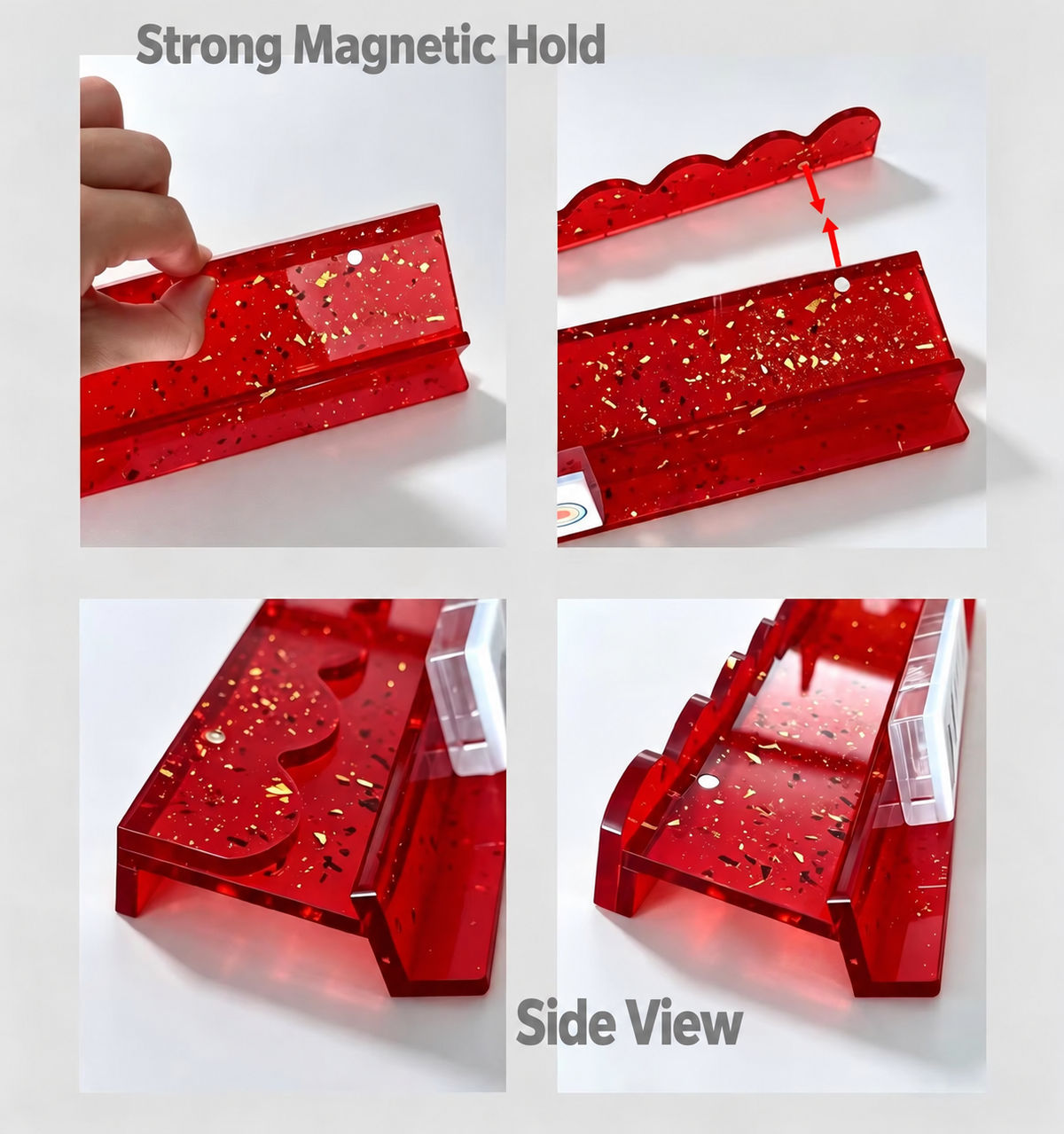
3. Pusher attachment: Are pushers removable or fixed? Fixed is safer for travel; removable is easier to clean.
4. Finish quality: Look for smooth edges and no splinters. Sand or varnish finish should feel even, not sticky or rough.
5. Weight and grip: If you'll move the rack often, pick one light enough to carry one-handed, with a lip or handle at the base.
6. Customization: If you buy an engraved mahjong set, some racks match with engraved wood or personalized designs. Check compatibility before ordering both together.
7. Return or exchange policy: Ask whether the vendor accepts returns if the rack doesn't fit your tiles. We always recommend testing tile fit before committing to a full order.
One honest mistake we've seen: buying a beautiful but impractical rack because it matched the table cover, then realizing the slots were too tight for rapid tile swaps. Form follows function in mahjong—beauty comes second.
🎁 See our most-loved mahjong sets & accessories →
How do you care for and store a rack?
Wood racks benefit from a light wipe with a dry microfiber cloth and occasional furniture polish. Never soak or leave in direct sunlight; wood can warp or fade. Store in a cool, dry place—avoid basements (mold risk) and hot attics (glue and varnish can fail).
Acrylic racks need only warm soapy water and a soft cloth; dry immediately to prevent water spots. Keep out of direct sunlight to slow clouding.
If you travel frequently, store your rack inside a padded case alongside your tiles and mat. Our mahjong bags collection includes sizes that fit standard racks plus tiles and a mat, with free US shipping.
What to Check Before You Buy
Hand size: Ask the vendor for the distance between slots and test if possible.
Tile dimensions: Confirm the tiles you own (or plan to order) match the rack's slot width.
Pusher type: Decide whether you want built-in pushers, removable, or none.
Material: Choose based on use frequency (travel = acrylic or light wood; home-only = solid wood).
Angle and height: Verify the rack tilts 30–45 degrees and positions tiles at comfortable chin level.
Return terms: Know whether the vendor allows returns or exchanges.
FAQ
Can I use the same rack for Chinese or Riichi mahjong as for American mahjong?
No. Chinese mahjong tiles are slightly smaller, and Riichi tiles are taller and narrower; slots designed for American tiles (1 inch wide) won't fit. Always match the rack to your tile set's exact dimensions.
Do I need a pusher if I play slowly or casually?
No. Pushers speed up tile movement and are most useful in fast games or tournaments. If you play relaxed, casual rounds, a simple slotted or bracket rack without pushers works fine.
What if my hands are very small or very large?
Small hands may prefer narrow-slot wooden racks (less reach required); large hands often need bracket-style racks with wider spacing or removable pusher rods so tiles don't jam. Test before buying if possible.
Can I engrave a rack like I can a tile set?
Some racks accept engraving—typically wood racks from makers offering engraved American mahjong sets. Acrylic and bamboo racks rarely accept engraving. Ask the vendor before ordering.
How often do racks need to be replaced?
With proper care, a solid wood rack lasts 10+ years. Acrylic and bamboo racks typically last 5–8 years before showing age. Replace sooner if slots splinter, warp, or no longer grip tiles securely.
What's the best rack for travel or tournaments?
Lightweight acrylic or laminated wood racks, ideally with removable or fixed pushers, pack well in a padded mahjong bag. Choose one under 2 pounds if you carry it often.


View More
View More
View More
