
Kong in Mahjong: Examples, Rules & When to Play It
Last updated: Nov 23, 2026
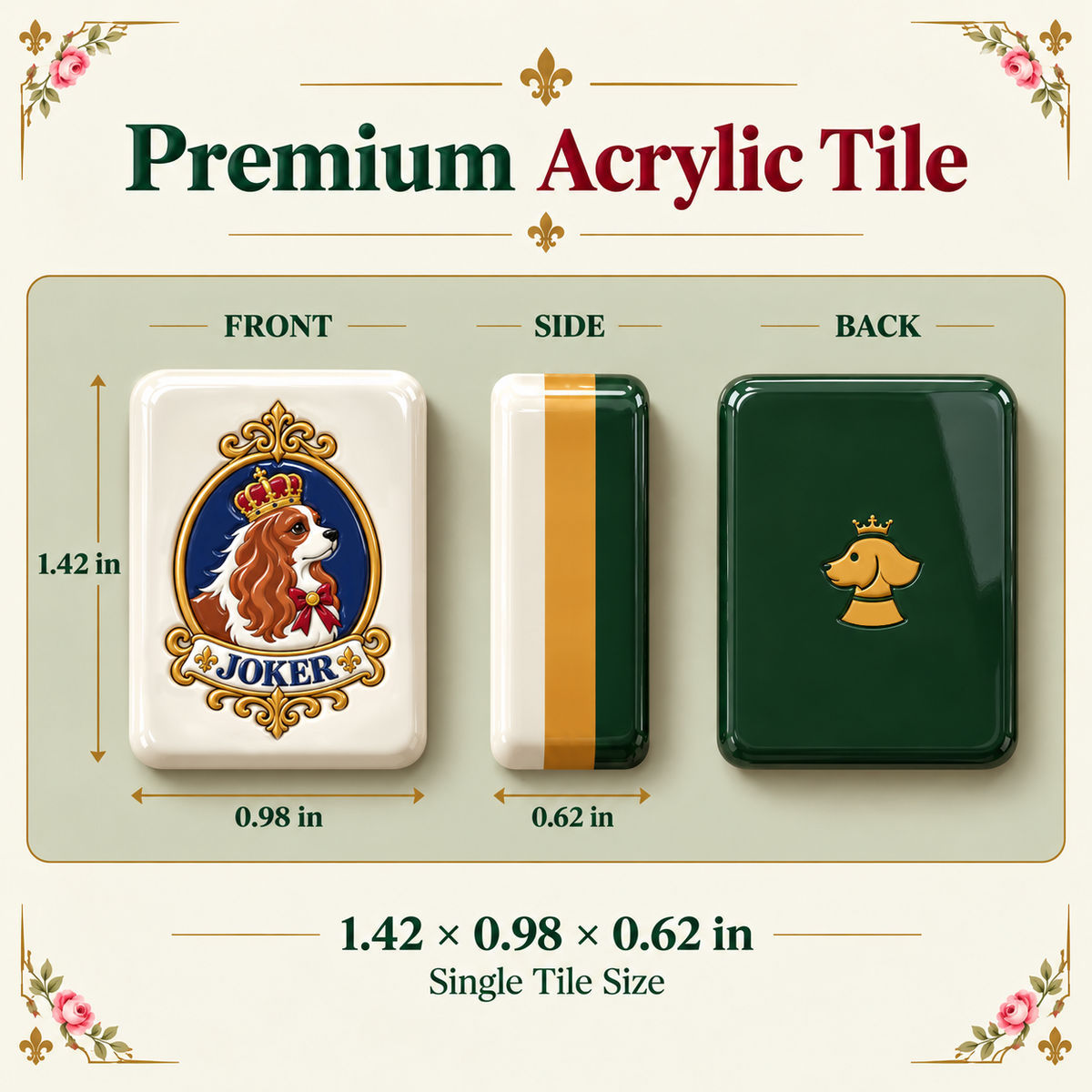
In American mahjong, a kong is exactly four identical tiles—four 5 Dots, four East Winds, four Red Dragons—melded as a single unit. Kongs are one of three exposable melds (along with pungs of three and quints of five); no chows or sequences exist in American play. You may expose a kong during your turn by laying it face-up on the table and drawing a replacement tile from the dead wall, or you may keep it hidden in your hand until you declare a winning hand. Kongs appear on the current National Mah Jongg League card in specific hand patterns—always check the card's sections to see which hands require or allow them. Many players hosting weekly games use acrylic sets like our best-selling mahjong sets to keep tiles visible and durable across seasons. Whether you expose or conceal depends on your hand strategy and the card layout you're chasing.
A kong is four identical tiles melded together in American mahjong. You can expose it mid-game or keep it hidden, and each choice triggers different scoring rules and tile replacement mechanics.
What makes a kong different from a pung?
A pung is three identical tiles; a kong is four. The moment you have four 3 Bams, you own a kong—not a pung plus one extra. In American mahjong, you cannot split a kong into a pung and hold the fourth tile separately; the four tiles form a single, indivisible meld. If you expose a kong, it takes up one meld position on the table. If you keep it hidden in your hand until you win, it counts as part of your 14-tile winning hand (or 13 if you drew the winning tile). Pungs are far more common on the card; kongs are selective—use the current year's National Mah Jongg League card to identify exactly which hands require them, as they are never interchangeable with pungs in a specific pattern.

When should you expose a kong versus keeping it hidden?
Expose a kong if the card pattern you're chasing requires an exposed meld in that position, or if exposing helps you draw a replacement tile that moves you closer to winning. When you expose a kong, you draw from the dead wall (the reserved stack at the end of the wall), not the live wall—this gives you access to tiles others haven't seen. Keep a kong hidden if the hand pattern lists it as a concealed meld, or if you believe exposing it signals your winning tile to opponents and invites blocking plays. Hidden kongs are also safer in early game when you're still shifting between multiple possible hands; once you expose, you commit. The trade-off is real: exposure gives you a fresh tile draw; concealment gives you secrecy. Study your card before the game starts so you know which hands favor which strategy.
How does drawing a replacement tile after exposing a kong work?
When you expose a kong by laying four identical tiles face-up on the table and calling "kong," you immediately draw one tile from the dead wall—the wall's end, reserved for kongs and going out. This replacement tile is drawn before your turn ends, and you then discard as normal. If you're drawing for the first time during your turn, you may draw from the live wall instead; the replacement draw happens only after you've already drawn your regular tile for that turn. In practice: you draw from the live wall (your turn begins), you recognize you can meld a kong, you expose it, you draw from the dead wall, you discard. The dead wall is finite—it has eight tiles reserved for kongs and the final draw when someone wins. Once the dead wall is empty, no more kongs can be exposed, and play continues with live wall draws only. Keep track of how many kongs have been exposed so far in the hand; if three have already been taken, only one dead wall tile remains.
🀄 Shop best-selling mahjong sets →

What does a kong look like on the mahjong card, and how do you read it?
On the National Mah Jongg League card, kongs appear in hand patterns as a "block" of four identical numbers or symbols, often written in a row or column depending on the hand's layout. Because you'll need to read the mahjong card accurately to spot them, remember: the card notation shows which tiles must be identical and which can vary. If a pattern lists "4–4–4–4" in the Dots section, you need the 4 Dot tile four times—that is a kong. The card also indicates whether the kong must be exposed (shown on the table) or can be concealed (held in your hand). Some hands demand all melds exposed; others allow a mix. Before each game, photocopy or review your card section by section so you can quickly identify which hands contain kongs. A common mistake is assuming a hand requires a pung when it actually requires a kong—four tiles look like three plus one extra to new players, but the card is absolute.
Which hands on the card typically use kongs, and does it matter?
Kongs appear sporadically on the card—they are less frequent than pungs but present enough to change your strategy. Hands heavy in kongs are often "called" hands because the card specifies which numbers and suits must appear; hands light in melds favor discarding early. The exact hands shift every spring when the National Mah Jongg League issues the new card, so there is no universal answer—only the current card is legal. That said, thematic hands (like "All Simples" or "Like Numbers") often include kongs to create variety and complexity. A hand with two kongs is rarer than a hand with two pungs; if you find a hand that fits and includes a kong, pay attention to whether that kong is your "slowest" meld (hardest to complete). If so, prioritize collecting those four identical tiles early. Many experienced players keep a mat and racks with pushers handy during play so they can organize their tiles clearly and spot four-tile matches quickly.
What mistakes do players make with kongs, and how do you avoid them?
Common Kong Mistakes & How to Avoid Them
Mistake | Why It Happens | How to Fix It |
Splitting a kong (3+1 instead of 4) | Miscounting tiles or confusing kong with pung | Count aloud: "one, two, three, four." If not four, it's not a kong. |
Exposing a kong when the card lists it hidden | Rushing or not reading the card section before play | Mark the card with a pen or sticky note; re-read before melding. |
Drawing from the live wall after exposing a kong | Forgetting the dead wall exists | Announce "kong" loudly; pause; draw from the far end (dead wall) only. |
Exposing too early and telegraphing your hand | Hoping for a lucky replacement tile without a strategy | Decide: does this meld help me this hand or does it expose me to blocks? Expose only if yes. |
Not tracking dead wall draws and running out of tiles to draw | Losing count after two or three kongs in a hand | Whisper the count: "First kong drawn, one left in dead wall." Say it aloud so everyone knows. |
The single easiest way to avoid mistakes is to read the card sectionbefore you begin your turn and decide which kongs (if any) you'll pursue. Many hosts keep acrylic sets on the table because acrylic tiles are bright, crisp, and easier to count and organize than bamboo or bone in poor lighting. Take your time. Announcing "kong" and pausing one full second before drawing prevents you from drawing twice by accident.
🎁 See our most-loved mahjong sets & accessories →
What to check before you buy tiles or a set for regular play
If you host weekly games and want to avoid confusion during kong calls, invest in tiles that are easy to count and see. Acrylic tiles in bright colors (especially engraved sets) make four-tile matches obvious at a glance. Paired with a mat, organized racks, and printed cards, you'll reduce hesitation and mistakes. Before you buy, confirm the set includes 152 playing tiles plus spares (American standard), and check that the card is current-year (updated annually in spring by the NMJL). A worn card or old card will have different hand patterns and may list kongs in places the new card does not.
✨ Find your Mahstead set — free US shipping →

FAQ
Can a joker be used to complete a kong?
No. In American mahjong, jokers cannot be used in a single tile or a pair, and they cannot substitute for the fourth tile of a kong. A kong must be four identical, unsubstituted tiles. Jokers can replace tiles in pungs (three), quints (five), and sextets (six), but only if the hand pattern permits them—and never for the first, second, or final tile of any meld.
If I expose a kong and draw a tile that matches one of my melds, can I immediately expose another kong?
No. You draw one replacement tile after exposing a kong, then you discard to end your turn. Your turn is over. Another player draws next. You cannot chain kongs in a single turn. On your next turn, if you draw or are passed a tile that completes a new kong, you may expose it and draw again.
What happens if the dead wall is empty before I'm ready to declare a win?
If all eight dead wall tiles have been drawn (via kongs and the final winning draw), no more kongs can be exposed. Play continues with live wall draws only. If you hold a concealed kong in your hand and win, you may declare it, but you cannot expose it mid-game after the dead wall is gone. Always track how many kongs have been called; once three have been exposed, only one dead wall draw remains.
Is a kong the same in Chinese mahjong or Hong Kong mahjong as it is in American?
No. Chinese and Hong Kong mahjong allow chows (sequences) and have different kong rules, tile counts (136 tiles typically), and scoring systems. American mahjong uses 152 tiles, forbids chows entirely, and requires all hands to come from the current National Mah Jongg League card. Always clarify which variant you are playing before sitting down.
How do I know if a hand on the card is worth chasing if it has two kongs?
Hands with two kongs are slower to complete because you need eight identical tiles across two different groups. If early in the hand you see neither kong's tiles appearing in discards, the hand is less likely to win. If one kong starts showing and the other does not, pivot to a different hand. Experience teaches you which hands are "live" (tiles visible) versus "dead" (tiles hidden or in others' hands)—focus on live hands, regardless of kong count.


View More
View More
View More
