
Is Mahjong Similar to Pinochle? Key Differences Explained
Last updated: Nov 23, 2026
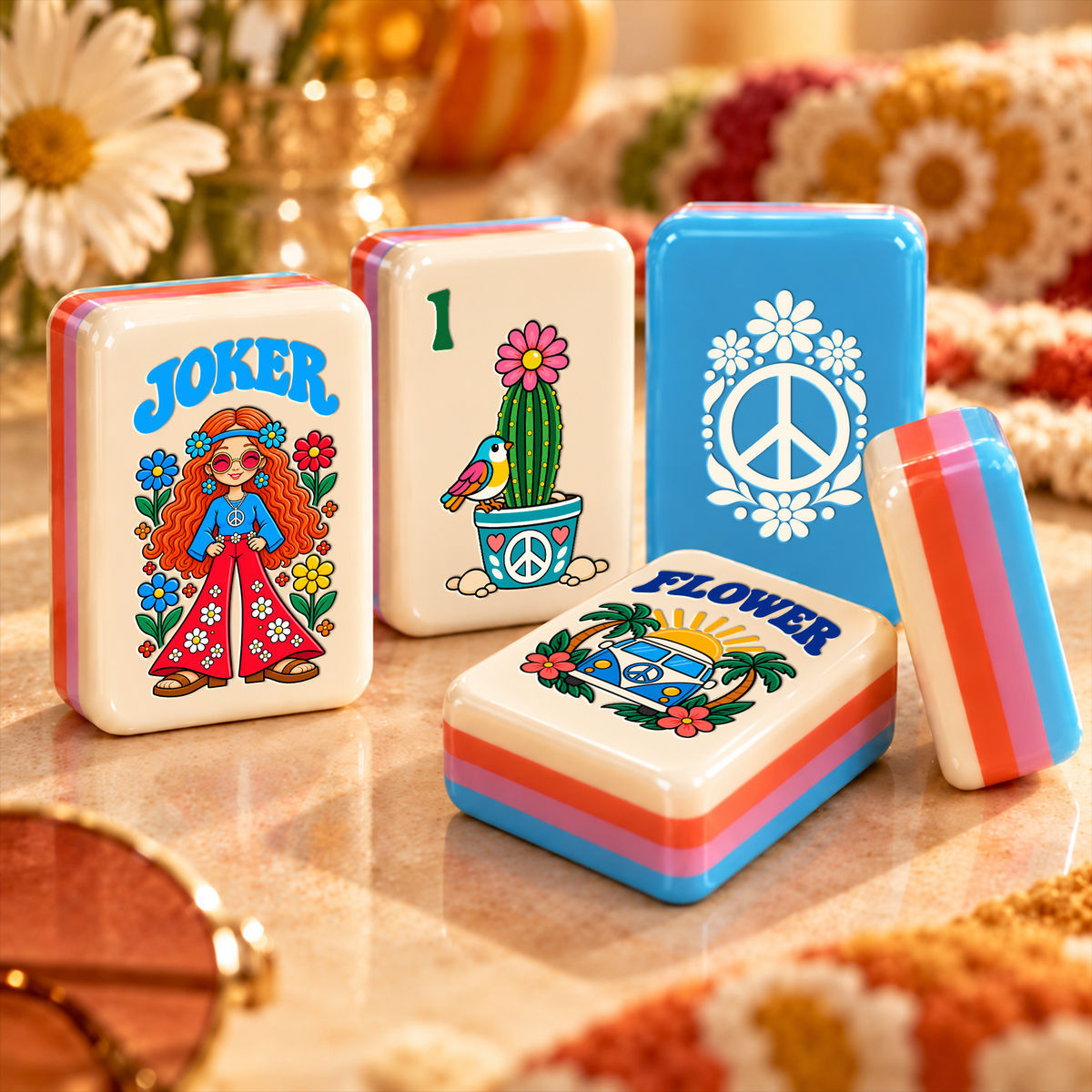
No, mahjong and pinochle are distinct games, though both reward memory and strategy. Pinochle uses a 48-card deck (no 2s through 8s) and focuses on melding combinations and trick-taking; mahjong uses 152 tiles across three numbered suits, wind tiles, dragons, flowers, and jokers. American mahjong (the most played variant in the U.S.) requires drawing from the current year's National Mah Jongg League card each hand—a live scoring reference that changes annually. Pinochle scoring depends on the cards you meld and win; mahjong scoring depends on hand type and complexity. Both games take 45 minutes to two hours per session. Neither is harder, but mahjong has a steeper learning curve because you must learn tile values, suit symbols, and the League card's patterns. Choose pinochle if you love trick-taking and bidding; choose mahjong if you prefer pattern recognition and tile collection. Our best-selling mahjong sets are designed for players ready to commit to the American game's rich mechanics. 🀄 Shop best-selling mahjong sets →
How do the core mechanics differ?
Pinochle is a trick-taking game: players bid on points, play cards to win "tricks," and score based on the combinations (melds) they declare and the points their tricks contain. Mahjong is a tile-collecting and pattern-matching game: players draw and discard tiles to build a complete hand that matches a pattern on the League card, then declare "mahjong" to win the round. In pinochle, your opponent's actions directly compete with yours during card play. In mahjong, players compete for the same tiles and often block each other's wins by keeping key tiles, but there's no bidding phase. Pinochle moves faster because cards play out turn by turn; mahjong requires more planning because you must visualize the full hand before you declare. Both games punish impatience, but mahjong punishes it harder—a wrong tile draw early on can doom your entire session.

What tiles and cards are actually used?
Pinochle uses 48 cards: two each of 9, 10, Jack, Queen, King, Ace in four suits. That's it—a compact deck you can fit in a shirt pocket. Mahjong uses 152 tiles divided into five categories: three numbered suits (Bams, Craks, Dots, each with numbers 1–9 and four copies of each), 16 wind tiles (four each of North, East, West, South), 12 dragon tiles (four each of Red, Green, and White), eight flowers, and eight jokers. A pinochle set costs less and fits anywhere; a mahjong set requires dedicated storage and a mat or table to organize play. Mahjong tiles are heavier, thicker, and more tactile—many players find the texture and weight satisfying, which is one reason the game builds such loyal communities.
How does scoring work in each game?
Scoring Element | Pinochle | Mahjong |
Reference | Standard rules (house rules vary) | Annual National Mah Jongg League card |
What you score | Melds declared + trick points won | Hand type, pattern, number of suits, joker usage |
Speed of tallying | Quick, during play | Slower, requires card reference after win |
Adjustment for errors | Often handled mid-game by house vote | League card is final; misread = no win |
Range per hand | Typically 20–500 points | Typically 20–40 points (rarely higher) |
Typical session total | 500–2000 points | 10–30 hands scored incrementally |
Pinochle scoring is more elastic: house rules vary widely, and players often debate point values for unusual melds. Mahjong scoring is rigid by design—the League card is the law, and no negotiation happens at the table. This makes mahjong fairer for tournaments but pinochle more social and flexible for casual play. If you hate looking up rules mid-game, mahjong's standardized card is a relief; if you love house variants, pinochle is more your speed.
🎁 See our most-loved mahjong sets & accessories →

Why do mahjong players need a new card each year?
The National Mah Jongg League publishes a new official hand card every spring. This card shows the 72–80 legal winning hands for that year, divided into sections: pairs (hands with one pair and four melds), like pairs (hands with two pairs and three melds), and other special categories. Hands on last year's card may be illegal this year, and new hands appear that weren't playable before. This keeps the game fresh and prevents players from relying on memorized patterns year after year. Pinochle has no equivalent: the melds and scoring system stay the same forever. If you play mahjong seriously, you'll print or download the current League card before each session. Many casual groups print it on cardstock or reference it on a phone; serious players often explore engraved or personalized sets and keep a laminated card at the table. This annual refresh is why mahjong communities feel alive and evolving, whereas pinochle players often describe their game as "timeless and unchanging."
Which game is easier to learn?
Pinochle is faster to learn because the rules are smaller: 48 cards, four ranks, standard melds, bid-and-play structure. Most people grasp it in two or three sessions. Mahjong takes four to six sessions to truly understand, because you must learn tile suit symbols (birds, numbers, Chinese characters), wind and dragon positions, how the Charleston tile-passing ritual works, and how to read the League card. However, once learned, both games offer the same replay value: strategy deepens over years. Beginners often assume pinochle is "more American" so it's easier—not true. Pinochle's trick-taking rules are easier, but mahjong's tile logic is equally logical once explained. We recommend starting with a beginner-friendly guide to American mahjong if you're drawn to mahjong; don't assume pinochle is your only option because it feels familiar.
Which game should your game night host?
Pinochle works best for groups of three or four who meet casually and enjoy quick rounds with flexible scoring. Mahjong works best for groups of exactly four (it's rarely played with three or two, though variants exist) who commit to learning and playing regularly. If your group changes size or attendance is unpredictable, pinochle is more forgiving. If you have a steady crew that meets weekly, mahjong builds deeper social bonds because the shared learning curve and annual card refresh create a sense of community investment. Hosting mahjong requires a mat to organize play, racks to hold tiles, and a bag to transport the set—minor costs, but real ones. Pinochle needs only a deck of cards and a table. Both are rewarding; the choice depends on whether you want ritual and structure (mahjong) or flexibility and speed (pinochle).
What to check before you buy
Do you have a steady group of four? Mahjong assumes yes; pinochle is more forgiving of floating players.
How much time do you have to learn? Pinochle: one or two sessions. Mahjong: four to six, plus ongoing League card updates.
Storage space. Mahjong tiles + mat + racks and storage bag take up a closet shelf; a pinochle deck fits in a drawer.
Tournament interest. Pinochle has regional tournaments; mahjong has a nationwide League with ranked play if you want it.
Tile texture matters. Some people love the weight and click of mahjong tiles; others find it overkill. Hold a set before committing.
✨ Find your Mahstead set — free US shipping →

FAQ
Can I play mahjong with pinochle players who've never tried it?
Yes, but set aside 30 minutes to teach the basics—tile suits, the League card, how the Charleston works, what a pung and kong are. Pinochle players grasp strategy quickly but stumble on tile symbols initially. A beginner's guide and a set of high-contrast tiles reduce frustration.
Is mahjong more expensive to start than pinochle?
A pinochle deck costs less upfront, but a full mahjong setup (set, mat, racks, and League card) spreads the investment across items that last years. Both are affordable hobbies; mahjong asks for more upfront planning.
Do serious pinochle and mahjong players ever play both?
Some do, especially in retirement communities where both games thrive. The skill sets overlap (memory, pattern recognition, hand management), but the games feel distinct enough that players usually prefer one. Mahjong communities tend to be more insular because the annual card creates continuity.
Is the League card really necessary, or can we house-rule mahjong like pinochle?
The card is essential if you want consistency and fairness, especially across different tables and seasons. House-ruled mahjong becomes a different game quickly—which is fine for purely casual play, but it loses the structure that makes mahjong tournaments possible. If you want freedom, pinochle's flexibility is a real advantage.
What if I like both games—should I have both sets at home?
Absolutely. They serve different group sizes and moods. A pinochle deck and a mahjong set take up minimal space and give your game group options. We've seen many hosts keep both on hand.
How long does a typical mahjong game take vs. pinochle?
Mahjong typically runs 8–12 hands per session, totaling 45 minutes to 90 minutes depending on player experience and chattiness. Pinochle can run 30 to 90 minutes depending on how many rounds you play and house rules. Both reward lingering because the social element matters as much as the score.


View More
View More
View More
