
Mardi Gras Mahjong Tablescape: Design Tips & Hosting Ideas
Last updated: Nov 23, 2026
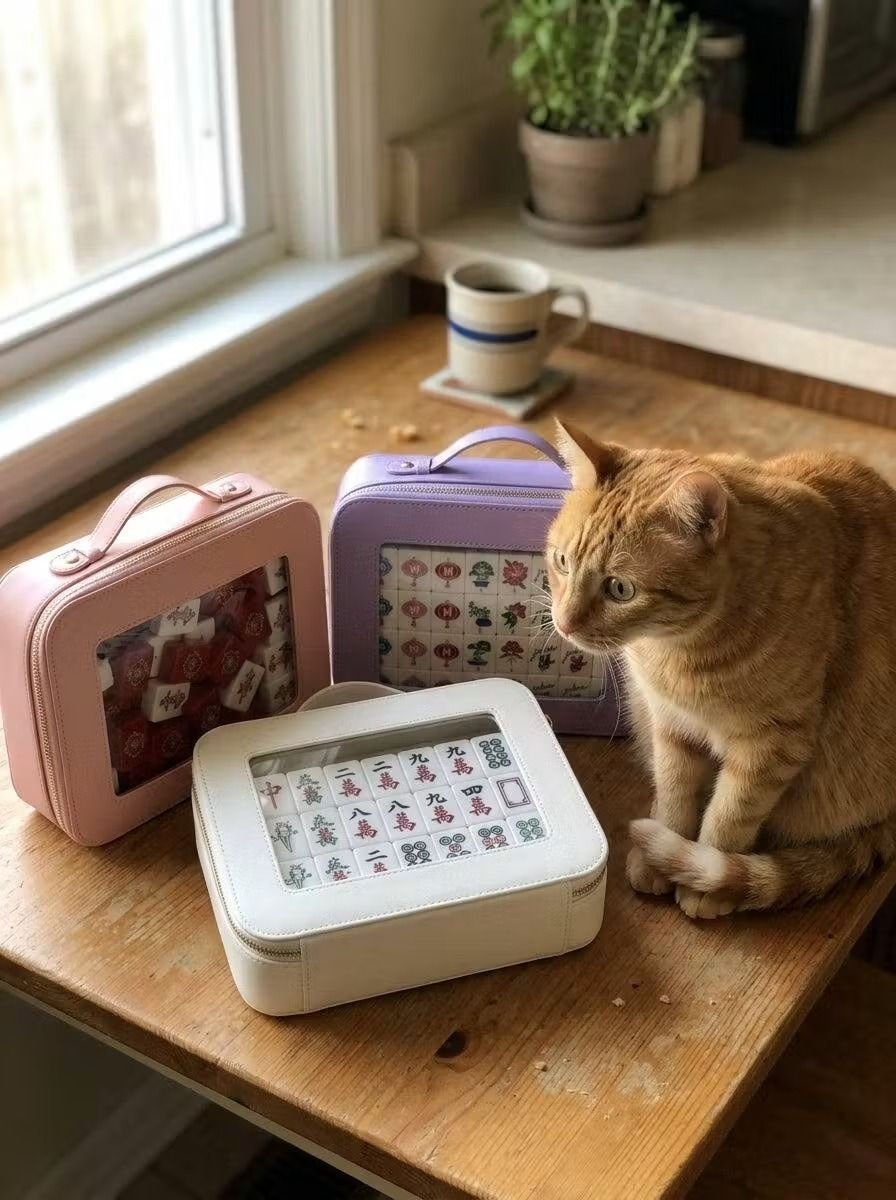
A Mardi Gras mahjong tablescape combines festive purple, green, and gold décor with the functional elegance of an American mahjong setup. Start with a quality mat—the foundation that protects tiles and defines the play area—then layer in coordinated linens, centerpieces, and a well-stocked tile set. The essentials are a 160-tile acrylic set (which we supply with free US shipping), a mat that fits your table, and serving pieces that echo the Mardi Gras palette. Aim for a setup that feels celebratory yet playable: enough room for the Charleston and four players' racks, good lighting to read tiles, and decor that doesn't block sightlines. Most home games run three to four hours, so comfort and hydration stations matter as much as aesthetics. Avoid cramped tables, reflective surfaces that wash out tile colors, and heavy centerpieces that impede the game flow.
🀄 Shop best-selling mahjong sets →
What colors and patterns work best for Mardi Gras mahjong?
Traditional Mardi Gras uses purple (justice), green (faith), and gold (power), but you can layer jewel tones—deep teal, emerald, sapphire—without losing the celebration feel. Pair solid table linens with patterned runners, beaded garland, and fleur-de-lis napkins. Avoid busy clashing prints: your mahjong tiles already have visual weight, and you want players to read them instantly. A deep purple or black undercloth with gold table runner creates contrast and lets acrylic tile colors pop. Feather boas and masks are fun accents; position them away from the tile play zone.
How do you arrange the mat for four players in a festive setup?
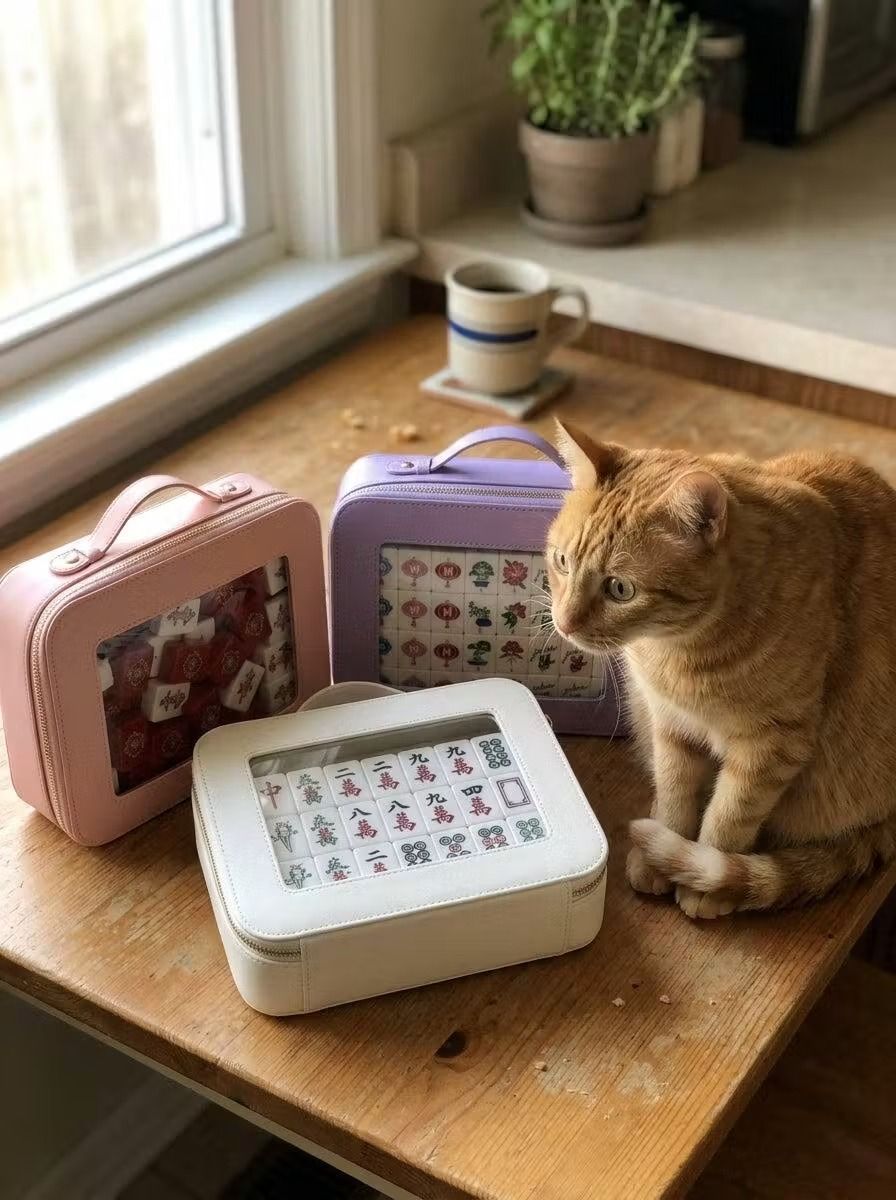
Place the mat at the table's center; it should sit flat and not bunch. Each player sits at one side—ideally a mat 24–36 inches square leaves 18–24 inches of table rim on each edge for personal tile racks and drink glasses. The player in East (declared at game start) typically sits opposite you; North, South, and West fan around. When you're hosting four, assign seats before the Charleston begins, and leave wall space clear: that's where the wall of undealt tiles lives. Position a festive centerpiece (beaded ball, Mardi Gras king cake replica, or tall masked candle arrangement) at the table's perimeter, not the mat center. Quality mahjong mats come in standard sizes and cushioned or flat finishes; a cushioned mat dampens tile sound and gives the game a luxe feel.
Should your acrylic tiles match the Mardi Gras color scheme?
Yes—acrylic tile sets come in dozens of color combinations, and choosing a purple, green, or jewel-tone option anchors the whole tablescape. Many players opt for colored racks and acrylic tiles in coordinated hues: if you have purple racks, a purple or green tile set ties them together. White or ivory tiles read easily under standard lighting but feel more traditional; colored sets add personality and thematic unity. Check tile thickness and engraving quality: you want crisp, deeply etched characters that don't fade under party lighting. Our best-selling collection includes colored acrylic sets; pick one that echoes your tablescape palette.
What serving and comfort elements elevate the vibe without slowing play?
Station beverages, snacks, and napkins on a separate side table or buffet, not crowded around the mat. Small plates, cups with lids (to avoid spills on tiles), and coasters for each player seat protect your setup and keep hands clean for tile handling. A dedicated scoresheet station—with pens, pencil, and the current-year National Mah Jongg League card printed and posted—prevents fumbling during hands. Soft background music (New Orleans jazz, funk, zydeco) reinforces the theme without drowning conversation. Warm lighting—not harsh overhead—makes tiles easier to read and photos look inviting. A guest book or scorecard where players initial their seat and note the final hand creates a fun memory and adds to the party ritual.
Décor Element | Mardi Gras Fit | Play Impact | Placement Tip |
Purple tablecloth | High—core color | Neutral if flat | Under mat or as underlay |
Gold beaded garland | High—festive shimmer | Neutral to negative if near tiles | Drape on chair backs, table edge |
Feather boas | Very high—iconic | Can obscure tiles if too dense | Drape loosely; keep mat perimeter clear |
Fleur-de-lis napkins | High—symbolic | Neutral | Beside place settings, not on mat |
Tall centerpiece | Medium—sets ambiance | Negative if blocks sightlines | Off-mat corners or low-profile center |
Mahjong mat (colored) | Very high—anchors setup | Essential to play | Center of table; flush and level |
Acrylic tile set (colored) | High—thematic | Essential to play | In tile wall and players' racks |
Racks with pushers | Medium—functional | Essential to play | One per player, off the mat |
Scoresheets + card | Medium—practical | Essential to play | Side table; posted clearly |
🎁 See our most-loved mahjong sets & accessories →
How do you handle tile management and clarity during a festive, well-lit game?
Good lighting is non-negotiable: if you're hosting indoors, use 60–75 watt equivalent LED bulbs overhead or add a table lamp on a nearby stand angled away from players' eyes. Never rely on candlelight alone; it's atmospheric but unreadable. Acrylic tiles in clear, deeply engraved designs stand up to party lighting better than ceramic or resin tiles with shallow stamps. When you shuffle the wall or mix tiles for the Charleston, do it on the mat in full view—never under a tablecloth corner where players can't verify the tile count. Keep the National Mah Jongg League card (the current year's official hand list) printed on a stand-up frame or clipboard visible to all; this prevents disputes and speeds up verification. If you're playing a 160-tile set, all 152 tiles go into play; the spares stay in their bag. Learn how to read the mahjong card so your guests can follow along. Racks with pushers keep tiles neat and hands off the mat, which also looks polished during photos.
What final checklist ensures your Mardi Gras mahjong night is both beautiful and playable?
Before guests arrive, run through these steps:
Table surface: Level, clean, and large enough for mat plus 18+ inches rim on all sides.
Mat placement: Centered, lying flat (no wrinkles), cushioned or standard per your preference.
Tile count: All 152 tiles in your 160-tile set present and accounted for; spares stored separately.
Racks and pushers: One per player, positioned off the mat, cleaned and ready.
Current-year card: Printed and visible at the table or on a stand.
Lighting: Overhead and secondary lights tested; no glare on tiles.
Linens and décor: Tablecloth, runners, centerpieces, and napkins in place; nothing impeding player sightlines or interfering with the mat.
Beverages and snacks: Set on a side table with coasters, small plates, and napkin supply.
Scoring setup: Pens, paper, and scorecards ready.
Music and ambiance: Playlist queued; volume low enough for conversation.
Test one full Charleston with a friend the day before to confirm that tile mixing and passing flow smoothly and that the mat size feels comfortable for four racks plus wall space. This rehearsal catches setup surprises—like a mat that's too large for your table, or racks that don't fit comfortably beside it—while you still have time to adjust. Our engraved sets and colored tile options are ready to ship with free US delivery, so order early if you're planning a themed night. Travel bags and cases keep your setup protected when moving between venues or storing between games.
✨ Find your Mahstead set — free US shipping →
What to check before you buy
Table dimensions: Measure your play surface; a standard 36–42 inch round or 48–60 inch rectangular table works best.
Mat size: Standard mats are 24–28 inches square; confirm it fits your table with ample margin for racks and drinks.
Tile set color: Browse colored acrylic options that match your Mardi Gras palette—purple, green, gold, or jewel tones all fit the theme.
Lighting: Invest in adjustable task lighting if your dining area is dimly lit; party ambiance shouldn't compromise tile readability.
Rack capacity: Ensure each player's rack sits comfortably off the mat without crowding; test with your actual table layout.
Spare tiles: Your 160-tile set includes extras; keep them in their original bag, not in play.

FAQ
Can you use a Mardi Gras tablecloth instead of a dedicated mahjong mat?
No. A mahjong mat protects tiles from spills, defines the play zone, and provides the proper shuffling and wall-building surface. A tablecloth adds festive color but won't serve the mat's function. Use a mat as your base, then layer a coordinated tablecloth or runner around it for Mardi Gras flair.
What size mat works for a round Mardi Gras party table?
A 28-inch square mat fits most 48-inch round tables with room to spare. For smaller 36-inch rounds, use a 24-inch mat. Always measure your table and confirm at least 18 inches of rim on each side for racks and comfort before ordering.
Should acrylic tiles be a specific Mardi Gras color, or is white fine?
Acrylic tiles come in many colors; choosing purple, green, emerald, or gold reinforces your theme and looks stunning under party lighting. White or ivory tiles are classic and read easily but feel less festive. Both are fully playable—pick what makes you smile.
How do you prevent drinks and food from damaging a mahjong mat during a party?
Station beverages and snacks on a separate side table, not on the mat. Use small plates and coasters for each player's seat area (off the mat). Remind guests that no drinks sit within arm's reach of the tiles. A mat with a sealed, washable surface protects against spills.
Do you need fancy racks and pushers for a Mardi Gras game, or are they optional?
Racks and pushers are optional but highly recommended. They keep tiles organized, prevent hands from obscuring the game, and let everyone see what other players are holding—which speeds play and adds polish to your tablescape. Colored or engraved racks coordinating with your set elevate the party feel.
What's the best way to store a full mahjong setup between Mardi Gras parties?
Keep tiles in their original drawstring bag, organized by a cloth tile organizer if you have one. Store the mat rolled or flat (not folded long-term, which can crease it). Racks, pushers, and accessories fit in a dedicated travel case or plastic bin. Keep the current-year card in a protective sleeve. Store in a cool, dry place away from direct sunlight to preserve acrylic color and mat finish.


View More
View More
View More
