
Is Mahjong Similar to Pickleball? A Player's Honest Take
Last updated: Nov 23, 2026
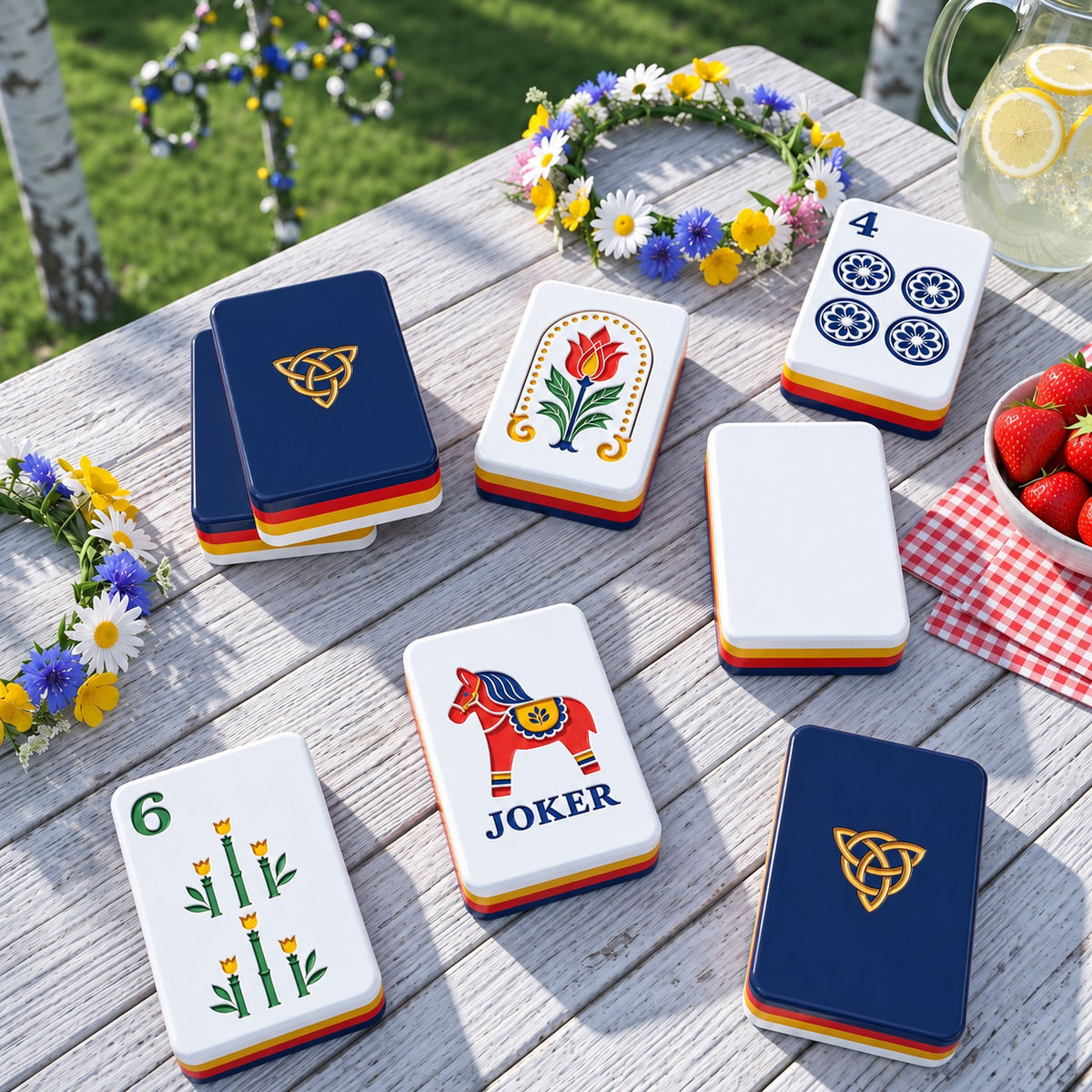
Mahjong and pickleball are not alike in mechanics, but they share identical social and cognitive appeal: both are accessible to beginners, both reward mid-game decision-making over speed, and both build tight weekly communities. Pickleball is a paddle sport with a lightweight ball and court rules; mahjong is a 152-tile card game played at a table with four players (traditionally). Both have low physical barriers to entry, quick rounds (a pickleball match or mahjong hand lasts 10–30 minutes), and rely on pattern recognition and positioning. Neither requires decades of practice to enjoy competitively. Mahjong uses the National Mah Jongg League card (updated yearly) to set which hands are valid; pickleball uses standardized court dimensions and scoring. Many players switch between both because they satisfy the same appetite: low-stress social play with genuine tactical depth. If you enjoy pickleball's accessibility and decision-making but want to stay indoors year-round, mahjong for beginners offers the same community spirit without the court reservation headache.
Mahjong and pickleball both draw millions of players and reward strategy over raw athleticism. But they're fundamentally different games — one tile-based, one paddle-based. Both have low physical barriers to entry, quick rounds (a pickleball match or mahjong hand lasts 10–30 minutes), and rely on pattern recognition and positioning. Neither requires decades of practice to enjoy competitively. Many players switch between both because they satisfy the same appetite: low-stress social play with genuine tactical depth.
Why do both games attract so many casual players?
Accessibility is the glue. Pickleball doesn't punish poor athleticism; mahjong doesn't punish poor memory. Both let beginners hold their own against experienced players because luck and decision-making matter as much as skill. A beginner can win a pickleball point against a strong opponent with good court positioning. A beginner can win a mahjong hand against a skilled player by drawing tiles strategically. Neither game locks out newcomers behind a wall of prerequisite training. Both also fit into weekly routines: most pickleball leagues play 1–2 hour sessions; most mahjong groups gather for 3–4 hours once or twice per week. The time commitment feels manageable, and the social payoff (tournament bragging rights, group chat trash talk, inside jokes) keeps people coming back.

What's the core difference in how you actually play?
Pickleball is real-time, physical, and spatial. You stand on a court, react to a moving ball, move your feet, and execute shots in seconds. The game flow is continuous; once a serve lands, play unfolds without pausing. Mahjong is turn-based, mental, and statistical. You sit at a table, draw one tile per turn, and decide which tile to discard. Every player waits for their turn. The game pauses after every play. Pickleball punishes delayed reflexes; mahjong punishes hasty tile choices. One is a sport; the other is a parlor game. On the surface, they have almost nothing in common—but that's exactly why many people play both. They exercise different parts of the brain and satisfy different moods. Pickleball energizes; mahjong calms and focuses.
Do you need athletic ability to play mahjong?
No. Mahjong requires zero hand-eye coordination, no running, no jumping, and no physical exertion. The barrier to entry is purely cognitive and social. You need to memorize the tile names (Bams, Craks, Dots, winds, dragons, flowers), learn which hands are legal (from the National Mah Jongg League card each year), and practice recognizing patterns under mild time pressure. A person with arthritis can play mahjong the same way a young adult can. A person in a wheelchair faces no obstacles. Age becomes irrelevant. Many of our regular players are over 70 and outthink competitors half their age every week. Pickleball does level the athletic playing field compared to tennis, but it still rewards mobility, balance, and reaction time. Mahjong levels it completely. If you play pickleball because you like the social structure and strategic depth but avoid it due to physical limitations, mahjong is the direct answer.
How does community work in each game?
Both build tight, repeating groups. Pickleball players join a league, book a court twice a week, and see the same faces. Mahjong players host standing tables at homes, community centers, or clubs and gather weekly for years. In both cases, newcomers integrate into a social structure fast. You're not a stranger for long; you're "the aggressive net player" or "the person who calls too much." Both games encourage friendly betting (usually small—a dollar or two per game) and running scorecards, which heightens stakes without creating financial risk. Both reward showing up consistently. Both create group customs: pickleball leagues have trophy nights; mahjong tables have snack rotations, lucky seat rotations, and running score sheets taped to the wall. The social payoff is enormous. Many people say they play for the friendship, not the win. That's identical in both communities.
🀄 Shop best-selling mahjong sets →

What's unique to mahjong that pickleball doesn't offer?
Mahjong has a "reset" mechanic that pickleball lacks: before every game, four players pass tiles in an elaborate ritual called the Charleston. This shuffle phase builds camaraderie, allows conversation, and guarantees no game ever starts identical to the last one. There's no equivalent in pickleball—you just take the court and play. Mahjong also allows jokers (wild tiles) in certain hand patterns, which means luck and strategy overlap constantly. You can draw a joker and suddenly have three ways to win instead of one. Pickleball has no "wild ball" mechanic; the rules are fixed. Mahjong also has a yearly card that changes the legal hands, so the game evolves annually. Pickleball rules are stable decade to decade. Many mahjong players love this rhythm of renewal; it keeps the game fresh. Mahjong also feels quieter and more intimate—you sit at one table with three people, not on a court with strangers. The conversation is continuous, not interrupted by rallies. If you like pickleball's community but want a game you can play year-round indoors without booking a court, how to play American mahjong is your entry point.
Aspect | Mahjong | Pickleball |
Physical demand | None | Low to moderate |
Setup time | 10–15 min (Charleston) | 2–3 min |
Hand/match length | 10–20 min per hand | 20–30 min per match |
Turn structure | Sequential, paused | Continuous, real-time |
Age barrier | None | Low |
Rule changes | Yearly card update | Rare |
Tile/court reservation | Not needed | Often required |
Group size | Exactly 4 (standard) | 2–4 (flexible) |
Best for | Thinkers, indoors | Active people, outdoors |
🎁 See our most-loved mahjong sets & accessories →
What should a pickleball player know before trying mahjong?
Expect a learning curve—not a steep one, but a real one. You won't play your first hand perfectly; you'll misread the card, forget which tile is which, and maybe discard a tile you needed. That's normal and takes 2–3 sessions to resolve. Pickleball players often have an advantage: you're used to rules, scoring, and competitive structure. Mahjong's scoring system is numeric and methodical; you might find it easier than you expect. Bring a notebook. Many groups track scores by hand, and newcomers benefit from seeing the pattern. Ask questions openly; mahjong communities are famously patient with beginners. Avoid trying to learn from YouTube or books alone; mahjong is too visual and interactive. Find a local group (community centers, libraries, synagogues, and country clubs often host tables) and play in person with experienced players coaching you. The tiles themselves are beautiful and satisfying to handle—they click and slide in ways that enhance the game's appeal. If you're considering buying your own set, our best-selling American mahjong sets are durable enough for weekly play and designed for new players and veterans alike.
What equipment do you actually need?
For mahjong: a 152-tile set (American standard), a mat or cloth to play on, and a rack with pushers to hold your tiles neatly. Many players also use a carrying bag or case because the tiles are heavy and the game requires transport to and from the table. For pickleball: a paddle, a ball, court access, and shoes. Mahjong's equipment is optional in the sense that you can play on a bare table without a mat, but a mat prevents tiles from sliding and adds to the game's tactile pleasure. Racks are not required, but they help you organize tiles so you can see all your options at once. Beginners often skip these extras and play bare-handed at first, which is fine. Over time, most players invest in quality equipment because it improves focus and reduces fumbling. The good news: mahjong equipment is one-time purchase. A durable set and mat last decades if treated well.
✨ Find your Mahstead set — free US shipping →
What to check before you buy your first set
Tile clarity: Can you read the symbols clearly from arm's length? Engraved tiles last longer than printed ones.
Tile weight: Heavier tiles feel more satisfying and shuffle better. Acrylic tiles are standard for American mahjong and last years of weekly play.
Rack compatibility: If the set includes racks, check that tiles sit snugly without falling. Pushers should move smoothly.
Case or bag: Does the set come with storage? If not, plan to buy one separately so tiles don't scatter.
Joker count: American mahjong uses 8 jokers in play. A 160-tile set includes spare jokers in case you lose one.
Instructions included: Does the box include rules or a beginner's guide? Not essential, but helpful.
Return policy: Can you return it if tiles are damaged or unreadable? Check before purchasing.
Most pickleball players who switch to mahjong are surprised by how quickly they fall in love with the game. The pace is gentler, the mental engagement is richer, and the community is just as warm. The two games attract the same type of person: someone who wants to play competitively but not aggressively, someone who values routine and friendship, someone who'd rather think than sprint. If you've enjoyed pickleball's social structure but want a game you can play rain or shine, mahjong is a natural next step.

FAQ
Do you need to be athletic to play mahjong?
No. Mahjong requires zero physical exertion—no running, jumping, or hand-eye coordination. It's a seated, turn-based mental game. Age, mobility, and physical ability don't matter. A 75-year-old in a wheelchair can compete as effectively as a 30-year-old.
How long does a typical mahjong hand take?
Most hands last 10–20 minutes. A full session (4–6 hands) takes 2–4 hours, similar to a pickleball league night. Setup (the Charleston tile-pass ritual) adds 10–15 minutes at the start.
Can you play mahjong with fewer than 4 people?
Standard American mahjong is designed for exactly 4 players. You can play with 2 or 3 using special rules, but these are less common. Most groups stick to 4 players per table.
Is mahjong easy to learn if I've never played before?
Yes, but not instantly. Most beginners play competently after 2–3 sessions. You'll need to memorize tile names and practice reading the yearly card. Playing with experienced people (not from videos alone) accelerates learning significantly.
How much does a decent mahjong set cost?
Sets range widely depending on tile material and design. See current pricing on the product page. All Mahstead sets include free US shipping and are built for years of weekly play.
What's the biggest difference between mahjong and pickleball?
Pickleball is real-time, continuous play with physical movement. Mahjong is turn-based, paused after every move, and entirely seated. One energizes the body; the other focuses the mind. Many people play both for exactly that reason.
Do I need to buy a mat and rack, or can I play without them?
You can play without a mat and rack, but they improve your game significantly. A mat keeps tiles from sliding; a rack organizes your tiles so you can see all options instantly. Most serious players invest in both after their first few sessions.


View More
View More
View More
