
Is Mahjong Similar to Bunco? Key Differences & Why They Feel Alike
Last updated: Nov 23, 2026
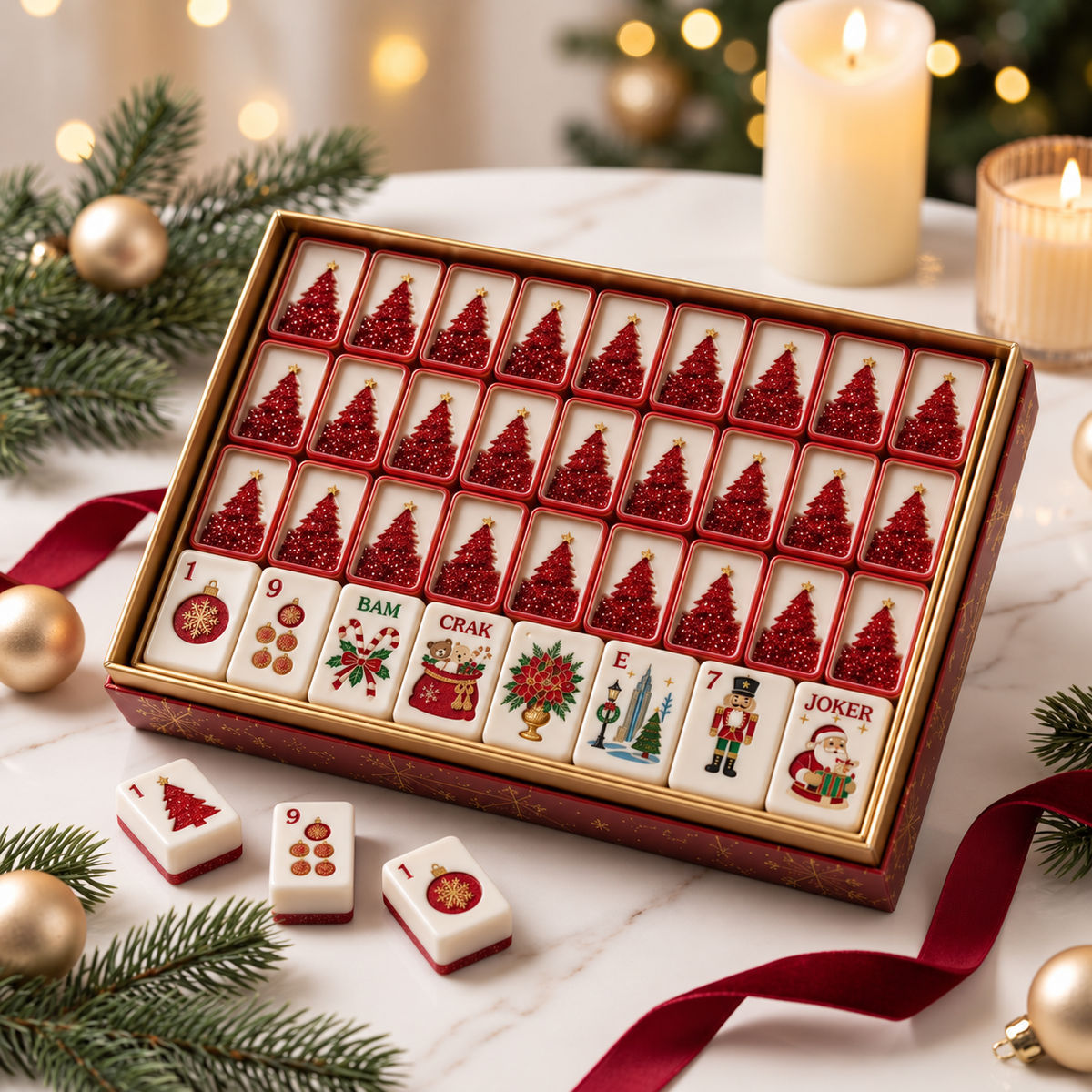
No. Bunco is a pure luck game: four players roll three dice, mark scores on a scorecard based on the roll, and the highest scorecard wins. Mahjong is a skill-and-chance game: four players draw 136 tiles over thirteen rounds, memorize patterns from an annual card, form melds (matched sets and sequences), and meld first to win. Bunco takes 30–45 minutes and has no strategy; mahjong takes 60–90 minutes and hinges on memory, tile reading, and hand planning. Both host four players and feel social, which is where the resemblance ends. If you love social table games, mahjong rewards deeper engagement, and our best-selling acrylic sets include everything you need to host weekly games: tiles, racks, pushers, and a mat.
What is Bunco, and Why Do People Confuse It with Mahjong?
Bunco is a dice-rolling game for four players that rotates partners and tables throughout play. Players roll three dice, trying to match numbers on a scorecard; whoever scores the most points wins the round. Bunco is pure chance—no decisions, no hand management, no memory of the rules. Mahjong, by contrast, is a tile-drawing game where skill and knowledge decide the outcome. Both use tables of four, both make people laugh and chat, and both take about an hour—but if Bunco is a raffle, mahjong is chess.
🀄 Shop best-selling mahjong sets →

How Do the Rules Differ?
Bunco has one scorecard, ten turns, and rolls. Mahjong has 152 tiles, four players, a memorized annual card listing all winning hand patterns, and a tile-passing ritual called the Charleston before the first draw. In Bunco, you roll and mark; in mahjong, you draw, discard, call melds, and read the card to spot your hand. Bunco gives you no choices—the dice decide. Mahjong makes you choose which tile to keep, which to discard, whether to claim a discarded tile, and whether your hand matches a pattern on the card. One is entertainment; one is a mind game. Learn the full rules with our American mahjong guide.
Why Do They Feel the Same?
Both games gather four players around a table. Both involve a draw phase, scoring, and friendly rivalry. Both are easier to teach than bridge or poker. Both take an hour and involve turning tiles or rolling dice. Both have a scorecard and a final winner. And both attract players who want to socialize while playing something structured. If you've sat through Bunco nights, the mahjong table feels familiar at first—until the Charleston starts and someone calls "pung," and you realize you're playing a completely different game.

A Side-by-Side Comparison: Bunco vs. Mahjong
Feature | Bunco | Mahjong |
Equipment | Three dice, scorecard, pencil | 152 tiles, rack, mat, annual card, jokers |
Players | 4 (fixed) | 4 (fixed) |
Game Length | 30–45 minutes | 60–90 minutes |
Rounds | 10 | 13 |
Skill Factor | None; pure luck | High; memory, strategy, tile reading |
Decision Making | Roll dice—no choice | Choose/discard tiles, call melds, read card |
Setup | Pass scorecard | Charleston tile exchange, deal 13 tiles each |
Winning | Highest score | First to meld a valid hand from the card |
Strategy Depth | None | Memorize hand patterns, manage discard safety, track tile count |
Rule Complexity | 1–2 pages | 10–20 pages, annual card changes |
What unites them is social energy; what divides them is that mahjong rewards mastery and Bunco doesn't.
🎁 See our most-loved mahjong sets & accessories →
Should I Learn Mahjong If I Love Bunco?
If you enjoy Bunco's social rhythms but crave a game where your choices matter, mahjong is the natural step up. Bunco is a warm-up; mahjong is the main event. You'll spend the first few games confused by the annual card and joker placement, then you'll start spotting patterns. By game five or six, you'll find yourself planning three draws ahead and calculating tile odds. By game twenty, you'll recognize the 2026 card by instinct. Players who switch from Bunco to mahjong often report that Bunco feels empty once they understand mahjong—not because Bunco is bad, but because mahjong offers a puzzle Bunco never does. The learning curve is real, but our beginner's guide will walk you through setup and your first hand. Start with best-selling sets designed for group play, read the card alongside your first game, and give yourself at least six sessions before forming a judgment.
What to Check Before You Buy a Mahjong Set
Before you invite four friends for your first game, make sure you have:
A complete 160-tile set with eight jokers (includes 152 playing tiles, plus spares); our acrylic sets include everything in one purchase.
A mat or table cover with sections for the wall, the live hand, and the meld area—it transforms a chaotic table into a clear workspace.
Four racks with pushers so tiles stay upright and organized during the game, not scattered across the felt.
The current-year National Mah Jongg League card (the 2026 card if you're playing now); you can download it free from the league website or order a laminated copy.
A quiet table with good light and enough room for four players, four racks, a mat, and a discard wall.
At least 90 minutes for your first game; experienced groups finish in 60 minutes, but learning slows play.
If any of these is missing, the game stalls. A mat saves arguments about where a pung goes. Racks prevent tiles from falling. Four copies of the card (one per player) mean no bottleneck at the card. Browse our mahjong mats and racks to ensure your table is game-ready.
✨ Find your Mahstead set — free US shipping →

FAQ
Can you play Bunco and mahjong with the same rules?
No. They share no rules. Bunco uses dice and a fixed scorecard; mahjong uses tiles and an annual pattern card. Teaching one won't teach the other. Both take four players, but that's where similarity ends.
Is mahjong harder to learn than Bunco?
Yes. Bunco teaches in five minutes; mahjong takes 2–3 games and constant card reference. After six games, most players stop relying on the card. Bunco requires no memory; mahjong rewards pattern recognition.
Can you play mahjong if you've never played Bunco?
Absolutely. Mahjong stands alone and needs no prior game experience. Bunco experience doesn't accelerate mahjong learning because the games are unrelated.
What equipment do I really need for mahjong, and what's optional?
Essential: 152 tiles, eight jokers, current-year card. Highly recommended: a mat, four racks with pushers, and a set bag for storage. Optional: dice (Americans don't use them in mahjong; wind markers suffice). Start with the essentials plus a mat and racks.
If I like Bunco's social feel, will mahjong give me the same vibe?
Yes, with a bonus—strategy talk. Bunco is conversation around luck; mahjong is conversation around decisions. Players debate discards, spot patterns, and build skill together. The table bonds faster because you're learning as a team.
How much does a mahjong set cost compared to setting up Bunco?
Bunco requires only dice and paper; mahjong requires a set, mat, racks, and a card—a bigger upfront investment. See current price on our product pages. The investment pays off if you play weekly; Bunco is cheaper if you play once a year.
Can I host a mahjong night with mixed skill levels?
Yes. Beginners and veterans play the same hand simultaneously, so learning and playing happen together. Bunco also mixes skill levels, but mahjong rewards preparation—reading ahead, understanding joker placement, spotting patterns—so veterans will edge ahead.


View More
View More
View More
