
Ura Dora in Riichi Mahjong Explained
Last updated: Nov 23, 2026
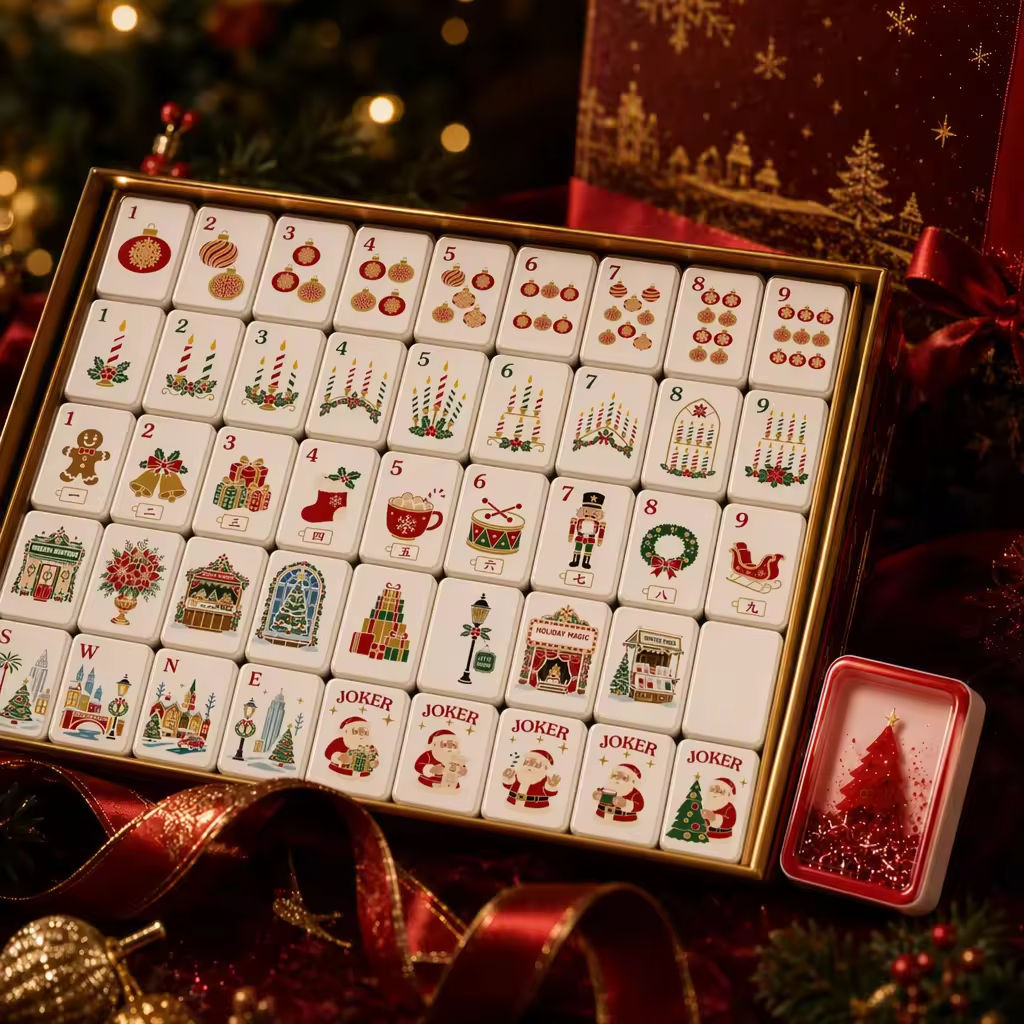
Ura dora (裏ドラ, literally "reverse dora") are bonus tiles in riichi mahjong that remain face-down until someone wins. When a hand is declared ready (riichi), the player declares it by placing a 1,000-point stick on the table; at the moment of winning, the indicator tiles for ura dora are flipped over, and any tiles matching those indicators add to the hand's scoring multiplier. The dora count—both regular dora (omote dora) and ura dora combined—multiplies the hand's base points. Unlike American mahjong, which uses a fixed league card, riichi mahjong rewards strategic declaration and tile-drawing luck. Ura dora only count if the winning hand was declared ready; a win without declaring ready (damaten) gets no ura dora bonus. The ura dora indicator appears under the regular dora indicator tile—a four-tile stack flipped one-by-one during play. Understanding ura dora transforms your scoring strategy and deepens your sense of when to gamble on declaring ready versus playing defensively.
Ura dora separate riichi mahjong from American mahjong in one fundamental way: declaring ready (riichi) opens a door to bonus points that doesn't exist in our two-deck game. When you commit to ready and someone wins—whether you or another player—a second layer of hidden dora indicators gets revealed, multiplying points exponentially. This mechanic creates psychological tension: do you declare ready and signal strength (risking the counter-declaration by others), or do you hide your strength and forfeit the ura dora multiplier? Over weekly games, we've watched newer players miss ura dora bonuses entirely because they didn't understand when they're revealed or how they stack with regular dora. This guide walks you through the draw sequence, common mistakes, and why ura dora matter more than most new players realize.
🀄 Shop best-selling mahjong sets →
What is the dora indicator tile and how does ura dora attach to it?
At the start of riichi mahjong, after the dead wall is set aside, one tile from the wall is flipped face-up next to it—that's the dora indicator (ドラ表示牌, omote dora hyoji hai). Any tile of the next rank becomes a dora. For example, if the dora indicator is 4 Bam, then all 5 Bams in your hand count as +1 dora each. The ura dora indicator lies directly beneath the dora indicator, face-down, and is only revealed when someone wins. If you're winning and you declared riichi, the ura dora indicators flip, and you count them into your scoring. If no one declared riichi, ura dora never appear—they stay hidden and have no value.

When exactly does the ura dora indicator flip over?
The ura dora indicator flips the instant the winning hand is completed and declared. In riichi mahjong, play proceeds by drawing from the wall and discarding. When a player either draws a winning tile or claims a discard from another player (on tsumo or ron), that player announces the win, and immediately—before points are calculated—the ura dora indicator underneath the dora indicator is flipped. If multiple dora indicators are present (which happens when kongs are called during play), each one has a hidden ura dora beneath it, and all of them flip at win time. This is why ura dora only count for hands declared ready: the rule exists because declaring riichi commits you to a fixed discard pattern, preventing you from adapting if other players' declarations signal danger.
How do regular dora and ura dora stack together?
Dora scoring in riichi mahjong is additive and multiplied into base points. Each dora tile in your hand adds 1 to your dora count. If your hand contains 3 regular dora (omote dora) and 2 ura dora, your total dora count is 5—and the scoring formula multiplies your base points accordingly. For example, a 1,300-point hand with 5 dora becomes significantly higher because dora act as a scoring modifier. The key difference from American mahjong: we don't have dora at all; instead, our hands are fixed by the league card, and all point values are pre-calculated. Ura dora exist in riichi because winning hands are theoretically infinite—the game needs a way to reward both the act of declaring ready and the luck of drawing high-value tiles. The more dora in a hand, the more points climb exponentially, which is why even experienced players can be blindsided by a seemingly modest hand that erupts into a mega-hand (mangan, haneman, baiman) once ura dora flip.
Why does ura dora only count for declared ready?
Declaring ready (riichi) locks your hand's discard pattern. Once you place a 1,000-point stick on the table and announce riichi, you cannot change your strategy—you can only draw and discard in strict tile order. This constraint is the cost of entry for ura dora eligibility. A hand won without riichi (damaten) is faster and safer because you can adapt to what opponents discard, but you forfeit the ura dora multiplier entirely if someone else wins or if you win after drawing a tile. The rule enforces a trade-off: transparency and commitment in exchange for scoring upside. In our American mahjong groups, we don't face this choice because our hands are declared before play and scoring is fixed by the card. Riichi mahjong gives you the option to gamble—to signal strength and accept the risk that opponents will defend harder against you.
What happens if multiple kong calls create stacked dora indicators?
Each time a player declares a kong (four identical tiles), a new tile from the wall is flipped to replace the kong tiles removed from the wall, and a new dora indicator is flipped. This means the dora indicator stack can grow during play. Some houses play with a limit (often 4 dora indicators maximum), while others allow stacking to continue. When a win occurs and ura dora flip, all dora indicators—both regular and hidden—are revealed, and ura dora are counted alongside regular dora. A hand with 6+ dora is not uncommon in fast games with many kongs. This is why riichi scoring can feel explosive compared to American mahjong: a single hand can accumulate 8–12 dora if luck aligns, multiplying the point value far beyond a "normal" win. Understanding stacked dora is crucial because it explains why cautious players may fold (pay discard losses) rather than continue playing in a game where another player has declared riichi and multiple kongs are in play.

Common mistakes: when ura dora are not counted
We see these errors repeatedly in new-player games:
Winning without riichi declared. Your hand wins, but you never placed the ready stick—no ura dora. This is the biggest trap because beginners don't realize they've forfeited a multiplier.
Counting ura dora for a win you didn't make. If an opponent wins, you don't count ura dora in your own score—only the winner benefits from ura dora.
Assuming ura dora flip during play, not at win time. Ura dora remain hidden until someone actually wins. If play continues for another hour with no win, those ura dora never appear.
Mixing up ura dora with red fives (aka). Red fives (5 Bam, 5 Crak, 5 Dot painted in red) are worth +1 dora automatically; they're different from hidden ura dora indicators.
Playing with house rules that don't match the rest of your group. Some venues allow ura dora to count for damaten wins (rare); others cap the total dora count at 13. Always ask before sitting down.
🎁 See our most-loved mahjong sets & accessories →
Riichi vs. American mahjong: scoring transparency
Aspect | American Mahjong | Riichi Mahjong |
Hand validity | Pre-printed card; fixed hands only | Infinite combinations; scoring varies by dora |
Bonus tiles | None (no joker multiplier in base scoring) | Dora + ura dora can multiply points 5–15× |
Ready declaration | Automatic upon achieving card pattern | Voluntary; unlocks ura dora but signals opponents |
Scoring predictability | Exact points known before play | Hidden until dora indicators flip at win |
Time-to-win pressure | Moderate (draw sequence is fixed) | High (every draw and kong changes dora count) |
The comparison shows why new riichi players struggle when returning to American mahjong: they're used to dora multipliers making every hand feel dynamic. In American mahjong, once you've counted your winning hand against the card, the score is final—there's no hidden mechanic waiting to surprise you.
How do you calculate points with ura dora factored in?
Riichi mahjong scoring uses a base-point formula: base points = (fu × 2^(dora + melds)) / 2. Ura dora are added to the dora count before the formula runs. So if you have a 30-fu, 4-meld hand with 2 regular dora and 3 ura dora, your total dora count becomes 5, and your base points climb accordingly. The final payout depends on the winner's and payer's seats (dealer vs. non-dealer) and is multiplied by 100 or 200. We won't walk the full math here—most groups use a scoring app on a phone—but the conceptual takeaway is crucial: every ura dora that flips is worth real money at the table. This is why declaring ready is a gamble: you're betting that either you'll win (and rake in the multiplier) or that an opponent will win (and you'll pay more). Many experienced players don't declare ready on marginal hands because the ura dora risk to themselves outweighs the upside.
What to check before you play riichi mahjong with a new group
House rules on ura dora. Some venues cap total dora at 13; others allow unlimited stacking. Ask.
Rules on damaten. Does a non-riichi win count ura dora? (Answer: almost never, but confirm.)
Dead wall size. Standard riichi uses a 14-tile dead wall; some casual groups use 16. This affects dora indicator count.
Red five count. Red fives (aka) automatically count as +1 dora. Make sure the set you're using marks them clearly.
App or manual scoring. If the group uses a scoring app, learn it before sitting down—live calculation of dora is error-prone.
Payment method. With big dora multipliers, point totals can exceed 10,000+. Confirm whether you're playing for chips, cash, or app-tracked IOUs.
✨ Find your Mahstead set — free US shipping →
When you're ready to explore riichi mahjong seriously, you'll want a set that's durable enough for frequent play and tiles large enough to see dora counts at a glance. Mahstead's best-selling mahjong sets are built for long game nights, with bright, readable tiles and acrylic durability that holds up whether you're playing American, riichi, or any variant. If you're hosting weekly games, investing in a high-quality set means you'll spend more time learning dora mechanics and less time replacing broken tiles.

FAQ
Does ura dora count if I win by drawing a tile (tsumo) versus claiming a discard (ron)?
Yes. Ura dora count regardless of win type—tsumo or ron—as long as riichi was declared before the win.
Can ura dora push a hand over the maximum scoring limit?
No. In riichi mahjong, the maximum hand score is mangan (2,000 base), haneman (3,000), baiman (4,000), sanbaiman (6,000), or yakuman (8,000). Dora don't exceed these caps; instead, excess dora are ignored once the limit is reached.
What if no one declares riichi—do ura dora ever flip?
No. Ura dora only flip when someone wins after declaring riichi. If the game ends without a riichi declaration (or if damaten wins and your house doesn't count ura for damaten), ura dora remain hidden forever.
How many ura dora are typically in play?
Usually 1–4, depending on how many kongs are called. A typical riichi hand has 1 ura dora indicator (the one beneath the initial dora); each kong adds another. Most games see 1–2 total.
Is ura dora the same as red fives (aka)?
No. Red fives are physical tiles painted red and automatically count as +1 dora regardless of what the indicator shows. Ura dora are hidden indicator tiles that only count after a riichi win.
Do I need a special set to play riichi mahjong?
You need a 144-tile standard set (American sets use 152) with marked dora indicators, often a spare set of four tiles for the dead wall. Mahstead's best-selling mahjong sets work for American play; riichi requires a dedicated riichi set or a separate purchase—check your group's requirements before buying.


View More
View More
View More
