
Is Mahjong Like Dominoes? Key Differences Explained
Last updated: Nov 23, 2026
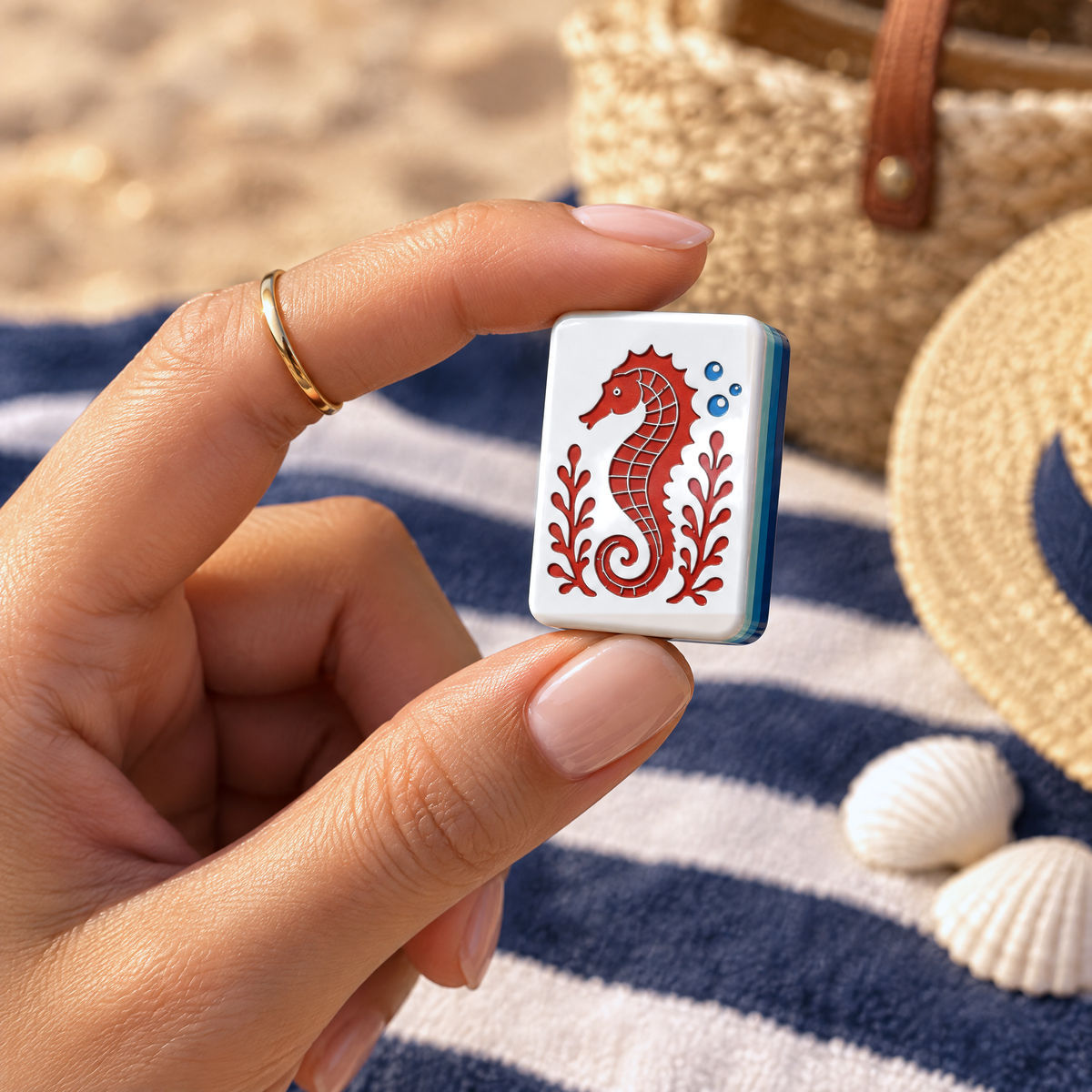
Mahjong and dominoes are both tile-based games played with similar-looking pieces, but they're fundamentally different. Dominoes use 28–55 flat tiles with pip dots; you match and extend lines by number. American mahjong uses 152 tiles divided into four suits (Bams, Craks, Dots), honors (winds and dragons), and flowers, with 8 jokers. You form hands of sets (pungs, kongs, and pairs) and win by matching complete patterns from the current season's official National Mah Jongg League card. Dominoes is primarily spatial and linear; mahjong is combinatorial and requires memory of legal hands. Both involve luck and tile draw, but mahjong demands far more strategy and rule literacy. If you're drawn to one, the other won't feel intuitive—they're separate skill trees. Mahstead's 160-tile sets come with everything needed to start American mahjong today.
Mahjong and dominoes share a visual family—both are rectangular tiles played around a table—but calling them "similar" is like saying poker and chess are the same because they both have strategy. We've sat in living rooms where someone says, "Oh, like dominoes?" and the room goes quiet. Let's clear this up with specifics.
What exactly is the core difference between mahjong and dominoes?
Dominoes are primarily a sequencing and blocking game played on an open line or branching path. You draw tiles showing two numbered ends, match your tiles to the exposed ends, and extend the chain. The game ends when someone plays out or no one can move. Mahjong, by contrast, is a closed-hand game where you're building toward one complete hand that matches a published legal pattern—not extending a public chain. You work in secret (mostly), and the hand is either valid on a specific card or it isn't. The tile geometry is completely different: dominoes end at 12 pips; mahjong goes from 1 to 9 in each suit, plus a second tier of honors (winds, dragons) that dominoes never touch. If dominoes is like building a wall brick by brick, mahjong is like solving a puzzle where the solution has to match an exact photo.

How many tiles does each game use, and why does it matter?
Dominoes typically come in a set of 28 (double-six, the standard for casual play) or up to 55 for larger variants. Each domino tile has two ends. Mahjong always uses exactly 152 tiles for American play—composed of three number suits (Bams, Craks, Dots), winds (North, East, West, South), dragons (Red, Green, White), and flowers—plus 8 jokers never in play at the same time as blanks. The tile count matters because dominoes scales: fewer tiles = shorter, tighter games. Mahjong's 152-tile standard is non-negotiable; every American mahjong game uses exactly this count. The extra tiles (Mahstead's 160-tile sets include spare jokers and blanks) sit off-table and only replace damaged or lost tiles mid-game. This fixed count is why mahjong feels more disciplined: every tile has a place and a probability.
Can you win dominoes and mahjong the same way?
Not remotely. Dominoes wins by playing out your hand (going "out"), or, if the game blocks, by lowest pip count remaining. The winner is often the first person to shed tiles. Mahjong wins only by completing a legal hand—a specific arrangement of sets (three or four identical tiles, or sets of five or six) and a pair—that appears on the current season's National Mah Jongg League card. You cannot invent a hand and win; it must be on the official hand card, which changes every spring. You also cannot count dominoes pips the way you score mahjong: mahjong scoring is based on hand type (like "2024 Closed Hand" or "Like Numbers"), and you can earn 25, 30, 40, 50, 60, 70, or 80 points per win depending on exposure and complexity. Dominoes is about shedding; mahjong is about pattern recognition and rule literacy. Our scoring guide covers the full system—it's worth reading if you're new.
Do both games rely on luck the same way?
Both involve tile draw—yes, luck is real. But dominoes relies heavily on luck and position: if the right tiles aren't in your hand or available in the boneyard (undrawn pile), you're stuck. Strategy exists, but the game can feel decided by the draw. Mahjong also has draw luck, but it layers it with far more decision-making. You can hold, discard, and watch others' plays for clues about legal hands. The Charleston—a deliberate pass of tiles before the game starts—gives you some control over your starting hand. You manage discards tactically to block others or hide your hand's direction. Dominoes is luck + positional reading; mahjong is luck + memory + psychology + pattern-matching. A weak dominoes player might get lucky and win; a weak mahjong player usually doesn't, because the hand card and joker scarcity penalize guessing.

Which game should you learn if you're between the two?
If you like dominoes and are intrigued by mahjong, understand: dominoes teaches you tile flow and blocking; mahjong teaches you nothing you already know from dominoes. Start mahjong fresh and plan to spend 2–3 game sessions before hands feel natural. You'll need the official hand card in front of you at all times—no cheating around it. If you want something closer to dominoes' accessibility, consider Chinese mahjong or Hong Kong style, which have more relaxed hand rules and fewer legal combinations. But American mahjong (the standard in the US) is rigorous and rewarding. We recommend starting with a well-made 160-tile acrylic set that's easy to shuffle, read, and hear click (psychological feedback that feels good). Bad plastic sets make learning harder because tiles feel cheap and break.
Comparison: What You're Actually Playing
Feature | Dominoes | American Mahjong |
Tile Count | 28–55 | 152 (fixed) + 8 jokers |
Tile Faces | Two numbered ends | Four suits + honors |
Win Condition | Shed all tiles or lowest pips if blocked | Complete legal hand from card |
Hand Length | Varies (draw more when stuck) | 14 tiles (13 in hand + 1 drawn) |
Legal Plays | Any tile matching an open end | Only sets from current year's card |
Rule Complexity | 5–10 minutes to learn | 30–60 minutes to get comfortable |
Memory Demand | Moderate (track discards) | High (remember legal hands + joker use) |
Luck vs. Skill | 50–60% luck | 40–50% luck (more skill) |
🀄 Shop best-selling mahjong sets →
What to Check Before You Buy Your First Mahjong Set
If you've decided mahjong is for you (not dominoes), here's how to pick a set that won't frustrate you:
Tile Size: Look for 1.25–1.5 inch tiles. Too small = harder to read and shuffle; too large = won't fit a mat.
Material: Acrylic is durable, quiet, and affordable. Bamboo is heavier and looks elegant but requires care.
Joker Count: All 160-tile sets include 8 jokers; you use exactly 8 in play. Spare jokers (beyond 8) are never used and stay off-table.
Tiles Per Suit: Confirm the set has four copies of each tile (1–9 in Bams, Craks, Dots; one of each wind and dragon). Shorted sets cause arguments mid-game.
Case and Mat: A good case saves tiles from spilling and keeps sets safe in transit. A mat with a sponge backing protects your table and makes shuffling faster. Don't skip these if you're hosting weekly games.
You might also want a set of racks with pushers to hold and organize tiles—beginners often fumble hand management, and racks solve that instantly.
🎁 See our most-loved mahjong sets & accessories →
A Practical Decision Framework: Dominoes or Mahjong?
Use this to decide which game fits your group:
Your Preference | Best Choice | Why |
Fast (20–30 min), social, luck-heavy | Dominoes | Simpler rules, faster turns, easier to teach mid-event. |
Weekly commitment, pattern lovers, memorization OK | American Mahjong | Deeper strategy, official hand card keeps it fresh yearly, higher replay value. |
You already play dominoes and want something new | American Mahjong | Dominoes skills won't transfer; learn fresh. Mahjong offers more complexity. |
Kids (8–12) or very casual players | Dominoes | Lower barrier to entry; mahjong hand card is intimidating for new readers. |
Competitive, structured tournament play | American Mahjong | National Mah Jongg League is the official governing body; dominoes has fewer organized leagues in the US. |
Aesthetics matter; you host fancy events | Either | Dominoes are simpler to display. Mahjong sets, especially engraved with titles or personalized designs, are statement pieces. |
Our recommendation: Try dominoes for 30 minutes at someone's home. If you feel like shedding tiles is enough, stick with dominoes. If you want more—more rules, more memory, more ways to win—grab a Mahstead set and dive into American mahjong. You'll know within three games whether the hand card feels like a puzzle or a prison. We play both, but we live for mahjong because there's always a new legal combination, a new card each spring, and always a reason to call a tile back. Dominoes hits a ceiling; mahjong doesn't.
✨ Find your Mahstead set — free US shipping →

FAQ
Can I play mahjong using dominoes tiles?
No. Dominoes only show pips (dots 1–6 per end); mahjong tiles have characters, suits, and honors (winds, dragons, flowers) that dominoes don't have. You need an actual mahjong set.
Is mahjong harder to learn than dominoes?
Yes. Dominoes takes 5–10 minutes. Mahjong takes 30–60 minutes to grasp the hand card, joker rules, and winning logic. Plan 3 practice games before you feel fluent.
Do I need a special table to play mahjong like I might for dominoes?
No dedicated table is required, but a mahjong mat with a raised sponge edge makes shuffling, drawing, and protecting your table much easier. Many groups use a folding mat on any flat surface.
Can I use a hand card app on my phone instead of printing one?
Yes, but most serious players still print the card or keep a physical copy at the table because scanning it on a phone slows play. Digital cards work best as backup.
Are there different versions of mahjong I should know about before buying a set?
Yes. American, Chinese, Hong Kong, Riichi (Japanese), and Taiwanese mahjong all have different tile sets and rules. American mahjong uses 152 tiles; others vary. Confirm which version your group plays before buying.
What's the real difference between a "good" mahjong set and a cheap one?
Cheap sets have thin plastic that cracks, tiles that don't shuffle evenly, and worn faces. Good sets (like acrylic from Mahstead) have consistent weight, readable characters after years of play, and a satisfying shuffle. You'll feel the difference in week two.


View More
View More
View More
