
Is Mahjong Harder Than Bingo? A Real Comparison
Last updated: Nov 23, 2026
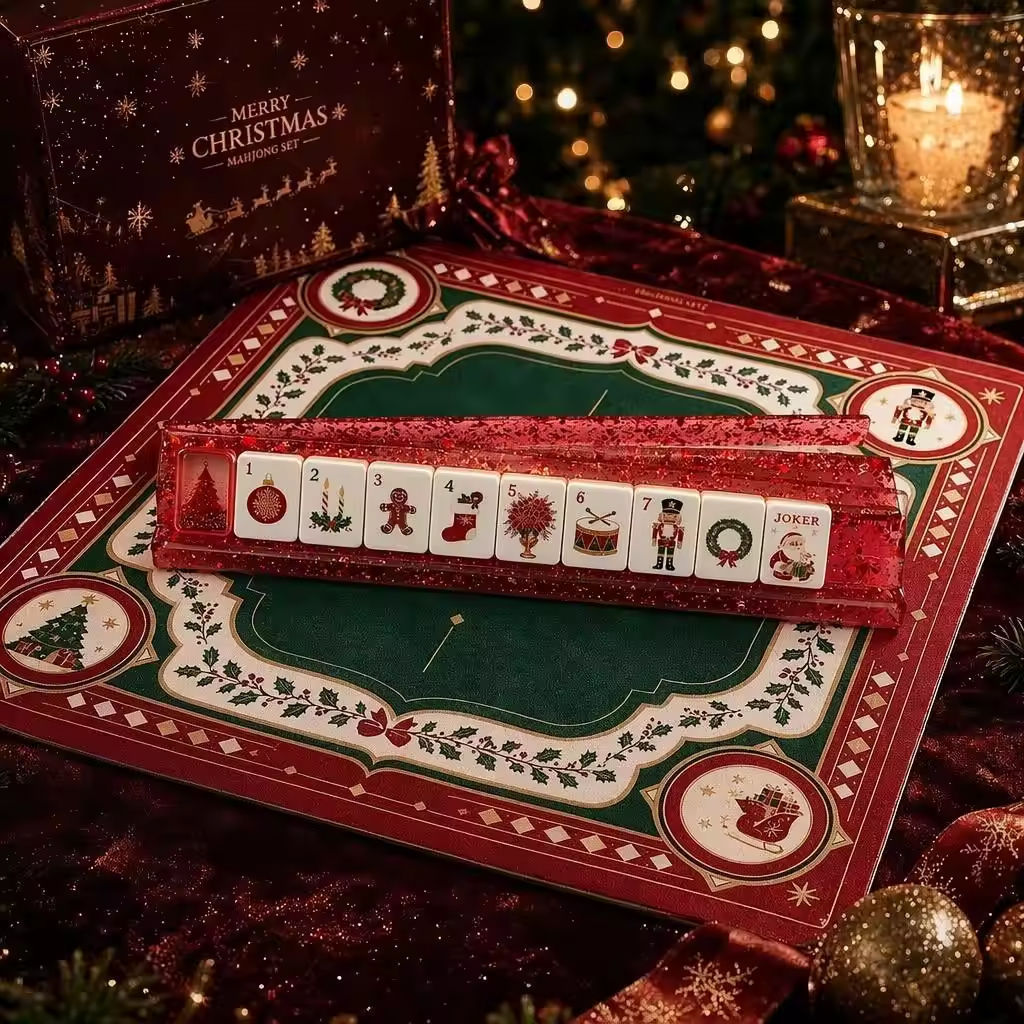
No—mahjong is substantially harder than bingo. Bingo is a game of pure chance: you mark numbers as they're called; you have zero strategic choice. Mahjong, by contrast, requires you to memorize 152 unique tiles, recognize 120+ valid hand patterns from the current year's card, manage a 14-tile hand, decide which tiles to discard, count jokers, track what others have exposed, and execute the Charleston tile-passing ritual before play. American mahjong rounds typically last 45–90 minutes per game; bingo cards take 5–15 minutes per card. Bingo suits players seeking relaxation and social time; mahjong suits those who enjoy puzzle-solving under mild pressure. Neither is "better"—they serve different player temperaments. Learning mahjong from scratch takes 4–8 weeks of weekly play; bingo takes one game. We recommend our best-selling mahjong sets for anyone ready for the challenge.
Mahjong is substantially harder than bingo. Bingo is a game of pure chance: you mark numbers as they're called; you have zero strategic choice. Mahjong, by contrast, requires you to memorize 152 unique tiles, recognize 120+ valid hand patterns from the current year's card, manage a 14-tile hand, decide which tiles to discard, count jokers, track what others have exposed, and execute the Charleston tile-passing ritual before play. American mahjong rounds typically last 45–90 minutes per game; bingo cards take 5–15 minutes per card. Bingo suits players seeking relaxation and social time; mahjong suits those who enjoy puzzle-solving under mild pressure. Learning mahjong from scratch takes 4–8 weeks of weekly play; bingo takes one game.
Why does bingo feel so easy?
Bingo removes all decision-making from the player. You buy a card, listen passively, and mark called numbers—that's it. The house or a volunteer calls balls randomly; you have no influence over outcomes or timing. The entire game is determined before you sit down. No two bingo rounds play differently; no bluffing, no tile memory, no reading opponents. Bingo's simplicity is its appeal: you can socialize, relax, and win without mental strain.

Why is mahjong genuinely harder?
Mahjong demands active, continuous mental engagement. You're managing a hand of 14 tiles simultaneously—tracking which ones you need, which you can safely discard, and which your opponents likely want. The National Mah Jongg League card lists 120+ legal hand patterns that change every spring; you must recognize them in real-time. You also must count jokers carefully—American mahjong allows exactly 8 jokers per game, and you cannot use a joker in a single tile or a pair, which creates constant calculation overhead. Add to that the Charleston, a tile-passing ritual before play begins, where you strategically trade tiles with opponents to improve your starting position. Mid-game, you must decide every discard knowing that exposing a tile reveals your strategy to three opponents who will adjust their own discards accordingly.
How do you actually learn each game?
Bingo: Attend a game, buy a card, listen. You'll understand the full ruleset in one round.
Mahjong: Week 1–2, learn the tile names, suits (Bams, Craks, Dots), winds, dragons, and flowers. Week 2–3, memorize how the current year's card is organized so you can spot valid hands in the pattern sections. Week 3–5, play supervised games where an experienced player guides discards and helps you spot hands. Week 5–8, play at full speed with feedback. Many players still refine strategy after a year of weekly play.
The time gap is not small: bingo mastery = 30 minutes; mahjong mastery = 200–400 hours of play.

What cognitive skills does each test?
Skill | Bingo | Mahjong |
Pattern recognition | Minimal (numbers 1–90) | Intensive (120+ tile patterns) |
Working memory | None (card is given) | High (tracking 14 tiles + rules) |
Opponent modeling | None | Critical (predicting discards) |
Decision-making | None | Constant (35+ discards per game) |
Probability judgment | None | Moderate (odds on winning draws) |
Speed of processing | Slow (caller-paced) | Fast (30-second turns) |
Bingo tests patience and luck; mahjong tests strategy, memory, and social reading.
Should you learn mahjong or stick with bingo?
Choose mahjong if you enjoy:
Puzzles and pattern-spotting
Games that reward preparation (reviewing the card at home)
Playing against human opponents rather than chance
Learning a skill over weeks that deepens with practice
Games where "bad" players can lose to "good" ones
Choose bingo if you prefer:
No homework, no preparation
Equal odds for all players
Games that end in minutes
Minimal table talk about strategy
Winning purely by luck
🀄 Shop best-selling mahjong sets →
What to check before you buy
If you're ready to learn mahjong, you'll need more than a rulebook—you need tiles, a mat, and ideally a group.
Tiles: American mahjong sets contain 152 playing tiles plus spare tiles. We design acrylic American mahjong sets with engraved designs so every tile remains legible after years of play. Acrylic is durable and doesn't absorb humidity like bone or bamboo tiles can in humid climates.
Mat: A mahjong mat organizes the game space, marks each player's position, and shows how to build the wall and draw tiles. It accelerates setup and prevents arguments about whose turn it is. Newer players especially benefit from the visual cues.
Racks:Racks with pushers hold your 14 tiles upright, hidden from opponents, making it easier to see your hand at a glance and slide tiles in and out as you draw and discard. Many casual players play without racks; serious players won't.
Finding a group: Check community centers, libraries, synagogues, and country clubs in your area. Meetup boards and local Facebook groups often advertise weekly games for beginners. Most groups teach for free.
🎁 See our most-loved mahjong sets & accessories →
We've hosted weekly mahjong games for years. We've watched players pick up bingo one evening and play confidently; we've watched new mahjong players struggle with the card for two months before the lightbulb moment hits. Bingo is simpler—it's not debatable. But simplicity is not always more rewarding. If you want a game that scales with your skill and pays back your effort, mahjong will deliver that. If you want to relax without thinking, bingo is the right choice. Neither is wrong; they serve different needs.
✨ Find your Mahstead set — free US shipping →

FAQ
Can a complete beginner learn mahjong in one day?
You can learn tile names and basic hand shapes in one day, but you won't play competently until week 3–4 of weekly play. The National Mah Jongg League card contains too many patterns to memorize quickly. Most groups pair beginners with an experienced player for the first 4–6 games.
Is bingo actually gambling?
Casual bingo played for fun involves no money and is not gambling. Bingo halls may charge entry or card fees, which some jurisdictions regulate. Mahjong can also be played for money, but we always recommend playing for fun or low stakes.
Why does American mahjong use a new card every year?
The National Mah Jongg League issues a new card each spring (around March) to refresh the game and prevent one hand pattern from dominating play. Games must use the current year's card—old cards are not legal. This keeps the meta fresh and forces players to relearn patterns annually.
How many tiles are in an American mahjong set?
A standard American mahjong set contains 152 playing tiles (108 from three suits numbered 1–9, 16 winds, 12 dragons, and 8 flowers) plus 8 jokers. Additional spare tiles may be included but never enter play. Our 160-tile sets include spare tiles for replacements.
Can you play mahjong with two people?
American mahjong is designed for four players. Specialized two-player and three-player rule variants exist, but they differ significantly from the standard four-player game. Check 2 and 3 player mahjong rules for details.
What's the fastest way to master the mahjong card?
Review the card at home for 10 minutes daily before your weekly game. During play, ask an experienced player to explain patterns as they appear. After 4 weeks, spend a game looking only for hand patterns in one card section instead of trying to win. Gradual familiarity beats cramming.


View More
View More
View More
