
Is Mahjong Hard to Learn? What New Players Actually Face
Last updated: Nov 23, 2026
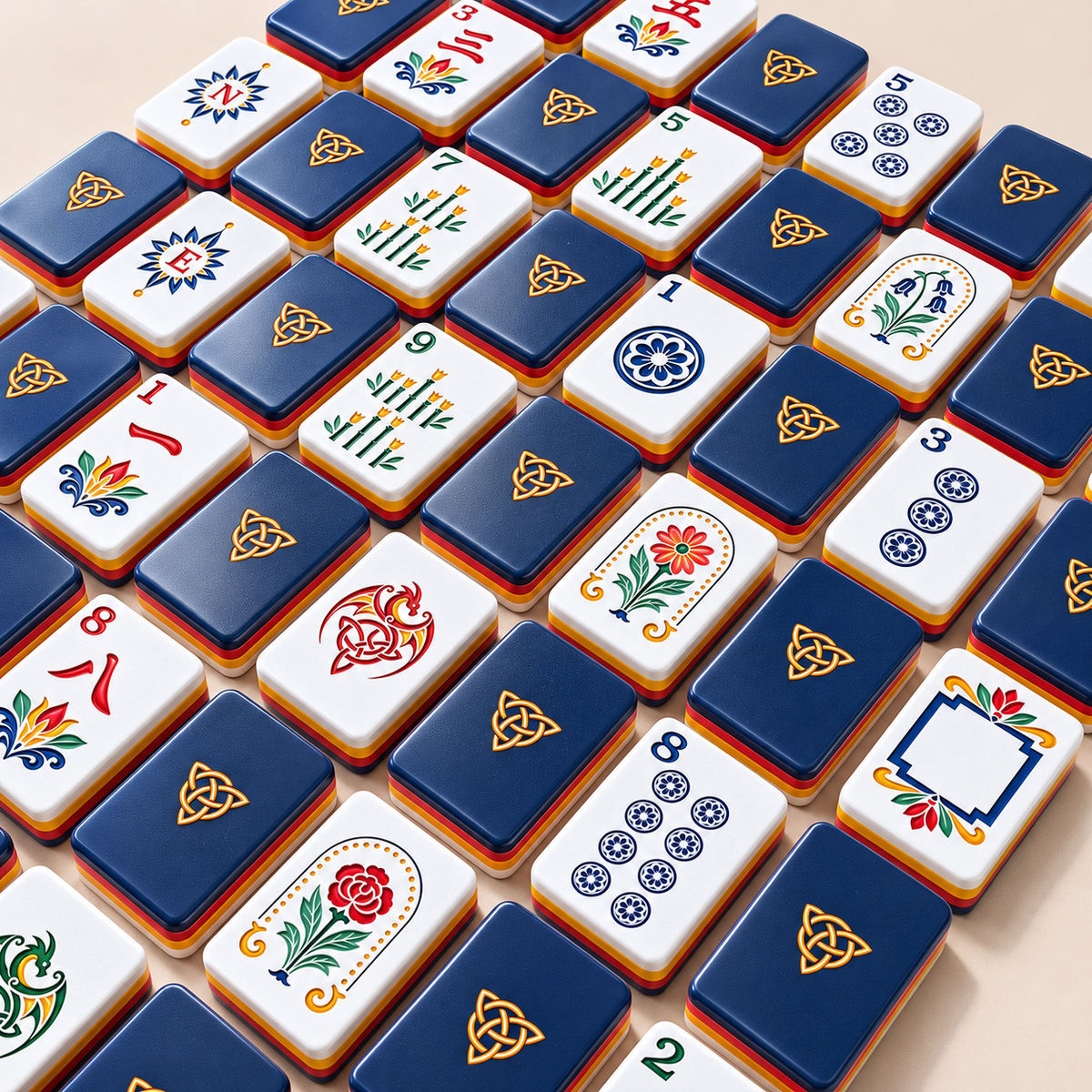
Mahjong is not objectively hard—it's systematic. The rules are finite: form sets (groups of three or four identical tiles, or sequences if allowed), build melds, and match the current year's hand card. American mahjong has no sequences, only groups and combinations. Most learners master tile names, hand-reading, and basic strategy in one full game session. The real barrier isn't rules; it's pattern recognition and memory, which improve with repetition. If you can read a standard chart and count to nine, you can play. The Charleston (the tile-passing setup before play) and joker rules need practice, not genius. Expect to feel clumsy in game one, confident by game five. The misconception that it's hard comes from the visual complexity—so many tiles, so many symbols—but once you learn the three suits, winds, and dragons, the rest clicks fast.
Most people who say mahjong is hard have never actually played it. The barrier isn't intelligence—it's unfamiliarity. You're not learning a language; you're learning a pattern system and three basic tile categories. Within a few hours of active play, your brain maps those patterns automatically. The real question isn't "Is it hard?" but "Will I stick with it long enough to enjoy it?"
What makes mahjong seem harder than it is?
Three things create the illusion of complexity: the visual density of tiles, the unfamiliar vocabulary, and the hand card's grid layout. Beginners see 152 tiles in four suits (Bams, Craks, Dots, winds, dragons, flowers) and assume they need to memorize each one individually. In reality, you only recognize three numeric suit patterns (1–9 repeated four times). The symbols are visual shortcuts; your eyes learn them faster than you think. The hand card looks like a spreadsheet, but you're just matching your tiles to one row per round. Our guide to reading the mahjong card breaks down the grid logic—once you see it as a menu instead of a puzzle, it stops feeling like work.

How long until you're actually playable?
You need three hours of instruction and play to follow the game without constant questions. After one full game (roughly two hours), you'll know tile names and basic melds. After three to five games, you'll anticipate draws and plan strategy. Within two weeks of weekly play, you'll recognize hand patterns without squinting at the card. Speed and memory come later—they're refinements, not prerequisites. New players often worry they'll slow the table down; they do, slightly, for one session. By game two, that stress vanishes. The Charleston and joker handling feel awkward at first; both are simple mechanical rules that become automatic after two rounds.
The beginner mistake that makes learning actually hard
Learners typically try to memorize the entire hand card before playing. This is inefficient and demoralizing. Instead, start by playing a few basic hands: any pung (three identical tiles), simple number runs if allowed in your variant, and obvious flower or wind combinations. Play those same hands across three games. You'll internalize patterns faster by repetition than by cramming. Many groups make the beginner's job harder by not explaining the Charleston clearly or by shuffling tiles in a confusing way. If your group isn't walking you through tile distribution step-by-step, ask—that's legitimate. A clear, printed setup sheet or mat makes the learning curve far gentler. Our best-selling mahjong sets include clear tile markings that speed up recognition, and pairing them with a proper layout mat removes one more friction point.
🀄 Shop best-selling mahjong sets →
Why variant rules make a difference
American mahjong plays very differently from Chinese, Hong Kong, or Riichi variants. American rules are actually more beginner-friendly: no sequences that you can call mid-game, only pungs and kongs (groups of identical tiles), plus jokers that act as wildcards. This simplicity is intentional—the National Mah Jongg League standardized American play precisely to make it teachable. Chinese classical mahjong allows sequences (chows) and has more hand types, which adds complexity; Hong Kong rules are even stricter. If you're learning in the U.S. and playing American mahjong with the current year's hand card, you have the easiest entry point. If you're learning a different variant, the learning curve is steeper, especially if your group doesn't have a clear rulebook or card. Before joining a group, confirm which variant they play; a good group will say "American" or show you the hand card immediately.
The skill arc: what actually improves over time
Month 1: Tile recognition, hand-matching, understanding the Charleston. Month 2–3: Strategic tile discarding, reading opponents' racks, spotting winning opportunities early. Month 4–6: Hand probability (which hands are likelier to complete), efficient rack organization, scorekeeping confidence. Year 2+: Bluffing, position play, pattern prediction, and speed.
Most players plateau at "competent by month 2 or 3," which is the threshold where the game becomes genuinely fun. You don't need more than that to enjoy a weekly game. Competitive players spend years on the subtleties, but casual players reach satisfaction far faster. The jump from "confused beginner" to "solid regular" happens in the same time it takes to learn a casual video game or a new software tool.
Skill Level | Timeline | What You Can Do | What Still Feels Hard |
Rank beginner | First game | Name tiles, match simple hands | Reading the card, remembering Charleston steps |
Novice (games 2–5) | Week 1 | Follow the game, make basic plays | Speed, spotting your own winning patterns |
Intermediate (weekly for 1 month) | Weeks 2–4 | Plan a few moves ahead, read the card confidently | Predicting opponent draws, optimal discards |
Solid player (weekly for 3+ months) | Months 2–3 | Win hands consistently, help teach others | Tournament-level strategy, advanced variants |

What new players actually struggle with (honest problems)
The Charleston. Passing tiles left, across, and right in the correct rhythm feels chaos at first. Solution: your group should do a full dry run before game one, no actual tiles involved. Then play one Charleston slowly with real tiles, narrating each step. By the third game, it's muscle memory.
The hand card grid. Finding your current hand's row feels slow when you're scanning a dense grid. Solution: ask your group for a card with larger print or consider a laminated, annotated version. Many serious groups buy cards designed for readability; this isn't cheating—it's common sense.
Joker rules. Jokers can sub for any tile in a meld you display, but not in a single tile or a pair, and they follow specific rules depending on context. Confusion here is normal. Solution: write the rule on a sticky note and keep it visible for the first five games.
Tile memory. Remembering what's been discarded sounds useful but isn't essential in the first month. Don't force this skill; it develops naturally as you play. Rookies who try to memorize every discard instead of focusing on their own hand slow their own learning.
The social speed. Mahjong tables talk fast, pass tiles quickly, and joke constantly. New players feel rushed. Real talk: this slows down once you're part of the group. Find a teaching table, not a competitive table, for your first three games.
Choosing the right entry point
Best option: Weekly game with a stable, patient group (community centers, synagogues, libraries, or country clubs often host beginner sessions; check local meetup boards). A live table with people who've taught others before is unbeatable.
Good option: Private group of friends, all learning together. You learn at the same pace and can laugh at shared confusion.
Slower option: Videos and rules sites alone. You'll absorb the theory, but without playing, it won't stick.
Ask any group before you show up: "Are you teaching beginners right now?" If they say yes, you're in. If they say "maybe," ask to observe one game first. A group that's impatient with questions isn't the bottleneck—you just found the wrong group.
🎁 See our most-loved mahjong sets & accessories →
What to check before you buy
If you're setting up a weekly game and want to buy a new set, prioritize these:
Tile clarity. Can you read the suit symbols (bamboo, circle, character, winds, dragons) without squinting? Engraved or well-printed tiles matter more than flashy colors.
Rack quality. Racks with pushers make the Charleston smoother and keep your hand organized. A wobbly rack forces you to slow down and steady tiles manually.
Mat or table cover. A proper mat defines the play space and makes tile movement predictable. A bare table adds friction—tiles stick, slide unpredictably, and cause accidental calls.
Spare tiles and jokers. A 160-tile set includes spare tiles beyond the standard 152-tile deck, so you're never short if one cracks or a joker wears out.
For a group of four people playing weekly, start with one quality set and a mat. As the group grows, add racks (one per player) and a bag for transport. You don't need individual sets or luxury accessories to learn and enjoy mahjong—one shared set and clear rules are enough.
The honest truth about difficulty
Mahjong is genuinely easier than learning chess openings, remembering Rummikub strategy variations, or mastering a complex card game. Your biggest challenge isn't the rules; it's finding a consistent group and giving yourself permission to feel confused for one session. The barrier to enjoyment is social and logistical, not intellectual. People who say mahjong is hard usually mean "nobody showed me properly" or "I tried to learn alone and quit." With a patient teacher or a welcoming group, most people go from zero to playable in a single afternoon. The satisfaction—remembering a pattern, winning a hand, predicting the next draw—arrives fast and keeps you coming back.
✨ Find your Mahstead set — free US shipping →

FAQ
How long does it take to feel comfortable playing?
One full 2-hour game teaches you the flow; three games get you to "solid beginner." By week two of weekly play, you'll stop needing rules clarifications mid-hand.
Do I have to memorize all the tiles?
No. You learn to recognize three suit patterns (Bams, Craks, Dots) numbered 1–9, plus winds, dragons, and flowers. Visual repetition handles recognition; memorization isn't required.
Is American mahjong easier than other variants?
Yes. American rules exclude sequences and have simpler hand combinations, making it the most beginner-friendly variant. Chinese and Riichi variants add complexity.
What's the biggest mistake beginners make?
Trying to memorize the hand card before playing. Instead, play five simple hands across your first few games, then expand. Repetition beats cramming.
Can I learn alone from videos?
You can learn the rules, but you need live play to retain them. Watch a video once, then play with people. Theory without practice fades.
Why does the Charleston feel so confusing?
It's a rhythm and spatial task you've never done before. A dry run (tiles removed) followed by one slow round with narration makes it automatic by game three.
Do I need my own mahjong set to learn?
No. Borrow or share a set for your first month. Once you're hooked and hosting regular games, a personal set with a mat and racks makes hosting easier and inviting.


View More
View More
View More
