
Rolling the Dice in Mahjong: Examples, Rules & When to Use Them
Last updated: Nov 23, 2026
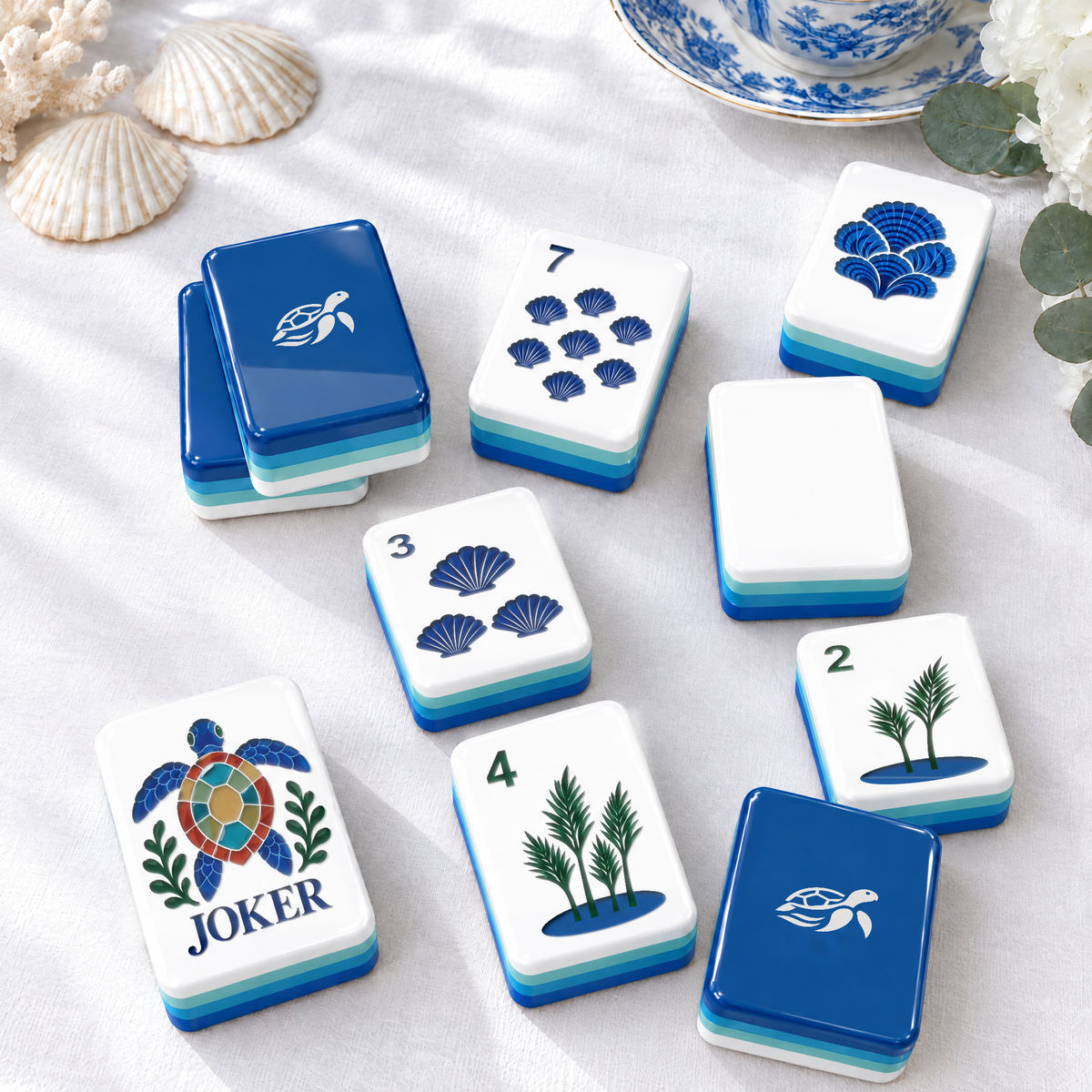
In American mahjong, two standard six-sided dice determine three things: initial seating, who deals first, and which wall position to break. Roll both dice before the game begins, add them, then count that sum around the table clockwise from the East position to assign seats. Roll again to set the player within the East seat who draws first. A third roll (or calculation from the second) identifies where to break the wall. Each roll is a single action by one designated player or by consensus; you use identical standard dice throughout. Dice rolls prevent bias and reset with each hand.
Why do we roll dice before any mahjong hand starts?
Dice rolls establish fair play order and wall position without argument. Without them, players would dispute who sits where, who deals, and where to discard from—turning the Charleston into chaos. By rolling once at the start of a session to set permanent seating, and again at the start of each hand to rotate the East player, you remove personal preference and speed up the game. The dice roll is the neutral rule engine that keeps every player equal.

How do you roll dice to determine the East player and seating?
Step 1: One player (usually by consensus, or whoever volunteered) rolls both dice and adds the total. Example: rolls show 3 and 5 = sum of 8.
Step 2: Count 8 seats clockwise starting from East. If East is your current dealer, count 1–8 around the table: East (1), South (2), West (3), North (4), East (5), South (6), West (7), North (8 = new East).
Step 3: That player becomes East for this hand and holds the dealer tiles (often a small marker). Roll again to identify which of the four East players sitting around that player draws first, or use the same roll's second die for speed.
Example: Five friends gather. You designate North as a temporary reference point. First roll: 2 + 4 = 6. Count clockwise: North (1), East (2), South (3), West (4), North (5), East (6) = East is the new dealer. If you rolled a 5 and a 4 on that same roll, use the second die (4) to count 4 positions clockwise from East: that player draws first in the wall-breaking sequence. This resets every hand, so no one always deals and no seating becomes stale.
🀄 Shop best-selling mahjong sets →
What does the third dice roll do: determining the wall break?
The wall break roll decides which of the 144-tile wall (four stacks of 36) to open. After walls are built and the East player (now confirmed) draws two tiles, someone rolls the dice. Add both numbers, multiply by two (because each wall position holds two stacks side by side), and count that position from East's right wall, moving counterclockwise. The count lands on a wall section; that's where the discard pile begins. Example: roll 3 + 2 = 5 × 2 = 10. Count 10 wall positions from East's right, counterclockwise: you land on West's wall. From that point, tiles are drawn and discarded in order. This adds randomness to the game and prevents memorization of standard wall breaks.
When do you roll dice again, and what happens if you make a mistake?
You roll dice fresh at the start of each new hand to rotate the East position. If East won the previous hand, they deal again and you still roll to see who at that table draws first. If you realize mid-roll that one die landed on the edge or off the table, roll both again—no one has drawn yet, so the error costs no time. If you've already started drawing and discover the wall break was miscounted, the house rule typically is: stop, recount, adjust the draw position, and continue. No penalty; the roll was done in good faith. Some groups allow a re-roll if both players agree the roll was unclear. Record the outcome (who dealt, where the wall broke) in a small notebook so you can verify the next hand's seating without re-rolling each time you play the same four players weekly.
🎁 See our most-loved mahjong sets & accessories →
What's the difference between a formal dice roll and casual play?
In formal American Mahjong League tournaments, dice rolls are supervised by a scorekeeper and recorded. In home games, one trusted player rolls and announces the number aloud so all can verify. No one re-rolls unless both dice are visibly unclear. Casual play is faster: you might skip the wall-break roll and use the "standard" position (East player's right wall, second pair), then roll only to rotate East. This saves 20 seconds per hand. Formal play takes slightly longer but ensures neutral seating for strangers or prize games. Either way, the math is the same; the difference is rigor and documentation. For weekly games among friends, a single roll per hand—to rotate East only—is the practical middle ground.

Common mistakes when rolling dice in mahjong
Mistake | What happens | How to fix it |
Rolling before walls are built | You count wrong; seats shift mid-setup | Always build walls first, then roll. Make it a habit. |
Forgetting to roll for wall break | Wall break is arbitrary; game feels sloppy | Assign one player to call "wall break roll" after East confirms their hand. |
Rolling one die instead of two | Sum is always 1–6; East position predictable | Use two identical dice every time. Store them together. |
Counting the sum wrong | You seat the wrong player as East | Have a second player verify the count before proceeding. |
Rolling off the table, no one sees | Dispute over what the result was | Designate a felt mat or box as the official roll zone. Re-roll if outcome is unclear. |
✨ Find your Mahstead set — free US shipping →
Real-world example: rolling for a four-player game
Four friends sit: Alice (North), Bob (East), Carol (South), Dave (West). Bob rolls 4 and 3. Sum = 7. Count clockwise from East: East (1), South (2), West (3), North (4), East (5), South (6), West (7) = West is new East. Dave is the dealer this hand. Dave and the other three build their walls and place them around the table. Bob rolls again: 2 and 5 = 7. Multiply by 2 = 14. Count 14 wall positions from Dave's right, counterclockwise: East (2 positions), North (2), West (2), South (2), East again (2), North (2), West (2) = 14th lands on West's wall, second pair. Carol (West player) opens there; Bob draws first, then Alice, then Carol. Dave deals next hand only if he won this hand; otherwise, roll again and rotate East. The whole sequence takes under one minute once you've done it twice.
What to check before you buy dice for your mahjong set
Size and weight: Standard six-sided dice are ½-inch (12mm) cubes. Avoid tiny dice that roll unpredictably on a mat or oversized dice that clutter the wall area.
Clarity of numbers: Dots on the dice must be easy to read in indoor light. Avoid glossy finishes that reflect glare.
Matching set: Use two identical dice so the sum feels fair. Do not mix a white die with a red one; it looks chaotic and people second-guess the outcome.
Storage: Keep dice in a small cloth pouch inside your mahjong bag or case so they don't roll away during transport.
Our best-selling mahjong collection includes sets with matched dice designed for reliable, smooth rolling. Standard acrylic dice ship with every full set; if yours are lost or worn, replacements are easy to find and store in your existing bag.
Step-by-step checklist for rolling dice correctly
Build all four walls (or three in casual three-player games) and position them.
Designate one player to roll (rotate this job each session if you like).
Both dice land in one roll; add the total.
Count clockwise from East that many seats; new East is confirmed.
Roll again for East-within-East draw order (or use the second die from the first roll).
Count wall positions from East's right, counterclockwise, multiplying by two if house rules require a wall-break roll (optional in casual play).
Announce the result aloud so all four players confirm.
Begin the hand: East draws first, followed by South, West, North in turn.
Record the outcome in a notebook if playing the same group weekly.
Roll fresh for the next hand after determining who won and whether East repeats.
🎁 See our most-loved mahjong sets & accessories →

FAQ
Can I use app-based dice or online random number generators instead of physical dice?
Yes, if all players agree beforehand. Physical dice feel more social and avoid phone distractions. For weekly home games, we recommend the ritual of rolling real dice on the mat; it marks the official start and builds camaraderie.
What if the dice roll produces a sum that's equal to the number of players?
Roll the sum as normal. Example: four players, sum = 4. Count 1, 2, 3, 4; you land on West (if East = 1, South = 2, West = 3, North = 4). Sums that match player count are common and fair—no re-roll needed.
Do I need to roll dice for each hand, or just the first hand of the night?
Roll for each hand to rotate the East player. If East won the previous hand, they deal again, but you still roll to confirm no one else becomes East and to pick the wall-break spot. This keeps the game moving and fair across multiple hands.
If I'm playing an online variant (like Riichi or Hong Kong mahjong), do I roll physical dice?
Online games use digital randomizers instead. In-person Hong Kong and Riichi games use the same dice mechanic as American mahjong to set seating and wall breaks. The counting method differs slightly, but the principle—fair, neutral randomization—is universal.
Where should I store my dice so they don't get lost between game nights?
Keep them in a dedicated compartment of your mahjong travel bag or case, or in a small cloth pouch zipped to a keychain. Never leave dice loose in a drawer where they'll roll under furniture or get mistaken for game tokens.


View More
View More
View More
