
Mahjong Tile Numbers and Arabic Numerals: What You Need to Know
Last updated: Nov 23, 2026
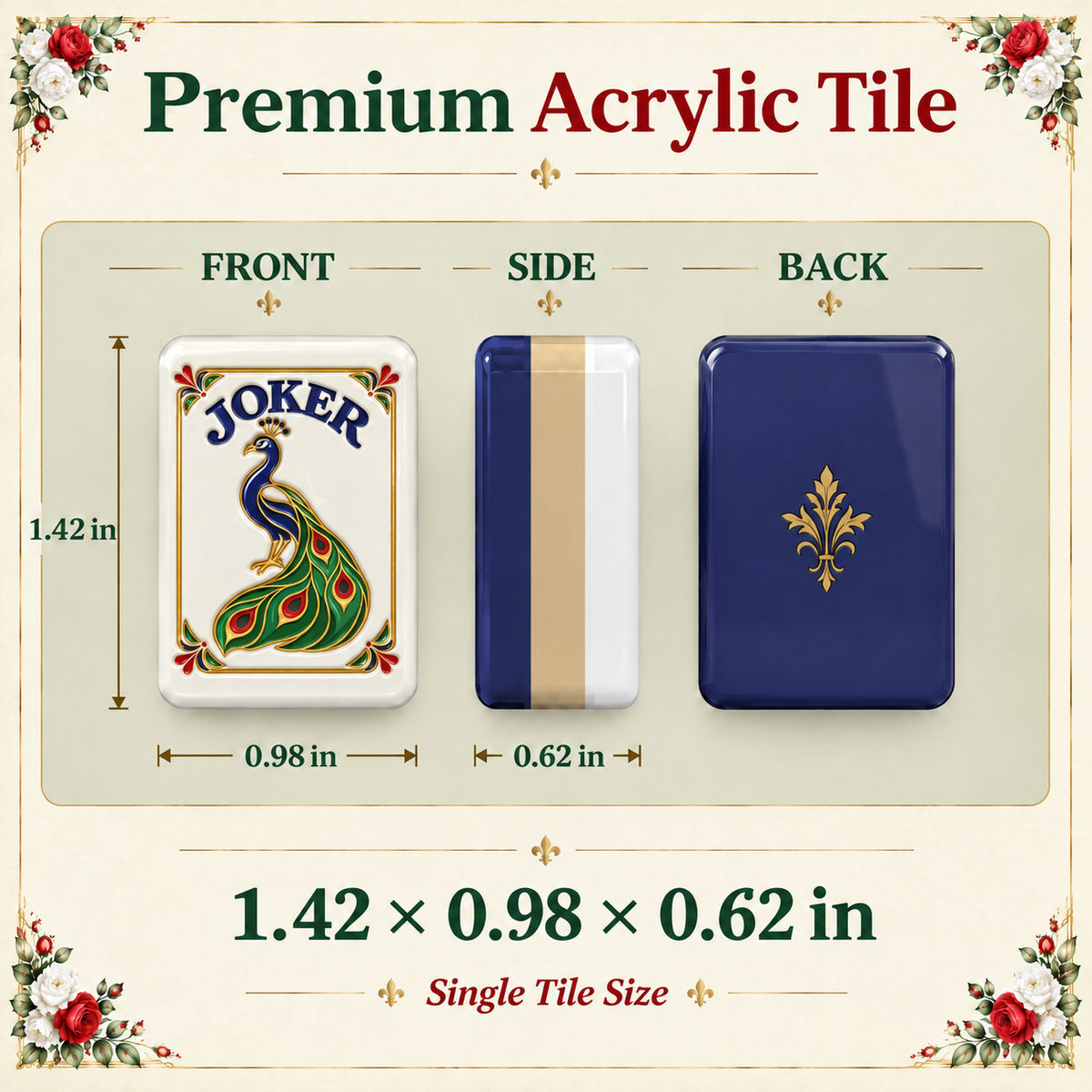
American mahjong tiles show numbers 1–9 using Chinese characters called "numerals" rather than Arabic digits. The three suits—Bams (circles), Craks (characters), and Dots (bamboo)—each display their numbers as traditional characters on the tile face. A 1 Bam typically features a bird illustration alongside the character. While some specialty sets incorporate Arabic numerals for modern design or clarity, the National Mah Jongg League standard uses character numerals exclusively. Newer players often buy sets with both characters and Arabic numerals printed for faster recognition during play. Mahstead offers engraved American mahjong sets in traditional and contemporary designs to match your learning style and table aesthetic.
Why don't mahjong tiles use Arabic numerals like 1–9?
Mahjong originated in 19th-century China, where numerals were written as characters rather than digits. The game preserved that tradition; tiles still display numbers 1–9 using the same classical notation. The League card and official play expect players to recognize characters instantly. Arabic numerals would conflict with the cultural authenticity of the game and break compatibility with how older players learned. Many find character numerals become second nature after a few games.

What do the character numerals look like on each suit?
Each suit displays its numbers uniquely. Bams (circles) show a character paired with one to nine circles; Craks (characters) display their character numeral with decorative elements; Dots (bamboo) pair the numeral with bamboo sticks. Winds and dragons use their own symbols: North, East, South, West appear as characters; Red, Green, and White dragons each have a distinct mark. Flowers are numbered 1–4 and seasons 1–4, also in character form. Learning these patterns takes 15–30 minutes of casual play before they become automatic.
Do modern mahjong sets print Arabic numerals alongside characters?
Yes, and this choice matters for your table. Many contemporary sets include both character numerals and Arabic 1–9 printed small on the same tile, helping new players transition faster. Some players find dual numerals distracting; others swear by them during their first season. Sets designed for teaching or casual family play often lean toward larger Arabic numerals. Official League tournaments still use character-only tiles, so competitive players eventually migrate back. Choose based on your group's experience level: pure character numerals for experienced tables, dual numerals for mixed groups or beginners.
How do you tell Craks from Bams if you're colorblind or have low vision?
Character numerals differ slightly in thickness and shape between suits—Craks' characters often sit upright, Bams' pair with circles, and Dots' align with bamboo symbols. However, color remains the primary identifier at most tables. Red Craks, green Bams, and white Dots also use hue to distinguish themselves. If your group includes players with low vision, consider sets with larger tiles or those offering high-contrast printing. Some players use tactile markers or keep a reference tile nearby. The best-selling mahjong sets include options with bold lettering that improves readability for all players.
🀄 Shop best-selling mahjong sets →

Should you choose character-only or dual-numeral tiles based on your learning stage?
Stage | Tile Style | Why It Works | What to Avoid |
First 3 games | Dual numerals (characters + Arabic) | Faster recognition, less mental translation | Character-only if you're still learning numbers |
Regular player (months 1–6) | Mostly characters, Arabic as backup | Builds automaticity, keeps official compatibility | Relying too heavily on Arabic numerals |
Experienced/tournament | Character numerals only | Matches League play, full fluency | Mixed numerals slow down reading speed |
Teaching or casual family play | Largest dual numerals available | Welcomes all ages, reduces frustration | Tiny print on any variant |
Choose based on who's at your table: a group of experienced players benefits from classic character tiles, while mixed skill levels or families new to mahjong do better with engraved American mahjong sets that offer dual numerals in readable sizes.
What about non-English mahjong variants—do they use numerals differently?
Chinese mahjong traditionally uses character numerals and often adds simplified character labels for suit names. Hong Kong mahjong follows the same numeral convention. Riichi (Japanese) mahjong typically uses character numerals as well, though some modern sets add Arabic numerals for international players. Taiwanese mahjong similarly relies on traditional characters. If you play multiple variants, character-numeral sets remain compatible across all of them—Arabic numerals are a modern English-language accommodation, not a historical standard. Most competitive players across variants stick with pure character numerals to avoid confusion across regions.
🎁 See our most-loved mahjong sets & accessories →
What should you check before buying a mahjong set based on numeral style?
Tile size & print clarity: Hold a sample or request close-up photos. Small character numerals strain eyes during long games.
Suit color contrast: Confirm Craks, Bams, and Dots are visually distinct even in indoor lighting.
Dual numeral placement: If choosing Arabic variants, check the position—side prints work better than overlays that obscure characters.
Group preference: Ask your regular players which style they've played before; switching mid-season causes confusion.
Official League compliance: If planning to join tournaments, verify the set uses League-standard character numerals exclusively.
Material & durability: Acrylic tiles hold print better than bamboo over years of play; confirm numerals won't fade.
✨ Find your Mahstead set — free US shipping →
A well-chosen set keeps numerals sharp and readable for hundreds of games. Mahstead's engraved American mahjong sets offer options ranging from traditional character numerals to contemporary dual-print designs, all with free US shipping.

FAQ
Can you play American mahjong with Arabic numerals only, no characters?
Technically yes, but not in League tournaments or with experienced players who expect character numerals. Home games can use any numeral system your group agrees on; mixing them at the same table causes errors.
How quickly do beginners learn to read character numerals?
Most players recognize all 27 numerals (1–9 across three suits) within 30 minutes to two games, based on table observation. Automaticity—reading without translation—develops over weeks of regular play.
Are character-numeral tiles more expensive than dual-numeral sets?
Price varies by material and design rather than numeral type. Acrylic tiles with either style typically cost the same; bamboo sets may vary. See current price on the product page.
What if one player is fluent in Chinese characters and others aren't—does that create an unfair advantage?
No. Character recognition in mahjong is purely visual; the numerals are simple enough that fluency in written Chinese provides no game advantage, based on play at mixed-experience tables.
Should you buy a spare set in a different numeral style if your group wants to try both?
Yes, if storage and budget allow. Keeping a dual-numeral teaching set and a character-only play set lets newcomers transition smoothly. Some groups rotate styles seasonally.
Do online mahjong games use character or Arabic numerals?
Most digital versions default to Arabic numerals or accept both, since screens can easily swap notation. Home play with physical tiles demands your agreed-upon style, usually characters for consistency with official tiles.


View More
View More
View More
