
Pinfu in Riichi Mahjong Explained: Rules & Scoring
Last updated: Nov 23, 2026
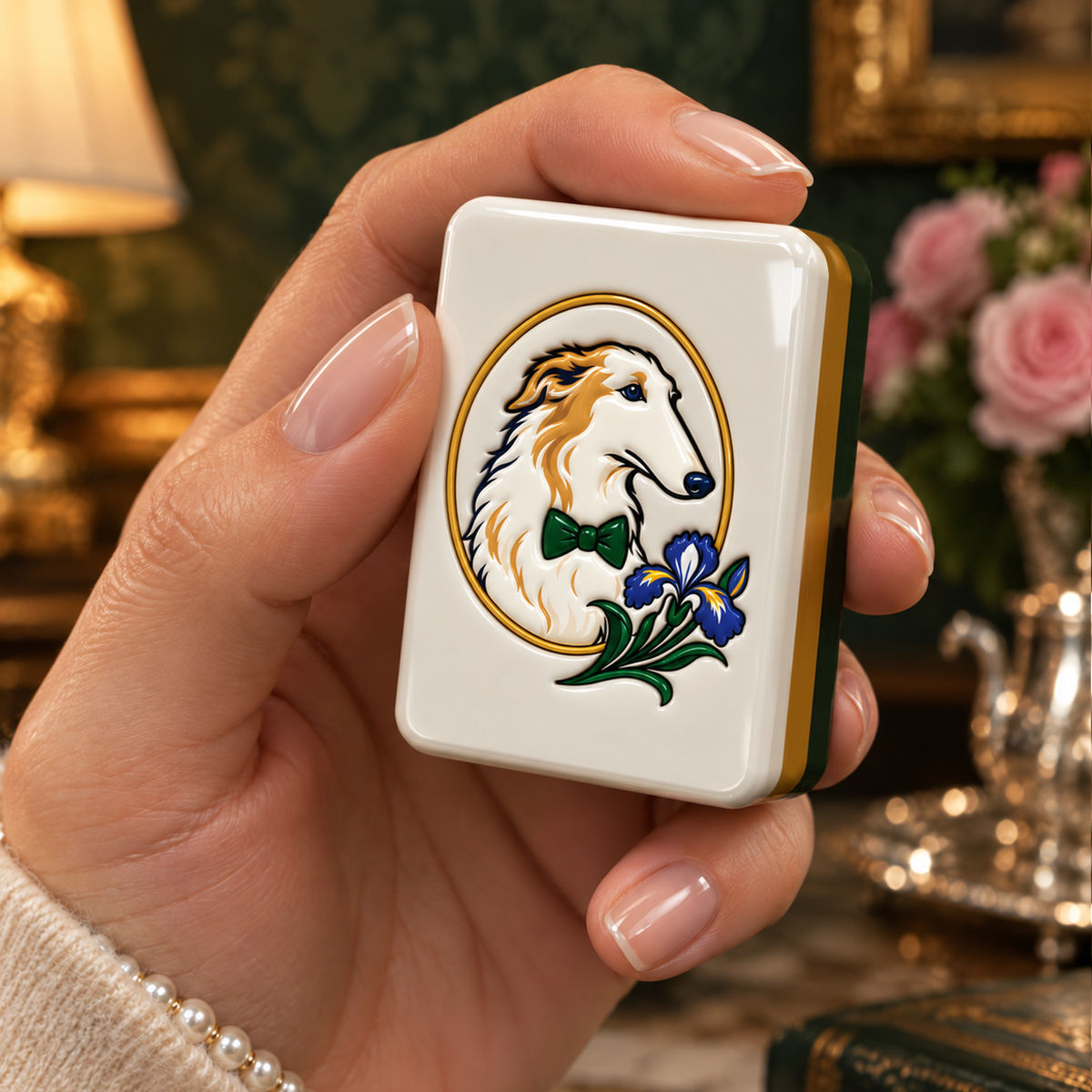
Pinfu (平和, "peaceful") in riichi mahjong is a closed hand of four melds composed entirely of Bam, Crak, and Dot tiles numbered 2–8 (simples), plus a pair. It explicitly excludes terminal tiles (1, 9) and honor tiles (winds, dragons). Unlike American mahjong, where you build hands from a yearly card, riichi mahjong scores fixed hand patterns: pinfu always scores a minimum of 1,000 base points (mangan threshold at 2,000). The hand must be closed—you cannot call tiles from other players—or it becomes a non-scoring open hand. Beginners often mistake pinfu for richer hands; the trade-off is that pinfu is fast to form and virtually guarantees payment. It's the student hand: reliable, repeatable, and a core part of learning riichi's point economy. Understanding pinfu builds the foundation for recognizing when a hand qualifies for yaku (scoring patterns) and when it doesn't.
What exactly is pinfu, and why is it called "peaceful"?
Pinfu means a hand with no complications: no honors, no terminals, no mixed colors. The four melds must each be a pung (three identical simples), a kong (four identical simples), or a sequence (three consecutive simples like 3–4–5 of one suit). The pair can be any simples tile. Because the hand avoids honors and terminals—tiles that often trigger special bonuses or conflicts—it's "peaceful." You're playing safe: your hand is always complete if you have the shape, and scoring is transparent and predictable. In contrast, hands with honors or terminals often lock you into longer waits or clash with other players' discards. Pinfu teaches beginners that riichi mahjong rewards simplicity and speed over complexity.

How does pinfu differ from American mahjong hands?
American mahjong uses a yearly card issued each spring, and you select any hand listed on that card—which may include sequences (chows), mixed colors, and honors in specified patterns. You also draw and discard openly, and jokers can substitute freely in most melds. Riichi mahjong, by contrast, is a closed system: hands are predefined (yaku), you draw one tile per turn and usually discard one, and jokers do not exist. Pinfu is a yaku, not a card entry. In American mahjong, there is no equivalent hand type because American mahjong separates hands by color and structure (e.g., "suited dragons" or "consecutive like numbers"), not by absence of honors. If you're switching between American and riichi, remember: riichi hands are about the type of tiles and their arrangement, not a curated list refreshed yearly.
What tiles can appear in a pinfu hand?
Pinfu uses only Bam, Crak, and Dot tiles numbered 2, 3, 4, 5, 6, 7, or 8—never 1 or 9 (terminals). Wind tiles (N, E, W, S) and dragon tiles (Red, Green, White) are forbidden. The pair must also be simples (e.g., two 4 Dots). Each of the four melds is either a pung (three identical), a kong (four identical), or a sequence (e.g., 5–6–7 Bam). If your hand includes even one 1 Dot, or one Red Dragon, or one North wind, it is no longer pinfu; it becomes a different yaku or no yaku at all (depending on what other patterns it matches). This strict tile restriction is what makes pinfu both easy to understand and easy to form: only 24 tiles are eligible (8 values × 3 suits), giving you a narrow but deep pool.
How many points does pinfu score, and when is it mangan?
Pinfu scores a base of 1,000 points—the lowest score for a winning hand in riichi mahjong. If you add a second yaku (such as tanyao, which is the yaku for simple tiles only, or a dora wind tile you drew), your score doubles. At 2,000 base points, your hand enters mangan tier and is paid as a fixed 8,000 points (2,000 base × 4). This differs sharply from American mahjong, where scoring is calculated from hand type, doubles, and limit thresholds from a scorecard. In riichi, you're tracking fu (minipoints derived from tile arrangement) and han (number of yaku). Pinfu alone is 1 han and often 30 fu, yielding 1,000 base; adding one more yaku creates 2 han, which jumps to 2,000 base or mangan. The mechanic rewards you for layering patterns, not for building long melds.
What's a common mistake beginners make with pinfu?
The most frequent error is including a terminal or honor tile, then insisting the hand is still pinfu. Pinfu has zero tolerance: one 1 Bam, one White dragon, or one East wind disqualifies it entirely. Another mistake is confusing pinfu with tanyao (simplified: all simples, same rule, but tanyao is the actual yaku name, while pinfu is the everyday term for that pattern when it scores). A third trap is waiting on a terminal or honor tile to win, not realizing the hand has lost all yaku—you're then waiting on a dead draw. Finally, some players hold pinfu-shaped tiles but fail to declare their intent early; when another yaku ripens faster, they chase it and lose pinfu's safety net. The lesson: commit to pinfu or pivot, but don't straddle both.

How do you practice recognizing pinfu hands?
Set up your best-selling mahjong sets and deal a random 13-tile hand. Sort tiles by suit and number, then ask: "Are all tiles 2–8? Are there any honors? If so, pinfu is not possible." Repeat this drill 10 times a session. Next, draw one tile at a time and decide whether the draw moves you toward pinfu or away. Use a mahjong mat with marked zones so you can organize melds visually. Once you've internalized the tile range, play live games and consciously track at least one opponent's discard trend—if they're throwing honors and terminals early, they're likely building pinfu and waiting narrow. Observing opponents trains pattern recognition faster than solo drill. Riichi mahjong rewards players who spot pinfu early because it's fast and forces others to adapt or wait out your win.
Step-by-step: Checking if your hand qualifies as pinfu
Check | How | Common miss |
Tile range | All 13 tiles include only 2–8 Bam, Crak, Dot | Including 1 or 9, or one wind |
Melds | Four melds are 3 identical or 3 consecutive simples | Mixing suits or allowing terminals |
Pair | The pair is two identical simples (2–8) | Using a dragon or wind as pair |
Closed hand | Hand is your own; no called tiles | Calling from opponent's discard ruins pinfu |
Honor count | Zero East, West, North, South; zero Red, Green, White | Any honor makes it not pinfu |
🀄 Shop best-selling mahjong sets →
Pinfu in a live game: a worked example
You have: 2 Dot, 3 Dot, 4 Dot (sequence), 4 Dot, 4 Dot, 4 Dot (pung), 6 Crak, 7 Crak, 8 Crak (sequence), 3 Bam, 3 Bam (pair), and 2 Bam. You draw 2 Bam on turn five. Now you hold:
2–3–4 Dot (sequence)
4–4–4 Dot (pung)
6–7–8 Crak (sequence)
3–3 Bam (pair)
2–2 Bam
If you draw another 2 Bam, you complete a pinfu: 2–3–4 Dot, 4–4–4 Dot, 6–7–8 Crak, 2–2–2 Bam (pair 3–3). All tiles are 2–8 simples. No honors. The hand wins and scores 1,000 base. If instead you draw an East wind, pinfu is dead; you must now find a different yaku (like tanyao if you discard the East) or fold. The narrow wait is pinfu's signature: you're hunting one or two tile values, not a broad range. This speed and clarity make pinfu the most frequent winning hand in riichi mahjong.
What to check before you play riichi mahjong for pinfu
Tile legibility: Riichi tiles use Japanese numerals and suit symbols; ensure your set's print or engraving is sharp—you'll be sorting by number in seconds. Our engraved sets are sized for quick recognition at a mahjong mat. Hand history: Some riichi clubs keep records of winning hands by type; ask whether pinfu is overrepresented (usually it's 25–35% of wins). Discard habits of regulars: Watch whether seasoned players throw terminals and honors early (sign they're chasing pinfu) or mixed (sign they're open to all yaku). Your own pace: If you freeze when recognizing patterns, drill 2–3 sessions alone before joining a live game; pinfu happens fast, and hesitation costs you the win.
🎁 See our most-loved mahjong sets & accessories →
Riichi yaku and pinfu's role
Pinfu is one of roughly 14 standard yaku (scoring patterns) in riichi mahjong. Others include tanyao (all simples, synonym of pinfu in casual speech), tsumo (self-draw win), east wind pung, white dragon pung, and iipeikou (two identical sequences). Each yaku is worth 1 han (or more); two or more han double the base score. Pinfu's 1 han and 30 fu formula is rock-bottom; it teaches beginners that riichi scoring is cumulative and strategic. You're not just chasing any win; you're calculating whether layering patterns (combining pinfu + a dora tile, for example) is worth the extra draws or waiting open. Experienced players use pinfu as a fallback: if a fancier hand (like sanshoku, three-color sequences) stalls, they downshift to pinfu's safe pattern and win before an opponent's richer hand ripens.
Why learn pinfu first in riichi mahjong?
If you're new to riichi, pinfu is your entry point because it has only six rules (simples only, 2–8 range, four melds, one pair, no honors, closed hand) and it arrives frequently. You'll see pinfu 2–3 times per session, reinforcing recognition. You'll also hit pinfu yourself within 10–15 games, which builds confidence. Once pinfu feels natural, learning the next yaku (like tanyao, which is nearly identical) or hand management (knowing when to pivot from pinfu to a richer pattern) becomes intuitive. Many riichi clubs recommend beginners play 20 games focused only on spotting pinfu in others' discards before worrying about scoring or advanced yaku. The habit of saying "opponent is building pinfu" (based on discard pattern) is the real win; it sharpens your entire game.
✨ Find your Mahstead set — free US shipping →

FAQ
Is pinfu only possible if my hand is closed, or can I call tiles and still score pinfu?
Pinfu is a yaku that requires a closed hand. If you call even one meld from an opponent's discard, your hand becomes open (menzenchin loses value), and pinfu does not score. You can win on a self-draw (tsumo) if the hand remains closed, and that actually scores higher. Never break closed status if pinfu is your target.
Can a pair of honor tiles (like two East winds) still let me score pinfu?
No. Pinfu explicitly forbids honors in any position, including the pair. If your pair is an honor, pinfu is impossible. The pair must be simples (2–8 of one suit). This rule has no exceptions.
Is pinfu the same as *tanyao*?
Colloquially, yes—both mean "all simples, no terminals, no honors." Technically, tanyao is the formal yaku name in riichi rulesets, and pinfu is the casual English term for that hand type. The scoring and tiles are identical; use either word interchangeably in casual play.
What happens if I'm building pinfu but draw a terminal (like a 1 Bam)?
You must discard it if you want to preserve pinfu eligibility. Holding it doesn't instantly break pinfu, but if you win with it in your hand, pinfu will not score. Discard terminals and honors immediately and visibly; other players will recognize your pinfu intent.
How many draws on average does pinfu take to complete?
There is no fixed average—it depends on your starting hand, your waits, and luck. Pinfu with a narrow one-tile wait (like needing only 5 Bam to complete) can hit in 2–5 draws; a broader wait (any of four different tiles) might take 8–12. This variability is why pinfu feels "peaceful"—it's often fast, but never guaranteed.
Can I switch from pinfu to another *yaku* mid-hand if pinfu is taking too long?
Yes. If your pinfu wait is stalling and another yaku (like a pung of Red dragons) is ripening, discard strategically to chase the new yaku. Riichi players constantly reassess: hold pinfu until turn 5–6, then pivot if a richer pattern is closer. This flexibility is part of riichi's depth.


View More
View More
View More
