
Is Mahjong Good for Couples? Benefits & How to Start
Last updated: Nov 23, 2026
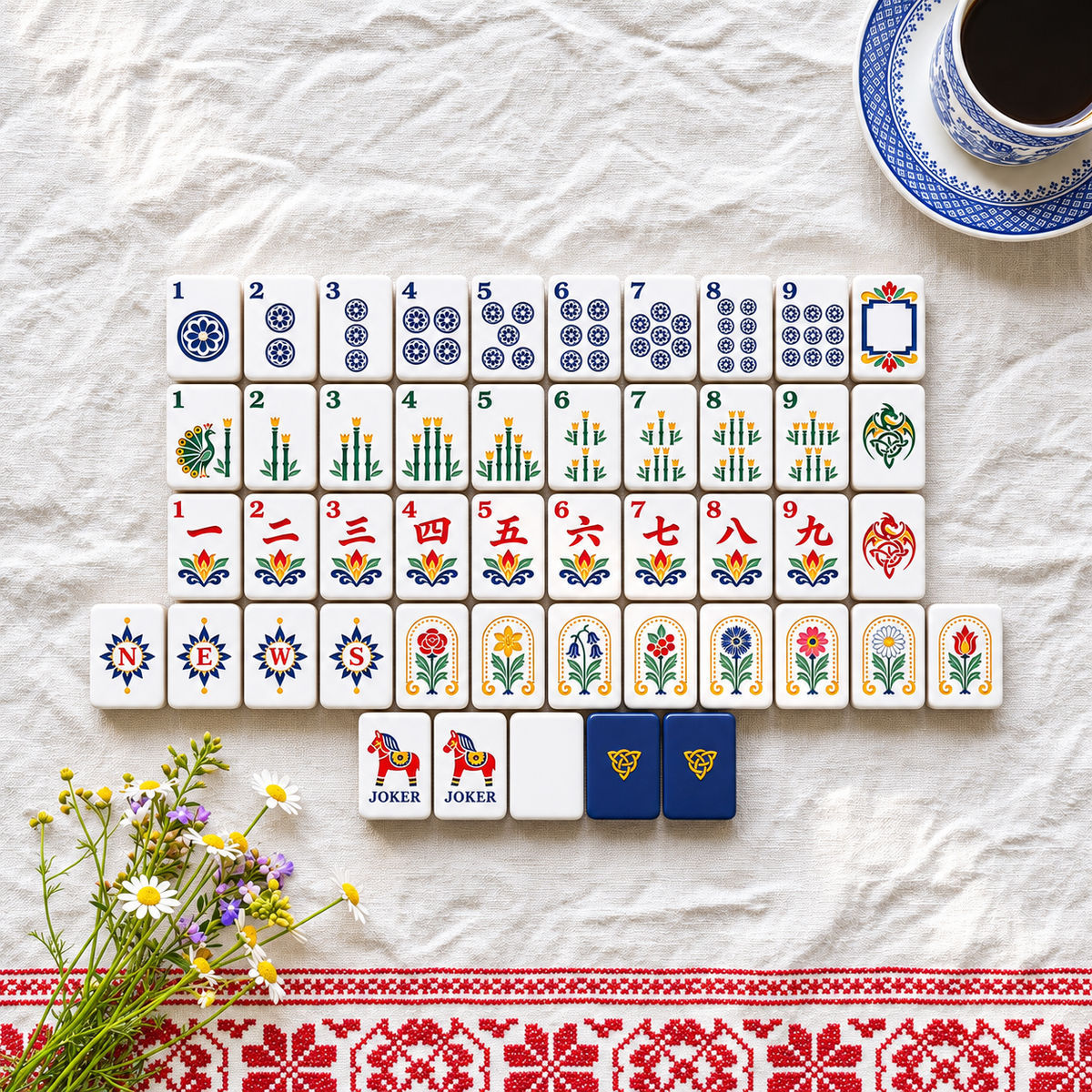
Yes, mahjong is genuinely good for couples. The game requires sustained focus and problem-solving—drawing and discarding 136 tiles across 13–20 minutes per hand—so both players stay mentally engaged without forced small talk. American mahjong (the most common variant in the US) is traditionally four-player, but you can adapt it to two or three players using published rules that adjust hand values and wall structure. The learning curve is steep for the first five games, then flattens sharply; most pairs report comfort by week three. You'll need a 160-tile set, a mat to organize tiles, racks to hold your hand, and the current National Mah Jongg League card. The real benefit isn't the tiles—it's the ritual: couples who play weekly report less phone-checking, more natural conversation during breaks, and a shared achievement language ("I almost had that sequence"). Mahstead's acrylic sets are durable for regular play and easy to read from across the table. Start with the how-to guide for beginners to sidestep the most common setup mistakes. 🀄 Shop best-selling mahjong sets →
Does mahjong actually improve focus and memory together?
Yes, but not equally for both. The player discarding faces more pressure—they must track discards, remember opponent exposures, and calculate hand risk. The waiting player builds pattern recognition by watching tiles leave the wall. Over six weeks of weekly play, couples report better sustained attention in other tasks and easier recall of each other's preferences. The benefit is real but modest; don't expect chess-level depth. What matters is that both players' brains are working hard in sync, which creates the couple's-activity appeal.

What rules change when you play as a pair instead of four?
American mahjong is designed for four players and one hand per round. With two players, you have two options: (1) Take turns playing full four-player games solo (you and your partner each complete a hand alone, then score), or (2) Play "partnership" rules where you sit opposite each other, share information, and pool points—less common but more collaborative. Both work. The second option feels more like a team sport; the first feels more like parallel play with shared celebration. Most couples starting out do option 1: each completes one hand per session, then swaps. This avoids the rule-learning friction and lets you build confidence separately. For detailed two-player variant rules, check the 2 and 3 player guide.
Which mahjong set is best for couples just starting out?
A set with large, easy-to-read tiles is essential—eye strain kills motivation faster than complexity. Look for acrylic sets with clear printed suits (Bams, Craks, Dots) and contrasting character tiles (Winds, Dragons, Flowers). Avoid bone or bamboo sets when learning; they're beautiful but slower to scan and harder to organize in racks. Our best-selling collection includes designs chosen by players who host weekly games—clear fonts, sturdy racks, and mats that keep tiles from sliding. For couples, we recommend starting with a standard set (not engraved) so you can resell or gift it if the habit doesn't stick. Many couples add engraved sets later as personal collections grow.

How long does setup take, and does it get faster?
First game: 15–20 minutes (wall building, Charleston tile-passing, hand layout). Game 5: 8–10 minutes. Game 20: 3–5 minutes. The Charleston—the tile-passing ritual before play—looks chaotic at first but becomes muscle memory by week two. The real time sink is the first three games spent reading the hand card; by game six, you scan it in seconds. Setup speed matters more for couples than group play because impatience kills motivation. A good mat with clear zones and racks with pushers cut setup time by 30% and reduce tile-spilling errors. Couples who invest in a mat and racks report they're more likely to play twice weekly instead of once.
What makes couples quit, and how do you avoid it?
The three main failure points: (1) Rule confusion in games 2–4 (you hit a hand pattern you've never seen and the card is unclear). (2) Tile management chaos (tiles slide, hands collapse, you reset five times). (3) Scorecard frustration (American mahjong scoring is dense; miscount one hand and doubt creeps in). The fix for top is to play the same three hand patterns five times each before moving to the full card—boring but bulletproof. For #2, good racks and a quality mat with clear zones matter more than they seem. For #3, use a printed scorecard or phone app and double-check totals aloud; the ritual of verification prevents resentment. Couples who survive weeks 2–4 stay engaged; those who don't often skip because the friction feels personal rather than procedural. Expect turbulence, plan for it, don't interpret it as "mahjong isn't for us."
Is mahjong a good date activity or better as a weekly ritual?
Better as ritual. A one-off game on a date night is usually stressful—the learning curve collides with romance, and losing feels worse. Weekly play over six weeks, though, becomes exactly what couples seek: low-stakes time where you're intellectually focused but emotionally present. You're not trying to impress each other; you're solving a puzzle together and occasionally winning. The real magic is the eighth week, when you've stopped thinking about tiles and started noticing things about how each other plays—risk tolerance, memory strengths, whether you choke under pressure. Those observations create a new inside language. Date nights benefit more from games with zero learning curve; mahjong belongs in the "we play this every Tuesday" category, like tennis or cooking together.
Couples' Mahjong Starter Comparison
Factor | Solo Setup | Partnership Style | Why It Matters |
Learning curve | Steeper—one player learns four-player logic alone | Gentler—you learn together but share info | Partnership feels more supportive early on; solo gives equal bragging rights |
Conversation during play | More—each hand is independent, then you discuss | Less—you're coordinating; talking ruins strategy | Solo lets you chat about each hand immediately; partnership delays fun |
Weekly frequency | 1 hand per person = 2 hands total, 20–30 min | 1 full game = 45–60 min (fewer hands, more depth) | Solo is easier to repeat twice weekly; partnership feels bigger but rarer |
Shared victory feeling | You each win independently; celebrate separately | You win or lose as a team; shared stakes | Partnership is cozier; solo is more meritocratic |
🎁 See our most-loved mahjong sets & accessories →
What You'll Need to Start (and Why Each Piece Matters)
160-tile acrylic set: Must-have. Tile clarity and durability differ massively between sets. Browse best-selling options chosen by weekly players.
Mahjong mat with zones: Prevents tiles from sliding, cuts setup time by 30%, keeps play organized. Not optional after week two.
Racks with pushers: Let you hold tiles cleanly; without them, hands collapse mid-game. Pushers especially save time when scoring.
Current National Mah Jongg League card: Changes every spring. You cannot play without it—the card IS the ruleset.
Scorecard or app: Prevents scoring disputes. Print one or use a simple spreadsheet.
Before You Buy: Honest Checklist
□ You've both committed to at least six weeks of weekly play (first four weeks are hard). □ You have 30–60 minutes uninterrupted each session (no phone tolerance or the game dies). □ One partner will be the "card reader" initially—they're okay with being slower at first. □ You've watched a five-minute setup video together and don't expect to nail it on day one. □ You're okay with occasional frustration—this is real learning, not passive entertainment. □ You have a flat, hard playing surface (table, not couch or bed) where tiles won't slide.
If four or more boxes are checked, mahjong is likely a keeper. If two or fewer, save your money and try it in a year when life rhythms shift.
✨ Find your Mahstead set — free US shipping →

FAQ
Can two people really play American mahjong, or do you need four?
Yes, two people can play using adapted rules that adjust hand values and wall size. See the full 2-3 player variant guide. Most couples start by each playing solo hands in turn, then keeping a shared score. This is simpler and teaches the game faster than partnership rules.
How long does it take to stop feeling lost during a game?
By game five or six, you stop panicking about the card. By week four, you start recognizing hand patterns before consulting it. Real fluency (calling tiles automatically, thinking two hands ahead) takes 10–15 weeks of weekly play. This is normal; don't give up before week four.
Do I need an expensive set, or will a cheap one work?
Tile clarity matters more than price. A $50 acrylic set with readable faces beats a $200 bone set when learning—smaller print tile or plastic wear make reading slower and discards harder to track. Start with a mid-range acrylic set; upgrade to engraved or specialty designs once you're hooked.
What if one partner is faster at strategy than the other?
This is universal. Pair the faster player with the role of card-reader (they learn the hand types first and help teach). Rotate roles each week. The "slower" player often picks up spatial pattern skills the fast player misses; it evens out by week eight.
Is mahjong good for couples with big age gaps?
Yes, especially if there's a gap. The game is age-neutral—it's pure logic and memory, not reflexes. Older players often out-think younger ones. Many couples with 15+ year gaps report mahjong as their most balanced competitive activity together.
Should we play against each other or play as a team?
Solo play (each player completes hands independently) is better for beginners—lower complexity, clearer feedback, equal fun. Switch to partnership rules after 8–10 weeks if you want more collaborative strategy. Most couples stay with solo play because the competitive edge keeps motivation high.


View More
View More
View More
