
British Mahjong Setup: Rules, Tiles & How to Play
Last updated: Nov 23, 2026
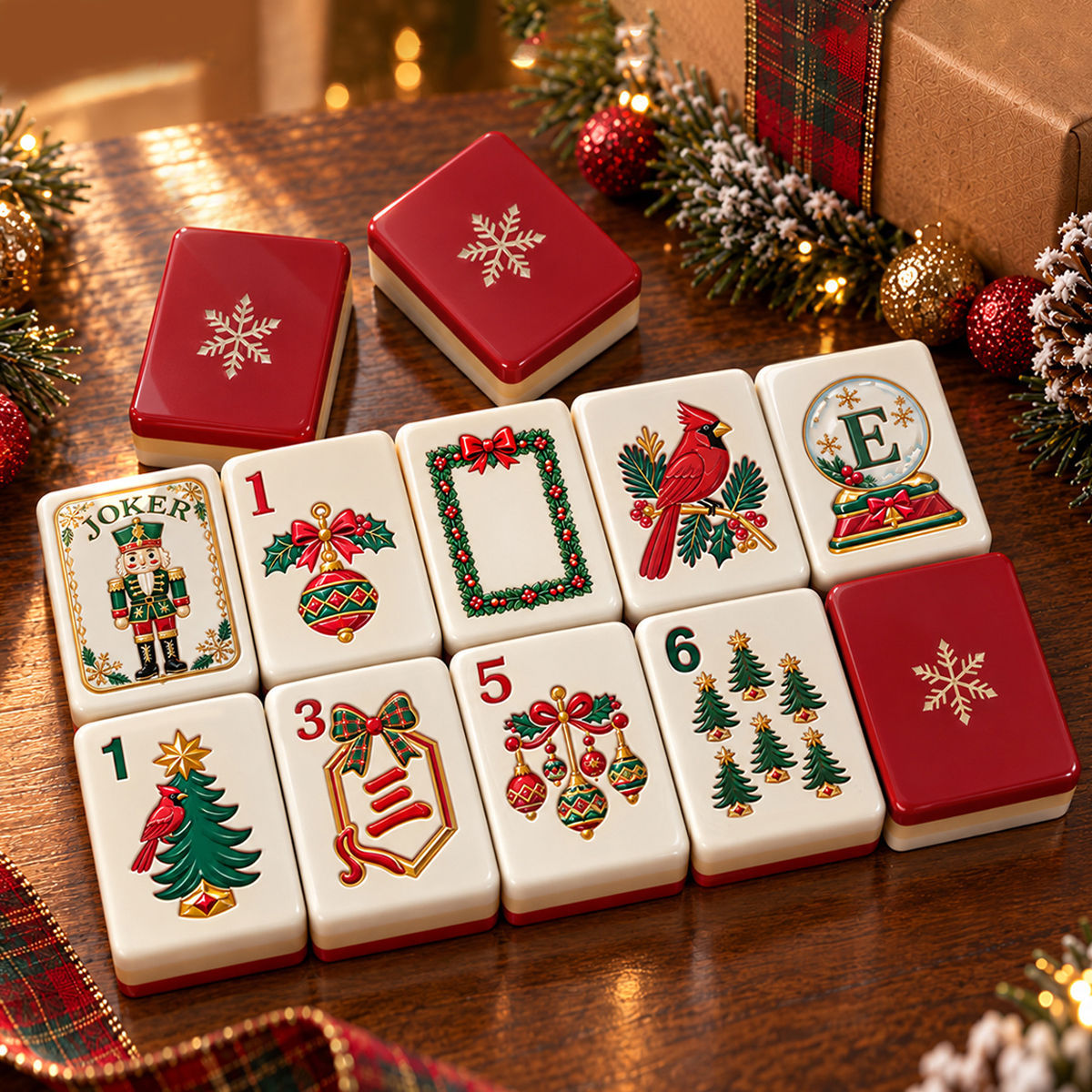
British mahjong uses 144 tiles (three suits × nine numbers × four copies each, plus winds, dragons, and flowers) and follows Hong Kong conventions: sequences (chows) count as valid melds alongside pungs and kongs, jokers are optional and never used as blanks, and there's no annual card—hands repeat across years. Setup takes 5–10 minutes: shuffle face-down, build a wall, deal 13 tiles per player, and draw to begin. Unlike American mahjong's tile-passing Charleston ritual and dependency on the current year's hand card, British play emphasizes quick hand recognition and flexible discard strategy. A 144-tile set is the standard; no extra jokers or blanks are needed for play.
🀄 Shop best-selling mahjong sets →
How does British mahjong differ from American mahjong?
British mahjong uses chows (1-2-3, 5-6-7, 8-9 sequences in a single suit), which are forbidden in American play. American mahjong depends on the current year's hand card from the National Mah Jongg League; British mahjong has no card—any combination of pungs, kongs, and chows wins. British uses 144 tiles with optional jokers; American mandates 152 tiles plus 8 jokers. The Charleston (tile-passing before the game) is American-only. British play is faster and less rule-dependent, making it popular in the UK and Commonwealth clubs.

What tiles come in a British mahjong set?
A standard British set holds 144 tiles: 108 suit tiles (Bams, Craks, Dots numbered 1–9, four copies each), 16 winds (four each of North, East, South, West), 12 dragons (three types: Red, Green, White), and 8 flowers. Some sets add jokers or blank tiles, but these are never required for legal play. Tiles are typically heavier bone or bamboo in traditional sets, or acrylic in travel versions. Weight matters: lighter tiles shuffle unevenly and stick together, especially on felt mats. Check tile thickness before buying; thinner tiles warp after repeated cleaning.
What's the step-by-step setup for British mahjong?
Step 1: Shuffle all 144 tiles face-down on the table or mat for 2–3 minutes. Step 2: Each player builds a wall of 19 tiles (38 tiles total showing face-down) in front of them. Step 3: Designate a wall-breaker (often North or the previous winner). Step 4: Count off on the wall and draw the first stack (usually two tiles per player). Step 5: Each player draws one tile face-down; whoever draws highest becomes East. Step 6: Deal 13 tiles face-down to each player; East gets 14. Step 7: East discards face-up; play begins clockwise. The wall-breaking position shifts each round, and ties are re-drawn. Most games use a mat with wall markers to keep tile stacks tidy.
How does scoring work in British mahjong?
British mahjong scoring is simpler than American: all winning hands are worth the same base value, often settled as one unit per player. Win by chow or pung combination and call "mahjong." Scoring variations exist by region—some clubs score double for self-drawn wins, others add bonuses for all-chows or all-pungs hands. No one scores for incomplete melds; only a finished hand counts. Ask your club for their scorecard before your first game. Most British players keep a pad and pencil rather than a printed card. Unlike American mahjong's detailed scoring rules, British play relies on house consensus.

What's the best setup for hosting a British mahjong night?
A dedicated mat protects tiles and speeds play. A quality mahjong mat has wall markers, four player sections, and a center discard area—this alone cuts wall-building errors by half. Dice are essential: use two standard six-sided dice to select the wall-break position. Racks are optional but prevent cheating and speed hand-reading; racks with pushers let you organize tiles and keep your hand hidden during discards. A travel bag or case protects tiles between games and keeps the mat, dice, and scorepads in one place. For weekly groups, a dedicated bag prevents tile loss and extends set life by years.
Setup Component | British Preference | Why It Matters |
Tile count | 144 (no extras) | Simpler to shuffle; faster deals |
Mat with markers | Yes | Wall-building errors drop; play speeds up |
Racks | Optional | Speeds hand-reading; prevents tile-peeking |
Dice | 2 standard d6 | Wall-break selection is random and fair |
Scorepad | Paper + pencil | Settlements are quick; no app needed |
Jokers | 0–8 optional | Never required; house rules vary |
🎁 See our most-loved mahjong sets & accessories →
What are the most common setup mistakes?
Not shuffling long enough is the top error: undershuffled tiles cluster by suit, skewing first hands and ruining fairness. Shuffle face-down for a full three minutes, breaking up any clumps. Uneven wall-building causes short stacks that tip over during play; use a mat with marked sections so each player's wall sits in the same position. Losing track of the wall-break count leads to re-dealing; use dice every time and write down the break position before dealing. Mixing tile styles (thick and thin) in one set causes uneven sliding and shuffling. Buy one consistent set and keep spares sealed. Forgetting to pass scorepads around: post the running total where all four players see it to prevent disputes at the end.
What should you check before buying a British mahjong set?
Tile material: Acrylic is durable and affordable; bone-and-bamboo is traditional but fragile. Acrylic also resists staining from hands and drink. Tile count: A complete British set is 144 tiles. Sets advertising 160 or 166 tiles include spares and are designed for American play; they're legal in British games but unnecessary. Weight and feel: Heavier tiles (bone or thick acrylic) don't shift during shuffles; light tiles stick to felt mats. Markings: Ensure suit symbols (Bams = circles, Craks = characters, Dots = dots) are clear and consistent. Case and bag: Travel bags with dividers protect tiles from breakage and mixing. Mat compatibility: Verify your mat fits your table width before buying tiles and mat together.
✨ Find your Mahstead set — free US shipping →
How do British rules handle discards and claims?
Discards are placed face-up in the center discard area or on the mat. A player can claim a discard only for a pung (3 identical tiles), kong (4 identical), or chow (three consecutive suit tiles). Claimed tiles are exposed in front of the claiming player; play then passes to the claimant, not the next player in turn. If no one claims the discard, play rotates clockwise to the next player, who draws from the wall. A tile placed face-up on the mat cannot be taken back—this rule prevents "changing your mind" and speeds the game. Exposure of melds is mandatory once claimed; hiding exposed tiles is a play violation.

FAQ
Can I play British mahjong with an American mahjong set?
Yes, if your American set includes the basic 144 tiles (suits, winds, dragons, flowers). You'll simply ignore jokers and extras. However, American sets often include special tiles and may have different artwork, making hand-reading harder for British players used to standard symbols.
Do I need the National Mah Jongg League card to play British mahjong?
No. British mahjong has no annual card. Any valid combination of sequences, pungs, and kongs constitutes a winning hand, repeated year after year. This makes British play simpler and less dependent on printing cycles.
What's the difference between a 144-tile and a 152-tile set for British play?
A 144-tile set is the British standard and is sufficient. A 152-tile set (American standard) works but includes extra tiles you won't use. Stick with 144 for clarity and to keep your bag lighter.
How long does a British mahjong game take?
A single round typically lasts 15–25 minutes. A full session (4 rounds with rotation) takes 60–90 minutes. Setup and teardown add another 10 minutes.
Are British and Hong Kong mahjong rules identical?
Nearly identical. Both allow chows and use the same hand-winning combinations. The main difference is scoring: some Hong Kong variants include bonus melds and special hands with premium points. British clubs often simplify scoring to settle faster.
Can I use jokers in British mahjong?
Jokers are optional and are never used as wild blanks. Some clubs permit them as wild tiles in any position to speed up completing hands; others forbid them entirely. Check your local club's house rules before your first game.
What's the standard tile size for British mahjong?
Most tiles measure roughly 1 inch × 0.75 inch (25mm × 19mm). Tiles that are significantly smaller or larger feel awkward to handle and shuffle unevenly. Compare tiles side-by-side before ordering if size matters for your hands.
How do I clean and store a British mahjong set between games?
Wipe tiles with a soft, dry cloth immediately after play to remove dust and fingerprints. Store in a sealed bag or case away from direct sunlight and moisture. Acrylic tiles resist staining; bone tiles can yellow in heat and light. Keep the mat rolled or flat in a dedicated travel bag to prevent creasing.


View More
View More
View More
