
Is Mahjong Good for Card Players? The Honest Crossover Guide
Last updated: Nov 23, 2026
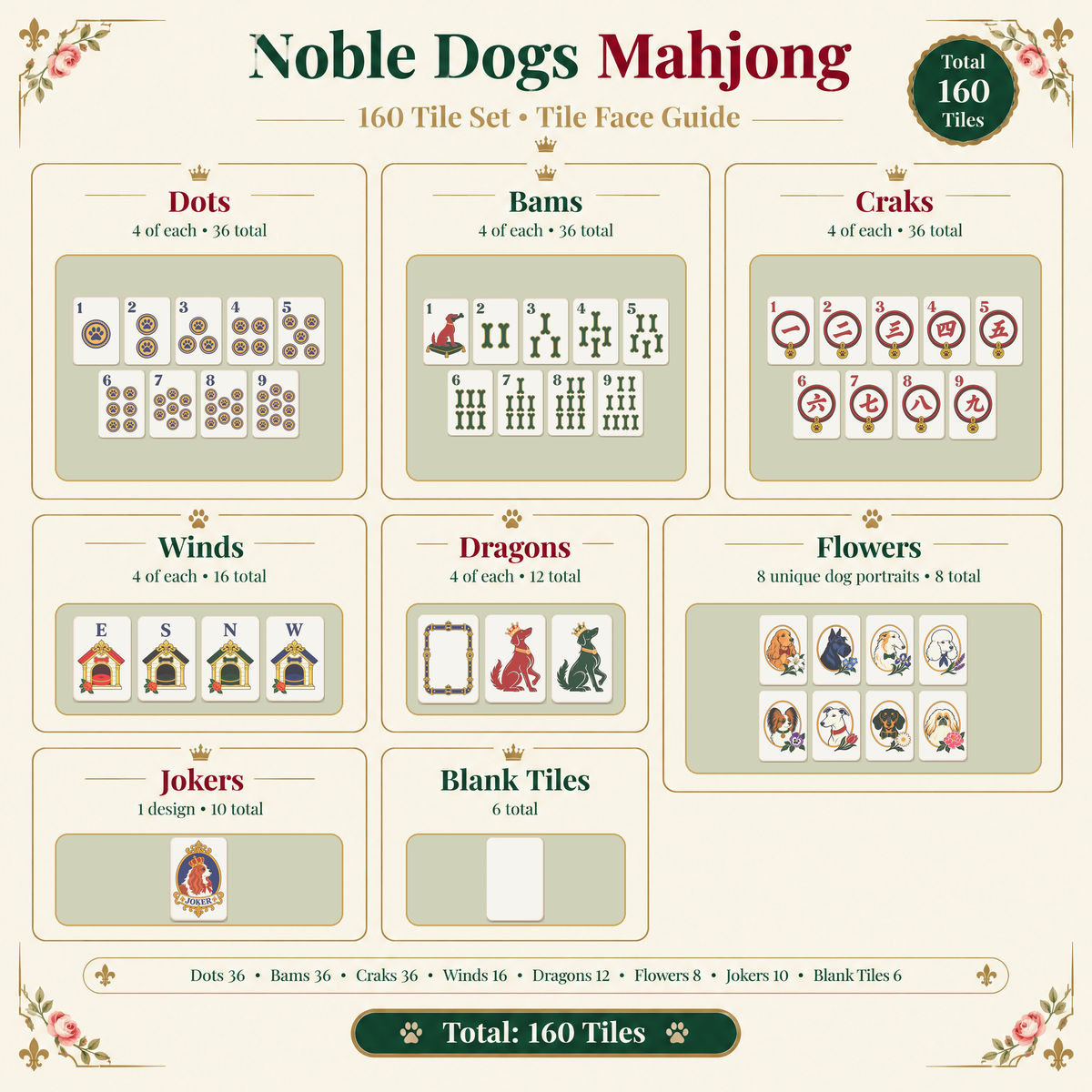
Yes, card players have real advantages in mahjong: hand management, pattern spotting, and probability instinct transfer directly. American mahjong, however, plays nothing like poker or bridge. There are no sequences, no bluffing, and hands are drawn from a single published card each year—not infinite combinations. You'll keep your edge in tracking discards, reading opponents' draws, and spotting which combinations are still possible. But you must unlearn sequences entirely and embrace the rigid structure of a mahjong card. Most card players learn the rules in one session and play competitively within two weeks. A 160-tile set from Mahstead includes everything needed: 152 playing tiles, eight jokers, and spare tiles. The core shift: mahjong is memory and pattern matching played openly, not hidden information and bluff. Card habits help; card instincts sometimes mislead.
Card players bring memory, hand management, and pattern spotting to mahjong—but tile games demand different strategy. American mahjong, however, plays nothing like poker or bridge. There are no sequences, no bluffing, and hands are drawn from a single published card each year—not infinite combinations. You'll keep your edge in tracking discards, reading opponents' draws, and spotting which combinations are still possible. But you must unlearn sequences entirely and embrace the rigid structure of a mahjong card. Most card players learn the rules in one session and play competitively within two weeks.
🀄 Shop best-selling mahjong sets →
What skills from cards actually carry over to mahjong?
Hand management, discard tracking, and probability judgment translate perfectly. Card players already know how to organize a hand for speed, remember which cards left the table, and sense when a draw is unlikely. In mahjong, this becomes tracking which Bams, Craks, and Dots have been discarded—and remembering which combinations have enough tiles left to form a winning hand. Opponent reading also matters: watch what tiles they pick up and what they discard to infer their hand structure. The biggest carryover is comfort with tables of four, dealer rotation, and scoring across multiple rounds. If you've played Rummy, you'll grasp the "melds first, then win" rhythm instantly.

Where does card-player intuition fail you?
Card players expect sequences. In American mahjong, sequences (called chows) do not exist. Instead, every meld is either three identical tiles (a pung), four identical tiles (a kong), or longer matching sets—all the same number and suit. This is the hardest mental shift. Your first instinct will be "I have 2, 3, 4 Bams—that's a run!" It is not. Discard that thinking immediately. Second, card players assume they can build hands flexibly. Mahjong hands come only from the current year's National Mah Jongg League card. You cannot invent a hand; you must match one printed on the card exactly. This cuts both ways: it removes infinite creativity but also removes guesswork. Third, bluffing does not work. Every tile you play is visible and documented. Opponents will track what you discarded and deduce your hand accurately. Play openly, not deceptively. Learn how the mahjong card works to see this constraint in action.
How much of the learning curve is "relearning" versus new?
If you play cards regularly, expect one week to learn rules, two more weeks to play fluidly, and four weeks to read hands quickly. The first hour covers tile names (Bams, Craks, Dots, Winds, Dragons, Flowers) and basic mechanics: draw one, discard one, and call melds. The Charleston—the tile-passing ritual before play—takes fifteen minutes to understand and one game to feel natural. The real learning is pattern recognition: seeing which hands are "alive" (still completable), tracking which melds opponent has called, and estimating your own speed to win. Card players excel here because they already do this mentally. The foreign part is the mahjong card itself: you must reference it constantly until you memorize 10–15 winning patterns. After four games, most card players stop checking the card for every hand. Within two weeks, they call hands correctly and read the card mid-game.
What kind of card background helps the most?
Rummy players transition fastest. If you play Rummy, you understand melds, discard strategy, and the rhythm of "get what you need, block what others need." Substitute "three identical tiles" for runs, and you have American mahjong's core mechanic. Bridge players bring hand management and long-memory skills—your discipline organizing thirteen cards into suits becomes organizing fourteen tiles into patterns. Poker players struggle most: bluffing, hidden information, and aggressive betting have no home in mahjong. Solitaire players have neutral advantage—pattern spotting helps, but there's no opponent reading to refine. Canasta players, like Rummy enthusiasts, adapt smoothly because they understand melds, sequences of play, and multi-round scoring. Start with your mahjong card face-up and hands called aloud until you retrain your pattern library.
Should you buy a beginner set, or jump straight to a nice one?
Most card players skip beginner sets and buy once. You'll quickly use mahjong two or three nights a week in a regular game, so a set you enjoy looking at matters. Beginner sets (basic acrylic tiles without engraving) cost less but feel thin and scratch easily. Mid-range sets (clear or colored acrylic with light engravings) last years and make the game feel like a ritual, not a tutorial. If you host weekly games, a best-selling mahjong set with a matching mat and racks with pushers sets the tone immediately. Card players often appreciate custom titles or designs that reflect your group's personality—engraved sets are popular for this reason.
Set Type | Suited For | Durability | Play Feel | Long-Term Value |
Basic acrylic | Testing if you'll stick | 1–2 years | Light, thin | Low (likely replace) |
Mid-range acrylic (clear/colored) | Regular weekly games | 3–5 years | Smooth, balanced | High (reliable workhorse) |
Engraved acrylic with mat/rack bundle | Hosted games, gifting | 5+ years | Premium, memorable | Highest (pride of ownership) |
🎁 See our most-loved mahjong sets & accessories →
How do you know if mahjong will actually stick with you?
Card players stay if they find a regular table. Unlike cards, which are portable and quick to teach, mahjong demands commitment: a dedicated mat or table, four committed players, and two to three hours per session. After your first session, ask yourself: Did I want the evening to end? Did I want to play again tomorrow? If yes to both, buy a set and find a standing game. If you felt neutral, you may enjoy it as a casual visitor but won't become a regular. Card players who love pattern-heavy games (Bridge, Gin) or team strategy often develop deep mahjong habits. Card players who crave speed and variance (Poker, Blackjack) sometimes find mahjong too steady. Schedule a second game within a week—if you're excited, commit to a set and a regular night. If you'd rather play cards instead, stick with what you know.
✨ Find your Mahstead set — free US shipping →
What to check before you buy
— Learn the rules first: Watch a video or play one free demo game before spending on a set. Most card players confirm after one session whether they're hooked.
— Confirm your table exists: Find a regular game in your area—library, community center, synagogue, country club, or Meetup board. Owning a beautiful set means nothing if you have no one to play with.
— Test tiles in hand: Acrylic tiles feel very different from cards. Visit a shop or attend a demo if possible. Some people prefer bamboo or bakelite; test what your fingers enjoy.
— Choose the mat + tile combo: A mat protects tiles and defines the play space visually. If hosting, invest in both; if visiting others' games, a bare set works fine for now.
— Read the mahjong card thoroughly: This is your only rulebook. Mahjong hands don't exist outside the card. Spend an hour with the current year's card before your first game.
Is mahjong good for card players? The honest verdict.
Yes—if you love pattern recognition, memory, and sitting with the same players over months. No—if you want speed, infinite variety, or bluffing. Most card players find mahjong refreshing precisely because it is different: the structure is fixed, the game is transparent, and winning is a team effort (you win when four players have played well together). You will find your card skills—hand management, probability instinct, discard discipline—waiting for you. You will also learn that mahjong is its own complete world, with its own logic. The crossover is real, not illusory. The decision is whether you want to step into that world or stay in cards. If you decide to try, start with an American mahjong beginner guide and a best-selling set you won't mind looking at for years.

FAQ
Do card players win faster at mahjong than beginners?
Yes, typically within three to five games. Hand organization and discard memory give you a measurable edge. You'll call hands correctly before beginners, but don't expect to dominate—mahjong is luck-heavy (draw-dependent), so skill plateaus quickly.
Can I play mahjong with only card players, or do I need a "mahjong person"?
Four card players learn and play independently without a coach. One person should read the mahjong card and rules before the first session, but that's it. The game teaches itself after two rounds.
What's the biggest mistake card players make in their first game?
Treating sequences as valid melds. "2-3-4 Dots" feels like a run; it isn't. Every meld must be three or more identical tiles (same number and suit). Unlearning sequences is 90% of the adjustment.
Do I need a special mat and rack, or can I just use my card table?
A mat is optional but transforms the experience. It defines the play space, protects tiles, and makes discards organized. A mat and rack with pushers cost little and are worth it for weekly games.
How long does a typical mahjong game take compared to a card game?
Two to three hours for a full mahjong session (four rounds, plus Charleston and setup). A single round takes 30–45 minutes. Card games range widely, but mahjong is longer and demands more focus because you're tracking more tiles.
Is mahjong harder to learn than Bridge or Gin?
Easier to learn, harder to master. Rules take one session. Winning hands take two weeks. Card counting and positional intuition in Bridge take months. Mahjong strategy is shallower but the pattern library is larger.


View More
View More
View More
