
Is Mahjong Good for Busy Professionals? Yes—Here's Why
Last updated: Nov 23, 2026
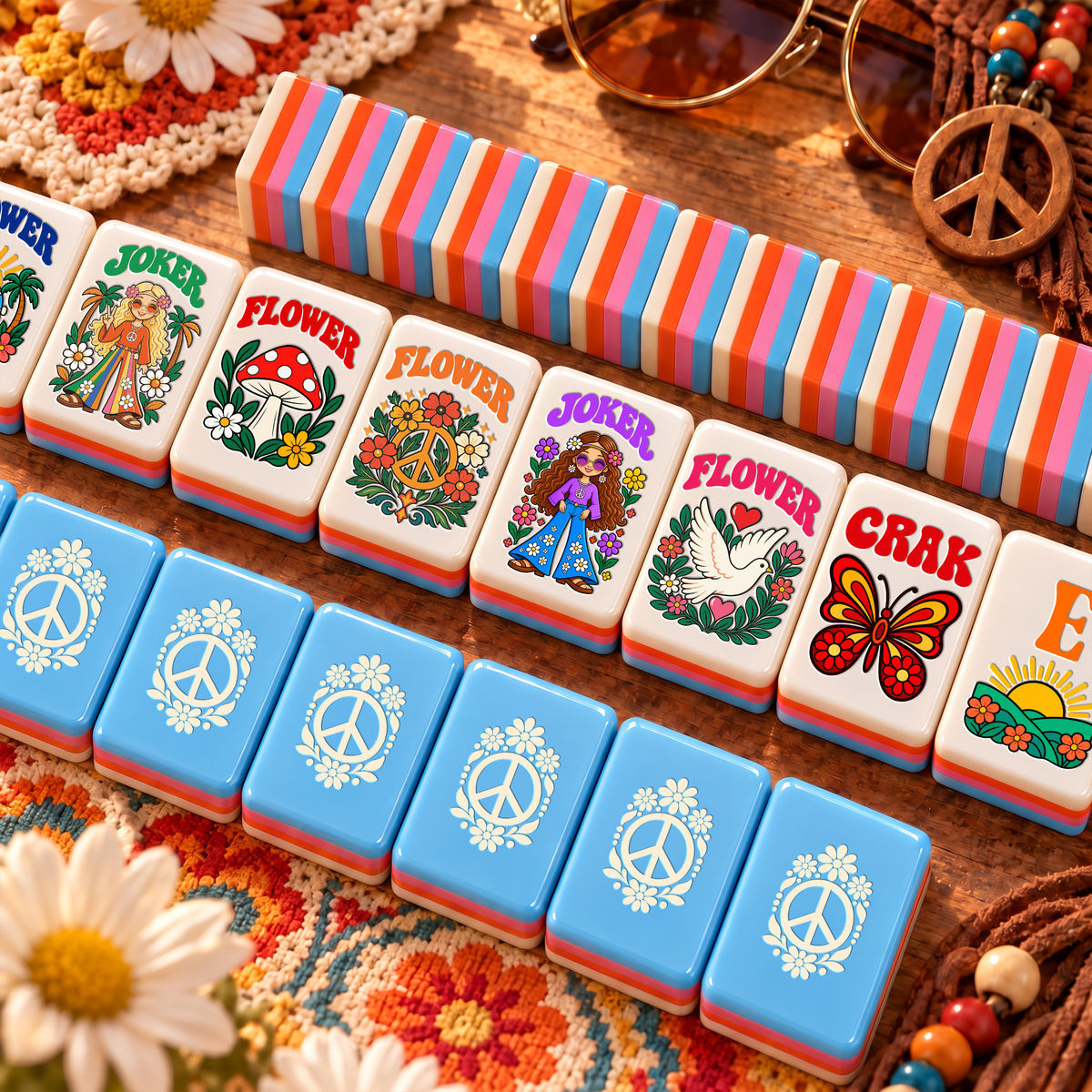
Yes. Mahjong suits busy professionals because a full game (152 tiles, four players) takes 45–90 minutes once you know the rules—not much longer than a workout class or happy hour. The game demands active pattern recognition and decision-making, forcing your brain away from email and Slack for genuine restoration. Weekly sessions build lasting friendships without the planning overhead of dinner parties; you show up, play three to five hands, and reset. American mahjong specifically has a quick learning curve for rule-based minds: you hold a card, match patterns, manage risk, and score. No memorization. Professional players report sharper focus at work the next day and a reliable social anchor that survives job changes. Our customers regularly source durable acrylic sets designed to travel and last through years of weekly games.
Mahjong suits busy professionals because a full game (152 tiles, four players) takes 45–90 minutes once you know the rules—not much longer than a workout class or happy hour. The game demands active pattern recognition and decision-making, forcing your brain away from email and Slack for genuine restoration. Weekly sessions build lasting friendships without the planning overhead of dinner parties; you show up, play three to five hands, and reset. American mahjong specifically has a quick learning curve for rule-based minds: you hold a card, match patterns, manage risk, and score. No memorization. Professional players report sharper focus at work the next day and a reliable social anchor that survives job changes. Our customers regularly source durable acrylic sets designed to travel and last through years of weekly games.
How Much Mental Recovery Do You Actually Get in One Session?
One hand of mahjong (typically 15–30 minutes) demands 80–90% of your cognitive load—tile recognition, hand probability, opponent reads, scoring math. That active focus is why it works: your prefrontal cortex (work mode) steps down, and pattern-matching takes over. After three hands, players consistently report the "offline" feeling that runners get after five kilometers. The relief comes not from passive distraction but from engaging a different part of your brain. A 2016 study published in the American Journal of Geriatrics found that regular mahjong players showed measurable improvements in short-term memory and mental flexibility. Most busy professionals play once a week for 60–75 minutes; that's enough to reset without becoming a second job.

Can You Really Fit This Into a Corporate Schedule?
Yes, if you commit to a standing game time. Most professional players we know meet Tuesday or Thursday evenings, 6:30–8:00 p.m., or Sunday mornings 9:00–11:00 a.m.—bookended slots that protect a specific window. The game itself has no prep work: your host sets up the table 10 minutes early, you arrive, and play begins. No ingredients to buy, no RSVPs to chase. Unlike golf (4+ hours) or book clubs (variable dates), mahjong scales to your week. One player told us she runs her law practice's intake calendar around her Tuesday game; her team knows not to schedule meetings then. The social commitment also protects against flaking: you know three people are counting on you, so you show up. That reliability builds deeper friendships faster than sporadic hangouts.
What's the Real Difference Between a Casual Game and Building a Habit?
Casual play happens once every few months at a friend's house; habit building requires a weekly anchor—a fixed day, time, and group. Players who game once weekly show consistent mental and emotional benefits; those who play sporadically report the same "fun but forgettable" experience they'd get from any one-off card game. Here's a comparison table of what habit players do differently:
Commitment Level | Frequency | Setup | Social Anchor | Mental Benefit | Retention |
Casual | 2–4 times/year | Borrowed set, unclear rules | Loose group | One-time fun | Rules fade between plays |
Weekly | Every Tuesday/Thursday | Dedicated set & mat, card at table | Same 3–4 people | Cumulative focus sharpness | Rules become automatic |
Tournament | 1–2 weekends/month | Personal competition set, learner's log | Club or league | Measurable skill growth | Deep strategic understanding |
The weekly player invests in a quality set and mat to reduce friction; casual players usually share worn tiles and wonder why nobody knows the score. Habit building also unlocks a second benefit: you stop reading the card mid-hand. That speed and confidence is deeply satisfying and happens around week 8–12 of weekly play.
Where Do Busy Professionals Actually Find Games?
The fastest route: ask your employer's wellness or diversity program if they know a group. Many corporate office parks, law firms, and hospitals already have standing Thursday-night games. If that fails, try community centers, synagogues, country clubs, and public library bulletin boards—all of these host open mahjong groups, and many post contact info online. Meetup.com (search "[your city] mahjong") lists active players in most metros. The third path is to start your own: invite two friends who want to learn, buy a set, use our free beginner's guide, and play three weeks straight. By week three, the game feels natural. Most groups grow by word-of-mouth once the core three or four players are solid.
🀄 Shop best-selling mahjong sets →

What Setup Minimizes Time Spent on Logistics?
Experienced players cut non-play time to under 10 minutes by having a dedicated space and gear. A permanent mahjong mat (acrylic or cloth, sized to fit your table) stays rolled in a closet; racks with pushers let players hold tiles without fatigue; a durable travel bag keeps tiles organized and protected. Setup: unfold mat, place racks, shuffle tiles (2 minutes), do the Charleston tile-passing ritual (3 minutes), deal, play. Cleanup: tiles back in bag, bag in closet. No hunt for lost Bams or cracked Dots. Amateur setups (loose tiles on a bare table, no racks, missing jokers) waste 15–20 minutes per session—almost 25% of your game time. Professional players we know treat their set like a sport: one person owns the equipment, it lives in one place, and setup becomes ritual. That efficiency is why habit players stay committed and casuals drift away.
🎁 See our most-loved mahjong sets & accessories →
What Should You Check Before Committing?
Before you buy a set or join a group:
Learn the rule set. American mahjong uses the National Mah Jongg League card (refreshed every spring); Chinese and Hong Kong variants are entirely different. Make sure your group uses American rules if that's what you're buying for. Our how-to guide explains the difference.
Verify group meet time won't shift. Ask the organizer if the day/time has held steady for at least three months. Unstable groups dissolve fast.
Test the set before buying. If you can, play one session with the group's tiles. Cheap sets have thick tiles that jam in racks or uneven paint that makes recognition slow—these annoy players within a month.
Confirm scoring method. Most American groups use the published card's scoring system, but some use house rules. A quick mismatch here ruins the first evening.
Allocate one month to learn. Don't expect to feel "good" at the game until week 4–6. That dip in confidence is normal; players who push through become long-term players.
Why This Works for Your Brain (And Your Career)
Pattern recognition is the core skill in both mahjong and high-pressure professional work (law, medicine, finance, strategy). A 30-minute hand forces you to track ~140 tile possibilities, calculate odds on your draw, anticipate opponent reads, and make risk-adjusted decisions under time pressure. That's the same cognitive load as a difficult meeting, but the stakes are zero and the rules are explicit. Your nervous system gets to practice that alertness without the cortisol spike of real work. One strategic consultant told us that weekly mahjong was the closest she found to a "simulation" of her actual job without the job's stress. Over a month, that weekly reset reduces decision fatigue and sharpens judgment.
✨ Find your Mahstead set — free US shipping →
What You'll Need
A complete weekly game requires one quality American mahjong set (160 tiles, 8 jokers), a mat to protect your table, and racks so players don't strain their hands. Most groups rotate who hosts; if it's your turn often, a travel bag protects your set between sessions. Everything ships free across the US, so there's no penalty for upgrading to a set that lasts five years instead of twelve months.

FAQ
How fast can a beginner learn American mahjong?
Most people grasp the basics in one 60-minute session. Comfort (reading the card without help) takes 3–4 weeks of weekly play. Strategic depth builds over months; mechanics are quick.
Does mahjong actually reduce work stress, or is that just talk?
The focus required in play forces your work-mode brain offline for the duration. Post-game, players report the same mental clarity runners describe after a 5-km run. It's not placebo—active cognitive engagement beats passive distraction.
Can I play on my lunch break?
No. Setup, the three-minute Charleston, and one full hand takes 30–40 minutes minimum. You need 60 minutes to play comfortably. Evening or weekend games are realistic; weekday lunch is not.
What if I can't find a group in my area?
Start one. Invite two colleagues or friends, buy a set, meet weekly for four weeks, and tell others about it. Most groups began this way. Your employer's diversity, wellness, or event coordinator may also help connect you to existing games.
Is mahjong better than meditation or yoga for busy people?
Different benefits. Meditation calms the nervous system; mahjong sharpens pattern recognition and builds social bonds. Both are valuable. Mahjong wins if you dislike sitting quietly or prefer group activity with an explicit outcome.
Do I need to buy my own set if I'm just trying it out?
No. Borrow one from a group for your first two or three sessions. If you like it and plan to host or travel to games, a personal set saves friction—tiles get lost or damaged when shared casually, and low-quality sets create delays.


View More
View More
View More
