
Is Mahjong Good for Bridge Players?
Last updated: Nov 23, 2026
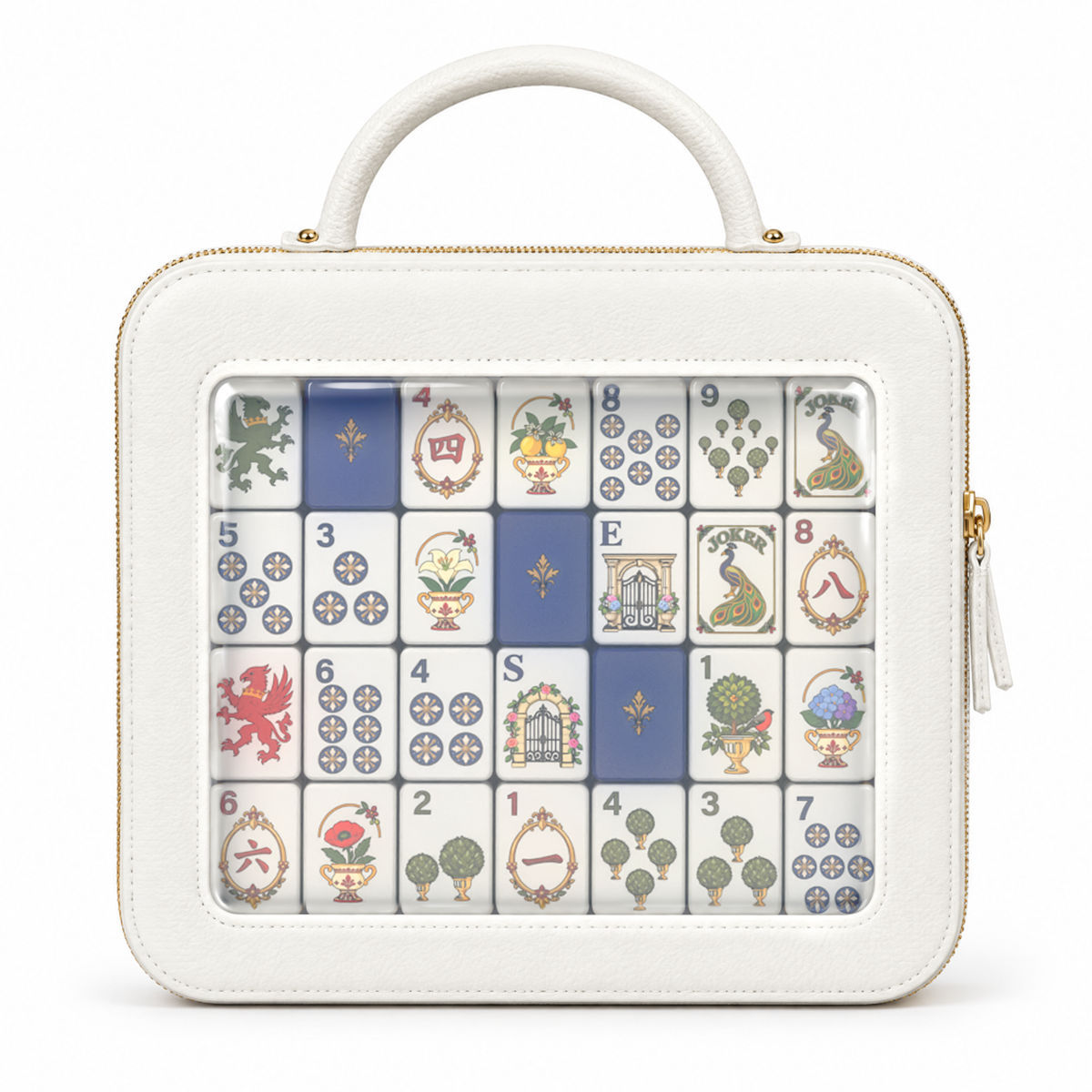
Yes, mahjong is genuinely rewarding for bridge players. Both games reward strategic thinking, memory, communication signals, and pressure decision-making under time limits. Bridge sharpens your ability to track what's been played, infer hidden information, and manage risk—all skills that transfer directly to mahjong. However, mahjong is not bridge played with tiles. American mahjong uses a fresh hand each year (drawn from the National Mah Jongg League card), randomized tile draws with joker substitution, and no dummy hand. Bridge players often find the hand patterns easier to spot quickly, but must unlearn bidding language and adapt to a no-communication format. Both games benefit from the same core: pattern recognition, patience, and the joy of a well-timed win. We see bridge enthusiasts transition smoothly into weekly mahjong nights, though most discover they want to play both rather than switching one off for the other. If you're serious, a quality tile set like those in our best-selling mahjong sets will serve you through years of games. 🀄 Shop best-selling mahjong sets →
What skills from bridge transfer to mahjong?
Your bridge toolkit transfers more than you'd expect. Counting—tracking what's been discarded, what's left in the wall, the odds on each player holding a specific tile—dominates both games. Memory for patterns and player tendencies also carries over: in bridge you read partner's bids and opponents' plays; in mahjong you read discard patterns to infer what hand each player is chasing. Risk management applies too: when do you go for a high-scoring hand versus a safe, quick win? Both games demand this calculus. Hand-reading and deduction are your superpowers—bridge trained you to work backward from limited evidence. In mahjong, you use the tiles people discard, the hands they expose, and the speed of their plays to guess their goal. One clear difference: bridge has a fixed set of suits and ranks played the same way forever, while American mahjong uses a new official hand list each spring, so you can't memorize the entire universe of possible hands—you learn to read the card on the fly instead.

How is mahjong different from bridge in ways that matter?
American mahjong breaks three bridge habits immediately. First: no partnership communication. In bridge, you and your partner signal strategy through bids and card play; mahjong forbids all talk once tiles are drawn. You must play from pure reads and deduction alone. Second: jokers replace any tile, anywhere—bridge has no wild cards, so risk calculation changes. A tile you discard might reappear in someone's exposed pung (a set of three identical tiles), powered by a joker. You can't simply assume a played card is gone. Third: hands change every year and come only from the official card—not from logic or point count. In bridge, bidding systems are stable across decades; in mahjong, you and your group must learn the current year's card. Bridge players accustomed to deep study of one bidding system sometimes find the annual reset refreshing—it keeps the game unpredictable. Fourth: winning speed is different. Bridge rounds last hours; most mahjong hands resolve in 10–20 minutes. The pace appeals to bridge players who want a complete game and evening of play without committing to a single long match.
🎁 See our most-loved mahjong sets & accessories →
Which bridge habits will trip you up?
Bridge players commonly stumble on three points. First, they over-communicate. In bridge, a hesitation, a quick play, or even a glance sends legal information. In mahjong, you sit silent. Many bridge players accidentally reveal their hand by playing too slowly over a critical tile (mahjong etiquette says: play at a steady pace). Second: they expect bidding-style discussion before play. Mahjong players conduct the Charleston—a tile-passing ritual—but after tiles are drawn, no hand discussion occurs. You draw, you read the card, you play. Bridge's pre-play banter doesn't translate. Third: they underestimate jokers. Bridge players understand wild cards exist in other games, but seeing a joker plug a gap in an otherwise-broken hand shocks them. A joker can mask what suit a player is pursuing, adding ambiguity you don't face in bridge. Read our guide on how jokers work to shift your mental model fast. Fourth: they assume hands repeat. In bridge, you study thousands of hands across years and see patterns. American mahjong rotates the hand list annually—you memorize this year's card, then start fresh in spring. This keeps the game younger-feeling and prevents the "I've seen this exact layout before" fatigue some long-term bridge players report.
Should bridge players learn American or Chinese/Hong Kong mahjong first?
Learn American mahjong first if you're starting in the U.S.—it's what weekly games near you almost certainly use, and the community is stable. American mahjong is simpler rules-wise: you need the yearly card, the 152-tile set, the jokers, and that's it. Chinese and Hong Kong variants use different tile counts, scoring systems, and hand-forming rules (they allow chows—sequences like 1–2–3—which American mahjong forbids). Bridge players sometimes ask if Hong Kong mahjong is "purer" or "more strategic"; it isn't—it's just different. Hong Kong play is faster, more abstract, and favors experienced pattern-matchers. American mahjong lets you anchor hands to the official card, making study easier at first. Once you've played American for a season, exploring other variants becomes a fun side journey. We host American mahjong players—that's where the how-to-play guide focuses—and most bridge players find the rule-set intuitive enough that they're playing hands confidently within 3–5 sessions.

What equipment do bridge players need to start mahjong?
You need a 160-tile American mahjong set—that's 152 playing tiles plus spare tiles, with the standard counts: four copies of each tile (3 suits × 9 numbers × 4 = 108 tiles), 16 winds (4 each of north, east, west, south), 12 dragons (4 each of red, green, white), 8 flowers, and 8 jokers. Unlike bridge, which needs only cards, mahjong requires the physical tiles to be readable across a table and shuffled fairly. A mat keeps tiles organized and visible; racks with pushers let you sort your hand comfortably and signal your plays without fumbling. A bag protects your set during transport to games. Most bridge players already own a card table—mahjong plays on any table, but a dedicated mat (check our mat buying guide) improves the experience. If you play weekly at home, a good mat and racks are worth it. If you play in a group that has communal sets, you can try borrowing first before buying. Bridge players usually have a dice pair for scoring in other games—mahjong uses standard six-sided dice the same way, so you may already be set there.
Equipment | Bridge player's status | Mahjong use | Why it matters |
Tiles (160-tile set) | New purchase | Core game | Bridge uses cards; mahjong requires tiles |
Mat | May own (card table) | Recommended | Keeps tiles visible, organized, protects surface |
Racks with pushers | Unlikely to own | Optional but helpful | Easier hand sorting than bridge card racks |
Bag/case | Possibly (for cards) | Optional | Protects tiles during transport to games |
Dice | Possibly (other games) | Optional | Used for scoring; many bridge players own already |
Current-year card | Not applicable | Required | Lists all legal hands for the year; free to print |
Score sheet/pencil | Possibly (bridge scoring) | Required | American mahjong scoring differs from bridge |
✨ Find your Mahstead set — free US shipping →
How do you find a mahjong group near you?
Most bridge players already know how to find organized game groups—mahjong follows the same playbook. Search for mahjong clubs or groups on community meetup boards, local library bulletin boards, community center activity lists, synagogue and country club calendars, and senior centers (mahjong is popular across age groups, not just seniors). Ask at your bridge club or bridge-playing friends; someone usually knows a mahjong game nearby. If you're in a major city, Facebook groups and Reddit communities often list regular game nights. Many groups meet weekly in homes or public spaces and welcome newcomers. When you find a group, ask: do they play American or another variant? Do they use the current National Mah Jongg League card? Do they lend tiles to new players, or should you bring your own? Most weekly home games are casual and happy to teach—bridge players often find the transition smooth because they're already comfortable with quiet, partner-based play. If no local group exists and you're serious about starting one, hosting a game at home is straightforward: get a set, learn the mahjong basics, and invite 3 friends. Many regular groups began exactly this way.
What to check before you buy a mahjong set
Tile quality and readability. Look for tiles with clear, large characters (numbers and suit symbols) visible from across a table. Acrylic tiles resist staining and last years under weekly play—they're also easier to shuffle fairly than bamboo or bone. Make sure jokers are clearly marked (often a unique face or symbol distinct from regular tiles).
Completeness. Confirm the set contains 152 playing tiles plus spare jokers and any blank tiles. A full American mahjong set lists the exact tile breakdown somewhere—we print it on every set description so you know what you're getting.
Tile weight and feel. Heavy tiles (acrylic or stone) shuffle less chaotically than light ones and feel solid during play. Bridge players are used to quality card stock; bring that same standard to mahjong tiles. Pick up a set in person if you can, or read descriptions carefully.
Storage and transport. Does the set come in a sturdy box or bag? If you plan to carry it to games, a protective bag is essential. Loose tiles in a box shift and chip during transport.
Joker and blank count. A 160-tile set contains 152 playing tiles plus spares. Confirm your set has enough jokers and blanks for your play style (some groups rotate spares during longer sessions, others use the fixed set). The product page always specifies what's included.
Cost and value. A durable acrylic set plays beautifully for 5+ years of weekly games. Compare the per-game cost over time rather than just the upfront price. Bridge players often own cards worth hundreds of dollars; a solid mahjong set is a similar long-term investment.

FAQ
Do bridge players really have an advantage at mahjong?
Bridge sharpens counting, memory, and hand-reading—skills that transfer directly. Bridge players typically need fewer teaching sessions (3–5 instead of 10+) to play a confident hand. However, they must actively unlearn communication habits and adapt to annual rule changes, so early plays often feel slower than bridge hands.
Can I play mahjong with bridge rules or a custom hand list?
Technically, yes—many groups invent house rules for fun. But organized weekly play uses the official National Mah Jongg League card (issued each spring), so if you want to play in clubs or travel games, learn American mahjong standard rules first. Once you're comfortable, exploring variants with friends is rewarding.
Is mahjong faster or slower than bridge?
Most mahjong hands finish in 10–20 minutes; a bridge rubber lasts 1–2 hours or longer. If you want complete games in an evening without the marathon commitment, mahjong's pace appeals to many bridge players. You can play 6–8 hands in an evening comfortably.
Do bridge players need different mental skills for mahjong, or is it just the same game reskinned?
The core skills overlap, but mahjong adds a unique layer: reading a card-based hand list on the fly, managing joker substitutions, and playing in near-silence. Bridge's bidding language vanishes. The strategic depth is genuine and different—not a reskin. Many players enjoy both for distinct reasons.
What's the biggest surprise bridge players encounter in their first mahjong game?
The silence. Bridge revolves around information exchange through bids and play signals; mahjong forbids all discussion once tiles are drawn. Bridge players often feel isolated at first, then discover the deduction challenge is more intense without communication. It's liberating once you adjust.
Should I buy my own set, or try borrowing first?
Borrow or visit a group's game once before buying. Sets range widely in quality and weight—what feels great to one player may not suit another. Once you've played 3–4 hands with different sets, you'll know your preference. Most bridge players who play mahjong weekly end up owning a set they love within 2–3 months.


View More
View More
View More
