
Designer Mahjong Racks: Which Pusher Style Fits Your Game
Last updated: Nov 23, 2026
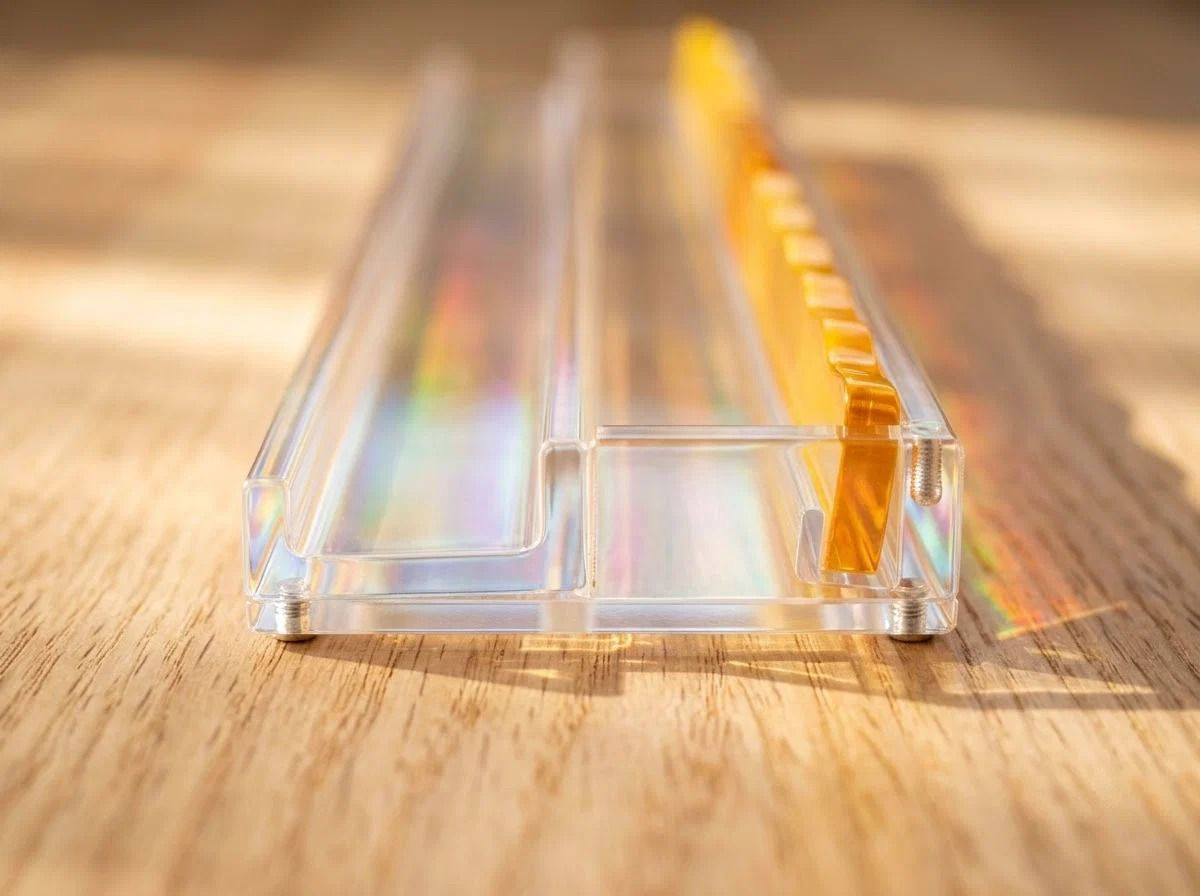
We stock acrylic mahjong racks with pushers designed to hold tiles upright during an American game—roughly 13–16 tiles per player depending on hand size and design. Racks solve the central problem: holding a full hand without dropping, sorting, or tipping tiles during passes and melds. Most players order racks that match their set—clear acrylic, engraved with titles or jokers—and keep them game after game. A rack is not mandatory (some players still use tile stands or hold tiles in hand), but once you try one, table stability improves noticeably. Racks range from simple straight designs to those with joke engravings or custom titles; see current price on the product page for your preferred style. The main thing to check: confirm your rack's height and width suit your hand and table size before ordering, since returns add friction to weekly play.
A mahjong rack with pushers is the unsung equipment hero. It holds your concealed tiles upright at a readable angle, keeps them sorted by suit and number, lets you push exposed melds forward without fumbling, and prevents that awful moment when someone's 14-tile hand collapses onto the discard pile. Most serious weekly players use one—not because they're required by any official rule, but because they make the game faster, cleaner, and less stressful.
Why do players choose engraved racks over plain ones?
An engraved rack does the same job as a blank one—holding and sorting tiles—but it also sits on your table and reflects your taste. We see players order racks with custom titles (last names, team names, funny sayings), joke designs, or matching artwork that ties to their set. The engraving doesn't affect function, but it does turn a utility item into something you want to display between games. Most folks keep the same rack for years, so a personal touch matters more than you'd think.
🀄 Shop best-selling mahjong sets →

What's the difference between a straight rack and one with a curve?
Straight racks hold tiles in a flat row, making it easy to sort by suit; they work best if you have a larger table and prefer a clean line. Curved racks arc slightly, which can save table space and gives your hand a more compact footprint—useful if you're playing on a tight surface or prefer to keep tiles closer to your body. The curve doesn't change how you play, only how the tiles sit relative to your position. Most players pick based on table size and personal comfort rather than any performance edge.
How do you match a rack to your set?
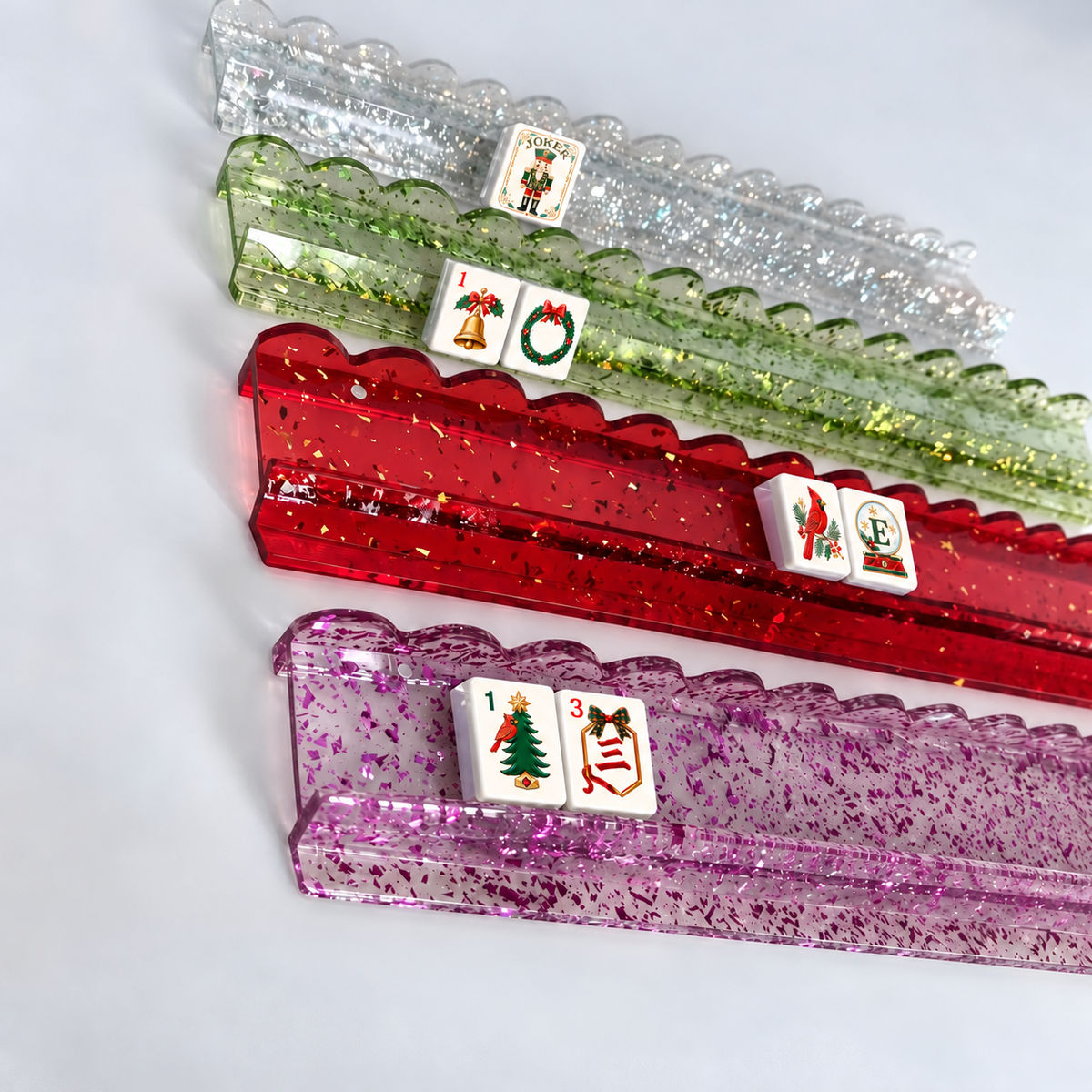
The easiest match is acrylic-on-acrylic: if you own an acrylic mahjong set, buying an acrylic rack from the same maker ensures visual consistency and the same tactile feel. Color and engraving style also matter—a clear rack with matching engraving, a tinted rack, or one with a joke or title you love will make sense at your table. Most players don't mix racks and sets from different makers; it's simpler to buy a matched pair and know they'll look intentional together.
What size rack should you order?
Rack length typically ranges to hold 13–16 tiles comfortably, depending on the tile height and pusher size. If you have smaller hands or prefer a compact setup, a shorter rack works fine; if you like to spread tiles wide for quick sorting, go longer. The pusher—the stick you use to shove tiles forward when you meld—should fit your grip; most are tapered so they're easier to hold than the tiles themselves. Before you order, measure or note your current hand spread if you already play, or ask at a club to see what feels natural.
Comparison: Rack Types by Player Profile
Player Profile | Rack Type | Best For | Why It Works |
New to game, small hands | Shorter straight, clear | Learning pace, easy sorting | Tiles stay visible and organized without overwhelming space |
Weekly regular, medium table | Standard straight, engraved | Balanced play, personal flair | Comfortable tile count, room to customize |
Tight table or apartment game | Compact curved, slim pusher | Space-saving setup | Takes up less room without sacrificing function |
Long-term collector | Full-size, matching set color | Display and storage | Looks intentional, stores easily with your set |
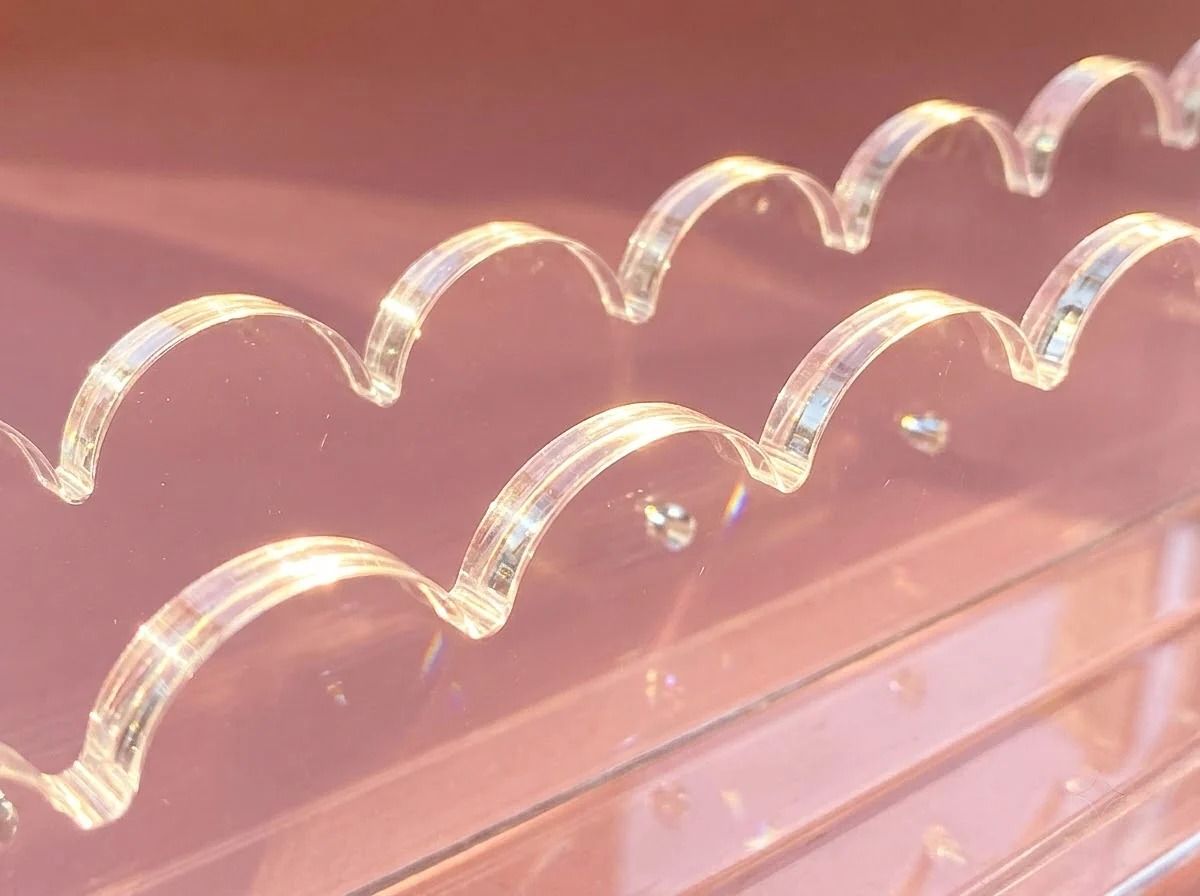
What should you check before ordering a designer rack?
Tile height: Make sure the rack's interior height accommodates your tiles—acrylic tiles vary slightly in thickness, so confirm compatibility if you're mixing brands. Table clearance: A taller rack requires more vertical space; measure your play area to avoid banging into light fixtures or running out of room for your hand. Pusher grip: Hold one if you can, or order from a maker known for tapered pushers that don't slip. Engraving style: Check that artwork or text is legible from across the table and aligns with your table's aesthetic. Spare pushers: Ask if extras come with your order or are sold separately; pushers occasionally get lost between games.
We've hosted hundreds of weekly games, and the most common mistake is ordering a rack without confirming tile fit first. A rack that's too tall, too narrow, or has pushers that don't grip well gets shoved aside, and you end up not using it. Take 30 seconds to cross-check dimensions against your tiles before checkout.
🎁 See our most-loved mahjong sets & accessories →
Do you need to buy a rack, or is it optional?
Racks are optional—plenty of players hold tiles in their hands or use improvised stands. But once you try a proper rack, you rarely go back. It frees your hands for writing scores, reaching for the Charleston, or picking up your drink. It also keeps tiles organized so you can spot a pair or pung instantly. In tournaments, racks are common but not mandated; in casual games, they're increasingly standard among weekly groups. If you're building your first complete mahjong setup, a rack is worth the investment.
How do you keep your rack and pusher in good shape?
Acrylic racks and pushers are durable and nearly indestructible if handled normally. Wipe them with a soft cloth after play to remove dust and hand oils. Don't leave them in direct sun for weeks (acrylic can yellow slightly), and don't soak them or use harsh cleaners. Store them in your mahjong bag or case if you travel, or keep them flat or upright in a cool, dry place. A well-made rack lasts for decades—many players have the same one from 10+ years of weekly games.
What if you play Chinese, Hong Kong, or Riichi mahjong instead?
American mahjong racks are sized for American tiles (roughly 1 inch tall and wide). If you play Chinese, Hong Kong, or Riichi mahjong, your tiles are often slightly smaller or shaped differently (some have rounded edges, others are thinner). Check that your rack interior matches your tile dimensions before ordering; many retailers specify American tiles only, so clarify with the seller. The principle is the same—a rack keeps tiles upright and sorted—but the fit won't work if you mix tile systems.
✨ Find your Mahstead set — free US shipping →
FAQ
Can I use an American mahjong rack for travel, or does it need a case?
Racks are sturdy but benefit from a protective bag or case if you transport them weekly. A mahjong travel bag lets you pack your rack, set, and mat together without worrying about scratches or drops.
Do engraved racks cost more than plain ones?
Engraving typically adds a modest amount to the base price; see current price on the product page for the specific design you want. Most players find the personal touch worth the difference.
What's the standard pusher length?
Pushers are usually 3–4 inches long, tapered to fit your thumb and forefinger comfortably. If you have very large or very small hands, confirm pusher dimensions before ordering.
Can I buy just a pusher if mine breaks or goes missing?
Some makers sell spare pushers separately; it's worth asking when you order your rack, since pushers occasionally disappear at the table or get stepped on.
Do I need a matching mat and rack, or can I mix them?
You can mix them—many players pair a rack from one maker with a mat from another. The combination that matters most is set and rack, since you handle them both during play.
How do I know if a rack will fit my table?
Measure your table depth and width, then check the rack's footprint (length and height when tiles are loaded). Confirm you have at least 2–3 inches of clearance on each side so you can reach discards and the wall without hitting the rack.


View More
View More
View More
