
Sichuan vs Vietnamese Mahjong: Key Rule Differences
Last updated: Nov 23, 2026
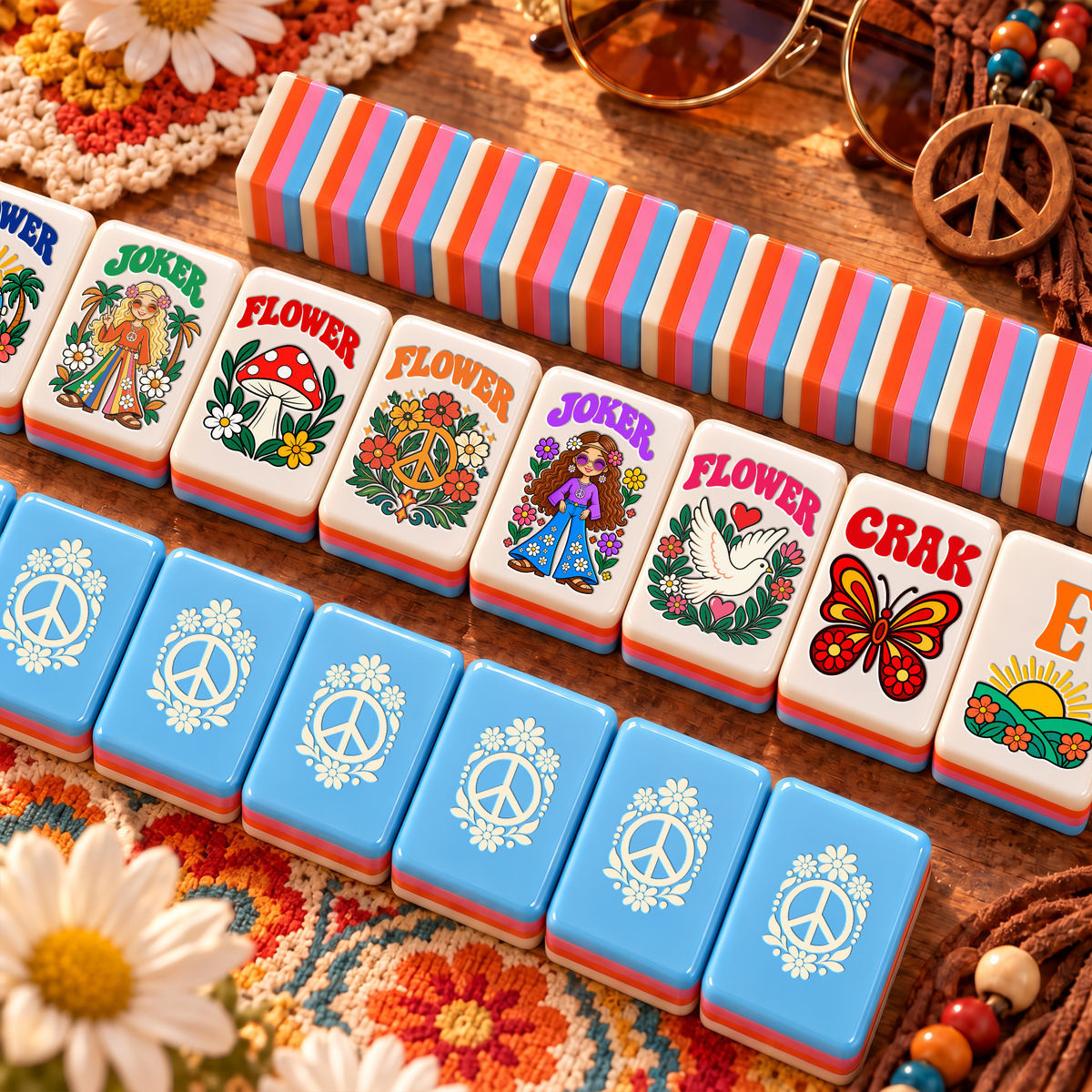
Sichuan mahjong (四川麻将) typically uses 108 or 144 tiles with unique hand mechanics—many Sichuan variants allow sequences (chows), simpler melds, and scoring tied to specific combos like pairs or triples. Vietnamese mahjong similarly uses 144 tiles but follows rules closer to Cantonese/Hong Kong styles: sequences are playable, and melds expose in specific ways. Both differ sharply from American mahjong, which forbids sequences entirely and uses 152 tiles with jokers. Sichuan emphasizes rapid play and local betting; Vietnamese preserves classical Hong Kong structure. If you host games mixing variants, clarify which rulebook governs play before dealing—mixing them creates deadlock. Most casual players in North America gravitate toward American rules; if you're exploring Sichuan or Vietnamese, online rule communities and YouTube demos are more reliable than books. Mahstead's best-selling sets come in American-format (152 tiles with jokers); if you play Sichuan or Vietnamese, a standard 144-tile Chinese set from a specialist retailer is more appropriate.
Sichuan and Vietnamese mahjong are distinct regional variants with different tile sets, hand patterns, and scoring systems. Understanding these differences helps you pick the correct rules and equipment for your game.
What tiles and counts do Sichuan and Vietnamese mahjong use?
Sichuan mahjong typically uses 108 tiles in four copies of 27 base tiles—no flowers, seasons, or honors in the classical form, though regional sub-variants exist. Vietnamese mahjong uses the standard 144-tile set: four copies of 36 base tiles (suits 1–9), 16 winds (N, E, W, S × 4), and 12 dragons (but no jokers or flowers in play). American mahjong, by contrast, uses 152 tiles—the 144 base plus 8 flowers and 8 jokers. This fundamental difference means a Sichuan player cannot simply swap an American set into a Sichuan game; the tile composition breaks the probability and hand balance entirely.

Can you play sequences and chows in Sichuan mahjong?
Yes. Sichuan mahjong allows and encourages chows (sequences of three consecutive numbers in one suit: 1-2-3, 5-6-7, etc.), both concealed and exposed. American mahjong forbids sequences completely—you can only meld pungs (three identical), kongs (four identical), and higher-order sets (quints, sextets). Sichuan hand goals often revolve around achieving all sequences, all pairs, or mixed meld combos; winning hands are faster to form and games move at a quicker pace. Vietnamese mahjong also permits sequences as part of its Hong Kong-derived ruleset. The absence of sequences is what makes American mahjong strategically unique and why an American player learning Sichuan will find the game feels more fluid and less about blocking—sequences are inherently easier to complete than pungs because you only need any three consecutive numbers, not three copies of the same tile.
How do Sichuan and Vietnamese scoring differ from American mahjong?
Sichuan mahjong scoring depends on hand composition: all chows, pairs + chows, or special combos each earn a fixed score or multiplier. Many Sichuan variants incorporate "limit hands" (similar to American hand card concepts, but simpler) and adjust payouts based on how the hand was won (self-draw, discard, etc.). Vietnamese mahjong uses a point-accumulation model closer to Cantonese mahjong—melds and winning conditions add base points, then multipliers (doubles) apply based on hand type, season, or special circumstances. American mahjong scoring is card-driven: the annual National Mah Jongg League card specifies which hands are legal, and points are determined solely by hand type and who paid out. No scoring in Sichuan or Vietnamese is tied to a single authoritative published card, unlike American mahjong. This means regional Sichuan or Vietnamese players may use house rules, adding chaos when travelers try to join a game; clarify scoring before the first deal.
Why do Sichuan and Vietnamese mahjong feel different to play?
Sichuan mahjong emphasizes rapid tile cycling, aggressive competition, and simultaneous calling (multiple players may claim a single discard, resolved by hierarchy). Games end in 10–20 minutes per hand, and the tone is fast, social, and often linked to gambling. Vietnamese mahjong follows a more methodical turn-by-turn flow similar to Hong Kong style, with individual claim priority and longer hands (15–30 minutes). American mahjong is the slowest: the Charleston ritual, the locked-down hand card, and the prohibition on exposed sequences create longer deliberation and higher strategy depth. If you've played American mahjong, switching to Sichuan or Vietnamese will feel unfamiliar—fewer hidden variables, faster payouts, and a party-game energy rather than a puzzle-solving energy. Each has merit; the choice depends on whether you want competitive brain-burn (American) or social speed (Sichuan) or balanced middle ground (Vietnamese).

Which variant should you learn first?
If you live in North America and want to join regular clubs, start with American mahjong. Clubs meet weekly in community centers, libraries, synagogues, and country clubs; most players use the current-year National Mah Jongg League card and 152-tile American sets. If you're exploring for cultural connection or have family who plays Sichuan or Vietnamese, learn that variant from native speakers or YouTube tutorials—the rules are subtle and house-dependent, and a rulebook alone won't capture unwritten norms. Never assume a variant is "simpler" because it uses fewer tiles; Sichuan's simultaneous claiming and rapid pace demand sharp focus. American mahjong's reputation for complexity comes from the card, not the rules—once you internalize the card, American play is highly logical. If your goal is one set for one game, pick the variant your group plays; if you want a travel-friendly intro to mahjong generally, American is the most standardized and teachable.
Aspect | Sichuan | Vietnamese | American |
Tile count | 108 or 144 | 144 | 152 |
Sequences allowed? | Yes (both exposed & concealed) | Yes | No |
Game length | 10–20 min/hand | 15–30 min/hand | 15–40 min/hand |
Jokers in play? | No | No | Yes (8) |
Scoring basis | Hand type + region rules | Point accumulation + doublers | Card-based annual reference |
Simultaneous calling? | Often yes | No (turn-order priority) | No |
Best for | Speed, social, gambling | Balanced classical play | Standardized clubs & tournaments |
🀄 Shop best-selling mahjong sets →
What to check before you buy a set for Sichuan or Vietnamese play
If you're committed to Sichuan or Vietnamese mahjong, verify your local group's exact ruleset and tile composition before purchasing. A 152-tile American set will not work for either variant; you'll need a 144-tile standard Chinese set. Confirm whether players use a published rulebook or house rules—if house rules dominate, no set you buy will guarantee correct play until you've attended a session and seen the conventions firsthand. Ask your group whether they prefer bamboo (traditional), plastic, or acrylic tiles; Sichuan players often prefer lighter, faster-sliding plastic, while Vietnamese players may favor a mix. Check if the group plays with an automatic shuffler (which means tile wear is high) or by hand (allowing for handmade or delicate materials). If you can't find a local group, online communities on social media and Mahjong Discord servers can point you toward rules and video tutorials.
For American mahjong, by contrast, the path is clearer: buy a 152-tile American set from the best-selling collection, print the current year's National Mah Jongg League card, and you're ready to join any American club or host your first game. The standardization removes guesswork.
🎁 See our most-loved mahjong sets & accessories →
How to transition between variants
If you already play American mahjong and want to explore Sichuan or Vietnamese, focus on one difference at a time:
Week 1: Learn to recognize sequences and understand how to call them.
Week 2: Memorize the hand patterns for your target variant (YouTube videos and online rulebooks are essential here).
Week 3: Play a few hands at half-speed with a patient group, stopping to check the rulebook after each meld.
Week 4: Play at normal speed and expect mistakes; most experienced players forgive novices.
Do not try to blend variants in the same game. Sichuan + American rules in one session will create disputes over whether a meld is valid, and no amount of arguing resolves it—the games are incompatible.
✨ Find your Mahstead set — free US shipping →

FAQ
Can I use an American mahjong set for Sichuan or Vietnamese mahjong?
No. American sets contain 152 tiles with 8 jokers and 8 flowers; Sichuan typically uses 108–144 tiles without jokers. The tile composition breaks hand probability. Use a dedicated 144-tile Chinese set for Sichuan or Vietnamese play.
Which variant is easiest to learn?
Sichuan is fastest to pick up (games end in minutes, fewer hidden rules), but American has the clearest standardized rulebook. Vietnamese sits in the middle for learning curve and pace.
Do I need to join a club to play Sichuan or Vietnamese mahjong?
Not required, but recommended. Online rule communities and YouTube tutorials exist, but in-person groups teach unwritten norms (etiquette, betting, claiming priority) that no video captures fully. Try a local community center or Meetup board to find a group.
Why doesn't American mahjong allow sequences?
American mahjong prioritizes complexity and strategy by forcing all melds to be identical-tile sets (pungs, kongs). Sequences simplify winning hands, so forbidding them keeps games longer and more competitive. This design choice makes American mahjong unique among variants.
Can I switch between variants in the same evening?
Avoid it. Each variant has different tile counts, melds, scoring, and calling rules. Mixing them creates confusion and disputes. If your group wants to play both, play complete rounds of one variant, then switch cleanly—treat it as a new game.
Is Vietnamese mahjong the same as Hong Kong mahjong?
Vietnamese mahjong is heavily influenced by Hong Kong/Cantonese rules (sequences allowed, similar melds), but regional variations exist in scoring and claiming. Always confirm local rules before playing.


View More
View More
View More
