
Is Mahjong Competition Rules Hard to Learn?
Last updated: Nov 23, 2026
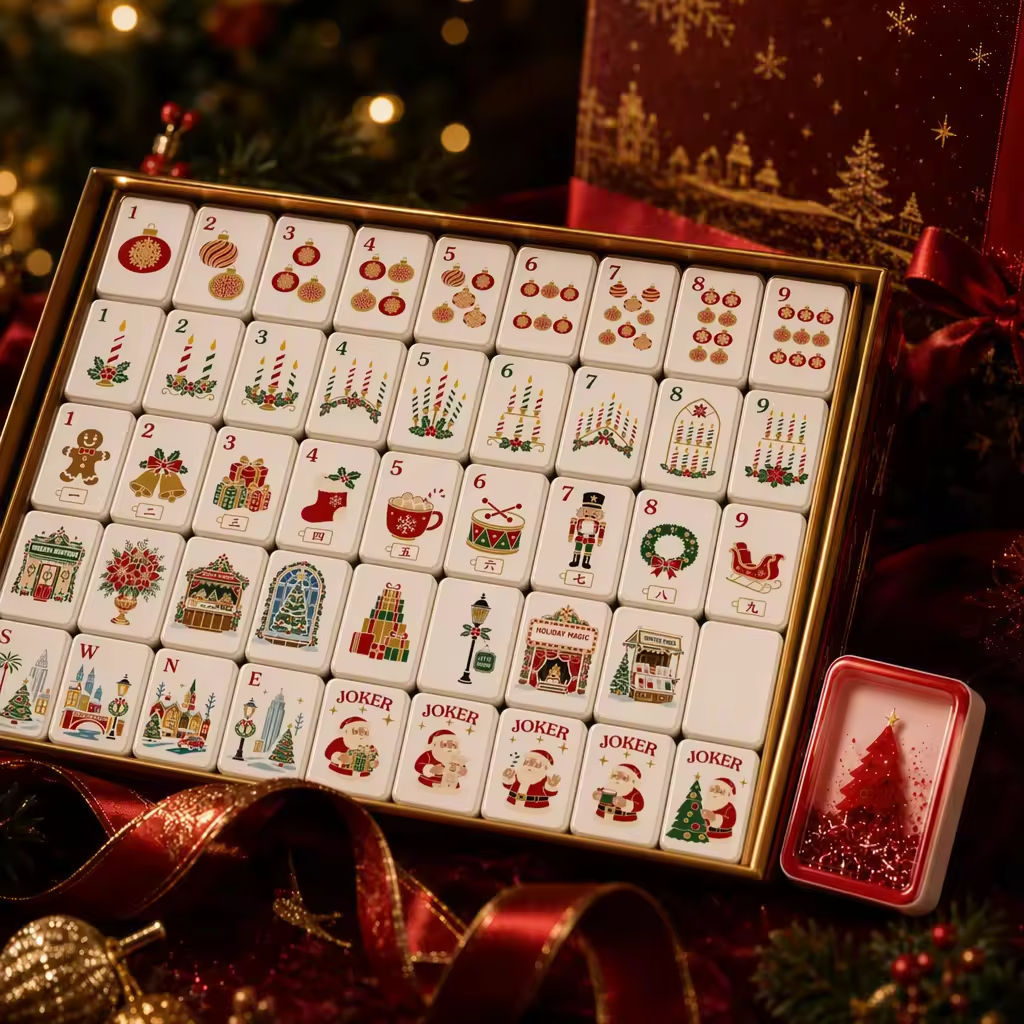
No—competition mahjong rules are harder than casual play, but not impossible. American mahjong competition (National Mah Jongg League standard) adds one major constraint: hands must match the current year's card exactly, and you must learn to read that card quickly. The core tile play—melds, the draw-discard cycle, calling—stays the same. Most players master the competition card within 3–5 games if they already know basic American mahjong. Chinese and Riichi variants have their own scoring systems that take longer (1–2 weeks of regular play) because point values depend on hand complexity and luck bonus, not a fixed card. The hardest part isn't the rules—it's memorizing which hands are legal this season. Our best-selling mahjong sets come with acrylic tiles that are durable enough for weekly league play, which is where most people learn competition rules fastest.
What makes competition rules different from casual play?
In casual American mahjong, players often play hands "off card"—whatever feels fun or educational. Competition play locks you to the League card: every hand you declare must appear on that year's card in the exact tile arrangement printed. You also cannot call a hand that's already been declared and won that game. This creates strategic tension—your perfect hand might be illegal if someone claims it first. The basic tile flow, winds, Charleston pass, and meld calling stay identical. The learning curve isn't steep if you already know the basics; it's precise. You're trading flexibility for structure. Beginners often feel this is harder because they can't improvise, but players who move to league play report the card actually simplifies decision-making by removing ambiguity.

How do American and Chinese competition rules differ?
American mahjong competition uses a fixed card; Chinese competition uses point scoring. In American play, a hand is worth 1 unit if it wins—all hands pay equally, and the payout depends on how you won (self-drawn vs. discarded) and who must pay. In Chinese competition, hands have point values based on their rarity and complexity: a hand with many matching melds scores higher than a simple run. Scoring also includes "luck bonus" for specific tile combinations. American players find the card constraint easier to learn because they study one reference document. Chinese players must internalize scoring tables, which takes longer but is equally learnable over 2–3 weeks of regular play. Hong Kong mahjong sits between them: it has fewer tiles (136 vs. 152 in American), no jokers, and rigid melds with lower point values. If you're entering competition for the first time, American League is the fastest entry point.
What's the hardest part: the rules or the card itself?
The card. Actual mahjong rules—how to call a meld, when you can pass, what the hand-winning conditions are—are straightforward and take one session to absorb. Reading the card is where most learners stumble. The League card is a dense reference grid organized by hand type: Pung hands, Kong hands, quint hands, sequences (which are joker-heavy in American play), and special hands like "Like Numbers" or "Consecutive Pungs." Each cell shows a visual pattern of tiles, and you must match your 14 tiles to exactly one printed pattern. Newcomers waste time flipping the card looking for matches instead of learning to scan by category and tile count. The rule itself—"your hand must match the card"—is simple. The practice of finding your hand on the card under pressure is a skill that improves with reps, not rule study. Bring a physical League card to your first few games and ask your tablemates to help you find matches; within 5–10 hands, the search gets much faster.
Do different competition variants have significantly different difficulty levels?
Yes. Here's a rough comparison:
Variant | Rules Complexity | Scoring Complexity | Card/Memory Load | Time to Competence |
American League | Low | Very low (1 point) | High (card study) | 1–2 weeks |
Chinese (Cantonese) | Medium | High (8+ scoring tables) | Medium (memorize combos) | 3–4 weeks |
Hong Kong | Medium | Medium (7-point limit, suits) | Low (fixed hand types) | 2–3 weeks |
Riichi | High | High (fan/meld scoring) | Very high (yaku lists) | 4–6 weeks |
Taiwanese | Medium | Very high (many point variants) | Very high | 4–8 weeks |
American League is the easiest entry to competition because you don't memorize scoring—you just match tiles. Riichi is the hardest because yaku (hand types) are contextual and melds matter: a 2-block sequence in one yaku is invalid in another. If you're serious about fast entry into a local league, American is your best bet. If you're learning online or have a patient tutor, any variant becomes manageable in 3–4 weeks.
How do you practice competition rules without joining a league right away?
Host private games with the current year's card and apply League rules: players must declare hands that match the card only, and once a hand wins, it's off-limits that round. Mark winning hands on a score sheet so you get used to the League card layout. Play 4–5 rounds (about 1.5 hours) and focus on hand-finding speed, not strategy. You can also ask your local library, community center, or synagogue game room whether they have a beginner league session or weekly open play where you sit in on real games without buy-in. Many regions offer casual league play monthly or seasonally specifically for newcomers. After 2–3 hosted games at home plus 1–2 sessions in a room, you'll know whether the card is natural to you and whether competition pace suits your play style. The difference between casual and competition rarely surprises players who've done this prep—it's rarely a shock once you've seen the card in action.
🀄 Shop best-selling mahjong sets →

What equipment do you actually need to play by competition rules?
A set of 152 American mahjong tiles (or a 160-tile set with spares), the current year's National Mah Jongg League card, a score sheet, and paper for noting melds. Some leagues require a mat for clear meld display, and racks with pushers make it faster to organize your hand and call quickly under pressure. A travel bag or case keeps your set and card together across seasons. Acrylic tiles are worth the investment if you plan to play weekly—they don't wear, fade, or stick like bamboo in humid rooms. Bring a pen and highlighter to mark the card's sections as you memorize them; a laminated card can be annotated with dry-erase markers. Some players study the card alone at home for 30 minutes weekly, reviewing hand types by category; this is faster than random trial-and-error in games.
What mistakes do competition newcomers make—and how to avoid them?
Memorizing the whole card at once. You don't need to. Study one section (e.g., all Pung hands) and play a full game before moving to Kong hands. Your brain will cluster patterns faster this way.
Calling a hand you're not certain matches the card. Always double-check with another player before declaring. A false call may cost you points or embarrassment; verification takes 5 seconds.
Forgetting that jokers can't be in a pair or single tile. This is an American rule that trips Chinese-trained players. Jokers must be in a meld of 3 or more.
Playing without a written scorecard. League play records each round's winner, payment, and seat assignment. Casual play doesn't—you'll forget who paid and who won by round 3.
Underestimating the Charleston. Competition League play follows strict Charleston rules (the tile-passing ritual before play). Learn this first; it's where many rule violations happen. See the Charleston explained for step-by-step details.
Ignoring the card's date. The League issues a new card every spring. Playing last year's card in a 2026 league game is invalid. Always confirm the year on your card matches the season.
What to check before you buy a set for competition play
Tile material: Acrylic is durable and consistent; inspect for bubbles or cracks that might make melds hard to read quickly.
Tile size: Standard American tiles are roughly 1¼ inch × ¾ inch. Verify your set matches before buying—tiny or oversized tiles slow card matching.
Suit clarity: Bam, Crak, and Dot suits must be visually distinct even under poor lighting (many home game rooms have glare). Check photos or ask for a sample.
Joker and wind count: A 160-tile set includes spares; verify you have 8 jokers in the playing set and enough winds.
Case or bag included: If you plan weekly league play, a protective bag is worth having; some sets include one, others don't.
Card included: Buy or download the current year's card separately. Sets do not include it.
🎁 See our most-loved mahjong sets & accessories →
Is competition mahjong worth the learning curve?
Most players report yes. Competition play adds strategy (hand-stealing, blocking others from declaring) that casual play lacks. The card constraint also eliminates arguments about what's legal—everything is printed and fixed. Once you've played 3–4 competition rounds, the card becomes automatic, and play gets faster and more fun. The time investment is modest: 1–2 weeks of regular play. The social payoff is large—league games have standings, regular opponents, seasonal tournaments, and often prizes or bragging rights. If you already know basic American mahjong, competition is an easy upgrade. If you're just starting, learning on the League card from day one is actually simpler than learning casual rules first, then relearning for competition later.
✨ Find your Mahstead set — free US shipping →

FAQ
Can I play competition mahjong on a kitchen table, or do I need special equipment?
Yes, you can play on a kitchen table. A mat or tablecloth helps define playing space and protects the table. Racks with pushers are optional but speed up meld calling and reduce fumbling—many league players use them out of habit, not necessity.
Do I have to memorize the entire League card before my first competition game?
No. Study the card's layout (sections by hand type) and practice finding 5–10 hands in 30 seconds. In your first live game, have the card in front of you and ask tablemates for help; they'll guide you faster than solo prep. Speed comes after 3–4 games.
What's the difference between an "off-card" hand and a "card" hand?
Off-card: any hand that follows basic mahjong rules (melds of 3+ identical tiles or joker sequences) but doesn't appear on the League card. Card hand: a hand that matches the printed pattern exactly. Competition requires card hands only. Casual play usually allows off-card hands for variety.
If I learn American League rules, can I play Chinese or Riichi mahjong?
You already know tile basics (suits, ranks, meld types), so yes—learning a new variant is faster. However, scoring systems are different. Expect 1–2 extra weeks to master scoring in Chinese or Riichi. Starting with American League is smart; switching is straightforward after.
How long does a typical competition game take?
A full round of 4 games (one player in each wind position) takes 45 minutes to 1.5 hours, depending on table speed and experience. Beginners run slower. League sessions usually schedule 2–3 rounds per evening (about 2.5 hours). Casual play can be much slower or faster depending on how much players chat.


View More
View More
View More
