
How Many Tiles in Shanghai Mahjong: A Variant Guide
Last updated: Nov 23, 2026
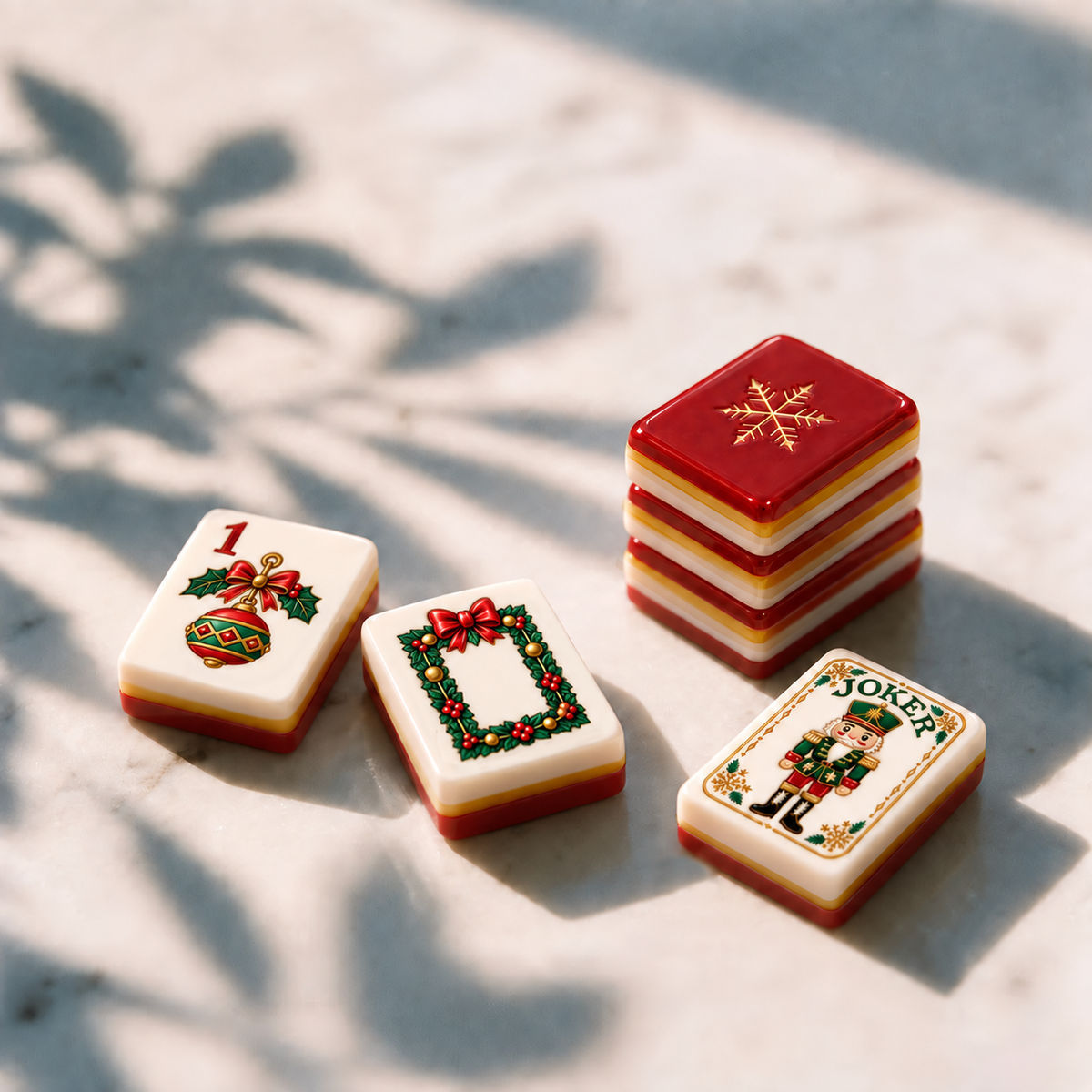
Shanghai mahjong uses exactly 108 tiles: three suits (Bams, Craks, Dots) numbered 1–9, with four copies of each tile (108 total). There are no winds, dragons, flowers, jokers, or honor tiles—only the numbered suit tiles. This makes Shanghai one of the simplest mahjong variants to learn and play. A game requires all 108 tiles on the table and typically lasts 20–30 minutes. Because the tile pool is smaller and there are no jokers to substitute, the hand combinations and strategy differ sharply from American mahjong. If you're switching between variants, a dedicated Shanghai set keeps confusion away; many players who host weekly games keep both an American mahjong set and a Shanghai set to avoid tile-swapping mid-session. --- 🀄 Shop best-selling mahjong sets →
What's the difference between Shanghai and American mahjong?
Shanghai mahjong strips the game to pure strategy: 108 suit tiles only, no honors, no jokers, no flowers. American mahjong uses 152 tiles including winds, dragons, and eight jokers that act as wildcards. Shanghai draws tiles one at a time from a wall (like Chinese classical); American uses the Charleston (pre-game tile exchange) and allows exposed melds on the table. Shanghai wins happen faster—fewer possible hands and no joker wiggle room mean games resolve in 20–30 minutes. If you've only played American, Shanghai feels bare at first; seasoned players often find it more purely strategic and less luck-dependent.

Why play Shanghai instead of American or Chinese classical?
Shanghai hits a sweet spot between speed and strategy. You can finish a game in the time a single American round takes. The reduced tile set (108 vs. 144+ in other variants) means fewer combos to memorize and less table chaos. It's ideal for players who want quick sessions, less equipment setup, or a stepping stone between casual play and competitive variants. Many of us host weekly games and rotate variants; Shanghai nights move fast enough that you can squeeze in four or five rounds after dinner. The smaller tile pool also makes teaching newcomers easier—no jokers to explain, no honor-suit confusion.
How do you set up a Shanghai mahjong game?
Divide the 108 tiles into four equal walls of 27 tiles each. Each player draws 13 tiles initially; the fourth player draws 14 and discards one to begin play. Tiles are drawn singly from the wall (not in pairs like American classical), and melds follow strict patterns: a pung (three identical), a kong (four identical), or a sequence (three consecutive in one suit, like 3–4–5 Bams). Players take turns drawing and discarding until someone completes a winning hand (typically four melds plus a pair). If no one wins after the wall runs dry, the round is a draw (often called a "goulash" in casual play). Unlike American mahjong, there's no joker substitution—if you need a 5 Crak and it's already been discarded, that tile is gone. This constraint makes tile memory and discard reading crucial skills.
What hands win in Shanghai mahjong?
A winning Shanghai hand has four complete melds (pungs, kongs, or sequences) plus one pair. That's it—simple but elegant. For example: three 2 Bams (pung) + 3–4–5 Craks (sequence) + four 7 Dots (kong) + 8–9 Bams and 1 Bam (sequence) + pair of 6 Craks. Some variants add scoring bonus for all one suit (like American mahjong's "all Bams"), or for all sequences, or for concealed melds (you drew every tile yourself without calling discards). Regional rule sets differ—Shanghai rules played in Jiangsu Province differ subtly from Shanghai rules as played in Hong Kong or Singapore. If you're learning from a friend or online group, confirm the specific bonus rules upfront to avoid disputes.

How do Shanghai and American scoring differ?
Shanghai scoring is typically simpler: a win is a win, all paid equally (often one point per player). Some groups add multipliers for rare hands (all one suit, all sequences, etc.), but no one tracks the elaborate point ladders of American mahjong (limit hands, doubles, triples). American mahjong pulls winning hands from the year's National Mah Jongg League card, so hands change annually and scores depend on which card-listed hand you completed. Shanghai has no official card—players either use traditional regional rules or agree on house rules beforehand. If you're hosting mixed groups, agree on scoring before the game starts: "One point per win, double for all one suit" avoids confusion far better than arguing mid-round. We've found that newcomers to Shanghai often appreciate the flat scoring; American players sometimes find it too simple, but it means games wrap faster and nobody's stuck calculating point multipliers.
🎁 See our most-loved mahjong sets & accessories →
Choosing the right set for Shanghai play
If you're serious about Shanghai, a dedicated 108-tile set keeps everything clean—no accidentally mixing in a wind tile mid-game. Many players who host weekly games own both American mahjong sets and a Shanghai set to avoid confusion and tile-swapping delays. Look for sets with clear markings (large numerals, high contrast colors) because Shanghai's speed means you'll scan tiles fast. Acrylic tiles with embossed numbers read faster under indoor lighting than painted tiles. Size matters too: 1.25-inch tiles are easier to handle on a mat, especially during rapid play.
What to check before you buy
Feature | Why it matters | What to look for |
Tile size | Faster play requires comfortable handling; too small = squinting | 1.2–1.3 inches standard; check against a ruler |
Numbering style | You'll read tiles in seconds; faded paint creates errors | Embossed or inlaid numerals; avoid flat paint |
Tile material | Durability during frequent games; acrylic lasts longer than plastic | Acrylic sets resist cracking; plastic weakens over seasons |
Set completeness | Missing tiles halt the game; 108 must be present and identical | Count the box contents; verify suit balance |
Carrying case | Weekly games mean transport; sets scatter without it | Reinforced bag or hard case; protects tiles from humidity |
A mat for your Shanghai games isn't essential (you can play on a table) but speeds setup: a rubber mat with tile grooves keeps tiles from sliding and organizes the wall layout. Racks with pushers aren't traditional for Shanghai (most players keep tiles in hand), but some groups use them to avoid confusion during rapid play. Neither is mandatory; focus first on getting a solid 108-tile set with clear markings.
Common mistakes when switching to Shanghai from American
Mistake: expecting jokers. Shanghai has zero jokers—you cannot substitute tiles. This shocks American players used to wildcards. Plan your melds accordingly; if the tile you need is gone, pivot quickly.
Mistake: forgetting there are no honors. American players sometimes still draw winds or dragons by habit. Confirm your set has only 108 tiles before game start.
Mistake: playing too slowly. Shanghai's speed is its appeal. Decide your move while others play; holding up the round kills the momentum that makes the variant fun.
Mistake: mixing house rules mid-game. Shanghai scoring and bonus rules vary by region. Write them down or state them aloud before the first tile is drawn.
Mistake: using a 152-tile American set as a stand-in. You'll either have extra tiles lying around (confusing) or strip out tiles and lose track of what's supposed to be in play.
✨ Find your Mahstead set — free US shipping →
Shanghai mahjong in your weekly game rotation
Many of us host weekly games and keep a Shanghai set on rotation for nights when time is tight or newcomers need a simpler entry point. Shanghai rounds finish in 20–30 minutes, so you can run four or five rounds in an evening rather than two or three American rounds. The focus shifts from card-reading and joker juggling to pure hand-building and tile psychology—you're competing directly, no hidden League card hands to decode. Over time, Shanghai develops its own texture: regulars become expert at reading discards (every discarded tile vanishes permanently), and the game becomes almost hypnotic in its simplicity.
If you're setting up a regular Shanghai night, get a set with clear, embossed numerals and keep it in a durable travel bag so the tiles survive your weekly commute. Acrylic sets age better than plastic under repeated handling. A rubber mat isn't required but helps younger players or anyone new to the variant learn tile organization faster. Store the mat and set together—consistency in setup makes transitions between American and Shanghai frictionless.

FAQ
Can I play Shanghai with an American mahjong set?
You can if you remove the winds, dragons, flowers, and jokers (44 tiles), leaving 108, but this risks losing pieces mid-game and defeats the purpose of owning a dedicated set. A proper Shanghai set ensures the right tiles stay in circulation and prevents accidental contamination.
How long does a Shanghai mahjong game last?
Typically 20–30 minutes per round if players are moderately experienced. Beginners may take 40–50 minutes while learning meld patterns. American rounds often run 45–60 minutes, so Shanghai is significantly faster.
Do all Shanghai players use the same rules?
No. Shanghai rules vary by region (Shanghai, Jiangsu, Hong Kong, Singapore styles). Before playing, confirm bonus hands, payment structure, and whether concealed melds score extra. Many casual groups play flat scoring (one point per win) to keep it simple.
What's the difference between Shanghai and Chinese classical mahjong?
Shanghai uses 108 tiles and typically plays faster with simpler rules. Chinese classical uses 144 tiles (108 suits plus winds, dragons, flowers, seasons) and has more complex bonus patterns. Shanghai is the simplified descendant.
Where can I buy a Shanghai mahjong set?
Online retailers and specialty game shops carry Shanghai sets. Look for clear numerals, acrylic construction, and a durable case. Check that the set includes all 108 tiles and no extra tiles that might cause confusion during play.
Is Shanghai mahjong good for beginners?
Yes. With only 108 tiles and no jokers or honor suits to decode, Shanghai is often easier for newcomers to learn than American mahjong. The faster rounds also hold attention better, and the pure strategy (no card-reading) appeals to logical thinkers.


View More
View More
View More
