
How to Use the 6 Dot Tile in American Mahjong
Last updated: Nov 23, 2026
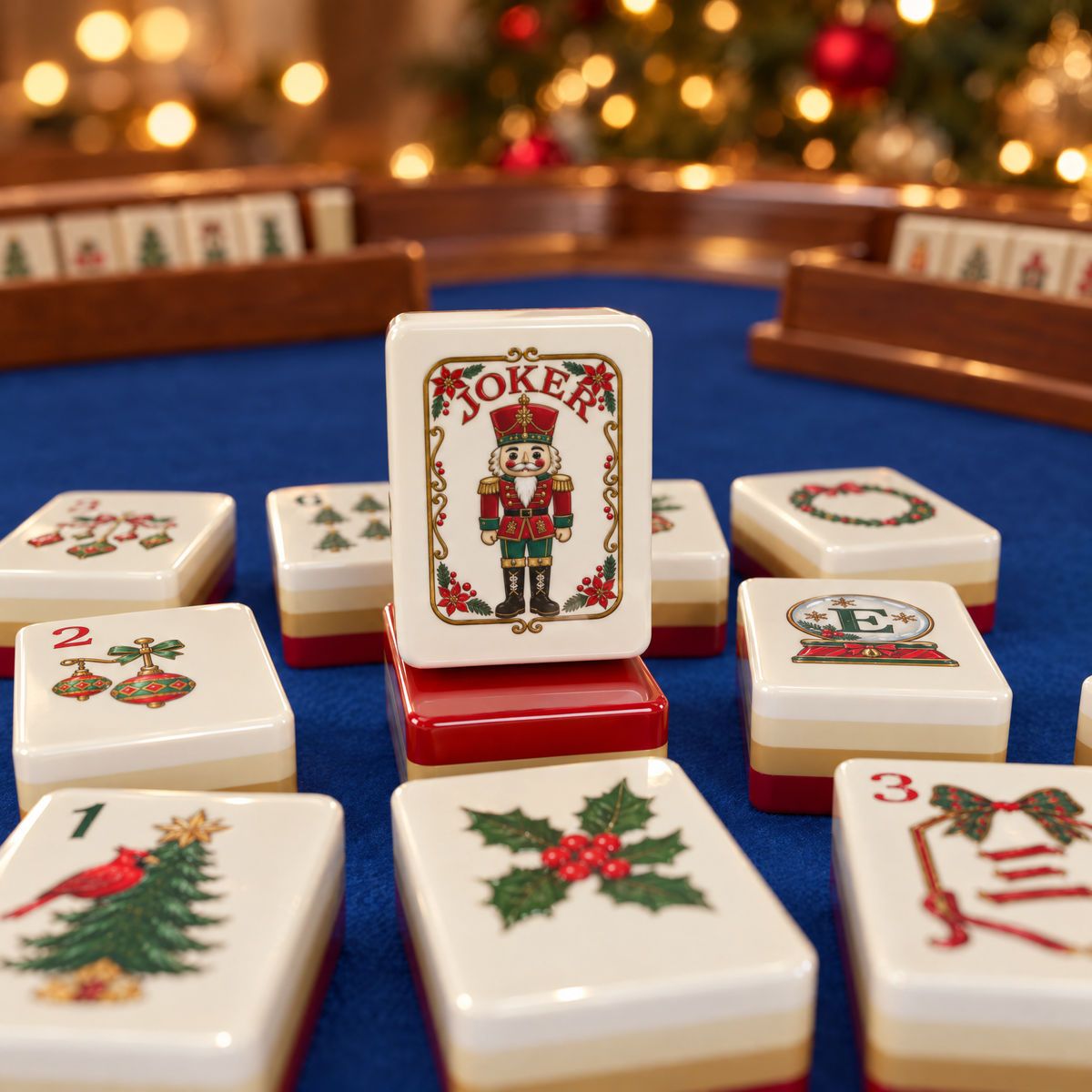
In American mahjong, the 6 Dot tile is one of four identical copies of the Dot suit numbered 1–9. You use it to build pungs (three identical tiles), kongs (four identical), or as part of a quint (five) or sextet (six) in hands listed on the current year's League card. The 6 Dot cannot form a sequence (chow) with 4-5 or 7-8 Dots—American mahjong does not allow sequences at all. You may expose a pung, kong, quint, or sextet of 6 Dots when you draw a matching tile or when a player discards one and you can complete a meld. Jokers can substitute for any Dot in these exposed melds but never in a pair or single tile. To know which hands use 6 Dots, consult the current year's League card before each game. A standard 160-tile American set includes four 6 Dot tiles and eight jokers, giving you the exact pieces needed to play and substitute. 🀄 Shop best-selling mahjong sets →
Why can't I make a sequence with 6 Dots?
American mahjong has no sequences—only American mahjong, not Chinese, Hong Kong, or Riichi variants. You cannot expose or call a run like 4-5-6 or 5-6-7. Instead, all exposed melds must be pungs (identical), kongs, quints, or sextets. This rule exists because American hands are built from the current year's card, which always specifies exact tile combinations, not flexible sequence rules. The 6 Dot works only in melds where all three (or four, five, six) tiles show the same Dot value.

Where does the 6 Dot appear on the League card?
The National Mah Jongg League card divides into sections by hand category: Like Numbers, Consecutive Run, Pair, and others. The 6 Dot appears in Like Numbers hands (all Dots the same rank), in mixed Dot/Wind/Dragon hands, and sometimes in Quint or Sextet patterns. To find hands with 6 Dots, scan the card's Dot-suit rows and read the symbols—a "6" with a Dot symbol means a 6 Dot tile. Learn to read the card before your first game so you can spot which hands are possible with the tiles in your rack.
Can a Joker replace a 6 Dot in an exposed pung?
Yes—a joker can stand in for a 6 Dot in any exposed pung, kong, quint, or sextet. If you have two 6 Dots and draw a third, you expose that pung. If you have two 6 Dots, a joker, and a player discards another 6 Dot, you can expose the pung with the joker filling the fourth tile's place (now a kong). However, jokers cannot be used in a single tile call or in a pair. Once a joker is placed in an exposed meld, it locks to that value (the 6 Dot) for the rest of the hand and cannot be moved or reclaimed.
What's the difference between a 6 Dot draw and a discard call?
When you draw a tile from the wall and complete a pung, kong, quint, or sextet with 6 Dots, you expose it immediately—no call needed. When another player discards a 6 Dot and you can complete a meld, you announce "pung" (or "kong," "quint," "sextet") before taking the tile. If two players want the same discard, the player making the hand call (not a simple pung) takes it; if both are melds, the player closest to discarder in turn order wins. Always check how jokers work to understand which substitutions are legal and when a joker locks in place.
🎁 See our most-loved mahjong sets & accessories →

What mistakes do new players make with the 6 Dot?
Mistake 1: Treating 6 Dot as part of a sequence. New players from other tile games assume 4-5-6 or 5-6-7 is a valid meld. It is not in American mahjong. Only Like Numbers hands (all same rank) work.
Mistake 2: Holding 6 Dots too long hoping for a sequence. Since sequences don't exist, a 6 Dot tile you can't use for a Like Number hand or a mixed hand on the card is a dead tile. Discard it early rather than clog your rack.
Mistake 3: Forgetting to check the card. Before you assume a 6 Dot hand is playable, scan the current year's League card. If 6 Dots don't appear in any hand you can form, they have no value.
Mistake 4: Using a joker in a pair of 6 Dots. A joker can substitute for one tile in a pung or larger meld, not in a pair. If you hold a pair of 6 Dots and a joker, you cannot use the joker to complete a pair—only a pung, kong, quint, or sextet.
Mistake 5: Misreading the card symbol. A Dot symbol (●) with a "6" is a 6 Dot. A "6" with a Bamboo symbol (🎋) is a 6 Bam. A "6" with a Circle symbol (◯) is a 6 Crak. Confusing these suits ruins your hand strategy.
6 Dot Strategy: When to Hold, Discard, or Call
Situation | Your Rack | Action | Why |
Two 6 Dots, no card pattern | Already have 3-4 other tiles | Discard early | Dead tile; frees space for card hands |
Two 6 Dots + one joker, card shows Like Numbers with 6 | Joker hasn't been used | Hold; wait for third 6 Dot or call | Pung or kong is achievable |
Three 6 Dots, one 6 Dot discarded by opponent | Rack shows 3-6-9 Like Numbers hand | Call "pung" immediately | Completes visible meld; player takes discard |
Four 6 Dots (full set), all concealed | Card shows Sextet with 6 Dot | Hold until you can complete hand | Sextet = higher points than pung or kong |
One 6 Dot, two jokers | Card shows no 6 Dot hands possible | Discard the 6 Dot | Jokers are too valuable to waste; use them elsewhere |
This table shows that the 6 Dot's value depends entirely on what the League card offers that game—always check before holding tiles.
✨ Find your Mahstead set — free US shipping →
What to Check Before You Buy a Mahjong Set
If you're new to the game, a standard American mahjong set includes four 6 Dot tiles (among 108 Dot, Bam, and Crak tiles total), plus Winds, Dragons, Flowers, Jokers, and spares. Verify the set is labeled as 160-tile American—not Chinese, Hong Kong, or another variant, which use different rules and tile counts. Check that tiles are large enough to read: a 1¼-inch tile or larger is comfortable for most tables. If you host weekly games, consider a set with engraved or branded tiles to personalize your play, and add a mat and rack with pushers to organize your hand and speed up play—all ship free across the US.
Key Takeaway
The 6 Dot tile is a standard Dot suit value used only in pungs, kongs, quints, or sextets—never in sequences. Always consult the current League card to know which hands with 6 Dots are valid that game. Jokers can fill in for a 6 Dot in any exposed meld except pairs. New players often waste 6 Dots or try to form impossible sequences; discard early if the card offers no 6 Dot hands, and hold strategically if it does. With a quality 160-tile set and a clear understanding of the card, the 6 Dot becomes a reliable building block in your weekly games.

FAQ
Can I use a 6 Dot in a hand with a 5 Dot and a 7 Dot?
No. American mahjong forbids sequences. A 5-6-7 run is not a legal meld. The 6 Dot works only in Like Numbers (all 6 Dots), mixed Dot/Wind/Dragon hands listed on the card, or Quint/Sextet patterns. Check the League card for your exact hand.
If I hold a 6 Dot pair and a joker, can I expose a pung?
Yes. A joker substitutes for the third tile, making a pung of three 6 Dots. The joker locks to the 6 Dot value and cannot move. You cannot use a joker in a pair alone.
What happens if I discard a 6 Dot and two players want it?
The player making a hand call (pung, kong, or final win) takes it before a player calling a simple meld. If both are melds, table position nearest the discarder wins. Always agree on turn order before play.
How many 6 Dot tiles are in a standard American set?
Exactly four—one for each of the four players in a game. American mahjong uses 152 tiles (four copies each of Dots, Bams, Craks, Winds, Dragons, Flowers) plus eight jokers.
Do Chinese or Hong Kong mahjong use the 6 Dot differently?
Yes. Chinese and Hong Kong mahjong allow sequences (1-2-3, 4-5-6, 7-8-9), so the 6 Dot forms 5-6-7 and 4-5-6 runs. American mahjong has no sequences. Always confirm your variant before play.
Where on the League card do I find hands with 6 Dots?
Scan the Dot-suit section and Like Numbers rows. A "6" symbol with a Dot (●) marks hands using 6 Dots. Read the tiles left-to-right and check the year—the card changes every spring.


View More
View More
View More
