
How to Use the 5 Crak Tile in American Mahjong
Last updated: Nov 23, 2026
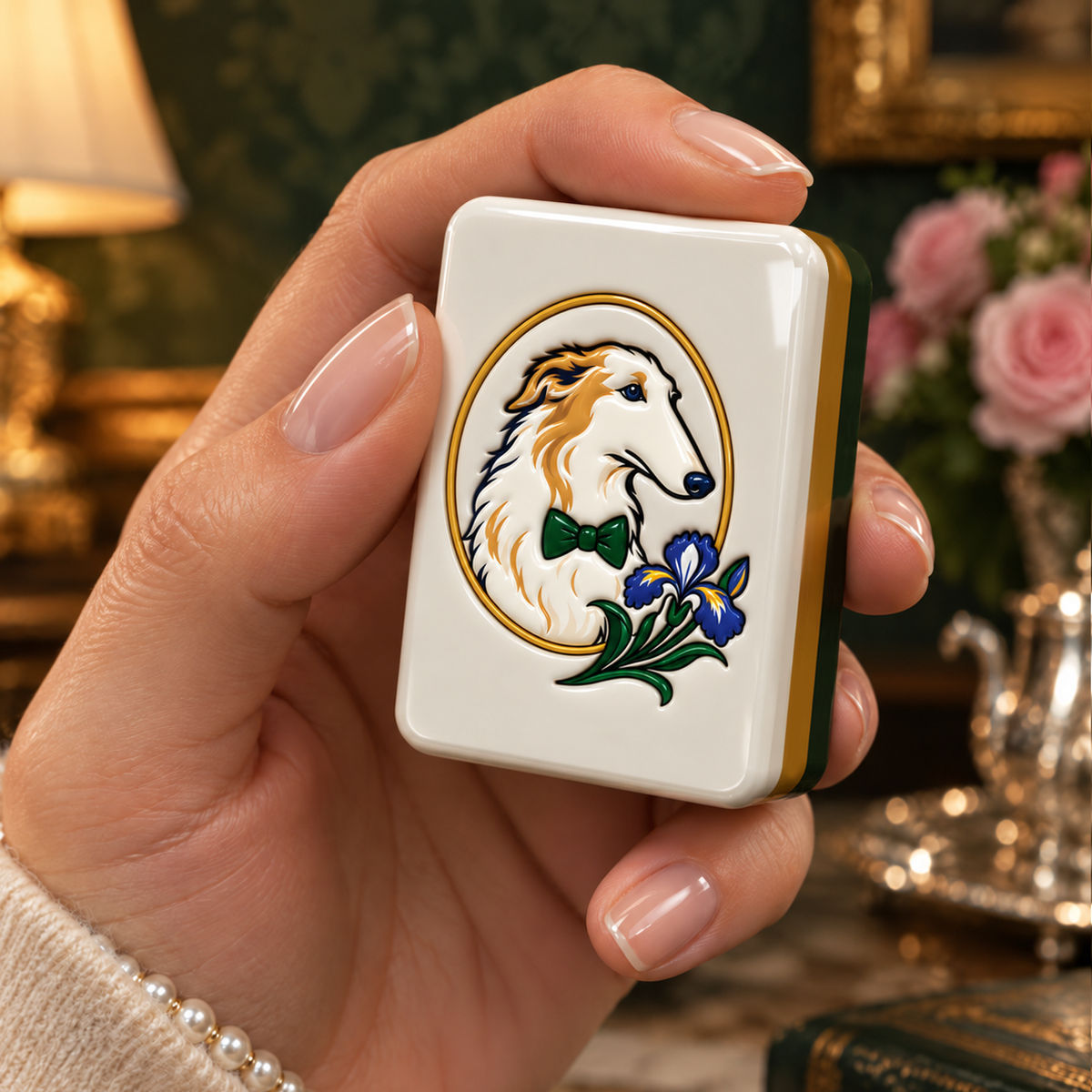
The 5 Crak is a character suit tile (Craks) ranked fifth in its line. You receive four copies of it in every standard 152-tile American mahjong set. The 5 Crak appears on the current year's National Mah Jongg League card in many hand patterns—typically in pungs (sets of three identical tiles), kongs (four), or longer sequences of the same suit. On the card, you'll find it grouped with other Craks in number-based rows and in mixed-suit sections. To use it, you draw tiles during play, match the 5 Crak to a hand listed on the card (checking the suit, number, and required groupings), and declare "Mah Jongg" once you've assembled that exact hand. Common mistakes: confusing the 5 Crak with similarly numbered tiles in other suits, or assuming you can substitute it for a joker when the card doesn't allow it. Jokers can replace any tile except the pair (final two tiles), so knowing the card's specific rules for each hand prevents costly errors. Learn the full structure of an American mahjong set to spot your 5 Craks quickly and build confidence at the table. 🀄 Shop best-selling mahjong sets →
Is the 5 Crak different from 5 Bams or 5 Dots?
Yes—each suit is distinct. The 5 Crak bears the crab image (Craks are pictorial); 5 Bams shows bamboo (5 stalks), and 5 Dots displays five small circles. On the card, they may appear in separate hand patterns, mixed-suit combos, or identical-suit rows. A hand calling for "one 5 Crak pung and two 5 Dot pungs" requires three specific tiles, not any "5" tile. Many new players mix them up by glancing at the number alone—always check the suit symbol before committing a tile to a grouping. Acrylic sets make suit symbols crisp and easy to read under table light, reducing hesitation during fast play.

Where do I find 5 Crak hands on the card?
The current year's card organizes hands by pattern type: same-suit number runs, mixed-suit combinations, consecutive-number lines, and honor tiles (winds and dragons). Look for rows labeled with Crak suit icons and the numeral 5. Some hands may list "5 Crak in a pung" (three of them), others "5 Crak as part of a mixed-suit group." Scan the entire card column-by-column rather than hunting randomly. The card structure remains consistent year to year—once you learn where to look, finding your 5 Craks takes seconds. Beginners often skim too fast; spend 10 minutes offline studying the card layout before your first session, then use that mental map at the table.
Can I use a joker to replace the 5 Crak?
Only if the hand on the card allows jokers in that position. The National Mah Jongg League card specifies where jokers are permitted (usually marked by small + symbols or a designated legend). Crucially, jokers can never be used in the final pair—the two tiles that complete your hand must be real, matching tiles. If a hand lists "5 Crak pung + joker" in another position, then yes, one joker substitutes for a missing Crak or other tile. If it shows "5 Crak pung" with no joker notation, you must hold three actual 5 Craks. Confusion here costs the game; always check the card notation before declaring Mah Jongg. Understanding how jokers work prevents costly misreads.
🎁 See our most-loved mahjong sets & accessories →
What's my strategy if I'm holding two 5 Craks?
Keep both if the card shows hands with 5 Crak pungs or kongs—your odds of drawing a third copy are decent with four tiles total in play. Discard one 5 Crak early if your hand plan doesn't need that suit or number; other players also need 5s, so a mid-game discard is often safer than clinging to redundant tiles. Track which players have discarded 5s (a sign they don't need Craks) and adjust. If you hold two 5 Craks and draw a third during active play, immediately check whether any remaining hand on the card uses a 5 Crak pung before exposing it—premature exposure locks your hand and may force you into a dead play. Position matters: East player (dealer) holds tiles longer before passing; South or West may pivot faster. Competitive weekly players often keep a quick mental count: "Two 5 Craks in hand, one discarded by North—one 5 Crak remains in the wall or other hands."

How do I avoid mixing up 5 Craks with other tiles?
Group your tiles by suit during the Charleston (the pre-game tile-passing ritual) and final draw. Organize as Bams (left), Craks (center), Dots (right)—this layout mimics most card layouts and becomes automatic muscle memory. Call out the suit aloud when you pick a tile: "5 Crak" not just "5," so your neighbors hear and you cement the name. When you check the card, place your finger under the Crak section, not wandering to Bams by accident. Some players use mahjong racks with pushers that keep tiles tilted and visible; angled racks make suit symbols pop compared to flat spreads. Acrylic tiles with bright engraving and large clear numerals cut confusion—plastic tiles with tiny faded symbols breed mistakes. In low light, suit symbols blur fast; ensure your table has adequate side lighting and consider a padded mahjong mat with a centered light well.
Comparison: Tile Organization Methods to Reduce Errors
Method | How It Works | Speed | Beginner-Friendly | Best For |
Hand groups by suit (left-to-right) | Bams, Craks, Dots in fixed zones | Fast | Yes | Home players, weekly games |
Rack with tile pushers | Tiles tilted upright in angled slots | Very fast | Yes | Regular hosts, tournament prep |
Flat spread on mat | All tiles face-up in a loose line | Slower | No | Teaching only, not active play |
Verbal call-outs | State suit name when drawing | Adds 2 sec per tile | Yes | Casual, social games |
How to read the card correctly for 5 Crak hands
Open the current year's card and locate the Crak suit section. Craks are numbered 1–9, so scan for the row or column containing "5 Crak" in a group. Most cards repeat the same hand in multiple layouts to save space; you may see "5 Crak pung + honors" listed once, then appear again in a different column with a different bonus tile. Read horizontally and vertically to ensure you're not missing a 5 Crak option. The card also separates "like numbers" (all 5s from any suit, mixed together) from "same suit" (all Craks, any number). A common trap: assuming "5 5 5" means three 5 Craks, when the card actually means three tiles of the number 5 across different suits. Look for the suit legend and tile symbols printed at the card's top or edges; these define abbreviations. Learn how to read a mahjong card for a full visual walk-through and avoid reading errors that slow down your group.
What to check before you buy a new set
Tile clarity: Hold a 5 Crak under table light and confirm the number "5" and crab symbol are sharp, not blurry. Acrylic sets printed with permanent engraving remain legible after years of play; cheaper tiles fade or scratch.
Suit color consistency: All four 5 Craks in your set should match in hue and icon style. Mixed batches sometimes produce tiles of slightly different shades—noticeable when you lay them side-by-side during a pung.
Tile thickness: Uniform thickness prevents tiles from catching on racks or sticking during shuffles. Uneven tiles are a sign of poor quality control.
Count: A standard set contains exactly four copies of the 5 Crak (and four of every number 1–9 in each suit). Count a sample before you leave the store or inspect on arrival.
Case or bag: If you host weekly games, a padded mahjong bag or carrying case protects tiles from dust and damage, keeping them play-ready for years.
✨ Find your Mahstead set — free US shipping →
What's in your weekly setup?
We host Thursday nights and keep a best-selling mahjong set in an acrylic case on a padded mat. Each player gets a rack so 5 Craks (and all tiles) stay upright and visible. Before the game starts, we sort tiles by suit—Bams left, Craks center, Dots right—so no one wastes time hunting for the 5 Crak mid-hand. With that routine locked in, the 5 Crak becomes a routine tile, not a bottleneck. The card sits propped on a card stand, and everyone scans it during their thinking time, not during active play. These habits keep the game flowing and the 5 Crak—like every other tile—where it belongs: in the right hand, at the right time.

FAQ
Can I hold a 5 Crak and a 5 Dot together and pretend they're a mixed pair?
No. The pair (final two tiles) must be identical—both 5 Craks, or both 5 Dots, or both winds, never mixed suits. Jokers cannot form the pair either. Always check the card for the exact pair type before declaring Mah Jongg.
What if I draw a 5 Crak but my hand doesn't need it?
Discard it on your turn. Watch which 5 Craks stay in the discard pile—other players may need them later, so gauge the table's demand before hoarding extras.
Is the 5 Crak worth more points than other numbered tiles?
Not inherently. Points come from the hand pattern itself (listed on the card), not individual tile values. A hand using all 5 Craks may score higher or lower than a hand using 1 Craks, depending on the pattern's rarity and bonus.
How many 5 Craks are in my new Mahstead set?
Exactly four. Every standard American mahjong set contains four identical copies of each numbered tile (1–9) per suit. All four 5 Craks are printed identically and play as interchangeable.
If someone exposes a 5 Crak pung on the table, can I still use 5 Craks in my hand?
Yes, but only one 5 Crak remains in play. If East exposed three 5 Craks as a pung, only one 5 Crak is left in the wall or other hands. Adjust your strategy—that hand pattern is now nearly impossible unless the exposed pung gets discarded later (very rare).


View More
View More
View More
