
Malaysian Mahjong vs. Competition Rules: Key Differences
Last updated: Nov 23, 2026
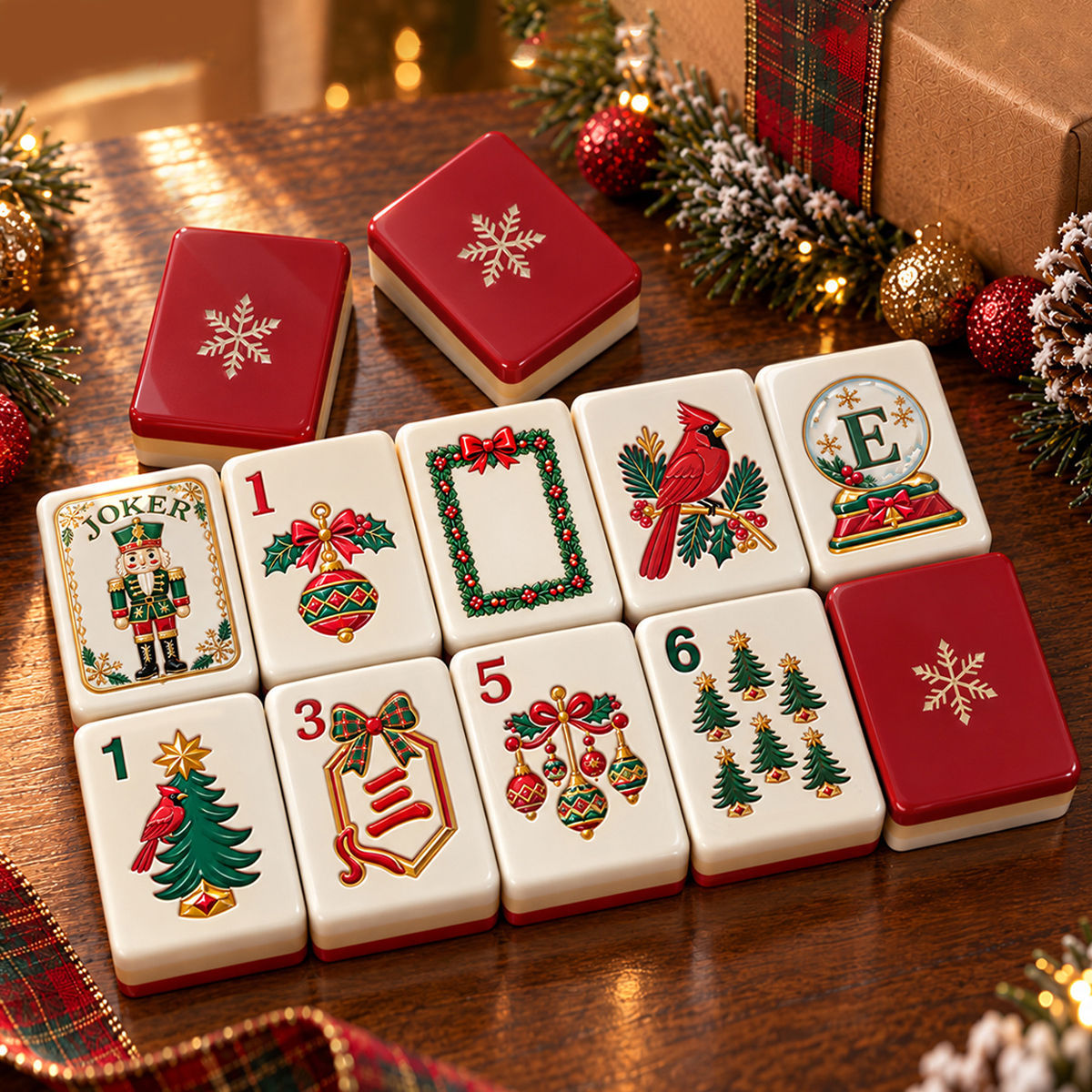
Malaysian mahjong (played in Malaysia, Singapore, and Brunei) uses 152 tiles like American mahjong but differs fundamentally in hand structure and exposure rules. Players pursue sequences (chows) openly—a core mechanic absent in American play, where only triplets (pungs), quads (kongs), and joker-enhanced sets are exposed. The hand-winning patterns differ: Malaysian uses a looser mix of sequences and triplets; American competition mahjong requires hands to match only the current year's official National Mah Jongg League card. Malaysian allows more flexibility in what constitutes a valid hand, while American play is rigid and card-dependent. Both use winds and dragons, but Malaysian typically plays faster rounds with fewer restrictions on joker placement. If you host regular games, knowing which variant your group plays is essential—tile sets and mats work for either, but the strategic play diverges sharply from the opening draw onward.
What is Malaysian mahjong versus American competition rules?
Malaysian mahjong evolved as a hybrid variant popular across Southeast Asia, borrowing tile structure from Chinese mahjong but developing distinct hand-calling conventions and exposure patterns. American mahjong, standardized since the 1920s, is governed by the National Mah Jongg League and requires players to match hands printed on an annually issued card. In Malaysia, players learn patterns by memory and regional convention rather than a centralized card; hands are more fluid and permit chows (1-2-3 sequences) that can be melded openly mid-game. This fundamental difference makes the two rulesets incompatible in practice—a hand valid in Kuala Lumpur would not score under American tournament law, and vice versa.
🀄 Shop best-selling mahjong sets →

Why does Malaysian mahjong allow sequences but American play doesn't?
In Malaysian mahjong, sequences (chows) are core melds: three consecutive tiles of the same suit exposed on the table, called openly like triplets. American mahjong prohibits exposed chows entirely; you may only expose triplets, quads, and special joker-enhanced sets. This stems from American mahjong's historical design as a "closed hand" game—players worked toward a single fixed winning pattern per round, published on the competition card, rather than calling any valid three-tile or four-tile combination. Malaysian play prioritizes rapid, flexible melding that rewards quick recognition and table speed; American play rewards card study, memory, and conservative strategy. If you're learning Malaysian rules, expect constant visible sequences on the table; in American games, most melds stay hidden until someone declares a winning hand.
How do hand-calling conventions differ?
Malaysian mahjong allows a player to call (win) when they complete any valid pattern of sequences and triplets, provided they hold the right combination—no reference card needed. A called hand in Malaysia might be three sequences plus a pair, or two sequences and two triplets, depending on local house rules and regional variation. American competition mahjong locks all winning hands to a single published card that changes each spring; you may call only if your 13 tiles (plus one drawn) exactly match one complete hand pattern listed on that year's card. This means American players spend time studying the card, memorizing sections, and planning moves around printed patterns; Malaysian players rely on rapid mental calculation and local tradition. The American system eliminates dispute—if a hand is on the card, it wins; if not, it doesn't—while Malaysian play requires table agreement on what patterns are "standard" and acceptable.
What about tile exposure and kong rules?
In Malaysian mahjong, when you claim a tile from the discard to form a sequence, triplet, or quad, you expose it immediately and continue play. Kongs (four identical tiles) are declared and set aside, with a replacement drawn from the kong end of the wall. American mahjong similarly allows exposed triplets, kongs, and joker-enhanced sets, but chows can never be exposed—only called as part of your winning hand. Both variants handle quints (five identical tiles, in American play using one joker) and sextets (six tiles, used in American hands). The key difference: Malaysian permits more mid-game flexibility because sequences are always valid melds, whereas American restricts exposure to rigid triplets and quads, forcing a more controlled, less reactive game flow.
How do jokers function in each variant?
American mahjong jokers are wild tiles that substitute for any single tile in an exposed set or a winning hand—they cannot stand alone as a tile and cannot be used in a pair. Each American set includes eight jokers; they're essential for building the hands published on the competition card. Malaysian mahjong also uses jokers (usually one or two per set as house rules dictate), but their role varies by region; some Malaysian groups treat them as wild substitutes, others restrict them to specific suit roles. Critically, American joker placement is rule-governed: a joker cannot occupy a pair slot, and exposed joker sets must match the card pattern exactly. Malaysian joker rules are looser and often negotiated at the table before play starts. If you're hosting both American and Malaysian players, clarify joker function upfront to avoid mid-game disputes.
What tile counts and set compositions are standard?
Both American and Malaysian mahjong use 152 playing tiles: three suits (Bams, Craks, Dots) numbered 1–9, four copies of each (108 tiles); four winds (North, East, West, South); 12 dragons (four each of Red, Green, White); and eight flowers. Malaysian sets sometimes add extra tiles or jokers depending on local play; American competition play uses exactly 152 tiles plus eight jokers, no more. Our best-selling mahjong sets are built to American standards (160-tile configuration with spare tiles), making them compatible with both rulesets in terms of raw components—tile counts, suits, and denominations are identical. The difference lies in strategy and hand validity, not inventory.
Aspect | Malaysian Mahjong | American Competition |
Hand reference | Memory + local convention | Annual National Mah Jongg League card |
Sequences (chows) allowed? | Yes, exposed mid-game | No, never exposed |
Exposure rules | Flexible; any valid meld exposed | Rigid; only triplets, kongs, joker sets |
Joker role | Regional variation | Fixed: wild substitute, no pairs |
Winning hand patterns | Numerous, player-negotiated | Strictly card-dependent |
Game speed | Fast, reactive | Deliberate, card-study focused |
Tile count | 152 standard | 152 standard |
Typical play setting | Home, casual, regional clubs | Tournament, competitive league |

How do regional house rules factor in?
Malaysian mahjong thrives on house-rule variation—different cities, families, and clubs may use distinct patterns, joker allowances, and payment structures. No central governing body publishes an official ruleset; instead, players agree on conventions before sitting down. This flexibility makes Malaysian mahjong accessible to newcomers (rules are negotiable) but also means a visitor from Penang might find Kuala Lumpur house rules unfamiliar. American competition mahjong eliminates this ambiguity: one card, one set of rules, one scoring system nationwide. If you're switching between Malaysian casual play and American league tournaments, expect a learning curve—not because tiles differ, but because the entire strategy framework shifts from adaptive to rigid.
🎁 See our most-loved mahjong sets & accessories →
What's the practical impact on game strategy and play pace?
Malaysian mahjong rewards table presence, quick reads, and flexibility—you're constantly assessing what sequences and triplets can be formed and called immediately. Game rounds tend to be quicker, with more tiles moving to the table. American mahjong demands card study before the game and conservative play during it—you're matching your hidden hand against one card pattern, often waiting many turns for the right tile. American play is slower, more thoughtful, and rewards memory. Malaysian play is faster and rewards instinct. If you're hosting both American and Malaysian players, be prepared for very different paces and mindsets; American players may find Malaysian play chaotic, while Malaysian players may find American play stalled.
How do Charleston and wall-draw protocols differ?
Both variants begin by distributing tiles and passing groups during the Charleston (or "passing" phase), though American mahjong has a formal three-pass protocol codified on the competition card. Malaysian mahjong's passing conventions vary by region—some groups skip the Charleston entirely and deal tiles directly. The wall draw (drawing tiles from the wall after each turn) is identical in both: players draw from the living end of the wall. The key difference is that American play is highly procedural (exact pass counts, wall breaks, first-hand restrictions), while Malaysian play is more adaptive. For a mixed game, agree on Charleston format before tiles are dealt.
What about player count and seating?
Both Malaysian and American mahjong are designed for four players, one per wind (North, East, South, West). Three-player and two-player variants exist but follow special modified rules in each system. Seating and wind rotation are handled identically: the winner of a hand becomes East; others rotate. The scoring impact of seating differs—American play uses a table payment model tied to the card hand value, while Malaysian payment is negotiated. For casual play at home, four-player tables are standard in both variants; if you're short a player, research the specific three-player or two-player rules for your chosen variant before starting.
✨ Find your Mahstead set — free US shipping →
What to check before you buy a set for either variant
When selecting a mahjong set, tile clarity and durability matter for both American and Malaysian play—you're reading symbols quickly in either case. Our engraved American mahjong sets are built to tournament durability standards, which translates well to casual Malaysian play too. Confirm tile size and weight feel comfortable in your hand; acrylic tiles suit fast Malaysian play and deliberate American study equally. Check that your set includes a sturdy mat or storage solution—both variants need a flat playing surface and organized tile storage. If you're hosting regular games, mahjong racks with pushers help both American and Malaysian players organize their hidden tiles neatly, reducing fumbles and disputes. For travel between groups or regions, a travel bag or case keeps your set protected and portable. None of these accessories change the rules, but they support cleaner, faster play in either system.

FAQ
Can I use the same mahjong set for both Malaysian and American play?
Yes. Both use 152 identical tiles (Bams, Craks, Dots, winds, dragons, flowers). The difference is strategy and hand patterns, not equipment. You'll need the American National Mah Jongg League card for American play, but the set itself works for both variants.
Why doesn't American mahjong allow sequences?
American mahjong was designed as a card-based, closed-hand game where winning patterns are published annually. Allowing exposed sequences would break that rigid structure. Sequences require ongoing negotiations and house rules, which American play avoids by eliminating them entirely.
How long does a round of Malaysian mahjong take versus American?
Malaysian rounds typically finish in 15–30 minutes due to faster melding and calling. American rounds often take 30–45 minutes because players study the card, wait for matching tiles, and play more conservatively. Exact time depends on player experience and table rules.
Do I need to learn the American card to play Malaysian mahjong casually?
No. Malaysian mahjong relies on memory and house-rule agreement, not a published card. However, if you plan to play American league tournaments, card study is mandatory and non-negotiable.
Which variant is easier for beginners?
Malaysian mahjong is often easier initially because patterns are negotiable and flexible; you can learn by asking at the table. American mahjong requires upfront card study but becomes more predictable once memorized. Choose based on your learning style: adaptive and intuitive (Malaysian) versus systematic and card-driven (American).
Are the dragons and winds handled the same way in both variants?
Yes. Dragons (Red, Green, White) and winds (North, East, South, West) function identically in both systems—they form triplets and quads, serve as hand components, and reset seating. The difference is only in which patterns using dragons and winds are valid for winning.


View More
View More
View More
