
How to Use the 1 Dot Tile in American Mahjong
Last updated: Nov 23, 2026
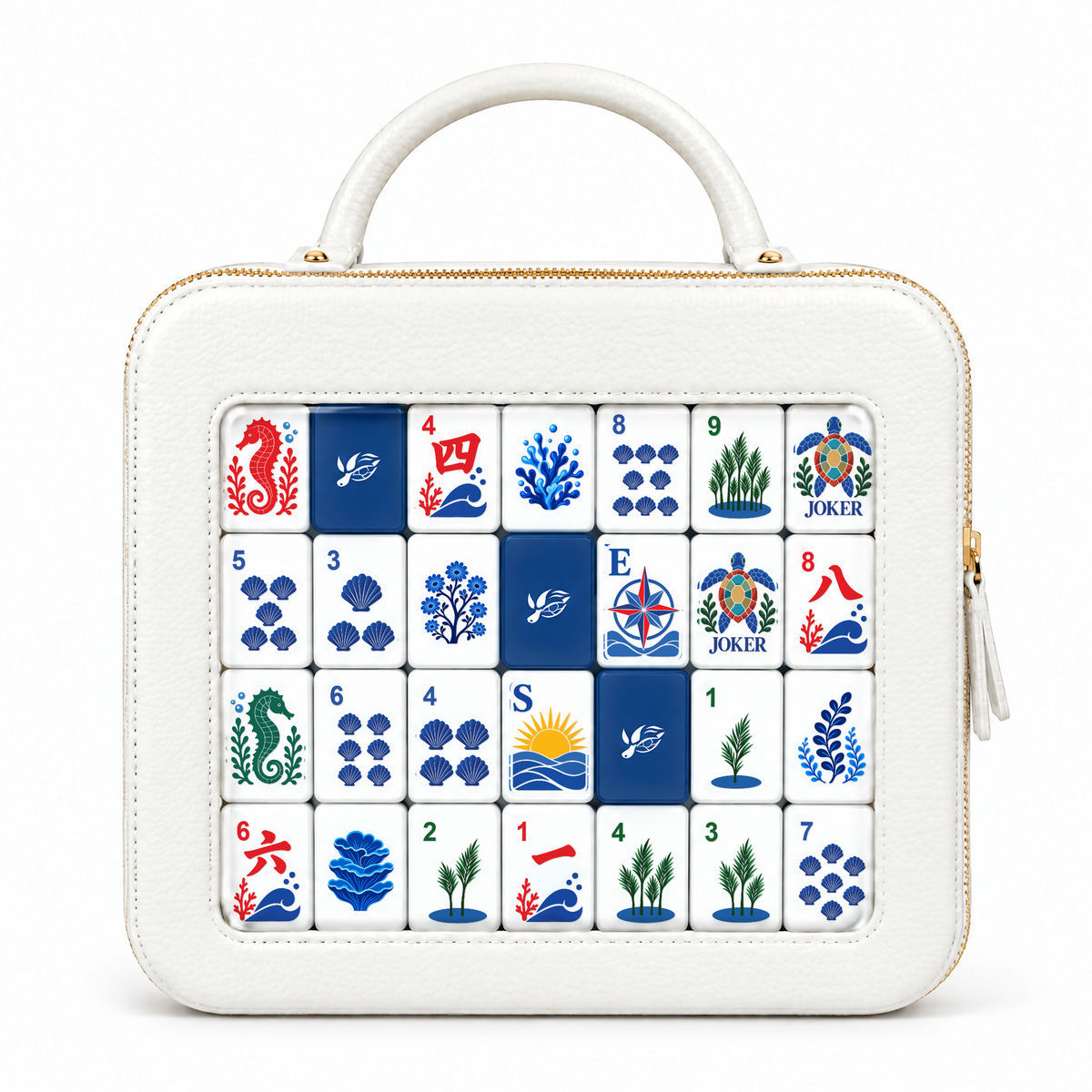
The 1 Dot is a numbered Dot suit tile—one of four identical copies in a standard 152-tile American mahjong set. It shows a single pip and is used to form pungs (three identical tiles), kongs (four identical), or complete hand patterns listed on the current year's National Mah Jongg League card. The 1 Dot appears in sequences on the hand card as part of runs like "1–2–3 Dots" written as a pung or longer matching set, never as a standalone chow. Since American mahjong allows no exposed sequences, the 1 Dot only contributes to exposed melds when grouped with two or more other 1 Dots, or when filling a complete hand from your concealed fourteen tiles. Learn what tiles fill a complete set before your first game. --- 🀄 Shop best-selling mahjong sets →
What does the 1 Dot look like and where do I find it?
The 1 Dot tile displays a single raised pip (dot) on its face, making it visually distinct from higher-numbered Dots. It belongs to the Dot suit (also called Bams in some traditions), which uses circular symbols. In any standard American set, you'll receive four 1 Dot tiles—never fewer, never more—because American mahjong uses exactly four copies of every numbered rank and wind. On hand charts, the 1 Dot appears in the Dot columns and is referenced by its number and suit name: "1 Dot" or sometimes "1–9 range" sections on the printed card.

Can I use the 1 Dot in any hand combination?
No. The 1 Dot only appears in hands listed on the current year's National Mah Jongg League card. You cannot invent combinations or use a 1 Dot interchangeably with any other tile rank. Each hand pattern on the card is unique and fixed; the 1 Dot must occupy the exact position shown—for example, as the first tile in a pung of three 1 Dots, or as part of a larger defined pattern. Many hands use no 1 Dot at all; others require exactly one, two, or more. Always check the card before assuming a 1 Dot fits your developing hand. If a hand calls for 1 Dots and you hold them, great—if not, pivot to a different hand pattern or wait for the tiles you need.
How do I expose a pung or kong of 1 Dots?
When you hold at least three 1 Dot tiles and the pattern on your hand card shows three 1 Dots in a pung (written as three identical symbols in a box), you may claim a discard and immediately expose the pung by placing it face-up on the table. If you already hold four 1 Dots and the card shows a kong (four identical tiles), you can expose all four. Never mix the 1 Dot with other Dot ranks when exposing—a pung must be three of the exact same tile, and a kong must be four. Once exposed, those tiles count toward your hand's completion but are held on the table, not in your rack, until you win. Jokers may substitute for missing 1 Dots in an exposed pung or kong only if the hand pattern itself permits jokers in that section; learn how jokers function in American mahjong for specifics.
What mistakes do players make with the 1 Dot?
The most common error is confusing the 1 Dot with the 1 Bam, which often shows a bird image instead of a dot. Beginners sometimes treat a 1 Dot as if it can form a sequence like "1–2–3" that can be claimed or exposed—wrong. American mahjong forbids chows (sequences); the 1 Dot only works in pungs, kongs, or longer matching sets. Another mistake: calling a meld when the card doesn't permit the specific combination at the moment. For instance, a player might expose three 1 Dots even though their chosen hand requires 1 Dots in a pair or a longer pattern; the card defines placement. Always verify the hand layout before claiming any tile or exposing any meld. When learning, refer to guides on reading the annual card until tile recognition becomes automatic.

How does the 1 Dot fit into a complete American mahjong hand?
A complete American mahjong hand consists of fourteen tiles arranged into melds that match exactly one pattern from the card. The 1 Dot might fill multiple roles depending on the pattern: it could be part of a pung (three 1 Dots + one different tile), part of a pair (two 1 Dots), or part of a longer run like a quint (five in order) or sextet (six in order)—always when the card shows that exact layout. You win by declaring "Mahjong!" when your fourteen tiles match a hand on the card, including your discard from your fifteenth tile drawn. The 1 Dot is neither special nor weak; it's simply a tile that appears in specific hands. Exposure strategy matters: if you expose 1 Dot melds early, opponents see your progress and may adjust discards. Keep 1 Dots concealed until close to winning unless the hand card forces exposure.
🎁 See our most-loved mahjong sets & accessories →
Comparison: How 1 Dot Hands Differ Across Difficulty Levels
Difficulty | Typical 1 Dot Usage | Why It Matters | Time to Spot on Card |
Beginner | Pairs, single pungs, simple runs | Easy to visualize and hold concealed | 10–15 seconds |
Intermediate | Multi-meld patterns, 1 Dot in pair + pung | Requires faster card scanning | 5–10 seconds |
Advanced | 1 Dot in kongs, quints, sextets, or mixed | Card strategy; 1 Dot rarity in complex hands | 2–5 seconds |
New players benefit from sets with clear engraved tile markings so the 1 Dot and other ranks stay readable under table lights.
What to Check Before You Buy a Mahjong Set
Tile clarity: Ensure the 1 Dot is clearly engraved or printed so it won't blur with 2 Dots or 8 Dots during play. Suit color consistency: Dots should look visually uniform; a 1 Dot slightly discolored or faded is harder to spot in a fast draw. Four copies present: Verify you receive four copies of every numbered tile (1–9 in each of three suits), not fewer. A quality set includes 152 playable tiles plus spares. Card included: Many sets ship without the current year's hand card; confirm the card comes with your set or purchase it separately. Material durability: Acrylic, plastic, and bone tiles each age differently; acrylic handles frequent reshuffling and table wear best.
✨ Find your Mahstead set — free US shipping →
Why the 1 Dot Matters for Your Game
The 1 Dot may seem minor—just one of thirty-six Dot tiles—but grasping how it combines with others sharpens your entire strategy. Recognizing that a 1 Dot can anchor a pung, pair, or longer meld trains your eye to scan the hand card faster and identify winning patterns before opponents finish their turns. In competitive play, reading the 1 Dot's position on the card within seconds becomes automatic; in casual home games, it's simply one more skill that deepens your enjoyment. When you sit down with a complete, well-made set, clear tile engravings, and a printed card, spotting the 1 Dot and every other rank takes no thought—you can focus purely on strategy, discards, and the rhythm of the draw.

FAQ
Is the 1 Dot the same in American, Chinese, and Hong Kong mahjong?
No. American mahjong uses only the Dots suit numbered 1–9; Chinese and Hong Kong use 1–9 Dots but allow chows (sequences) that American mahjong forbids. The 1 Dot tile itself looks similar across variants, but its rules differ completely.
Can I use a blank tile or joker as a 1 Dot?
A joker may substitute for a 1 Dot only if the hand card explicitly permits jokers in that section of the pattern. Blank tiles are spares and never enter play. Always check the card layout before substituting.
Why does my 1 Dot look like it has a bird on it?
You likely have a 1 Bam, not a 1 Dot. The 1 Bam traditionally shows a bird; the 1 Dot shows a single raised pip. Both are common sources of confusion for new players—keep them clearly separated on your rack.
How many hands on the card use the 1 Dot?
This varies yearly; the National Mah Jongg League issues a new card each spring with different hand patterns. Typically, the 1 Dot appears in 30–50 hands out of roughly 72 standard patterns, but always consult the current year's printed card for exact placement.
If I draw a 1 Dot but my hand doesn't need it, what do I do?
Discard it unless another hand pattern you're pursuing uses it. Holding a useless 1 Dot wastes a slot in your fourteen-tile hand; pivot to a hand that incorporates the tiles you're drawing, or pass it along and try a new strategy.


View More
View More
View More
