
How to Teach Mahjong to Grandparents and Grandkids
Last updated: Nov 23, 2026
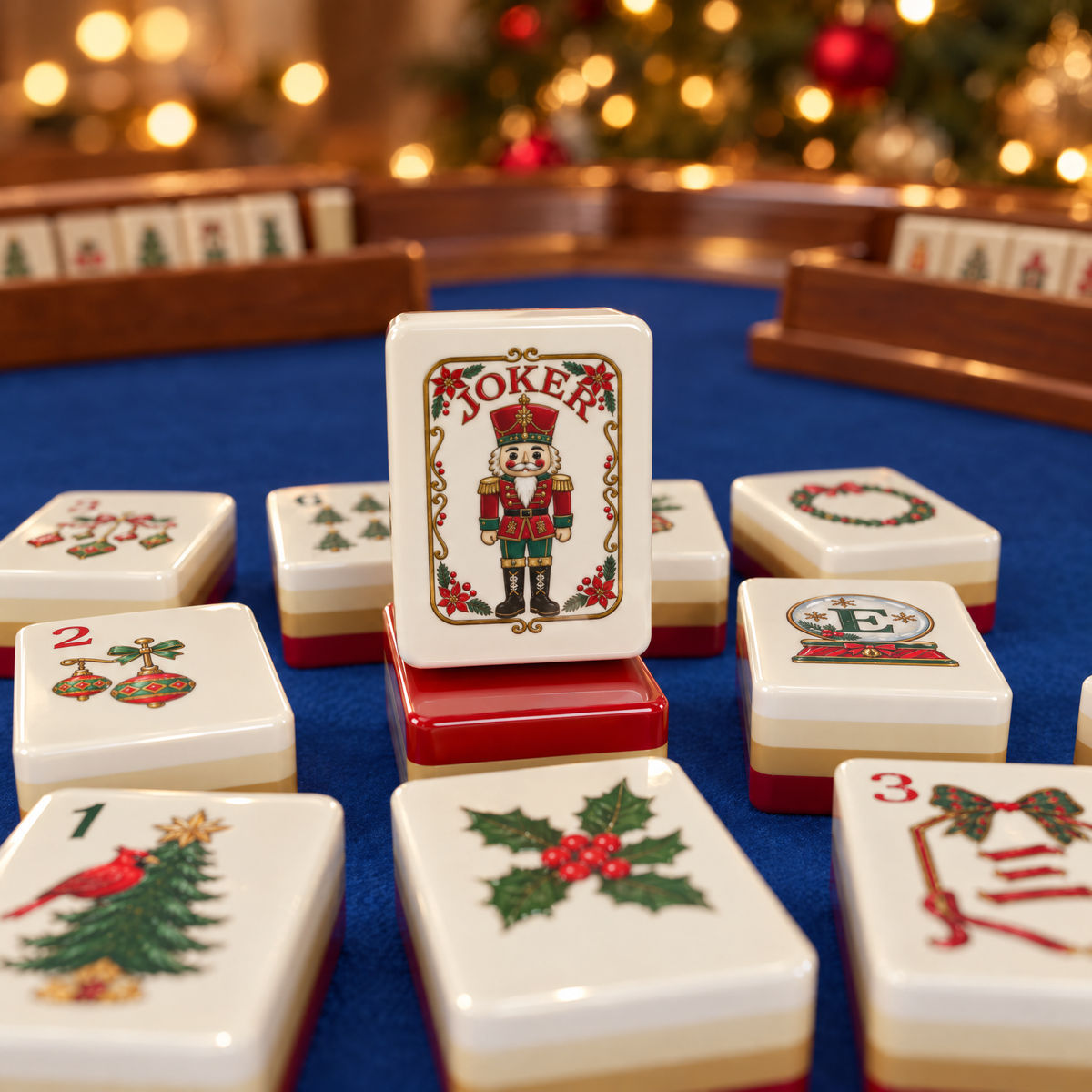
Teaching mahjong across generations works best when you start with American mahjong, which has clearer tile visibility and simpler calling rules than other variants. Gather a four-player group (grandparent, parent, two grandkids, or swap players), get a quality 160-tile acrylic set with large readable tiles, and plan 45 minutes to teach, then a 2-hour first game. Before starting, explain the hand card (the National Mah Jongg League's annual guide to winning combinations), the Charleston (the three-round passing ritual), and that American mahjong has no sequences—only identical-tile groups of three or more. Most mixed-age groups succeed by playing one game, letting beginners kibitz the second, then hosting a slower-paced third round where everyone plays. The goal isn't speed; it's laughter and connection. From best-selling mahjong sets come tile designs and sizes that make reading tiles easier for aging eyes and younger hands alike.
Why is American mahjong easier to teach than other variants?
American mahjong eliminates sequences (Chows in Chinese mahjong), so players only memorize three group types: pungs (three identical tiles), kongs (four identical), and joker combinations. There's no "1-2-3 sequence calling" that confuses beginners. The Charleston—the ritual exchange of tiles before play—gives everyone a fair starting position and builds anticipation. The hand card, printed yearly, is a single reference document that replaces hundreds of memorized patterns in Chinese or Riichi variants. Players aged 6 to 86 can learn one game rule set rather than juggling regional dialects. Start with how to play American mahjong to see the core mechanics before teaching anyone.

How do you explain tile groups and the hand card to mixed ages?
Show the hand card first—not the whole thing, just one section. Say: "This year's card shows winning combinations. Your job is to match tiles in your hand to one combination on the card, then call 'Mahjong.'" Hold up a pung (three 5 Dots) and a kong (four 5 Dots) side by side. Say: "These are identical-tile groups. They never have 1-2-3 in a row; every tile matches." For grandkids, relate it to Lego bricks: "Same color, same height, snap together." For grandparents, compare it to Rummy card groups: "Like collecting three queens—all the same rank." Use a printed hand card at the table so all four players can point and see together. Jokers are wildcards that sit inside groups only—never alone and never in a pair. Understanding mahjong jokers covers the exact rules; read that section aloud together if anyone is unsure.
What should you teach first: rules, the Charleston, or how to read the card?
Teach in this order: (1) tile names and groups, (2) how to read the card, (3) Charleston mechanics, (4) calling rules, (5) play. Start by laying out all four tile suits and having everyone name them: Bams (rods, often with a bird on the 1), Craks (lines, usually in red), and Dots (circles). Next, open the hand card together and pick one winning combination row. Have everyone trace it with a finger: "See these three 5 Craks here? That's a pung. These four 8 Dots? That's a kong." Then teach the Charleston—three rounds of passing tiles to the left, across, and right—as a game in itself before play begins. This order prevents overwhelm: names → patterns → mechanics → live play. Grandkids often learn tile recognition fastest; grandparents pick up the Charleston ritual first. By the third time you shuffle and start the Charleston, both groups will anticipate it and stay engaged.
🀄 Shop best-selling mahjong sets →
How do you keep the first game from running too long or feeling stressful?
Set a timer for 2 hours total before the game starts. Slow down play: allow 10 seconds per turn (no racing). Ask players aloud which tiles they're drawing or discarding, so everyone learns from every turn. Skip scoring the first game if time runs short—focus on "Did anyone reach Mahjong?" Let the winner stand and cheer; move straight to round two. Grandparents often benefit from playing East first (the starting position), then rotating; grandkids enjoy seeing how positions shift strategy. If someone gets frustrated, offer to kibitz one round—watch without playing, ask questions, then rejoin. Most families find that a 45-minute first game plus a 30-minute second game with light snacks creates a rhythm where both ages relax. Bring a mahjong mat to keep tiles organized and visible; the raised walls and grooves help all players, especially those with vision or dexterity concerns.
What equipment helps grandparents and grandkids play comfortably together?
Equipment | Why it matters | Who benefits most | Long-term use |
Large-tile acrylic set | Bright colors, clear numbers, easier to see from across table | Grandparents with vision changes | 10+ years, no fading |
Soft mahjong mat | Tiles don't slide; grooves keep groups organized | Both ages (grip + visibility) | Every game, reduces stress |
Racks with pushers | Tiles stand upright, easier to read and move | Grandparents, small hands, arthritis | Makes handling faster, tidier |
Printed annual hand card (laminated) | No glare, doesn't tear, visible to all four players | Mixed ages (shared reference) | One season, then archived |
Acrylic tiles (not bamboo or bone) are louder and more tactile—grandkids find satisfaction in the "click," and grandparents can feel tiles they're holding even without looking closely. Avoid plastic sets with tiny fonts; they frustrate older eyes and bore younger players faster. Engraved American mahjong sets from Mahstead let you personalize the set with family initials or a year, turning it into a keepsake grandkids will remember.
🎁 See our most-loved mahjong sets & accessories →

How do you handle rule questions during the first game?
Pause the game, ask the group, and look up the answer together in the hand card or a simple rules guide. Never let one player decide alone. Say: "Let's check the card together—what does it say?" Most rule questions fall into three types: (1) "Is this a winning combination?" (Check the card.), (2) "Can I call this tile?" (Only if it completes a group you can see and announce.) (3) "Do jokers go there?" (Only inside groups, never in a pair or alone.) Write these three on a sticky note and keep it on the table for round two. If play stalls for more than two minutes, skip that hand and start a new one; come back to the rule question later with a full explanation or a quick phone search. Grandparents often worry about "breaking an unwritten rule"; reassure them: "American mahjong is written down. If it's not on the card or these rules, it's fair."
When should grandkids learn scoring, and does it matter for the first game?
Skip scoring in game one and two. On game three, introduce it if everyone is relaxed and understands tile groups. American mahjong scoring awards points based on hand complexity and group types; the full scoring guide is dense, but a beginner version is: "Higher hands on the card = more points. Exposing groups costs points. Winning without showing tiles is worth the most." Use pencil and paper to track points per round, not cumulative scores. Grandkids often love scoring (they want to "win"); grandparents may prefer play-for-fun. Split the difference: announce a winner each round, keep score loosely, and celebrate after three games with the highest total. This keeps motivation high for both ages without reducing the game to arithmetic. Most families return to scoreless play after a few sessions—they realize the fun is in the game itself.
✨ Find your Mahstead set — free US shipping →
What common mistakes do mixed-age groups make, and how do you avoid them?
Mistake | Why it happens | How to fix it |
Passing tiles too fast in Charleston | Younger players rush; older players lose track | Call out loud: "Pass left now. Wait." Count to 3 between passes. |
Forgetting the hand card rule | Too many patterns to memorize | Print and laminate the card; point at it every turn. |
Trying to play too fast | Speed equals fun for some; confusion for others | Set timer for 10 seconds per turn. Enforce it kindly. |
Using jokers in pairs or alone | Confusion from other games or variants | Say aloud before every game: "Jokers live inside groups only, never a pair." |
Not rotating positions each game | East player has advantage; newer players feel left out | After game one, move everyone one seat clockwise. |
Mixing up tile suit names | Bam/Crak/Dot sound strange | Write the names on cards and tape them to the tiles. |
The biggest error: teaching too much before play. Grandkids disengage if you lecture for 30 minutes; grandparents forget rules if you don't practice them live. Teach one tile group, then start the Charleston. Teach the hand card, then play. Let the game itself be the textbook.
What do you need to host a multigenerational mahjong session?
Start with a quality 160-tile set (152 playing tiles plus spares). Choose acrylic tiles in bright colors—easier to see across the table and robust enough for repeated play. Add a mahjong mat to keep tiles from sliding and to provide grooves that help organize groups. If anyone has arthritis, mobility issues, or simply prefers not to hold tiles, racks with pushers let players stand tiles upright and move them by pushing instead of pinching. Laminate a printed hand card (the current National Mah Jongg League card) and keep it at the center of the table. Grab a notebook for scoring, a pencil, and dice (included in most sets). Set snacks and water nearby—mahjong games run 45 minutes to 2 hours. For ongoing play, a padded mahjong bag or case keeps the set safe between sessions.
What to check before you buy:
Tiles are acrylic or ceramic (not thin plastic).
Numbers and characters are printed clearly (no fading after washing).
Set includes 160 tiles (152 + spares for lost pieces).
Bag or case fits the set and is padded inside.
Racks and mat are optional; try one game without them first.

FAQ
Can grandkids younger than 8 learn American mahjong?
Yes, but focus on tile recognition and the Charleston ritual; skip scoring and complex hands. Play shorter rounds (two 30-minute games instead of one 2-hour game). Ages 6–7 often excel at memory and naming tiles but tire quickly on strategy. Ages 8+ grasp winning hand patterns. Keep snacks and breaks frequent.
How do I explain why American mahjong has no sequences when grandkids know other card games with runs?
Say: "In Poker or Rummy, you collect 3-4-5 in order. Mahjong only uses matching tiles—like three Aces, not a mixed hand. It's simpler: same-same-same, not different-different-different." Then show a pung and a sequence card side by side.
Should I teach both American and Chinese mahjong, or stick to one?
Teach one variant only for the first year. American mahjong is clearer for mixed ages because it has one hand card, no sequences, and fewer regional rules. After everyone is confident, introduce a second variant if interest grows. Mixing rules mid-game confuses everyone.
What if one grandparent knows Chinese mahjong and teaches it their way?
Before the first game, agree as a group: "We're playing American mahjong today using the 2026 hand card." Write it on a note card. If the experienced player drifts into Chinese rules, gently pause and point to the card: "Let's stick with this version so everyone's on the same page." Respect their knowledge and ask them to be the table "referee" using American rules.
How many games should we play in one session to keep everyone happy?
Play two games for the first session (45 min + 30 min). Most mixed-age groups enjoy three games if snacks and chat happen between rounds. After three, tiredness and rule fatigue set in. Plan sessions every two weeks so grandkids stay engaged without feeling forced to practice.
Can we play mahjong online instead of in person across generations?
Online mahjong works for adults who already know American rules, but teaching across video is slower—tile visibility is reduced, and the social rhythm is lost. The Charleston, hand-passing ritual, and immediate feedback all happen better in person. For ongoing play, yes; for teaching a new generation, gather in person for at least the first three sessions.


View More
View More
View More
