
How to Teach Mahjong to Empty Nesters
Last updated: Nov 23, 2026
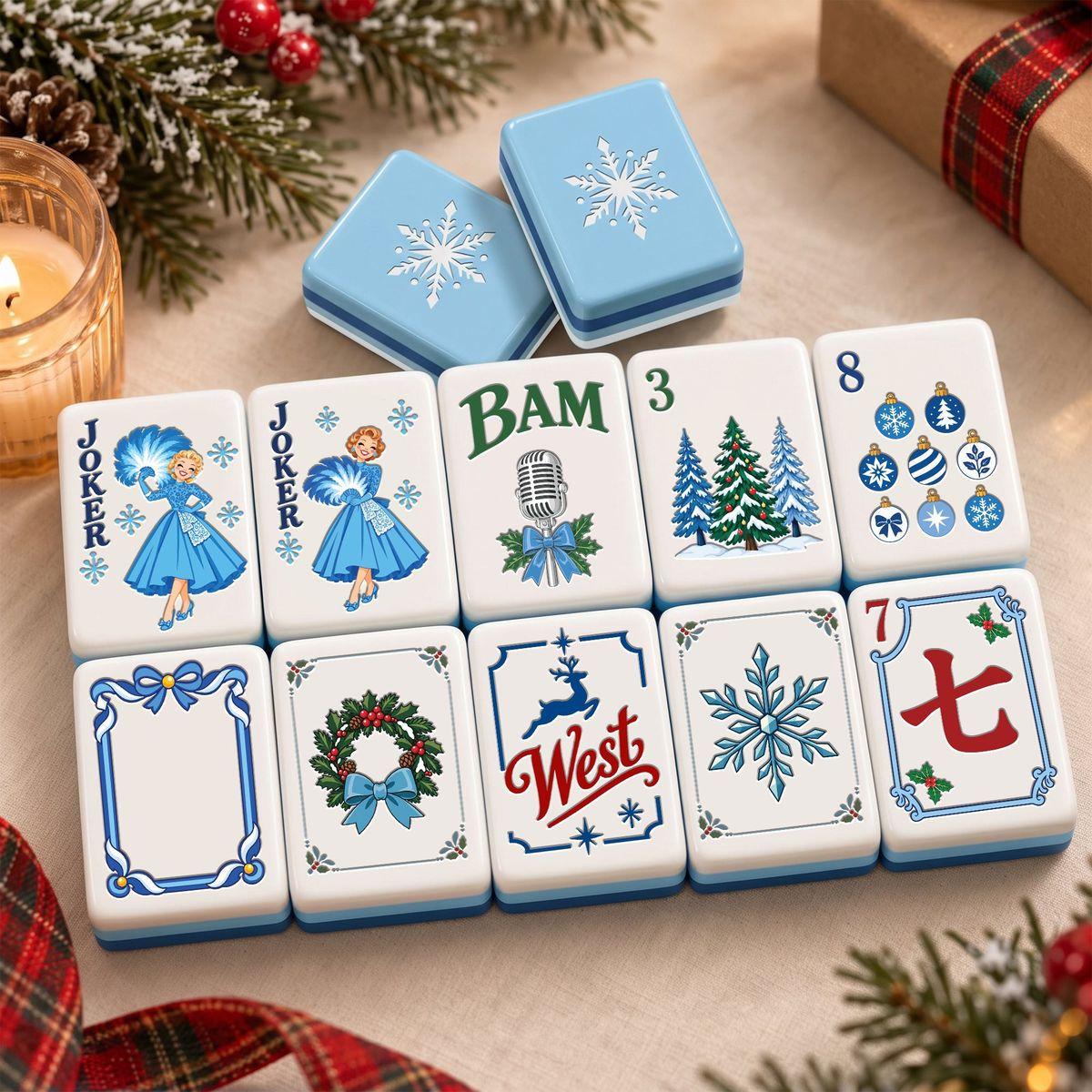
Teaching mahjong to empty nesters works because the game matches their pace: social, strategically rewarding, and played once a week for two hours. Start with the tile basics (152 tiles across three suits, winds, dragons, flowers, jokers), then explain hand-reading using the current-year National Mah Jongg League card—the only legal hands. Spend lesson one on tile names and the Charleston passing ritual; lesson two covers how to build and discard. Most groups meet at home with a mat, racks, and pushers; setup takes five minutes. Avoid rushing the card tutorial or playing without it—players lose confidence fast. A 160-tile American mahjong set includes everything needed; see the best-selling mahjong sets to find one that fits your table and players.
🀄 Shop best-selling mahjong sets →
Why empty nesters take to mahjong faster than younger players?
Empty nesters approach mahjong with patience and social intent—they're not learning under time pressure and genuinely want a weekly gathering place. Retirees often have time for the 4–6 week ramp-up before a player feels confident reading the card and managing tiles. They also bring decades of game-playing habits (rules respect, turn discipline, note-taking), so teaching hand structure is faster than teaching fundamentals like "you must play in turn." The game's blend of luck (the shuffle and draw) and skill (discarding strategy, reading opponents' builds) appeals to minds seeking both challenge and humor. Unlike competitive bridge, mahjong has no ranking anxiety—a group plays the same four players weekly, and "winning" feels more like collective accomplishment than scoreboard pressure.

What does lesson one actually cover?
Lesson one is 60–90 minutes and covers three pieces: tile recognition, the Charleston, and hand layout. Begin by naming each tile type aloud—Bams (1–9), Craks (1–9), Dots (1–9), the four Winds, three Dragons, eight Flowers—and show players how the sets are physically organized (Mahstead sets organize tiles in clearly marked suit sections). Pass a set around the table so everyone handles acrylic tiles and feels tile weight. Spend 15 minutes on the Charleston: show players the six passes (right, across, left, right again, across again, left again), then walk through one full round slowly. Describe hand structure in plain terms: "You'll have 14 tiles at your turn's end—they must match a pattern from the card, like three Bams plus three Craks plus pairs, etc." Don't open the card yet. End by playing one practice hand where players just draw and discard without seeking a win, so they feel tile movement.
How do you introduce the card without overwhelming them?
The National Mah Jongg League card is the rule book and only legal hand source; it's also why many beginners freeze. Introduce it in lesson two by picking one simple hand pattern (e.g., "three pairs of Bams in a row: 1-1-1, 2-2-2, 3-3-3 all Bams"). Show the card row where that hand appears, and name every tile needed aloud. Build that exact hand on the table so players see what "matches the card" means. Then flip to a second pattern and repeat. After two patterns, you've broken the ice—the card stops feeling like a foreign language. In week three, players start spotting patterns themselves ("I see that hand!"). Teach how to read the mahjong card by section first: pairs go on the left, then the main melds. Tell players the card uses symbols (little pictures of suits) not numbers, so the first look is always a bit fuzzy—that's normal. Give each player a card copy to highlight their winning hand once they win; it feels like ownership.
🎁 See our most-loved mahjong sets & accessories →
What home setup makes teaching easiest?
A mahjong mat is your best investment: it defines four player zones, marks the center discard area, and signals "this is serious play" to everyone. Sit players on all four sides, not in a row. Use mahjong racks with pushers—one per player—so tiles stand upright and hidden; pushers let players move tiles forward to signal a discard without reaching across. A lazy Susan or turntable in the center speeds tile distribution (the dealer draws from the wall, spins the center pile for others to draw in turn). Have the current-year card printed or copied four times; laminate one copy for the center so it survives wear. Keep a pen and paper for scoring. Gather around a 36–48 inch table; if your table is too small, play standing or get a lightweight folding mat that extends into a dedicated game space. Never teach on a kitchen counter or while standing—the game requires 30 seconds to settle and look at the card between turns.
Setup Item | Why It Matters | Who Needs It | Impact on Teaching |
Mahjong mat | Defines zones, organizes discard area | All four players | Players focus on tiles, not table confusion |
Racks with pushers | Hides tiles, signals discards clearly | One per player | New players learn proper play flow |
Copied card (×4, laminated) | Everyone reads simultaneously | All four players | Eliminates "what hand is this?" delays |
Lazy Susan | Speeds tile distribution | Dealer role | Games run smoother; teaching points stick better |
Pen and paper | Tracks scores | One per pair or table | Accountability builds confidence |

What mistakes do new groups make in weeks 2–4?
The biggest mistake is playing without the card or using an old year's card—empty nesters often have a friend's old set and assume the card is "the same." It changes every spring; playing an outdated card teaches wrong hands and breaks trust ("I thought that was legal!"). A second mistake is skipping the Charleston or doing it poorly; if players don't pass tiles fairly, the game feels rigged ("I only got face cards"). A third is teaching all 152 tiles at once—name suits and numbers in play, not memorization drills. A fourth is unclear discard rules: many new players think they must match someone else's tile when they discard, or that they can pick up any discard. Clarify: "You discard one tile every turn, face-up in the center. On your next turn, the player to your left draws first, then you draw, then others draw." Slow down week two and three deliberately—groups that rush feel lost by week four. Allow players to ask "What's that tile?" during play; it's not cheating, it's learning.
When is your group actually ready to play "for real"?
After four weeks, most groups have seen all tile types, played 12–16 hands, and can read the card without hesitation. By week five, scoring confusion is normal—use the simplest American mahjong scoring rules first (points = hand value + bonuses), then add variations later. A group is ready to "play for real" when: (1) every player can spot three legal hands on the card in 60 seconds, (2) no one asks "Is this discard safe?" more than twice a turn, (3) the Charleston runs smoothly without re-passing, and (4) players laugh or chat during play instead of looking stressed. That usually lands around week 5–6. Set a weekly standing time (Tuesday 2 p.m., every Thursday evening) so the habit sticks; empty nesters thrive on reliable routines. Some groups add light snacks or wine after, so the gathering becomes social landmark, not just a game.
✨ Find your Mahstead set — free US shipping →
What to check before you buy a set
Choose a 160-tile American mahjong set (not Chinese, Hong Kong, or Riichi, which have different rules and tile counts). Verify the set includes all four suits, winds, dragons, flowers, and eight jokers—check the product description. Acrylic tiles last longer than bamboo and are easier for older hands to grip and shuffle; lighter-colored tiles are easier to read if anyone has vision concerns. Check that the set comes with at least one mat (or budget for a mat separately); without one, racks slide around the table. If your table is smaller than 36 inches, buy a travel mahjong mat that folds; if you play at a home with a dedicated game table, a standard mat is sturdier. Consider a mahjong bag or case only if the group rotates houses; if you play at the same home every week, storage at that table saves setup time. The best-selling collection shows designs and styles; pick sets with clear tile markings (bold numbers, visible suit symbols) over decorative designs if any player has mild vision challenges.

FAQ
How long does it take a new empty nester to play their first winning hand?
Most players see and recognize a winning hand by week 3–4, after 8–10 hands of play. The card read-aloud process speeds this up. A few players take 5–6 weeks; rushing them creates frustration. Social pressure works—once one player wins, others feel motivated.
Should I teach American mahjong rules or another variant?
American mahjong is the clearest for new adult players because the card system is rigid (only hands on the card are legal) and turn discipline is built in. Chinese and Hong Kong variants allow sequences (chows) and have looser hand structures—harder for retirees to learn simultaneously. Stick to American rules; the pillar on mahjong for beginners focuses on American play.
What if someone in the group already plays, and new players feel intimidated?
Pair the experienced player with a learner for the first two weeks; they become a "buddy," not a competitor. After week two, let the group play evenly. The experienced player helps answer questions but must play normally (not go easy), so new players build real confidence.
Can you play mahjong with fewer than four people?
American mahjong is designed for exactly four players and uses all 152 tiles. Two or three-player variants exist but use fewer tiles and different rules. For empty nester groups, recruiting a fourth is easier than learning a variant; see 2 and 3 player mahjong rules if a fourth is truly impossible.
Do I need to buy scorekeeping tools or printed score sheets?
A pen and notebook work fine for weeks 1–4. After that, printed score sheets or a simple spreadsheet help track season standings; some groups use apps, but many prefer paper so everyone sees the math. Scorekeeping is not essential to teaching—focus on the card and tile flow first.
What's the difference between racks with pushers and just laying tiles flat on the table?
Racks hide your tiles from other players and let you "push" a discard forward clearly—key to turn discipline. Flat tiles invite peeking and slow down play. For new players, racks with pushers are worth the investment because they enforce the rules through design, not just words.


View More
View More
View More
