
How to Teach Mahjong to Card Players
Last updated: Nov 23, 2026
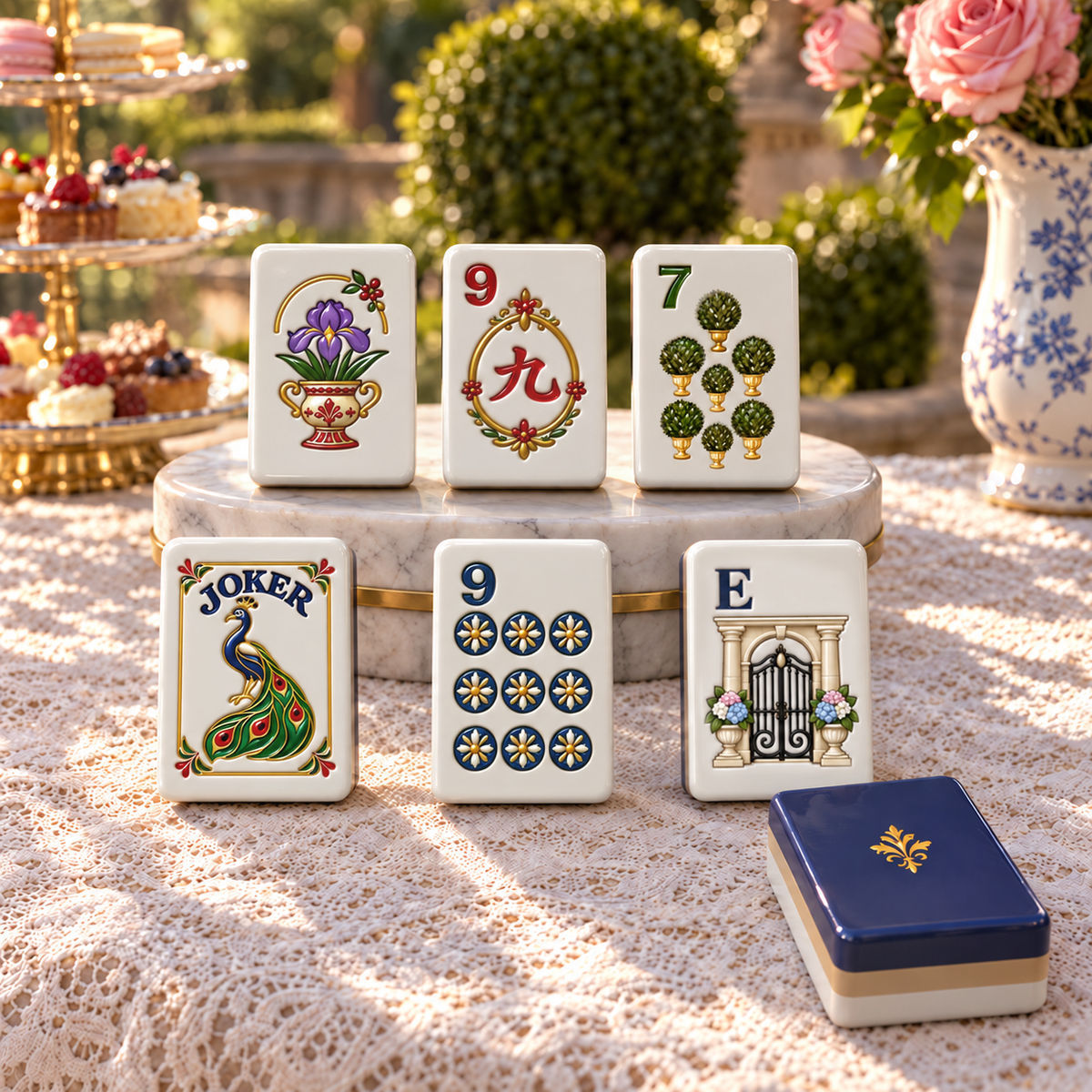
Card players bridge to mahjong best when you lead with the hand-building logic they know: like a poker hand, you're collecting patterns toward a goal, but in mahjong all four players draw and discard live (nothing stays hidden). The core move is learning that American mahjong uses 152 tiles across three numbered suits (Bams, Craks, Dots 1–9), winds, dragons, flowers, and eight jokers; you build one hand per year from the seasonal National Mah Jongg League card, which lists all winning patterns. Unlike cards, you can see every tile played and open certain melds (triplets, quads, longer runs) on the table. A typical game takes 45 minutes to two hours. Start your card-player friends with a best-selling mahjong set and teach the Charleston (pre-game tile-swap), then one practice hand before score. Most card players grok the strategy in two rounds.
What's the hardest leap for a card player?
Card players expect private hands and no table talk—mahjong is the opposite. In mahjong, every discard is public and announced; you read table texture from what your opponents throw away. Unlike bridge, there's no bidding phase to hide intent; every draw and discard is a live decision everyone watches. The shift feels exposed at first, but card players adapt fast once you stress that everyone can see the same info, so skill lies in remembering sequences and spotting early patterns. Teach them to treat discards like poker tells: a thrown 5 Bam early signals something about that player's hand shape, just like folding patterns in poker reveal strategy.

Why does the Charleston confuse bridge players?
The Charleston is four passes of tiles before play begins—bridge players expect to deal once and start. In American mahjong, the Charleston is a three-way tile trade (you pass right, pass left, pass across) plus an optional fourth pass. Many card players freeze because it feels chaotic, but it's not random: you're intentionally breaking up hands to shuffle luck. Bridge players will respect it once you name it correctly: it's a draw mechanism, not a mistake. Show them the ritual once with slow-motion passes, use your mahjong mats to mark the pass zones, and suddenly it clicks—they've done similar pre-deal shuffles in poker.
🀄 Shop best-selling mahjong sets →
How do you explain melds without sequences?
Card players expect sequences (1-2-3 are a run), but American mahjong has none during open play. You can only meld triplets (three identical tiles like three 5 Dots) and quads (four of the same); you also call kongs and pungs from the discard (your opponents threw the tile you needed). No sequences means the board visual is simpler but the hand reading is harder—card players must think in terms of tile counts and joker substitutes instead of building runs. Teach it with examples: "If you're holding two 5 Bams and someone discards a 5 Bam, you pung it—pull all three onto your rack and expose them. No one else can now play a 5 Bam unless they have a completely separate pair or a joker." Repeat that jokers are wildcards that can only fill incomplete melds (never a single tile, never a pair), and that sealed hands (your personal 13-14 tiles you haven't shown) contain the sequences implied by your patterns. Card players grasp it once they realize sequences are hidden inside sealed hands, not displayed like a bridge dummy.
What should you use to teach the first hand?
Use a simplified version of the current year's National Mah Jongg League card—don't hand them the full card yet. Instead, print or write out three or four basic hands (like "3 Pungs + 1 Kong + 1 Pair") and let them chase one target. Card players are used to working within a defined ruleset (poker hand rankings, bridge bidding conventions), so giving them a fixed goal removes analysis paralysis. Sit them on your east position (the player who starts), deal 14 tiles, walk them through one draw-and-discard cycle, let them call the Charleston in slow motion, and ask them to spot one meld on their rack. Don't score the first hand—just complete it. The moment they see a pung form or recognize a pair, they feel the aha. Then teach the real card for round two. Card players move fastest when they build one correct hand before worrying about scoring or strategy.
How does American mahjong tempo differ from card games?
Card games often have decision windows (shuffle time, deal time, betting rounds); mahjong is continuous draw-discard rhythm with almost no pause. Once a tile hits the table, it stays discarded—no second chances. This rattles card players who like to consider every move; reassure them that speed comes with five games, not one. The actual pace (45 minutes to two hours per game) matches a bridge rubber or poker session, but the internal rhythm is faster. Also, American mahjong games have clear phases: Charleston (3–5 minutes), then eight turns maximum per player (call it 20–30 minutes of play), then scoring (5–10 minutes). Once card players see the shape, they settle into it. Tell them: "You're thinking the whole time, but the moves are smaller and your turn is faster than your bridge bid."

Decision Framework: Card Player → Mahjong Readiness
Signal | Ready? | How to Respond |
Knows poker hand rankings by heart | Yes | Jump straight to tile patterns and hands. |
Plays bridge bidding | Yes | Use bidding logic: early discards = signals, like bids reveal intent. |
Asks "What if I hold this?" early | Yes | They're reading probability—give them the League card next. |
Says "This is fast" after five minutes | Maybe | Slow down Charleston to 2 passes instead of 3, then add the real version. |
Keeps asking "Is that a hand?" | Not yet | Do a second practice round; they're still learning tile combos. |
Wants to skip the Charleston | No | Insist on one full Charleston; it's not optional and it teaches passing logic. |
What to Check Before You Teach
Tile size and clarity: Card players squint at small tiles because they're used to large card faces. Our best-selling sets use 1-inch acrylic tiles with crisp suit symbols—no guessing from six inches away.
Rack angle: Card players expect tilted racks like bridge hands. A rack with pushers angled at 45° makes tile reading instant and reduces mistakes.
Table surface: Even a folded mat beats bare wood—it quiets tile noise (card players notice) and marks the dead wall. A mahjong mat also saves reshuffles because tiles stay in place.
Hand reference card: Keep a single-page cheat sheet of the League card open on the table (not the full card) during teaching. One-hand wins only, clearly printed.
One finished game before you explain scoring: Card players mentally check out if you teach Chinese-style or Hong Kong-style variants—stick to American rules, one year, one season. Consistency builds confidence.
🎁 See our most-loved mahjong sets & accessories →
Starting Kit Checklist
✓ One complete acrylic mahjong set (160-tile with spares) ✓ Four racks with pushers (one per player) ✓ One mahjong mat (quiets play, marks dead wall) ✓ Current-year National Mah Jongg League card (printed, laminated) ✓ Three simplified hand examples (written or printed) ✓ A bag to carry the set (card players will ask for portability—travel bags fit home games) ✓ One spare joker (guaranteed: sets come with spares)
Most card players complete one teaching hand in 20–30 minutes, then want to play again immediately. Have a second round ready or schedule a full game night. They'll bring their own friends next week—you've just expanded your table.
Why Card Players Excel at Mahjong (And What Slows Them Down)
Strengths:
Comfort with hand probability and tile counting (poker math transfers directly)
Experience reading opponents through discard patterns (bluff-like signals in mahjong)
Fast decision-making under partial information (card players assume hidden hands)
Ritual respect (they'll follow the Charleston and turn order without argument)
Common Stumbles:
Wanting to hold tiles face-down privately (mahjong is open play—all melds visible once called)
Expecting sequences as table melds (American mahjong has no open sequences)
Hesitating on the Charleston (feels random; it's not—it's deliberate chaos and worth doing twice)
Overthinking first hands (reassure them: speed and reads come after five games, not one)
The best teaching moment is when a card player's first discard reads the table and they call a pung someone else needed. That's the instant bridge to mahjong—they realize the game is as deep as poker, just with tiles.
✨ Find your Mahstead set — free US shipping →

FAQ
Can I teach American mahjong to someone who's never played cards?
Yes, but it takes one extra session. Card players learn the hand-building logic in one round; non-players need two full games to internalize patterns. Start with the beginner guide and one practice hand before your card-player friend joins.
Do card players need to learn Hong Kong or Chinese mahjong first?
No. Stick to American mahjong rules, one season, one card. Other variants confuse strategy and scoring. Card players respect rule consistency—teach one game fully before exploring variants.
How long does one teaching session take?
Plan 90 minutes: 10 minutes for Charleston walkthrough, 20 minutes for the first practice hand, 30 minutes for the second real game, 20 minutes for scoring questions. Card players who know poker will compress this to 60 minutes.
What's the biggest mistake I can make when teaching?
Showing them the full National Mah Jongg League card before they've completed one hand. It overwhelms them. Teach with three simplified hands first, then introduce the full card in round two.
Should I teach them to play with American or Chinese tiles?
Teach with American tiles only. Chinese tiles use older symbols; American mahjong has simplified craks and bams that card players recognize faster. The best-selling sets are built for American play.
Can I teach mahjong online or must it be in person?
In-person is best for the first game because the Charleston (the tile-passing ritual) needs hands-on rhythm and the table setup matters. After one live game, card players can play online; they'll know the logic and just need tile visibility.


View More
View More
View More
