
British Mahjong Quick Start Guide: Rules & Setup
Last updated: Nov 23, 2026
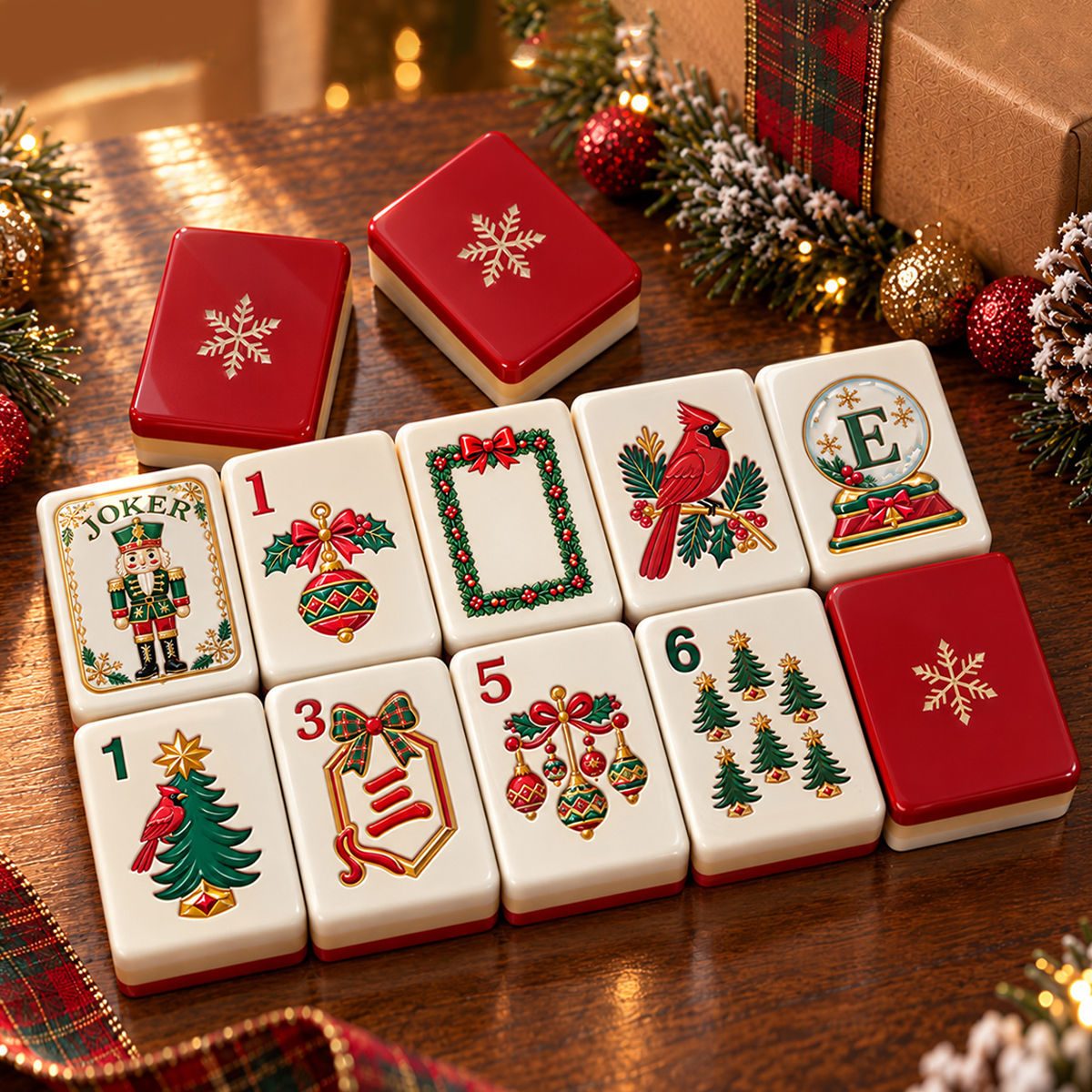
British mahjong differs fundamentally from American play: it uses 144 tiles (108 numbered, 16 winds, 12 dragons, 8 flowers—no jokers), permits chows (sequences like 1-2-3), and requires melds (exposed pungs, kongs, chows) to form winning hands. Players draw and discard one tile per turn until someone completes a legal hand of four melds and a pair, winning by self-draw (tsumo) or discard claim (hu). A game is typically four rounds (one for each wind), each lasting 15–40 minutes. Setup needs a best-selling mahjong set, a mat to protect tiles, and wind markers to rotate dealer. Unlike American mahjong, British play has no card, no Charleston, no jokers, and scoring is simpler—a win is a win, though bonus points vary by hand type. Many players find British rules more social and faster-paced; others prefer it as a bridge to learning Chinese or Riichi variants.
🀄 Shop best-selling mahjong sets →
How does British mahjong setup differ from American?
British mahjong uses 144 tiles instead of 152, omits jokers entirely, and requires no tile-passing ritual (Charleston). Before play, the dealer (East wind) shuffles tiles face-down, each player builds a wall of 18 face-down stacks (36 tiles per wall), and the dealer draws 14 tiles while others draw 13. Wind markers rotate counter-clockwise each hand; North becomes East, East becomes South, and so on. A discard rack or mahjong mat keeps tiles organized. Play proceeds counter-clockwise (opposite American direction). Once tiles are drawn, play begins—no pause for hand-planning as in American mahjong.

What tiles exist in a British mahjong set?
A 144-tile British set contains: three number suits (Bamboo, Character, Dot) numbered 1–9, four copies each (108 tiles); four winds (East, South, West, North, four of each = 16 tiles); three dragons (Red, Green, White, four of each = 12 tiles); and eight flowers (four seasons and four flowers). No blanks, no jokers. Number tiles are visually similar across variants, but winds and dragons may differ in symbol style or English versus Chinese labeling. When shopping for a British set, confirm the tile count is 144 and the suit symbols match your preference (traditional Chinese characters or modern dot/line designs).
Tile type | Count | Role in British play |
Number tiles (1–9, three suits) | 108 | Form sequences (chows) and triplets (pungs); suit-specific |
Winds (E/S/W/N) | 16 | Form triplets; also rotate as dealer position |
Dragons (Red/Green/White) | 12 | Form triplets; no special scoring in basic rules |
Flowers | 8 | Drawn during setup; bonus +1 point each; replaced from wall |
Total | 144 | Standard deck; no jokers or spares |
What makes a winning hand in British mahjong?
A winning hand (hu) contains exactly four melds and one pair. A meld is either a pung (three identical tiles: 5-5-5 Bamboo), a kong (four identical tiles: 7-7-7-7 Dot), or a chow (three consecutive tiles in one suit: 3-4-5 Character). The pair is two identical tiles separate from melds. You win by drawing the final tile yourself (tsumo) or claiming a discard (hu). Not all hands score the same: "all pungs" (no sequences) is worth more points; "all simples" (tiles 2–8 only, no dragons or honors) is worth more; mixed honor hands (dragons or winds mixed with numbers) score standard. Basic British play awards one point for a win, plus bonuses: +1 for each flower, +1 for a self-draw over a discard, +2 if the hand contains all terminal/honor tiles. Learning hand patterns takes practice; many players study hand charts or play tutorial rounds.
🎁 See our most-loved mahjong sets & accessories →
How do you play a British mahjong turn?
Each turn follows a strict sequence: first, draw one tile from the wall (or claim a discard if called), then declare any melds you want to expose, then discard one tile. If you discard a tile another player wants, they may claim it to complete a meld (pung, kong, chow) or a winning hand; if multiple players claim the same discard, the player closest to winning priority takes it. If no one claims your discard, play passes counter-clockwise to the next player, who draws from the wall. A kong (four identical tiles) is drawn and exposed during your turn; you then draw a replacement tile from the end of the wall to maintain 13 tiles in hand. Melds exposed on the table are permanent—you cannot retract them. A typical turn lasts 5–10 seconds.
What are common beginner mistakes and how do avoid them?
Mistake 1: Forgetting chows are allowed. British mahjong permits sequences (1-2-3, 5-6-7) unlike American play. New players trained on American rules sometimes ignore chow opportunities and trap high-value tiles. Solution: review hand patterns weekly; write "chow" on a sticky note on your mat as a reminder.
Mistake 2: Discarding risky tiles early. In British play, tiles you discard may be claimed by opponents for melds or wins. Beginner players toss dangerous tiles (dragons, terminals) on turn two without reading table position. Solution: observe what others discard and pick similar tiles; save unique honors (dragons, winds) for the endgame.
Mistake 3: Exposing too many melds. Exposed melds are visible to all players and lock your hand; opponents can estimate your winning tile and avoid discarding it. Greed for visible melds can block your path to a fast win. Solution: expose only if you're one tile away from winning or in a very dead game.
Mistake 4: Miscounting the wall. After two turns, players sometimes lose track of how many tiles remain. If the wall is nearly exhausted and no one wins, a "draw" or "goulash" happens (shuffle and restart). Solution: place a marker or counter on the mat's wall zone; count aloud after every third discard.
Mistake 5: Confusing wind rotations. East wind is dealer; after each hand, East becomes South, South becomes West, West becomes North, North becomes East. Many new players rotate the wrong direction or forget to reset seats. Solution: use engraved mahjong sets or dice with wind symbols; assign players to fixed positions and rotate only the dealer chip.
✨ Find your Mahstead set — free US shipping →

How does British scoring work compared to American?
British mahjong uses a flat-point system: one point per win, plus modest bonuses. American mahjong uses hand-specific multipliers from a card (80 points for a hand, 160 for certain patterns). British play is simpler to learn—no card lookup, no scoring table. A typical British game tracks points over four rounds (one East wind per player); the highest total wins the session. Bonuses in British play are minimal: +1 for self-draw, +1 per flower collected, +2–4 for special hands (all honors, all terminals, or seven pairs, depending on house rules). Some groups add "egg" payments (penalty fees from losers) if a player declares a win but cannot reveal a legal hand. Always confirm scoring rules with your group before starting, as house rules vary by region and club.
What equipment do you really need to play British mahjong?
A 144-tile set is essential; it's lighter and more portable than American sets. A mahjong mat protects tiles and defines discard zones, reducing table noise and tile wear. A rack or tile holder keeps your hand hidden (especially useful in close games). Wind markers (small tokens labeled E/S/W/N) track dealer rotation; some sets include these. Dice are optional but speed up choosing the breaking point in the wall. A score sheet and pen track rounds and final tallies. For travel, a mahjong bag or case keeps tiles safe during transport. None of these are strictly mandatory—many players play on bare tables with mental score tracking—but a mat and holder dramatically improve the experience and protect your investment.
What to check before you buy a British mahjong set
Tile count: Confirm it states 144 tiles, not 152 or 160 (those are American).
Suit symbols: Check whether you prefer traditional Chinese characters or simplified dot/line designs; both are valid.
Material: Acrylic tiles are durable, lightweight, and quiet. Bamboo or bone tiles are heavier and more traditional but require more care.
Included accessories: Does the set include racks, wind markers, or a mat? If not, budget for these separately.
Storage: Ensure the case or box fits on a shelf and is easy to open repeatedly; you'll transport the set often.
Tile finish: Matte tiles grip the mat better and are easier to handle than glossy tiles, especially for players with arthritis or low vision.
Setting up your first British mahjong game: a 5-step checklist
Assign seats. Place four players at a square table facing each other. Designate one East wind (dealer) and rotate counter-clockwise (North to East, East to South, South to West, West to North after each hand).
Build the wall. Each player shuffles their 36 tiles face-down, stacks them into 18 pairs (two-tile high), and pushes the wall toward the center. Dealer sits North-side; walls run clockwise.
Draw tiles. Dealer draws 14; other three draw 13. Go counter-clockwise from East. Place flower tiles on the table; draw replacements from the wall's far end.
Discard and begin. Dealer discards one tile to open play; other players go counter-clockwise. Claim discards for melds or wins by declaring aloud.
End the hand. When someone wins (hu), they reveal their hand; losers pay the winner per house rules. Shuffle all tiles, rotate the dealer chip, and reset seats.

FAQ
Can you play British mahjong with three or two players?
Yes, though rules shift slightly. In three-player games, remove all 5 Dots; in two-player games, use custom rules your group agrees on beforehand (some drop the seasons or reduce hand size). Four players is the standard; variants require extra study.
Is British mahjong harder than American mahjong?
Different, not harder. British play has fewer rules but requires faster tile recognition (no hand card to reference). American play is more strategic; British is more social and reactive. Experienced American players usually transition in 2–3 games.
Do I need to memorize hand patterns?
No, but learning common patterns (all pungs, all simples, "13 orphans") helps you play faster and spot bonus hands. Start by playing casually; patterns come naturally after 10–15 games.
What's the difference between tsumo and hu?
Tsumo is a self-drawn win (you draw the winning tile from the wall). Hu is a claimed-discard win (another player discards your final tile). Tsumo is worth a small bonus (+1 point) because it's slightly rarer and requires better luck.
How long does a full game take?
A four-hand game (one hand per player as dealer) typically takes 45 minutes to two hours, depending on how talkative your group is and how often ties occur. Single hands usually finish in 10–20 minutes.
Can I switch between American and British mahjong?
Absolutely. Many players enjoy both for different reasons—American for strategy and precision, British for speed and social play. Always confirm which rule set your group is using before sitting down.
Are there online British mahjong communities where I can learn?
Yes. Search "British mahjong online" or "Hong Kong mahjong forums." Also check local libraries, community centers, and synagogues; many host British and Chinese mahjong clubs alongside American groups.
What's the best set for a beginner?
A standard acrylic 144-tile set with clear suit symbols and a storage case. Avoid bone or bamboo initially (heavier, fragile); acrylic is forgiving and affordable. Include a mat and rack to make learning comfortable.


View More
View More
View More
