
Mahjong Solitaire: How to Count Points and Win
Last updated: Nov 23, 2026
Mahjong solitaire (also called Shanghai or tile-matching solitaire) is a single-player puzzle game where you match pairs of identical tiles from a stacked pyramid or layout, aiming to clear all tiles and win. It doesn't use the National Mah Jongg League scoring card that American mahjong does. Points come from clearing levels, bonus combos for matching pairs in quick succession, and sometimes time or move bonuses. Most solitaire games award points per pair matched (often 10–50 points depending on difficulty), multipliers for consecutive matches, and level completion bonuses. Unlike four-player American mahjong—where you draw tiles and build hands against opponents—solitaire is turn-based, no-opponent strategy. Winning means clearing the board; points reflect how efficiently you did it. Free-play versions appear online; commercial tile sets designed for solitaire play are less common than American mahjong sets, though our best-selling mahjong sets include tiles you can use for casual solitaire practice.
Mahjong solitaire scoring is straightforward compared to four-player American mahjong, but beginners often confuse it with League-card play or miss bonus multipliers. If you're playing digitally, the app usually tracks your score automatically; if you're using physical tiles at home, you'll count points manually. We host weekly four-player American games, so solitaire isn't our core focus—but many players use the off-season or solo practice time to sharpen their tile recognition with solitaire layouts. Here's how to count points and optimize your score.
What is mahjong solitaire scoring based on?
Mahjong solitaire awards points for each matched pair you remove from the board. Most games give a base score of 10–50 points per match; consecutive matches within a short time frame trigger multipliers, often doubling or tripling your next pair's value. Completing all tiles on a level adds a level-completion bonus (typically 100–500 points, depending on difficulty). The total score reflects both speed and efficiency—faster clears and longer combo chains rank higher on leaderboards.

How do you count a basic pair match?
Each pair you match earns a base amount set by the game's difficulty level. Easy mode might award 10 points per pair; medium 20–30; hard 40–50. Simply add each match to your running total. If the game displays a multiplier (×1.5, ×2, ×3), multiply that pair's points before adding. For example: match a pair on medium at ×2 = 30 × 2 = 60 points. Track your total as you play, or let the digital version handle it; digital apps update your score in real time, so you'll see cumulative progress.
What bonuses boost your solitaire score?
Combo bonuses reward fast consecutive matching. Match five pairs in 10 seconds? The game multiplies your next pair by ×1.5 or ×2. Some games offer time bonuses (finish under a target time, earn 200+ extra points) or move-limit bonuses (clear the board in fewer than 100 moves, earn 150+ points). Cascade bonuses occur when removing one pair makes others fall and match automatically—each cascade earns points without counting as a manual move. Check the game's rules or help menu to see which bonuses apply; online solitaire games vary widely.
Bonus Type | Trigger | Reward | Strategy |
Combo multiplier | 3+ pairs in 10–15 sec | ×1.5–×3 next match | Focus on accessible pairs; chain matches |
Time bonus | Clear board under target | 100–500 pts | Prioritize speed; skip difficult pairs early |
Move-limit bonus | Finish in <100 moves | 100–300 pts | Plan sequences; avoid random clicking |
Cascade bonus | Tiles auto-match after removal | 50–100 pts/cascade | Match top pairs to trigger falls |
Level completion | All tiles cleared | 200–1000 pts | Guaranteed; scales with difficulty |
Why does solitaire scoring feel different from American mahjong?
American mahjong uses the current year's National Mah Jongg League card, where hands are named patterns (e.g., "Like Likes", "Consecutive Pungs") and scored by position on the card: concealed melds score higher, exposed melds lower, and doubling or quinting a meld adds points. Solitaire, by contrast, ignores melds, patterns, and opponents—it's purely individual efficiency. If you're learning how to read the mahjong card for four-player games, solitaire scoring won't help you; they're separate games. Solitaire suits beginners who want tile-matching fun without League rules. American mahjong suits groups who want strategy, play against others, and follow published hands.

How do you avoid common solitaire scoring mistakes?
Mistake 1: Ignoring multipliers. Many players match tiles without watching the multiplier display. Always glance at the current multiplier before clicking—a ×3 bonus on a high-difficulty pair is worth far more than a base match. Mistake 2: Chasing bonuses over board control. Don't match tiles just to build a combo if it blocks access to higher-scoring pairs below. One 100-point pair you couldn't reach beats five rushed 20-point matches. Mistake 3: Not tracking time in time-attack modes. If the game offers a time bonus for finishing under (say) 60 seconds, play deliberately enough to clear the board but fast enough to qualify. Mistake 4: Restarting too early. If you get stuck (no accessible pairs remain), some games let you undo or shuffle; use those before restarting, or you'll lose your progress.
🀄 Shop best-selling mahjong sets →
What to check before you buy a physical solitaire set
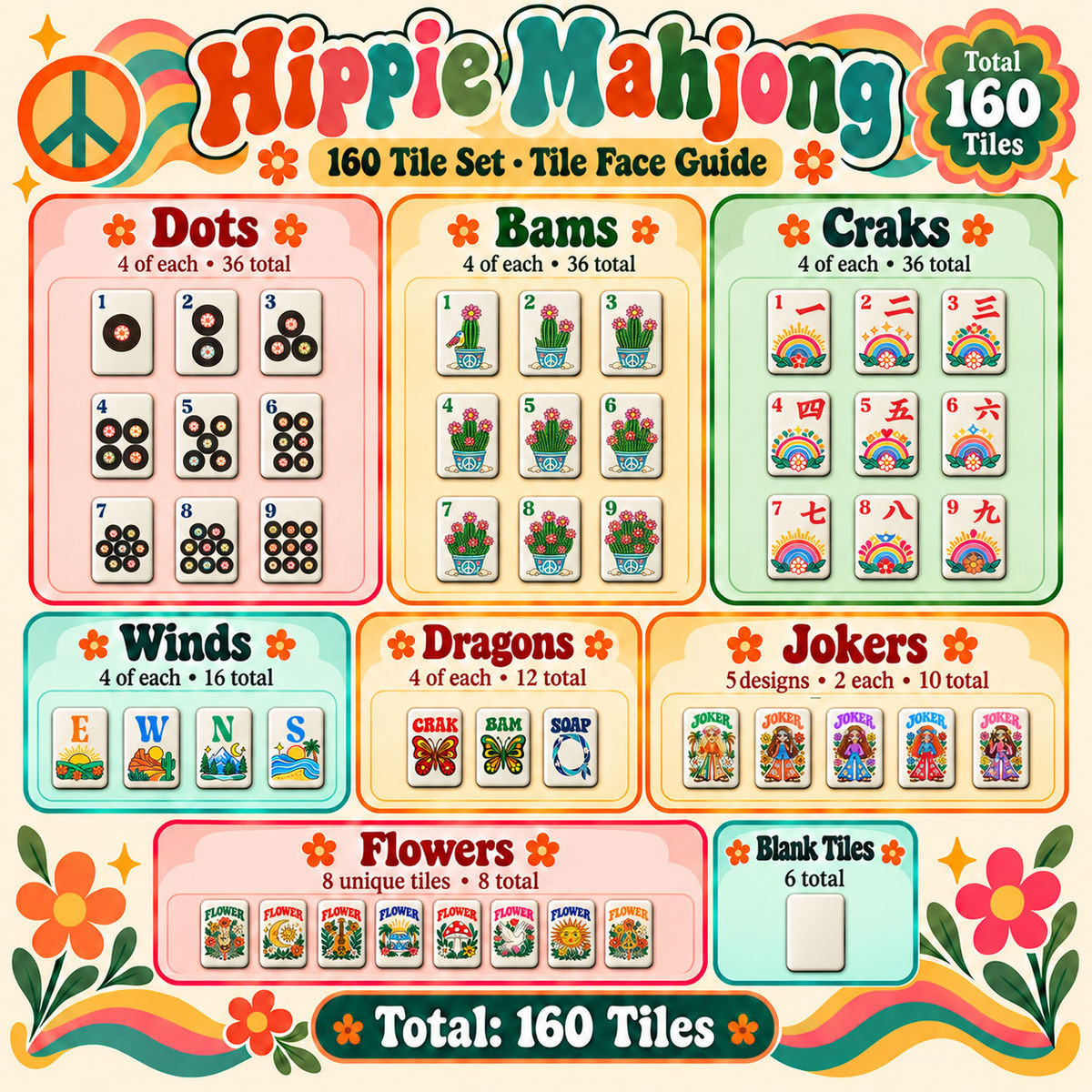
If you want to play mahjong solitaire with real tiles—not a phone app—you'll need a standard tile set. Our best-selling mahjong sets include 160 tiles (152 playing tiles plus spares), enough for solitaire layouts. Check that the set includes clear tile faces (symbols easy to read from a distance) and sturdy acrylic or bamboo construction so tiles don't chip during repeated shuffling. For solo play, you don't need racks, pushers, or jokers—focus on the tile quality and case durability. A mahjong mat isn't required but keeps tiles organized and prevents scratches on your table. If you're moving between locations, a travel case protects the set and keeps tiles from scattering.
Solitaire strategy to maximize points
Start by scanning the entire board and identifying all visible pairs. Prioritize pairs near the top or edges that unlock hidden tiles when removed—clearing blockers first lets you cascade more matches later. Watch for multiplier windows (some games activate bonuses at specific moments) and time your matches to ride them. In time-attack modes, move faster but maintain focus; in survival modes, think twice before each match. Many players improve by replaying the same layout: you learn tile patterns and develop faster recognition, which boosts score and combo length.
🎁 See our most-loved mahjong sets & accessories →
How solitaire score translates to skill
Your solitaire score reflects tile recognition speed, board-reading ability, and sequencing logic—all skills that transfer to four-player American mahjong. Regular solitaire play trains you to spot tile groupings, memorize suit and number patterns, and think ahead about which melds will open up next. If you're preparing to join a weekly game group, solitaire is excellent solo practice. Once you're ready for multiplayer, you'll use the National Mah Jongg League card and a different scoring system, but the tile familiarity pays off instantly.
✨ Find your Mahstead set — free US shipping →

FAQ
Can I use a standard American mahjong set to play solitaire?
Yes. Any 160-tile set works for solitaire layouts—you don't need jokers, flowers, or honors. Just shuffle all tiles and arrange them in your chosen pattern (pyramid, rows, or freeform).
Do I have to use the National Mah Jongg League card when playing solitaire?
No. The League card is for four-player American mahjong only. Solitaire is a standalone game with its own rules. Some digital solitaire apps include story modes or themed boards, but no League card.
How long does an average solitaire game take?
Typically 5–15 minutes, depending on difficulty and board size. Easier layouts with fewer tiles finish in 5–7 minutes; expert layouts with 144+ tiles can run 15–20 minutes or longer if you're playing for optimal score.
Does solitaire scoring change if I play with a friend taking turns?
Yes. If two players alternate matches on the same board, most house rules give each player points for their own matches and declare the player with the highest total the winner. This is not a standard published format—it's casual play.
What's the highest score possible in solitaire?
It depends on the game version and your multiplier chains. Casual home play with a 160-tile set might top out around 5,000–10,000 points; digital games often go higher. Check your app's leaderboard or rules for the ceiling.


View More
View More
View More
