
How to Store a Large Print Mahjong Set: Space-Saving Solutions
Last updated: Nov 23, 2026
Large print mahjong sets—which feature tiles about 25–35% bigger than standard—require storage that protects them from humidity, temperature swings, and crushing. The best approach is a hard-sided case or sturdy box in a climate-controlled closet, away from direct sunlight and damp areas like basements. You'll want to keep tiles in their original compartmented rack or use foam dividers to prevent sliding. Store the set upright or flat depending on your case design; never stack heavy objects on top. Humidity between 35–50% is ideal; avoid garages, attics, and bathrooms where temperature and moisture fluctuate. Most players rotate their sets every few months to inspect for warping. Budget 2–3 cubic feet of shelf or closet space for a full set in a quality case.
Why does humidity matter most for large print tiles?
Acrylic tiles expand and contract with moisture. High humidity (above 55%) causes swelling; low humidity (below 30%) causes cracking and brittleness. Large tiles are heavier and more prone to warping when exposed to these extremes. Keep your set in a room with stable temperature and humidity—ideally a climate-controlled bedroom closet or living room cabinet. Check the tiles quarterly for any visible bulging or gaps. If you live in a humid climate (coastal areas, tropical regions), use silica gel packets inside your storage case to absorb excess moisture and prevent mold. Replace packets every 3–6 months or when they lose their color-change indicator. This single step prevents 80% of storage-related damage we've seen.

What's the difference between hard cases and soft bags?
Hard cases (plastic or wood) protect against crushing and stack safely; soft bags offer portability but compress tiles over time. For home storage, a hard case wins every time. Soft bags work for transport to weekly games. Hard cases sit flat on shelves without deforming; soft cases flatten under their own weight in a closet, distorting tile corners. If you host games at home, invest in a quality mahjong bag or case designed for your set size. Check the interior dimensions—large print sets need cases with at least 16 × 12 × 4 inches of usable space. Compartmented cases with foam inserts beat generic storage boxes because each tile stays in its designated slot. A basic plastic organizer from a hardware store costs less but doesn't prevent tile-to-tile friction during storage.
Should you store tiles in the rack or remove them?
Storage method | Pros | Cons | Best for ---|---|---|--- Tiles in original rack | Organized, prevents mixing | Rack takes up space, tiles press on each other | Home display or frequent players Tiles in padded compartments | Maximum protection, easy to see | Requires foam or dividers, takes time to organize | Long-term storage, delicate sets Tiles loose in case with gel | Flexible, compact | Risk of damage during transport, harder to count | Emergency backup storage only
Most of us keep tiles in a quality rack with dividers inside a hard case. Original racks that ship with large print sets are designed to nest snugly and protect tiles from movement. If your set didn't come with a rack, buy a mahjong rack with pushers that matches your tile height; they're designed to stabilize large tiles and keep them organized. Never force tiles into tight spaces—forced tiles chip or crack.
What room conditions prevent warping and fading?
Temperature swings cause the biggest problem. A set stored in a garage that hits 45°F in winter and 95°F in summer will warp within two years. Interior closets (no exterior walls), bedroom cabinets, or living room shelves maintain steadier temperatures. Avoid direct sunlight—UV rays fade engravings and custom designs on premium sets over time. Use an opaque case or cover rather than clear plastic if your storage spot gets indirect sun. Basements sound convenient but fail because they trap moisture and temperature shifts as seasons change. Attics are even worse—they bake in summer and freeze in winter. The ideal spot is an interior closet in a lived-in, heated/cooled room where you walk past it regularly. This habit naturally reminds you to rotate and inspect the set.
🀄 Shop best-selling mahjong sets →

How do you organize tiles so they're easy to find during setup?
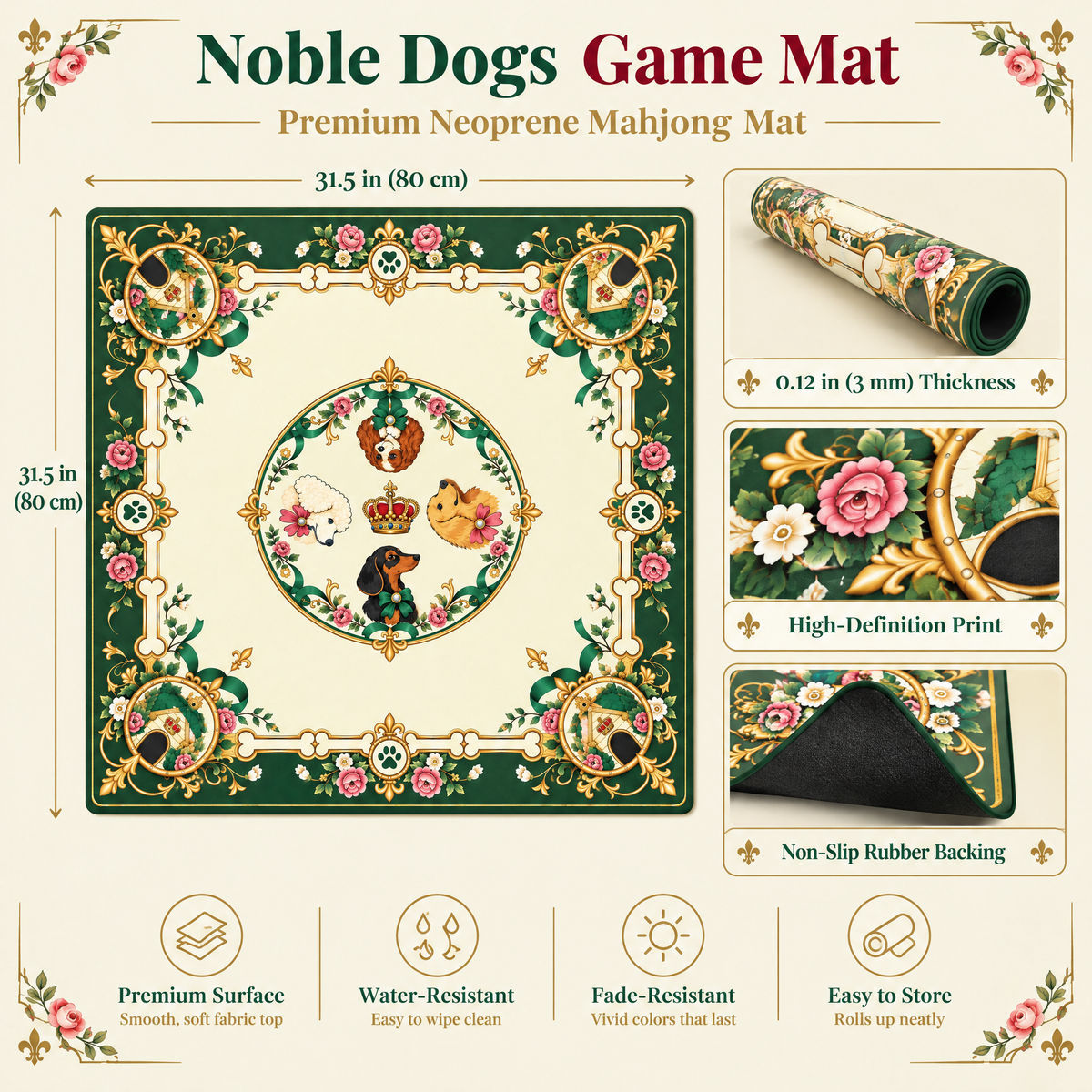
Keep the score sheet, card holder, and current year's mahjong card in the same case pocket. Label your case or case compartments by suit (Bams, Craks, Dots, Winds, Dragons, Flowers) if using separate pouches. Take a photo of your organized set before you close it—that photo becomes your setup guide for your next game. Store the rack and pusher set together in a labeled bag clipped to the case. If you play with a mahjong mat, roll it loosely (not tightly—rolling crushes the mat) and store it flat on top of or beside the case. Many players keep jokers and spare tiles in a small ziplock bag taped to the inside of the case lid. This system cuts setup time from 10 minutes to 3 minutes at game night.
What should you check before storing for months?
Run a quick audit every time you pack up after a game:
Count tiles: American mahjong always uses 152 tiles (108 from three suits plus 16 winds, 12 dragons, 8 flowers, 8 jokers). Missing tiles stay missing—buy a replacement set of the missing suit rather than trying to substitute.
Inspect for cracks: Look for hairline splits in corners. These spread during storage if humidity shifts.
Verify jokers: All 8 jokers should be present; they're replaceable but easy to lose.
Check rack compartments: Confirm dividers sit flat and no tiles are wedged at angles.
Wipe the case interior: Remove tile dust and debris before sealing. Dust traps moisture and scratches tiles.
🎁 See our most-loved mahjong sets & accessories →
Where in your home is the safest storage spot?
Location | Temperature stability | Humidity control | Light exposure | Verdict ---|---|---|---|--- Interior bedroom closet | ★★★★★ | ★★★★ | ★★★★★ (dark) | Best choice Living room cabinet | ★★★★ | ★★★★ | ★★★ (indirect sun) | Very good Kitchen cabinet | ★★★ | ★★ (cooking steam) | ★★★ | Acceptable if high, away from stove Basement | ★★ (cold, damp) | ★ (high humidity) | ★★★ | Avoid if possible Attic | ★ (extreme swings) | ★★ (dry, then damp) | ★★★★ (hot) | Worst choice Garage | ★★ (unheated/uninsulated) | ★★ (variable) | ★★★★ (direct sun) | Avoid unless climate-controlled
The interior bedroom closet wins because it's small, shaded, temperature-stable, and part of your daily space—you're more likely to remember to check on your set. If you live in an apartment with limited closet space, a living room cabinet with doors (away from windows and heat vents) is the second-best option.
✨ Find your Mahstead set — free US shipping →
What to check before you buy a storage case
Interior dimensions: Measure your large print set (tiles in the rack) and add 1 inch on each side for air circulation and to prevent jamming.
Material: Plastic cases are lighter and cheaper; hard composite or wood cases offer better cushioning.
Compartments or foam insert: Ensure dividers keep tiles stable. Loose tiles shift and chip during storage.
Ventilation: Cases need tiny air gaps to prevent moisture pockets. Completely sealed cases trap condensation.
Weight capacity: If you stack anything (even a thin book), check the case's stated maximum load.
Browse our collection of engraved American mahjong sets to find large print options that come with a case, or pair any set with a dedicated travel bag or hard case designed for large tiles.

FAQ
Can I store a large print mahjong set in a plastic bin in the garage?
Not long-term. Garages swing 40–50°F between seasons, causing tile expansion and contraction. If you must use a garage, keep the bin on a shelf (not the floor) and use silica gel packets inside. Check the set quarterly.
How often should I inspect stored tiles?
Check every 2–3 months. Look for warping (edges lifting or edges curving inward), cracks, or discoloration. Caught early, minor warping can often be reversed by adjusting humidity. Cracks spread if ignored.
Do I need to remove jokers and store them separately?
No. Keep all 8 jokers with the rest of your tiles in the same case. Separating them increases the risk of losing one. American mahjong always uses all 8 jokers—missing even one joker means you're one tile short for a full game.
Is it bad to store a set in its original cardboard box?
Yes. Cardboard absorbs moisture and deteriorates over time, letting dust and humidity reach tiles. Cardboard also crushes under its own weight in a closet. Upgrade to a hard case within a year of purchase.
What humidity should I maintain for large print tiles?
Aim for 35–50% relative humidity. Below 30%, tiles become brittle; above 55%, they swell and warp. A cheap hygrometer (≈$8–12) lets you monitor your storage closet. If humidity creeps above 50%, add silica gel packets or a small dehumidifier nearby.
Can I store two mahjong sets in the same case?
Only if the case is designed for it. Stacking tiles or sets increases pressure on bottom tiles and risks crushing. Two sets need either two cases or one very large compartmented case with dedicated sections. Measure before assuming.


View More
View More
View More
