
Big Hand Mahjong Rule Explained: When to Declare and How to Score
Last updated: Nov 23, 2026
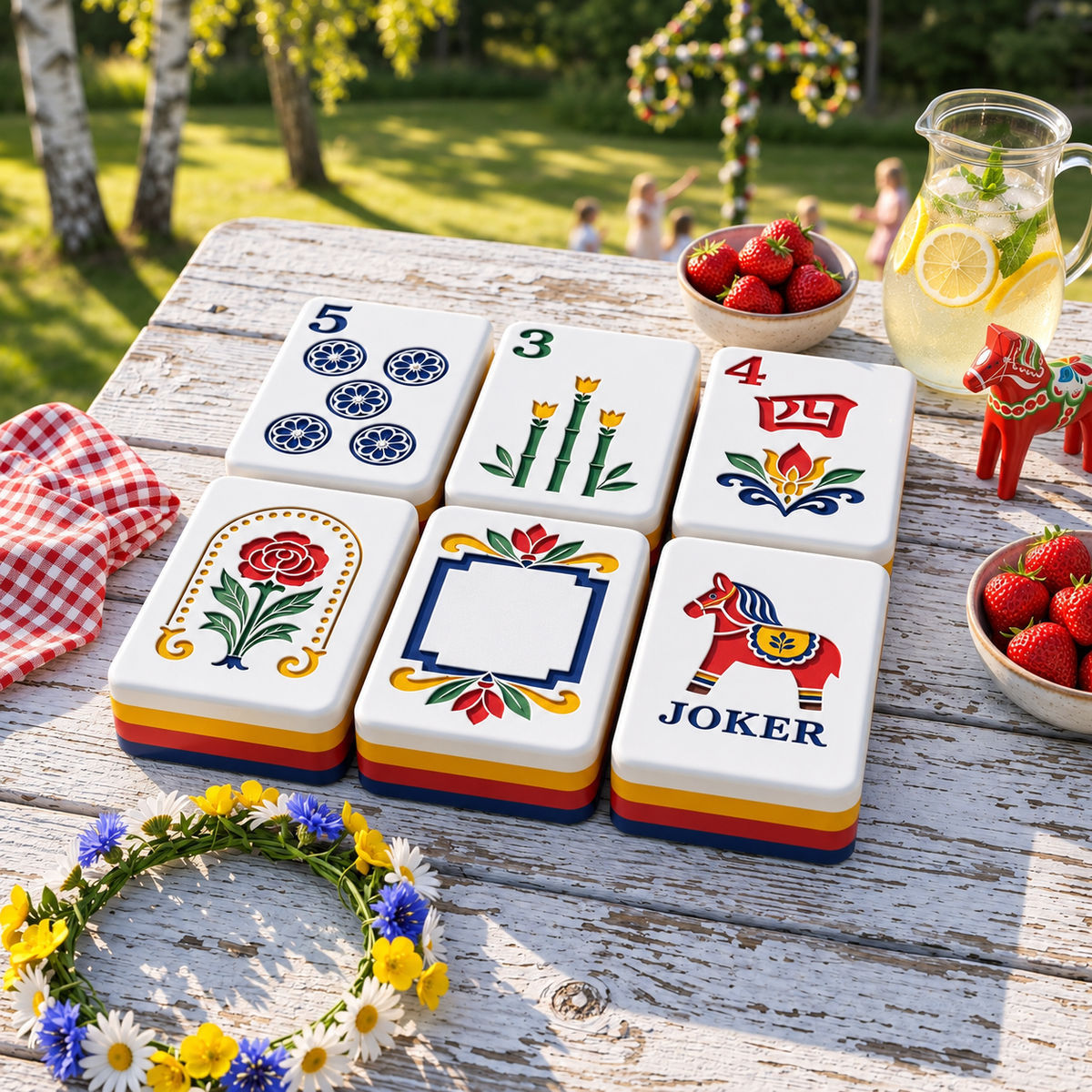
A big hand in American mahjong is any winning hand worth more points than standard payouts—typically 2 or 3 points per game, depending on your group's house rules. The card lists these hands by section; they usually involve rarer patterns like all honors, specific sequences of numbers, or combinations using the maximum number of jokers or quints. You declare a big hand by announcing it and laying your tiles face-up on the table to prove the pattern matches the card exactly. The declaring player wins immediately and receives the higher payout from all three opponents. Not every hand qualifies as "big"—only those printed on the current year's card in designated high-point sections. Beginners often confuse big hands with any quick win; instead, focus on recognizing the exact tile arrangement the card shows. Our best-selling mahjong sets come with clear tiles and organized racks that help you spot these patterns faster during the game. 🀄 Shop best-selling mahjong sets →
What exactly counts as a "big hand" on the card?
A big hand is any completed winning combination that appears on the current year's National Mah Jongg League card and yields a point value higher than 1 point. The card organizes hands by patterns—for example, all Honors, Like Numbers, Consecutive Pungs, or special quint/sextet combinations. Each section lists the exact tiles required, and a big hand typically requires more restrictive conditions: all one suit, all honors and terminals, or unusual use of jokers and five-tile exposures. To verify: find your hand pattern on the card, count the tiles exactly as shown, and check that your jokers fall within allowed positions. If it matches and the card lists it under a high-point section (usually marked clearly), you have a big hand. The key is precision—one wrong tile type or joker placement disqualifies it. Study your current year's card before each session so you can recognize big hands during play rather than hunting for them afterward.

How do you declare and win with a big hand?
When you complete a big hand—all fourteen tiles match a high-point pattern on the card—call "Mahjong" and announce the hand name or section. Immediately lay all tiles face-up on the table in organized groups (pungs, kongs, quints, pairs) so opponents can verify the match. Never touch the discard pile after declaring. If your layout matches the card exactly, you win instantly and collect the agreed payout (typically 2–3 points per opponent, set before the game starts). If tiles don't match the card, your win is void and play resumes. Declare only when certain—hesitation or correction after laying tiles weakens your claim and may invite closer scrutiny. Many players photograph or reference the card while laying to avoid mistakes. Practice laying your tiles in clear rows before sitting at a real game; muscle memory prevents fumbling when the moment comes.
🎁 See our most-loved mahjong sets & accessories →
Why do some groups score big hands differently?
House rules vary widely by region and group—there's no single "official" payout. Some groups pay 2 points per opponent for a big hand; others pay 3, 4, or even a multiplier if you declare it before drawing the fourteenth tile. A few groups tier payouts: a big hand declared early wins more than one declared after drawing. The reason: encouraging aggressive play and rewarding quick thinking. Before every new game with unfamiliar players, ask explicitly: "What's the payout for a big hand?" Write it down if playing with a new group. Confusion over payouts causes arguments that kill table energy. Some communities use a small notepad or our mahjong racks with pushers that include scoring space—a simple visual reminder prevents disputes. Never assume payouts match last week's game; always confirm.
Which hands are most commonly mistaken for big hands?
A common error: confusing a quick two-or-three-tile win (often called a "quick hand" or "lucky win") with a big hand. A lucky early draw is not a big hand unless it's listed on the card in a high-point section. Another trap: playing a hand you think matches the card, but discovering mid-layout that one tile is the wrong number or suit. For example, you believe you have all 3 Dots and honors, but one tile is actually a 3 Crak—that's not a match, and your win is void. A third mistake: assuming quints and sextets are automatic big hands. They're not—the card specifies which quint or sextet patterns pay high points; others may be standard or invalid. Beginners also misread the card by confusing sections. Always read the full hand requirement: some sections require a specific joker count; if your hand uses fewer or more jokers, it's a different hand (often lower-point). Slow down, cross-check against the card twice, and never assume.
How does the big hand rule differ across mahjong variants?
American mahjong's big hand system is unique because hands must match the current year's card—there are no fixed "universal" big hands. In Chinese classical mahjong, certain patterns (like "all terminals," "dragons," or "winds") are inherently high-value regardless of year; no card required. Hong Kong mahjong uses a similar fixed-pattern system with point multipliers. Riichi mahjong has "yaku" (hand types) that earn points through pattern and draw method, not a yearly card. Taiwanese mahjong uses tile ranks and scoring chips, not a card. If you play American mahjong, always play by the current card—don't try to import rules from another variant, or you'll break the game. The card changes every spring, so big hands that paid 3 points last year might be worth 2 this year, or vice versa. This is why serious players receive a fresh card annually and study it before the season starts. The flexibility and refresh keep American mahjong dynamic but demand attention.
Comparison Table: Big Hand vs. Standard Win vs. Lucky Draw
Category | Big Hand | Standard Win | Lucky Draw |
Listed on card? | Yes, high-point section | Yes, any section | May not be on card |
Payout per opponent | 2–4 points (house rule) | 1 point | Varies (not guaranteed) |
Tile count required | 14 (exact match) | 14 (exact match) | Variable |
Timing | Can declare anytime after completing | Anytime after completing | Usually early game |
How to verify | Cross-check against card twice | Cross-check against card once | May not be verifiable |
Example | All honors + one pung of Reds | 2 Pungs Bams, 1 Kong Craks, 1 Pair Dots | Draw the 14th tile on turn 3 |
What to check before you declare a big hand
Before laying tiles, run through this checklist:
Count your tiles: Exactly 14? No more, no fewer.
Check the card: Find the exact hand name or section.
Verify tile types: Are all tiles the suit and number shown? No substitutions.
Count jokers: Does your joker count match the card's allowance for that hand?
Check the pair: Is your pair identical—same suit, same number?
Confirm exposures: Do your pungs, kongs, quints, sextets match the card's requirement?
Ask opponents: "Does this match?" and let them inspect before you announce.
Confirm the payout: "Big hand is ___ points, right?" before you collect.
Rushing this step costs you credibility and money. Spend 10 seconds; it's worth it.

Honest differences between American and other variants on big hands
Variant | Big Hand Type | How It's Verified | Payout Basis |
American | Card-listed, annual refresh | Current year's card | House rule (typically 2–3 points) |
Chinese Classical | Fixed pattern (Dragons, Terminals, etc.) | Memorized or reference chart | Point multiplier (e.g., 5× base) |
Hong Kong | Fixed pattern + draw method | Chart + player's turn/draw | Points + scoring chips |
Riichi | Yaku (hand type) | Memorized yaku list | Meld method + multiplier |
Taiwanese | Tile rank + suit combo | Rank chart | Chip denomination |
American mahjong's yearly card means no two seasons have identical big hands—you must update your reference every spring.
✨ Find your Mahstead set — free US shipping →
Why recognizing big hands matters for your group's dynamics
Knowing big hands fast transforms your play. Players who spot big hands early declare before opponents finish their hands, often ending the game before high-payout hands ripen. This rewards skill and attention. Groups where everyone knows the big hands play tighter, more strategic games—people watch draws more carefully and avoid discarding useful honors or jokers. New players who don't know big hands feel lost and discouraged; teaching them the card sections before the first game keeps energy high. At Mahstead, we often hear from groups that engraved sets with our mahjong titles collection become conversation starters—players use them to remember which hand is which. A well-organized table with clear acrylic tiles and good lighting also helps everyone spot big hands faster and reduces disputes. Big hands aren't just scoring rules; they're part of the social fabric that keeps weekly games fun and fair.
Steps to master big hands in your next three games
Game 1: Bring the card and a notebook. Every time someone wins, check whether it's a big hand. Write down the hand name and section. Ask the winner to explain why it's high-point. Don't worry about speed; just learn patterns.
Game 2: Before the game, review your notes from Game 1. During play, try to identify big hands as they're being built—"That's looking like an all-honors hand." Call out your guesses (don't announce Mahjong yet). Check against the card after the hand resolves. This trains your eye.
Game 3: Play normally, but commit to declaring only if you're 100% sure you have a big hand. Lay tiles slowly, point to each one on the card, and let opponents verify. Speed comes later; certainty wins first.
By Game 4, you'll spot big hands faster than players who've played for years. The card is your guide—study it like a playbook, and the game opens up.
Common mistakes that trip up even experienced players
Mistake 1: Confusing a quick win with a big hand. A win on the fourth draw isn't a big hand unless the card lists it. Lucky timing ≠ high points.
Mistake 2: Forgetting the joker limits. Some big hands allow up to four jokers; others allow two. Count them before declaring. One extra joker breaks the match.
Mistake 3: Misreading "Like Numbers." Many players think "Like Numbers" means any three or four numbers—it doesn't. The card specifies the exact numbers. A hand with Pungs of 2, 4, and 6 is not "Like Numbers" if the card requires 1, 3, and 5.
Mistake 4: Declaring before you draw the 14th tile. You can't win without 14 tiles. Wait until you draw. Declaring early only works if house rules explicitly allow it (and payouts are adjusted).
Mistake 5: Ignoring the pair. Your pair must be identical. A 5 Dot and a White Dragon look similar but aren't a pair. Double-check.
These errors humble everyone at least once. Learn from them, and your game jumps a level.
How to teach big hands to new players without slowing the game
Before the first hand, spend two minutes: "Big hands are patterns on the card that pay extra points. We're looking for hands that match these sections [point to high-point areas]. Today, if you complete one, lay it down and we'll all check it together. No rush—accuracy matters more than speed. Ask me before you declare."
During the game, don't interrupt play to quiz them. If they're building a hand that looks like a big hand, quietly mention it after the hand ends: "That was close to an all-honors big hand—see? You had 13 of 14 tiles matching."
By the third or fourth game, new players internalize big hands without formal lessons. Give them a copy of the card with high-point sections highlighted. Repetition and low pressure build confidence faster than lectures.
What you'll need to spot big hands reliably
Clear, readable tiles and good table lighting are non-negotiable. Acrylic tiles with large, bold numbers and suits let you cross-check the card quickly. A mahjong mat with printed legends keeps all four suits visible so you can organize tiles by type before laying. Racks with pushers hold your thirteen hidden tiles upright and in order, making it fast to spot your hand and match it to the card. If you're playing in dim light or outdoors, bring a reference card in a sleeve—moisture and glare are the enemy. A small notepad to jot down big hands you've seen helps memory. None of these are fancy; they're practical tools that turn big hand recognition from stressful to routine.
🀄 Shop best-selling mahjong sets →
The strategic edge: when NOT to declare a big hand
Here's an advanced tip many skip: sometimes not declaring a big hand is the right move. If the player to your left has only two tiles left and you have a big hand that requires you to draw a tile you just discarded, fold and live to fight next round. Or, if the player opposite has called "ready" (one tile away from any win) and you're holding a big hand that won't close for three more draws, declaring now feeds them the discard they need. Skilled players trade short-term payouts for long-term table position. Don't always chase the 3-point win if it means handing someone else the 4-point hand. This calculus separates casual play from strategic play—and it keeps games tighter and closer, which most groups prefer.

FAQ
Can you declare a big hand before drawing your 14th tile?
Only if your house rules explicitly allow it and adjust payouts accordingly. Standard American mahjong requires a complete 14-tile hand. Always confirm house rules before the game starts.
What happens if you declare a big hand but one tile doesn't match the card?
Your win is void, the hand dissolves, and play continues. You lose your turn and credibility; other players may scrutinize your future hands more carefully. This is why cross-checking twice matters.
Do all big hands use the maximum number of jokers?
No. Some big hands specify a low joker count (e.g., zero or two); others allow more. The card lists the joker limit for each hand. Using the wrong count breaks the match.
If I'm playing with a group that uses old rules, are big hands scored the same?
Only if they're using the same year's card. If they're playing with a card from 2023 and you have 2026's card, big hands differ. Insist on the current year's card to keep the game fair and recognizable.
Can you use a joker in a pair for a big hand?
Never. In American mahjong, jokers cannot be used in single tiles or pairs—only in pungs, kongs, quints, and sextets. A pair must always be two identical real tiles, no jokers.


View More
View More
View More
