
How to Set Up a Mahjong Table: A Step-by-Step Guide
Last updated: Nov 23, 2026
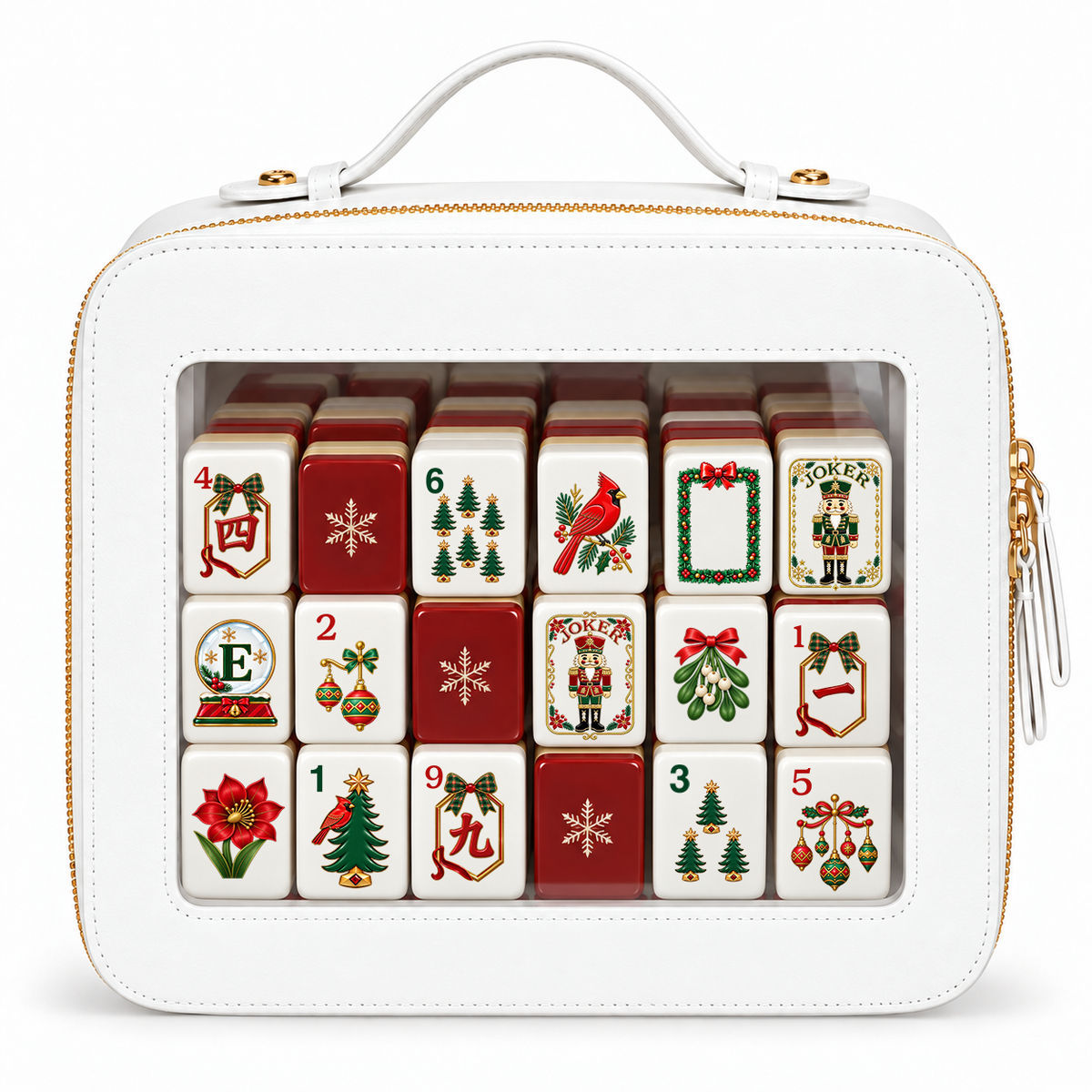
A proper American mahjong table setup starts with seating four players around a square or rectangular surface, each person sitting at a cardinal position (North, East, South, West). Place your mahjong mat in the center—this defines the play zone and protects your surface. Each player needs a rack with pushers to hold their 13 tiles upright and organized. Set the four walls (stacks of tiles) in the center of the mat, leaving space for the discard area in the middle and the current card visible to all players. Place the wind tile indicator at the dealer's position. Before drawing your first hand, the Charleston (tile-passing ritual) happens with all tiles still in the wall. The entire setup takes minutes; the game itself runs one to three hours depending on your group's speed. One-time mistakes: forgetting to display the card, stacking walls unevenly, or letting jokers clutter the discard pile. 🀄 Shop best-selling mahjong sets →
What space do you need?
You need a surface roughly 36–48 inches square to play comfortably. A dining table, coffee table, or card table works perfectly. A mahjong mat reduces bounce and marks the play zone clearly, especially on hard surfaces. Make sure each player sits at least 18 inches from the center to reach tiles without leaning awkwardly. If your table is smaller, players sit closer and still play; if larger, it's actually easier. The mat itself handles the real estate: it tells everyone where tiles belong and keeps them from sliding during shuffling.

How do you arrange players and winds?
Four players sit one per side. The first dealer always sits East; the others are assigned South, West, and North going clockwise around the table. Before each round, the wind indicator (a marker or tile showing E/S/W/N) rotates so the next player becomes East. Winds determine turn order, who calls their hand first, and scoring settlement direction. Use a small tile or token at the dealer's spot to show who is East. At a casual game, call it out; at competitive play, keep it visible the whole hand. This is the foundation: if winds are confused, scoring gets messy fast.
Where do the tile walls go?
Stack all 152 tiles into four walls of 38 tiles each (19 stacks of two tiles, one on top of the other). Place each wall directly in front of a player, parallel to their body. The walls should sit about 6–8 inches from the center of the mat. Leave the middle open for the discard area. The East player's wall is drawn from first during the hand; the wall position matters for the game's rhythm. Uneven or crowded walls cause tiles to topple during draws and clogs the discard zone. A mat with clear zone markings helps you align walls without fussing.
Setup Element | Placement | Why It Matters |
Four walls | One per player, 6–8 inches from center | Defines draw order; keeps game space organized |
Discard area | Center of mat | Prevents accidental kong/pung calls on floor tiles |
Player rack | In front of each seat, parallel to edge | Keeps hands hidden and organized; prevents mistakes |
Current card | Visible to all four players equally | All players reference same hand list; prevents disputes |
Wind marker | At dealer (East) seat | Tracks who plays next round; settles scoring |
What tools do players need at their seat?
Each player sits with a rack with pushers to hold exactly 13 tiles upright and hidden from opponents. Pushers help you slide tiles one at a time without fumbling. The rack should sit close enough to grab tiles quickly but far enough away that others cannot see them. Many racks have a lip or tray to catch tiles if you bump the table. A small notepad for score tracking sits to one side. The current year's National Mah Jongg League card must be placed where all four players can read it without asking—usually propped on the mat or held by the player whose turn it is. Water glasses or snacks go outside the mat to avoid spills on tiles.
🎁 See our most-loved mahjong sets & accessories →
Does your table surface matter?
Hard surfaces (glass, lacquer, wood) are ideal. Cloth or felt slows tile movement and makes shuffling loud. Textured surfaces catch tile edges and slow draws. If you play on a bare dining table, a mahjong mat cushions impacts and quiets the game. Mats also define the boundary so players don't knock tiles outside play. An older table with slight warping is fine—walls compensate for tilt. What matters most: the space is level enough that a tile won't roll unexpectedly, and the surface is clean so tiles don't stick.

What happens before the first draw?
Before anyone picks up 13 tiles, all 152 tiles sit in the four walls. Each player draws eight tiles from their wall into a rack in a specific order (detailed in how to play American mahjong). Then the Charleston begins: players pass tiles three times in a ritual that randomizes hands before the real game starts. Only after the Charleston ends do players look at their racks and start playing. A common beginner mistake: setting up the card or scoring pad too late, wasting time once play begins. Have the card visible and score pad ready before the first wall is built.
How do you track whose turn it is?
Players draw, discard, and play in wind order: East draws first, then South, West, North, repeat. A turn ends when a player discards one tile. The next player may call that tile (pung, kong, or win) or pass, and play continues around the table. Many groups use a quiet count or simple call ("your turn, North"). At competitive tables, a timer or turn token moves clockwise. If you lose track, look at the discard pile: the most recent tile belongs to the previous player. Once you play five or six hands, the rhythm becomes automatic.
✨ Find your Mahstead set — free US shipping →
What are the most common setup mistakes?
Walls built unevenly. If one player stacks their wall too close or too far, draws take longer and tiles are harder to reach. Build all walls to the same distance from the center.
Card not visible to all. One player holding the card means others have to ask every time they want to check a hand. Prop or display it so everyone sees it equally.
Discard pile cluttered. Discards should pile neatly in rows of four in the center, keeping them separate from tiles still in play. A mess makes it hard to track what's been thrown and slows the game.
Racks too close together. If your racks sit only inches apart, you can peek at neighbors' hands. Keep them at arm's distance around the table.
Wind indicator missing. Especially in the second or third round, players forget who dealt last. Mark the East seat every hand—it settles disputes and keeps scoring straight.
What to check before you buy
Tile quality: Engraved tiles (rather than stamped or printed) last through years of weekly play. Check that images won't fade or peel.
Rack fit: Your rack should hold 13 tiles snugly without forcing them. Test it if you can; a loose rack tips over mid-hand.
Mat thickness: A thin mat won't protect tiles from bounce on a hard table. Mats should be at least ¼ inch thick and lay flat.
Bag durability: If you transport your set, a travel bag or case should have thick walls and a secure closure so tiles don't scatter in a car.
Set completeness: American mahjong requires exactly 152 tiles plus 8 jokers. Verify your set includes all four winds, three dragons (Red, Green, White), all suit numbers 1–9 in four copies, and eight flowers.
How long does setup really take?
Five to ten minutes once everyone is seated and focused. If you're teaching a new player, add ten more minutes for explanation. Experienced players knock it out in three minutes. Time is mostly spent building the four walls evenly and making sure the card and score pad are positioned where everyone can use them. The actual shuffling of tiles—mixing them face-down before stacking into walls—adds one to two minutes.
For your next game, use this checklist: surface clear and level, mat in place, four walls built evenly 6–8 inches from center, player racks positioned at arm's distance around the table, current card visible to all four, wind marker at the East seat, score pad and pen ready. Do all this before anyone touches a tile, and the hand runs smooth from shuffle to win.

FAQ
Can I set up mahjong on a small table?
Yes. Players sit closer to the center, but a card table (30×30 inches) accommodates a full game—tiles and walls just crowd tighter. A mat still defines the zone and keeps tiles from rolling onto laps.
Do I need a mat for a casual home game?
Not required, but strongly recommended. A mat protects the table surface, keeps tiles from sliding during shuffles, marks the play boundary clearly, and makes the game feel organized. It also quiets tile noise for neighbors.
How do I know if my rack is the right size?
Your rack should hold exactly 13 tiles with pushers, sitting upright and hidden from view when placed 12–18 inches in front of you. If tiles fall out or the rack sits flat, it's too loose.
What if a player forgets which wind they are?
Call it out before drawing: "East, South, West, North, clockwise." The wind marker at the dealer's seat confirms East. If players still lose track, announce the wind before each turn ("Your turn, West").
Does the table have to be square?
No. Rectangular tables work equally well as long as all four players can reach the center comfortably and tiles don't roll off the sides.
Should the discard pile be organized?
Yes. Arrange discards in neat rows of four in the center so everyone can see what's been thrown and which discard matches a potential hand. A messy pile causes confusion and slows recognition of winning hands.


View More
View More
View More
