
How to Run a Mahjong Tournament: Rules, Setup & Scoring
Last updated: Nov 23, 2026
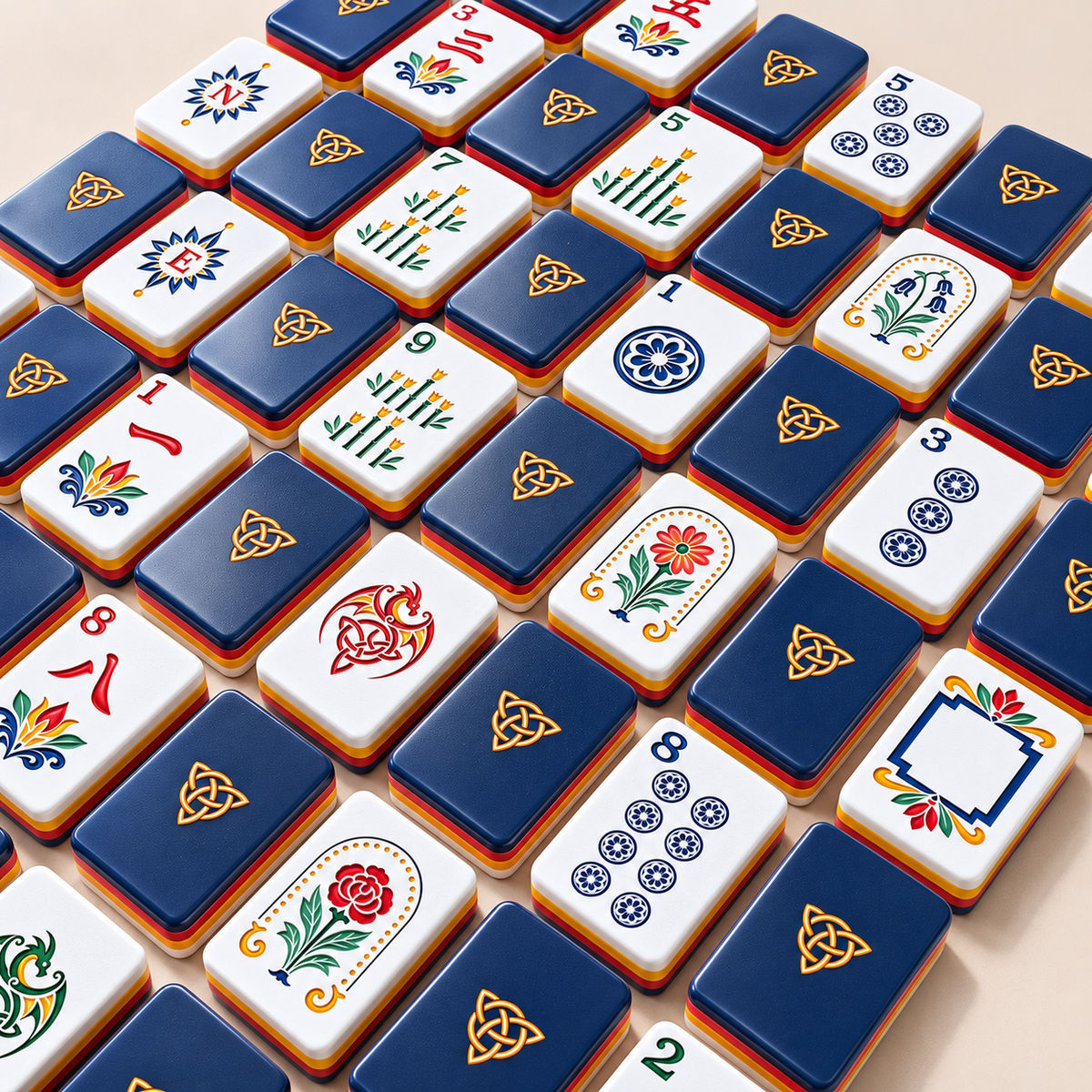
A mahjong tournament is a structured competition where four players rotate through assigned tables over multiple rounds, with winners determined by cumulative score rather than single-hand luck. American tournaments use the current year's National Mah Jongg League card, standard 152-tile sets plus jokers, and predetermined seating rotations to ensure fairness. A typical tournament runs 6–8 rounds of play (30–45 minutes per round), with players keeping individual score sheets and rotating positions (North, East, South, West) to equalize advantage. Scoring follows League rules: winning hands earn points based on the difficulty and tile count listed on the card, and losers pay the winner. Setup requires one set per table, scoreboards or sheets, and clear communication of the annual card rules before play begins; the biggest mistake organizers make is inconsistent hand verification or unclear rules about joker substitution, which slows play and sparks disputes.
What exact rules should I announce before round one starts?
Post or read aloud these rules before tables begin play: hands must come from the current year's League card only; the Charleston is mandatory and follows the standard ritual; jokers cannot fill a single tile, a pair, or any position marked "NO" on the card; Kong replacements draw from the dead wall's end; and all winning hands must be verified by another player before scoring. State whether you're using American rules (no chows), and confirm the consequence of dead wall exhaustion (no winner, that hand is void, discard passes to next player). If players are mixed skill levels, pre-announce whether beginners can ask questions during their turn or only between hands. Clear rules prevent argument stalls and keep rounds on schedule.

How do I set up table rotation fairly?
Number your tables 1, 2, 3, etc., and assign players by draw or pre-set list for Round 1 using random positioning (or fixed if you prefer consistency). After each round, use a simple "bump" rotation: East player moves to the next table in numerical order, and all others shift to their new seats based on the standard four-wind order. For four tables of four, this takes 60 seconds and ensures no player sits East (the advantaged position) more than once. Document each round's seating in a visible bracket—a whiteboard works, or print a simple grid. Without rotation, the same players gain repeated advantage, and your tournament loses credibility.
What's the fastest way to score and settle chips?
Have scorekeepers at each table record raw hand points immediately after verification—before chips change hands—in a ledger or shared sheet (pencil and paper is fastest). At the end of each round, calculate the round total for each player: East wins 2 points per paying player, so if East wins a 40-point hand, they collect 40 from each of three losers = 120 total; each loser notes −40. Keep a cumulative total per player across all rounds. Between rounds, players do not settle chips—settle only at the end of the tournament, based on cumulative score. This avoids lost chips, recounts, and disputes. Use a simple spreadsheet or printed sheet; updating it in real time prevents chaos at the end.
How many rounds should the tournament run?
Run 6–8 rounds for a casual four-person tournament (about 3–4 hours with breaks). Each round lasts 30–45 minutes depending on player speed and hand complexity; add 5 minutes for rotation and scoring. For 8 or 16 players, consider a Swiss-system bracket (players matched by score each round rather than rotating tables), which is faster and fairer but requires software or careful manual tracking. A smaller round count (4–6) risks lucky one-offs; longer tournaments (10+) exhaust players. If you want results fast, six rounds is the sweet spot for four players.

Should I require players to bring their own sets, or supply them?
Supply one complete set per table if you're running an official or public event—this ensures consistency and fairness. Players sometimes bring house sets with worn or missing tiles, mismatched jokers, or outdated cards, which create confusion mid-game. If you own multiple best-selling American mahjong sets, you control tile quality and joker count (152 tiles plus spares per set). For a small casual tournament among friends, letting each table use their own set is acceptable—just confirm all sets are the same edition and that players have agreed on house rules beforehand. For anything larger, uniform sets eliminate disputes about valid tile condition.
Tournament Setup Decision | Casual (4 players) | Club Event (12–16) | Official Competition |
Sets required | 1 | 3–4 | 4+, verified |
Rounds | 6 | 8 | 8–10 |
Scorekeeping | Paper ledger | Spreadsheet | Software or formal sheet |
Rotation | Manual bump | Swiss bracket or bump | Assigned bracket |
Setup time | 10 min | 20 min | 30+ min |
🀄 Shop best-selling mahjong sets →
What equipment makes hosting easier?
A dedicated mahjong mat for each table keeps tiles in place and signals the game space clearly; a scorecard stand or clip at each table keeps the current year's card visible. Mahjong racks with pushers prevent hand fumbling and speed up tile management, especially in longer rounds. A simple timer (phone alarm or kitchen timer) set to 40 minutes signals the end of the round and keeps play on schedule. Store all sets in individual mahjong bags and cases between rounds so tiles don't scatter or mix. Keep a printed copy of that year's League card at the registration table, a scoresheet template ready to photocopy, and a small notebook to log any disputes or hand verification questions for later review.
✨ Find your Mahstead set — free US shipping →
What are the most common mistakes that break tournaments?
Inconsistent hand verification: One table accepts a hand the next table rejects because rules weren't enforced uniformly. Assign a neutral arbiter (you or a respected veteran player) to roam between tables during Rounds 1–2 and settle edge cases loudly and clearly so all tables hear the ruling.
Unclear joker rules: Players ask "Can this joker stand for the White Dragon?" or "Can I use a joker in a pair?" mid-game. Read the joker rule aloud in Round 1 and post a reminder at each table.
Wrong card: Two players use different years' cards. Confirm all players have the current year's card before play starts; ask them to bring it or provide a copy.
Scored but not recorded: A player swears they won Hand 3 but it was never written down. Make recording mandatory before chips move.
Players leaving early: One player abandons their table mid-tournament, breaking the rotation. State at the start: early departure forfeits the tournament.
Preventing these takes 60 seconds of pre-game clarity.
🎁 See our most-loved mahjong sets & accessories →
What should I check before buying equipment for the tournament?
Set count: Do you own enough complete sets (one per table, each with 152 tiles and spare jokers)?
Mat condition: Are mats rolled flat, not creased, and free of stains that might obscure tiles?
Card year: Is the card this year's League edition, and do all players have or will all tables share it?
Scoresheets: Have you printed or prepared scoresheets so they're ready, not handwritten mid-event?
Racks and pushers: If using them, test a set before the tournament—tiles should sit securely and pushers slide smoothly.
Timer: Does your timer work on a full battery or charge?
Backup tiles: If a tile cracks during play, do you have a spare set at hand?
Test your equipment one week before the tournament; a cracked tile or missing joker discovered during Round 3 stalls play and ruins the schedule.
FAQ
Can I run a tournament with fewer than four players per table?
Yes. 2 and 3 player mahjong rules exist and are played seriously, though American League rules are written for four players. Scoring and hand validity change; confirm all players know the variant before Round 1, and apply it consistently across all tables.
How do I handle a player who disputes a winning hand after verification?
The hand was verified by another player at the table before chips moved—that's final for the round. Note the dispute in your log and review it after the tournament. In future rounds, ask the skeptical player to voice concerns during verification, not after scoring.
Should I award prizes for first, second, and third place, or just overall winner?
That's your choice and should be announced upfront. Many casual tournaments award only the highest cumulative score. Larger competitions often prize top three to encourage consistent play. Decide and announce it before Round 1 so players know what they're playing for.
What happens if the dead wall runs out before anyone wins?
The hand is void, no one scores, and play passes to the next player. Discard from your hand as if you had drawn from the wall, and the next player begins their turn. This is rare but clarify it beforehand so no one panics.
How long should I wait for a player to decide on a discard?
30 seconds is reasonable in casual play; in timed tournaments, set a rule like "1 minute per turn." If a player is slow consistently, warn them after Round 2. Most delays come from new players learning the card—pair them with experienced players at neighboring tables so they can ask questions between hands.
Can I use old mahjong sets or mismatched sets at different tables?
Not in an official tournament. Mismatched tile thickness, color, or wear creates unfair play: some hands are easier to spot, tiles sit differently on racks, and joker clarity varies. For a casual house game, it's fine; for a tournament, use matching sets you control.


View More
View More
View More
