
How to Read Mahjong Bams: Recognizing Suit and Numbers
Last updated: Nov 23, 2026
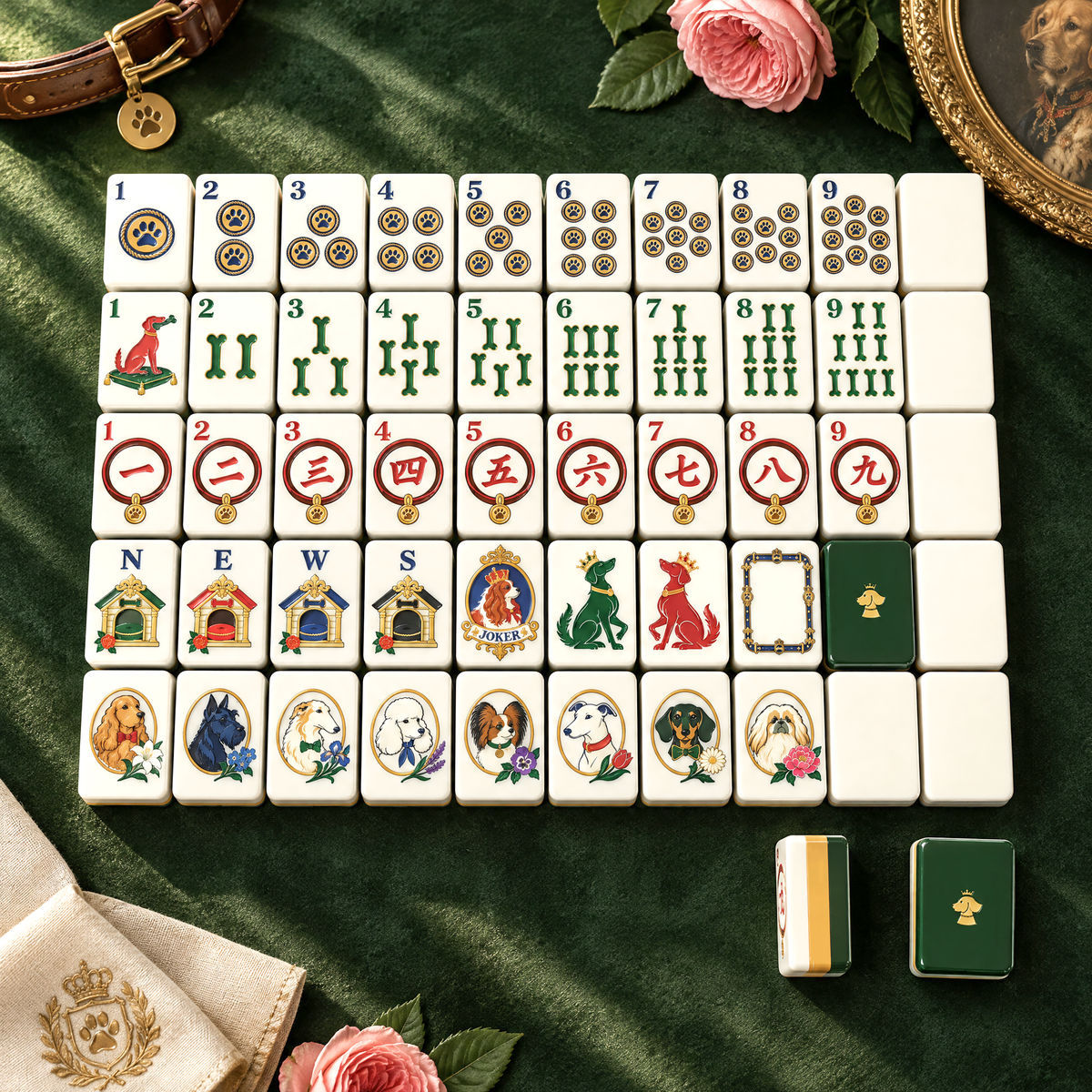
In American mahjong, Bams (bamboo suit) run from 1 to 9, printed four times each in a standard set. The 1 Bam features a stylized bird—its most distinctive design—while Bams 2–9 show stacked bamboo stalks in ascending count. Most acrylic sets print Bams in green or dark characters to distinguish them from Craks (circles, red) and Dots (dots, blue). Learning Bam faces takes 10–15 minutes of sorting practice; within a few games, recognition becomes automatic. The Bam suit appears in roughly one-third of winning hands on the current season's National Mah Jongg League card. Whether you're a beginner learning the fundamentals or a host upgrading to clearer, engraved tiles, tile legibility directly impacts game speed and table confidence.
Why Does the 1 Bam Look Different From the Other Bams?
The 1 Bam is the only number in any suit shown as a symbol—a bird (often a crane or bamboo bird motif)—rather than a count of objects. This historical design choice, carried into modern American sets, gives new players an immediate landmark: if you see a bird, you've found your 1. All other Bams (2–9) display that number of bamboo stalks, stacked vertically or in clusters. The bird rule applies only to 1 Bam; no other tile uses a creature or icon to replace its numeral. Remembering this single rule speeds up tile recognition across the whole table.

How Do You Tell Bams Apart From Craks and Dots Quickly?
Bams are bamboo stalks; Craks are circular (ring-like or wheel); Dots are solid dots in a pattern. In traditional and modern tile designs, color coding reinforces the shapes: Bams often appear in green or black, Craks in red, and Dots in blue. During the first few hands, sort your rack by suit and lay Bams together so your eye learns the visual cluster. After one or two games, you'll glance at a tile and name it without conscious thought—the same way you recognize the difference between a petal and a line. Fast suit recognition is a sign of table confidence, not expertise; even new players can drill this in 15 minutes of pre-game practice.
What Happens If You Misread a Bam at the Table?
Misreading a Bam as a Crak (or vice versa) breaks the hand immediately. If you expose a tile you thought was a 5 Bam but it was a 5 Crak, you've shown two different suits and cannot complete a pung or kong in that group. The error is caught when you try to go out; the other players will verify against the card before accepting a win. Prevention is simpler than correction: sort your rack by suit before each draw. Use racks with pushers that let you slide tiles into separate compartments; the physical separation makes suit mix-ups nearly impossible and speeds your decisions by seconds per turn.
🀄 Shop best-selling mahjong sets →
How Do Different Mahjong Tile Sets Handle Bam Design?
American mahjong tiles come in acrylic, wood, bamboo, and ceramic, each with distinct engraving or printing styles. Acrylic sets (including engraved designs with titles and personalization) offer sharp, high-contrast Bam faces that reflect light evenly, making them easy to read under standard table lamps. Engraved tiles have characters sunk into the surface, so glare doesn't wash out the design. Printed tiles carry color on the face; over time and with handling, printed details may fade or chip, making Bams harder to distinguish in older sets. If readability matters (you have low vision, play in dim light, or host multiple games per week), engraved acrylic tiles eliminate guesswork and preserve legibility for decades.
Does Reading Bams Differ in Chinese, Hong Kong, or Riichi Mahjong?
Chinese and Hong Kong mahjong use a 144-tile deck that includes bonus tiles and no Flowers or Jokers; Bams (Bamboo, Tiao) still run 1–9, but the 1 Bam shows a bird exactly as in American play. Riichi mahjong (Japanese) also uses Bamboo 1–9 with the same bird symbol. The three-suit structure (Bamboo, Circle, Character) is universal in Asian variants. However, American mahjong adds Winds, Dragons, Flowers, and Jokers to the 108-tile base, making hands more complex; because of Jokers, Bam recognition speed matters more in American play—you may need to substitute a Joker for a Bam mid-hand, and misidentifying a Bam blocks that swap. If you play both Asian and American variants, the Bam faces are identical; only the hand-building rules and tile counts differ.

Comparison: Tile Legibility by Set Type
Set Type | Bam Readability | Durability | Best For | Maintenance |
Acrylic, Engraved | Highest; sunk characters | 10+ years | Weekly games, bright tables | Wipe with soft cloth |
Acrylic, Printed | High; colored faces | 3–5 years | Casual play, good lighting | Avoid water, store dry |
Wood or Bamboo | Medium; carved or burned | 15+ years | Collectors, slow-paced games | Oil yearly, avoid humidity |
Ceramic | High; glazed surface | 20+ years | Professional sets, showpieces | Hand-wash, dry immediately |
Step-by-Step: Learning to Read Bams in 10 Minutes
Lay out one 1 Bam and one 2 Bam side by side. Memorize the bird on the 1; notice the two stalks on the 2.
Add Bams 3–5. Say aloud: "Three stalks, four stalks, five stalks" as you point. Muscle memory + voice cement the image.
Add Bams 6–9. Say the count for each. At this step, speed doesn't matter—accuracy does.
Mix all nine Bams face-up on a table. Call out each number from sight, no longer reading the tile—just naming it.
Shuffle them and repeat Step 4 five times. By the fifth shuffle, you'll name each Bam in under 2 seconds.
Sort your full rack by suit once before the game starts. This one action locks Bams into a visual zone you trust.
What to Check Before You Buy a New Set
Tile thickness: thicker acrylic (≥6mm) resists chipping and makes engraved characters last longer than thin tiles.
Character contrast: hold a sample Bam under the light you'll play under. If the bird or stalk symbols blend into the background, the set will cause eye strain.
Joker count: learn how jokers work in American play, because you may substitute a Joker for a Bam; if Jokers aren't visually distinct (a different color or bold marking), you'll confuse them with number tiles under pressure.
Spare tiles: a 160-tile set includes spare Bams and other tiles; verify the set comes with extras in case one chips or cracks during an event.
🎁 See our most-loved mahjong sets & accessories →
Real Table Tip: The 5 Bam Trap
The 5 Bam is the most often misnamed tile in American play—players see five stalks and hesitate, confusing it with a 5 Dot (five dots in a quincunx pattern) or a 5 Crak (five circular rings). The 5 Bam stalks are clustered or stacked visibly; the 5 Dot is always arranged as four corners plus one center (the quincunx). Spend 30 seconds before your first hand comparing a 5 Bam to a 5 Dot in your set. This one comparison erases the most common misread at the table.
✨ Find your Mahstead set — free US shipping →

FAQ
Can you play American mahjong if you can't tell Bams from Craks by sight?
Technically yes, but you'll slow the game, annoy other players, and make winning errors. Every exposed tile must match the card, and misreading a suit invalidates a hand. Learn the three suits before sitting down; sort your rack by suit every turn. After three games, recognition is automatic.
Why does the 1 Bam have a bird and not a bamboo stalk?
Historical precedent from Chinese and Japanese tile design, adopted into American mahjong. The bird (crane, bamboo bird, or stylized mark) serves as the 1 symbol, making it instantly recognizable and giving new players a landmark. This single rule applies only to Bam 1; all other numbered tiles are literal counts of their symbol.
Do engraved Bams stay readable longer than printed ones?
Yes. Engraved characters are sunk into the acrylic surface, so they don't fade, wear, or chip as easily as printed ink or paint. With regular use and storage, engraved tiles stay clear for 10+ years; printed tiles may blur or scratch in 3–5 years depending on humidity and handling.
What's the fastest way to practice reading Bams before my first game?
Lay out one of each Bam 1–9 and name them aloud five times in a row. Then shuffle them and name them again, without looking at their position. Once you hit 100% accuracy, you're ready to play. This takes 10–15 minutes and saves hours of table fumbling.
Are Bams the same in Chinese and American mahjong?
Yes, for the 1 Bam (bird) and the stalk design. Both use Bamboo 1–9. American mahjong adds Winds, Dragons, Flowers, and Jokers to the base three suits, but the Bam faces are identical. If you learn Bams in one variant, you can recognize them instantly in the other.
How do I organize my rack so I don't mix up Bams?
Use mahjong racks with pushers with separate compartments or dividers for each suit. Slide Bams into the left section, Craks in the middle, Dots on the right. This one setup erases most suit confusion and speeds your turn by 2–3 seconds because you see each tile's suit at a glance, not by reading individual characters.


View More
View More
View More
