
Chinese Mahjong Hand Examples: Learn by Pattern
Last updated: Nov 23, 2026
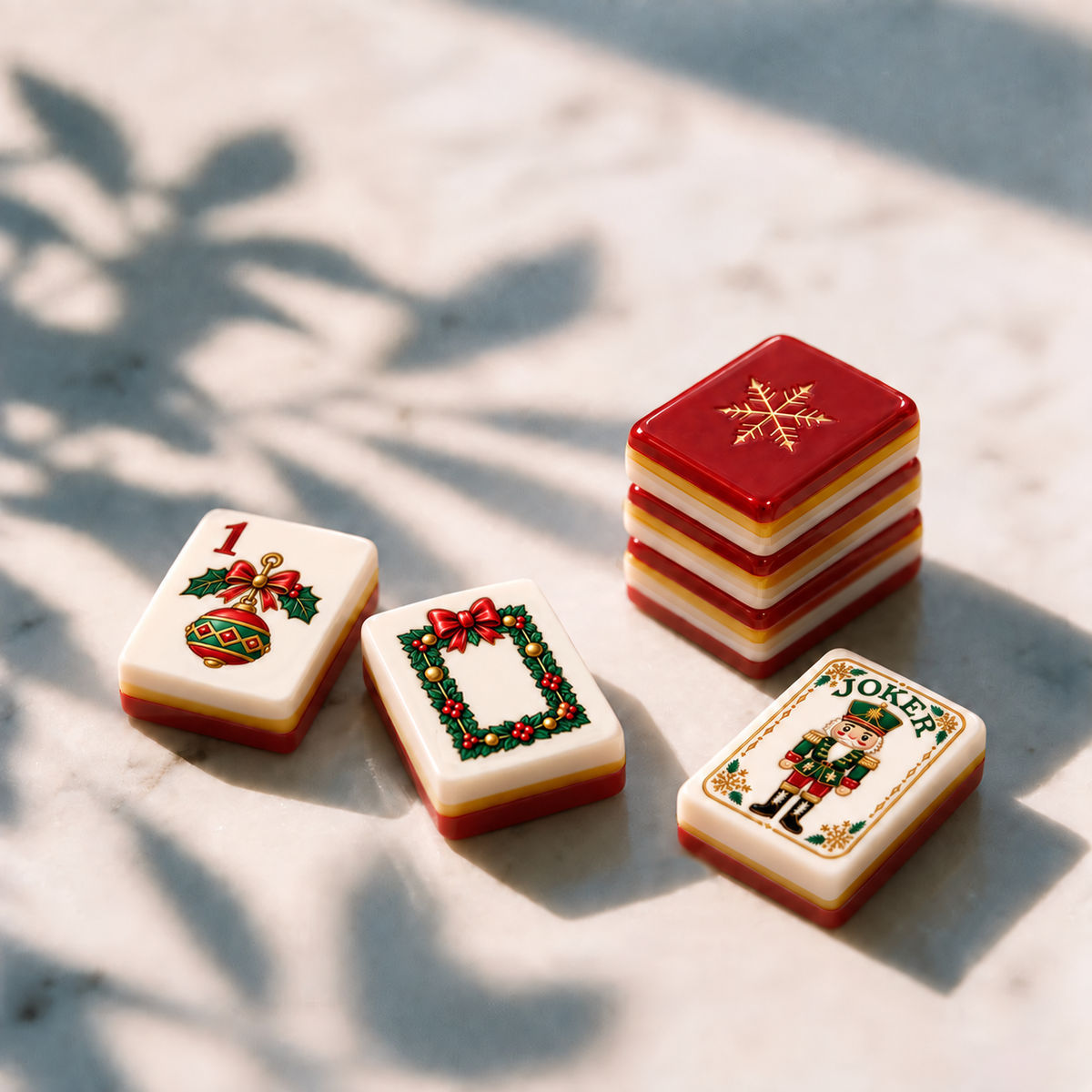
Chinese mahjong wins require 14 tiles: one pair (2 identical) + four melds (each 3 tiles: either a pung—three identical—or a chow—three consecutive in the same suit). Unlike American mahjong, which uses only the current year's card and prohibits chows, Chinese mahjong allows any chow you can form. For example, 2–3–4 Bamboo counts as a valid meld; so does 7–8–9 Dots. Honor tiles (Winds, Dragons) form only pungs. A hand like one pair of White Dragons, plus three Craks (pung), four-five-six Dots (chow), eight-nine-one Bamboo (chow) wins immediately. The complexity lies in reading which melds are legal in your dialect—Cantonese, Sichuan, Shanghai, and Riichi each enforce different bonus rules, flower scoring, and declare methods. We recommend starting with best-selling American mahjong sets if you're learning alongside players who mix variants, since American play's fixed card and clear exposure rules create a steadier foundation for new players. 🀄 Shop best-selling mahjong sets →
What makes a winning Chinese hand?
A Chinese mahjong hand wins when you hold exactly 14 tiles: one pair plus four melds of three tiles each. A meld is either a pung (three identical tiles) or a chow (three consecutive numbers in one suit). For example, three 5 Dots (pung) + four-five-six Bamboo (chow) + seven-eight-nine Craks (chow) + one pair of East Winds = a complete hand. Unlike American mahjong's rigid card-based hands, Chinese play rewards recognizing any legal meld on the fly. You win by drawing a tile that completes the last meld or pair, or by claiming a discard from another player that does the same.

How do chows differ from American melds?
Chinese mahjong permits chows—sequences of three consecutive tiles in the same suit—as a basic meld. American mahjong forbids chows entirely; you may only expose or declare pungs (three identical), kongs (four identical), quints (five), or sextets (six). This is the deepest rule difference between the games. In Chinese play, 1–2–3 Bamboo is a legal chow; in American, it is not—you'd need three identical 1 Bamboos (a pung) to expose. Chows create far more hand combinations in Chinese play, making it faster-paced and less predictable. When learning, beginners often accidentally try to claim a "sequence" in American games and must be reminded that no chow exists under American rules.
Can honor tiles form chows?
No. Winds (North, East, South, West) and Dragons (Red, Green, White) are honor tiles and cannot form chows because they have no numerical sequence. They form only pungs—three or four identical copies of the same honor. For instance, three East Winds + three Green Dragons + four-five-six Craks + seven-eight-nine Dots + one pair of White Dragons is a valid hand: two honor pungs, two number chows, one pair. If you hold scattered honors with no three identical copies, they stay unused; many beginners waste turns hoping to complete a non-existent "honor chow." In Cantonese and Shanghai variants, honor tiles can also earn bonuses for certain patterns (like all honors in one meld), but the no-chow rule is universal.
How do you read a real-game Chinese hand?
Let's walk through a Cantonese-style winning hand step by step. You draw the tile that completes your fourth meld. Your tiles in hand: one White Dragon (pair), three 2 Craks, four-five-six Bams, seven-eight-nine Dots, three-four-five Bamboo, and one 5 Dot. You declare "winning hand" (or "mahjong"). The melds break down as:
Pair: White Dragon + White Dragon
Pung 1: 2 Crak + 2 Crak + 2 Crak
Chow 1: 4 Bam + 5 Bam + 6 Bam
Chow 2: 7 Dot + 8 Dot + 9 Dot
Chow 3: 3 Bamboo + 4 Bamboo + 5 Bamboo
Bonus tile: 5 Dot (some variants award points for holding duplicate tiles; rules vary by dialect)
You announce "all chows and honor" (or the local scoring term), and the other players settle the score according to your dialect's point table. Speed and accuracy matter: miscounting a meld costs the round or attracts debate.

Comparison: Chinese variants and their hand rules
Variant | Chows allowed | Honors in melds | Win condition | Special feature |
Cantonese (Hong Kong) | Yes, 1–9 sequences | Pungs only | Draw or claim discard | Bonus tiles, limit hands, frequent scoring |
Sichuan | Yes | Pungs only | Draw or claim discard | Eye melds, melded sets must match in "rank" |
Shanghai | Yes | Pungs only | Draw or claim discard | No scoring limit, simpler rounds |
Riichi (Japanese) | Yes (closed hand required) | Pungs only | Draw only (no claiming) | Riichi bet, dora tiles, draw-only win |
American | No chows | Pungs, kongs, quints, sextets | Claim discard (must go mah jong on discard) | Annual card, eight jokers, Charleston pass |
The most striking difference is American play: no chows, jokers as wild tiles, and a published card that lists all legal hands for that year. If you play American mahjong in a club, you need how to read the mahjong card to follow hand patterns. Chinese play has no card; instead, you learn your dialect's bonus rules, point limits, and scoring.
🎁 See our most-loved mahjong sets & accessories →
Common mistakes beginners make with Chinese hands
Forgetting honor tiles cannot form chows. New players often hold North, East, and South Winds and expect them to count as a sequence. They do not. Only pungs (three identical) work with honors.
Miscounting tile sequences. 1–2–3 is a chow; so is 8–9–1 if it wraps around (variant-dependent; check your ruleset). But 9–1–2 does not wrap backward. Always verify your dialect's rules before the game starts.
Mixing pair and meld tiles. Your pair must be exactly two identical tiles, separate from your four melds. Some beginners accidentally use one tile of the pair as part of a meld, breaking the winning structure.
Assuming all tiles in hand must be visible. In Chinese play, most tiles stay concealed until you declare victory. American players, used to exposing melds mid-game, sometimes expose too early and lose the flexibility to adjust their hand strategy.
Ignoring scoring bonuses. In Cantonese, Shanghai, and Sichuan, certain patterns (all pungs, all chows, all honors in one meld, dragons, seasons) earn multipliers. Missing these during play costs money at settlement. Study your dialect's bonus chart before your first game.
What to check before you buy
If you're hosting or joining a Chinese mahjong group, verify which dialect and ruleset everyone plays; rulebooks differ sharply between regions. Ask experienced players whether bonuses cap (limit hands), how many rounds occur per session, and what the tile count is—nearly all Chinese games use 144 tiles (36 per suit × 4 + 16 honors + 8 flowers + 8 jokers), versus American's 152 base. Check whether the set includes a wind indicator (a marker showing which player is "dealer" or "east") and a scoring pad, since settlement happens after every round. If you're learning both American and Chinese, best-selling sets designed with clear suit printing help you spot chows and pungs faster.
✨ Find your Mahstead set — free US shipping →
For serious players hosting regular games, we recommend investing in a dedicated mahjong mat marked with player positions and a mat with pushers and racks to organize and reveal melds cleanly—especially if you play with both American and Chinese groups, since layout clarity prevents disputes.

FAQ
Can I play the same Chinese hand pattern in American mahjong?
No. American mahjong has no chows, only pungs and higher melds. A 1–2–3 Bamboo sequence is invalid in American play. You must hold three identical 1 Bamboos or build a higher-count exposed set. Consult the current year's National Mah Jongg League card for legal American hands.
What if I hold four of the same tile in a Chinese hand?
A four-tile set (kong) is not a standard meld in most Chinese dialects—it counts as a bonus or special draw hand. In Cantonese and Sichuan play, forming a kong during the game (after declaring three melds) awards points and often triggers a replacement tile draw. Rules vary; confirm with your group's rulebook.
How do I know which dialect my local club plays?
Ask the organizer or most senior player upfront. Cantonese (Hong Kong style) is most common in North America; Shanghai and Sichuan are also popular. Each has different bonus patterns, winning scores, and round lengths. Playing without knowing your dialect's rules leads to disputes and slow games.
Is there a standard way to announce a winning hand?
Most Cantonese games require you to declare "mahjong" (or your local term) and name your melds aloud: "pair of White Dragons, pung of 2 Craks, chow 4–5–6 Bams," etc. This lets other players verify before settlement. American play requires you to declare "mah jong" and expose your entire hand on the mat.
Can I learn Chinese mahjong from a single rulebook?
One rulebook covers one dialect. Cantonese, Sichuan, Shanghai, and Riichi each have distinct bonus tables, point caps, and declare rules. If you move between groups, you'll need to relearn scoring. Starting with mahjong for beginners materials that teach American rules first gives you a solid foundation in tile recognition and meld logic before dialect-specific nuances.
What tiles do I absolutely need to recognize to form a chow?
The four Number suits (Bams, Craks, Dots, Bamboo)—specifically their 1–9 sequence in each suit. Chows only form within one suit and only with numbers. Honors (Winds, Dragons) never form chows. Flowers are bonus tiles and don't form melds. Once you can spot 1–2–3 through 7–8–9 in any single suit, you can recognize all legal chows.


View More
View More
View More
