
How to Play Year Hands in American Mahjong
Last updated: Nov 23, 2026
Year hands are mahjong patterns tied to the current year—for 2026, the year section shows specific hand combinations printed on the National Mah Jongg League card that are valid only during 2026 play. You locate them by finding the "Year" section on your card, which lists hands built from any suit combination using tile numbers that relate to or incorporate the year digits. To play a year hand, you expose the required groupings (pungs, kongs, or quints, never sequences), complete your hand when you draw or someone discards a tile that lets you call "mahjong," and score according to that hand's value. Year hands often reward players who hold flexible tiles early in the game and watch what others discard—common mistakes include holding year tiles too long hoping for one specific hand, or forgetting that your hand must match exactly what appears on the card for the current year. How to read a mahjong card explains card layout in detail; understanding the year section requires you to cross-reference suit, number, and exposure type each time you draw.
What is the year section on the card?
The year section lists valid hands only for the current year. Every spring, the National Mah Jongg League releases a new card; the year section changes annually and reflects that calendar year's digits or thematic patterns. For 2026, the year row contains hands you can play only in 2026—on January 1, 2027, those hands expire and a new year section appears. This keeps competitive play fresh and encourages players to learn the card thoroughly each season.

How do you identify which tiles make a year hand?
Read the year section left to right, just as you would any other row on the card. Each hand lists exposures (pung, kong, quint, sextet) separated by symbols or spacing. For example, if a year hand reads "Pung 1, Pung 2, Pung 3, Pair Any," you need three identical 1-tiles, three identical 2-tiles, three identical 3-tiles, and a pair of any matching tiles—all exposable (visible on the table). Numbers always refer to tile count or suit, not a random code. Match your drawn tiles against the printed pattern exactly: suit, number, and exposure type must all align. If the card shows "Like No Like" or "Consecutive" modifiers in the year section, those override default play rules for that hand only.
What role do jokers play in year hands?
Jokers substitute for missing tiles within an exposure—a pung of 5 Dots might use two real 5 Dots and one joker. However, jokers cannot be used to complete a pair; if a year hand requires a pair, both tiles must be real (identical, no joker). Many year hands feel achievable precisely because they allow joker substitution, so holding a joker early in the round increases your flexibility to pursue multiple year hands simultaneously. Never assume a joker is "stuck" on a single hand—keep your draws loose until the endgame. We've seen players waste a joker on a year hand when the same joker would have won them a higher-value hand in another section five tiles later.
What are the most common mistakes players make with year hands?
Mistake 1: Holding too many year tiles too long. If you draw a 1 Crak early and dream of a year hand using 1 Craks, you may refuse good discard chances and get stuck. Instead, prioritize hands that can win today, then layer year hands as a secondary option. Mistake 2: Misreading exposure type. A year hand might require a quint (5 identical tiles), not a pung; if you expose only three 7 Bams, that hand is dead. Always re-read the card before you expose. Mistake 3: Forgetting that year hands must match exactly. If the card says "Pung 5, Kong 7, Pair Dragon," you cannot substitute a sextet for a kong—the card defines the hand, period. Mistake 4: Playing too many year hands at once. Holding tiles for three different year hands means you're holding 12–15 tiles; you'll never complete any of them. Pick one or two year hands per round and discard the rest decisively.
How do year hands compare to other sections on the card?
Section | Valid when? | Typical complexity | Joker rules | Beginner comfort |
Year | Current year only (e.g., 2026) | Medium–high | Allowed in exposures, not pairs | Medium |
Regular sections (like "Like Hand") | All year | Low–medium | Allowed in exposures, not pairs | High |
Consecutive | All year | High | Allowed in exposures | Low |
Quint | All year | High | Allowed in exposures | Low |
Year hands sit in the middle: more restrictive than regular sections (they expire), but often simpler than consecutive or quint hands because they use familiar number patterns. Many players prioritize year hands during the first half of a round, then pivot to regular sections as discards pile up and year-hand tiles become visible in other players' melds.
🀄 Shop best-selling mahjong sets →

How does a year hand win work step-by-step?
Step 1: Draw a tile or wait for a discard. During your turn, draw from the wall (or receive a discard from another player). Step 2: Check your hand against the year section. Do your exposed tiles plus your remaining hand match one of the year hands on the card? Step 3: Confirm all exposures are legal. Pungs, kongs, quints, and sextets must use real tiles (or joker substitutes, except in pairs). Pairs must be real tiles only. Step 4: Call "mahjong." If the incoming tile completes your year hand exactly—meaning you have all required exposures plus a winning pair, all matching the card—declare mahjong immediately. Step 5: Reveal your hand and score. Place all tiles on the table, show them to all players, and verify the hand matches the card. The scorekeeper awards points and notes the winner. A misread year hand—one that doesn't match the card—loses the game for you, so take three seconds to double-check every exposure before calling.
What's the strategic difference between pursuing a year hand vs. a regular hand?
Year hands reward patience and card knowledge; regular hands reward flexibility and opportunism. If you're holding tiles for a year hand and four rounds pass without drawing the right tile, you've wasted your holding pattern. Conversely, if you're holding only regular-section tiles, you can pivot instantly when a discard chain opens up. Expert players often hold one year hand loosely and four to five regular-hand possibilities simultaneously, so they can win on multiple routes. Beginners should pick one simple year hand per round and ignore the rest—this builds confidence and teaches you to read the year section without distraction. How to play American mahjong covers hand selection broadly; year hands are the advanced layer on top.
What's the best way to learn year hands?
Start with a clean, well-lit mahjong mat and the current year's card. Before each game, spend two minutes scanning just the year section—read aloud the first three hands so the patterns stick. During your first five rounds with a new card, play only regular-section hands and let other players chase year hands; this removes pressure and lets you observe how year-hand holders behave (often they call late because they're waiting for one specific tile). By round 10, pick one simple year hand and go for it. By the end of your session, you'll recognize the year section without thinking. Mahjong for beginners covers foundational concepts; year hands assume you already know how to read suits and exposures.
Why do year hands change every spring?
The National Mah Jongg League issues a new card each year to keep the game fresh, competitive, and aligned with the calendar year. A 2026 year hand might use the digits 2, 0, 2, 6 in some combination; a 2027 hand will look completely different. This annual refresh means casual players who skip a season can feel out of step, and competitive players must study the new year section thoroughly. It also prevents memorization from replacing skill—you cannot "solve" American mahjong by learning one card forever.
🎁 See our most-loved mahjong sets & accessories →
What to check before you buy a mahjong set for year-hand play
Tile clarity: Can you see Crak vs. Bam vs. Dot instantly? Year hands demand fast pattern recognition; a best-selling set with crisp, contrasting suits saves you misreads.
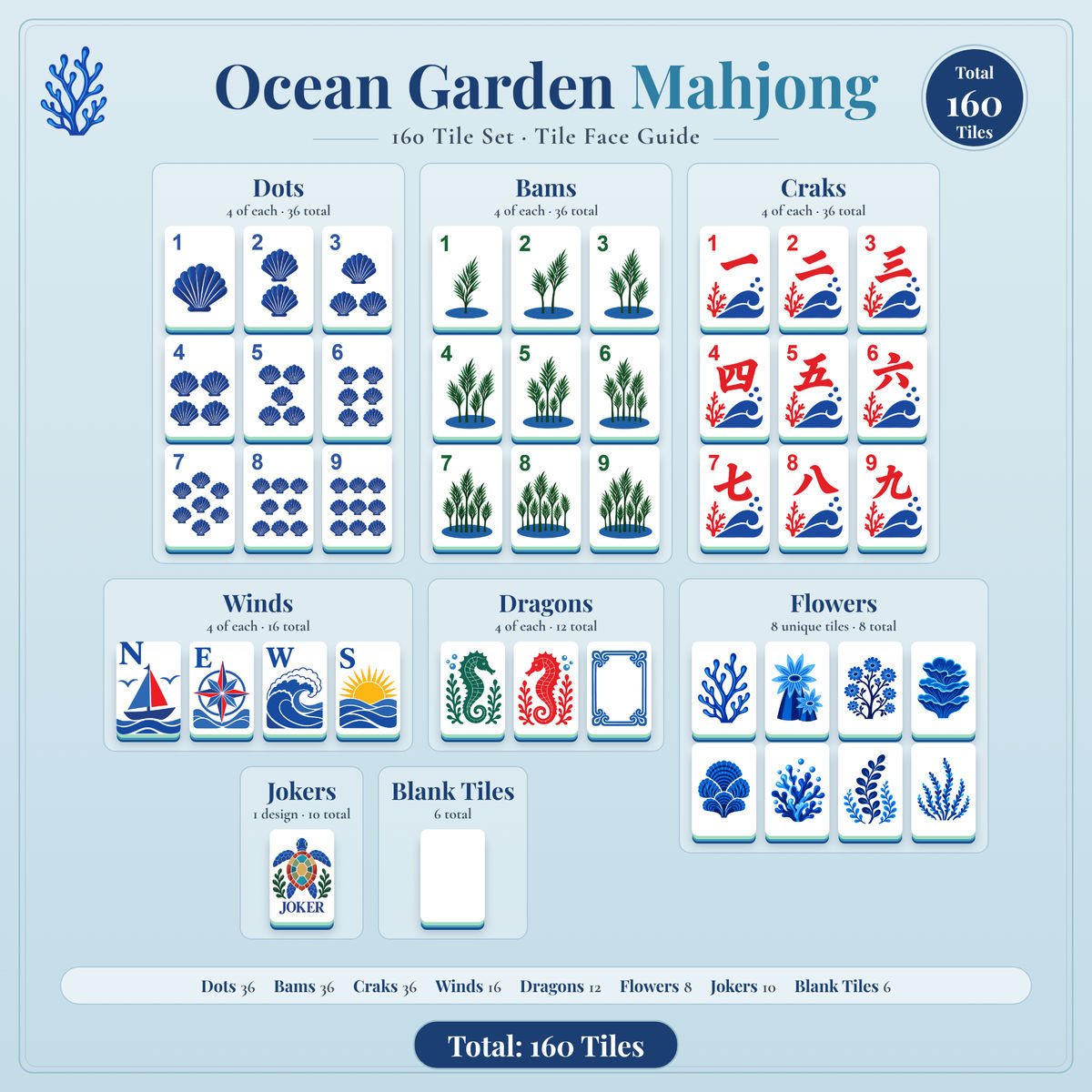
Joker count: A 160-tile set includes spare jokers. Year hands (and all American mahjong) require exactly 8 jokers in play; check that your set includes spares so if one joker is damaged, you're not short mid-game.
Card slot or mat pocket: Many players keep the year card visible near the rack. A mat with a card slot prevents you from squinting at a card in your lap.
Racks and pushers: Year hands require constant exposure of multiple groupings; racks with pushers let you organize and update your melds cleanly without fumbling tiles.

FAQ
Can I play a year hand if I draw it after someone else wins the round?
No. A year hand is dead the moment another player calls mahjong. You must complete your year hand before anyone wins, or it has no value.
If the year section shows "Like 1," do I use any 1-tiles, or only 1s in one suit?
"Like 1" typically means one pung/kong of any 1-tile (Crak, Bam, or Dot)—you choose the suit when you build the hand. Read your specific card carefully, as "Like" patterns differ by year.
What happens if I expose a year hand incorrectly?
If your exposure doesn't match the card exactly (wrong exposure type, wrong number of tiles, or wrong suit), your hand is dead and you lose the game. Always verify with another player before calling.
How many year hands are usually on the card?
Most cards have four to six year hands spread across different exposures and number patterns. The exact count changes annually.
Can I mix year-hand tiles with regular-hand tiles in the same round?
No. Your final winning hand must match one hand on the card—either a year hand or a regular hand, not both. The card defines the single pattern you claim as your win.
Should beginners focus on year hands or regular hands first?
Start with regular hands. Year hands are a bonus once you're fluent in reading the card and exposing pungs/kongs. Trying both simultaneously overwhelms new players. ✨ Find your Mahstead set — free US shipping →


View More
View More
View More
