
How to Play Wright-Patterson Mahjong: Rules & Setup
Last updated: Nov 23, 2026
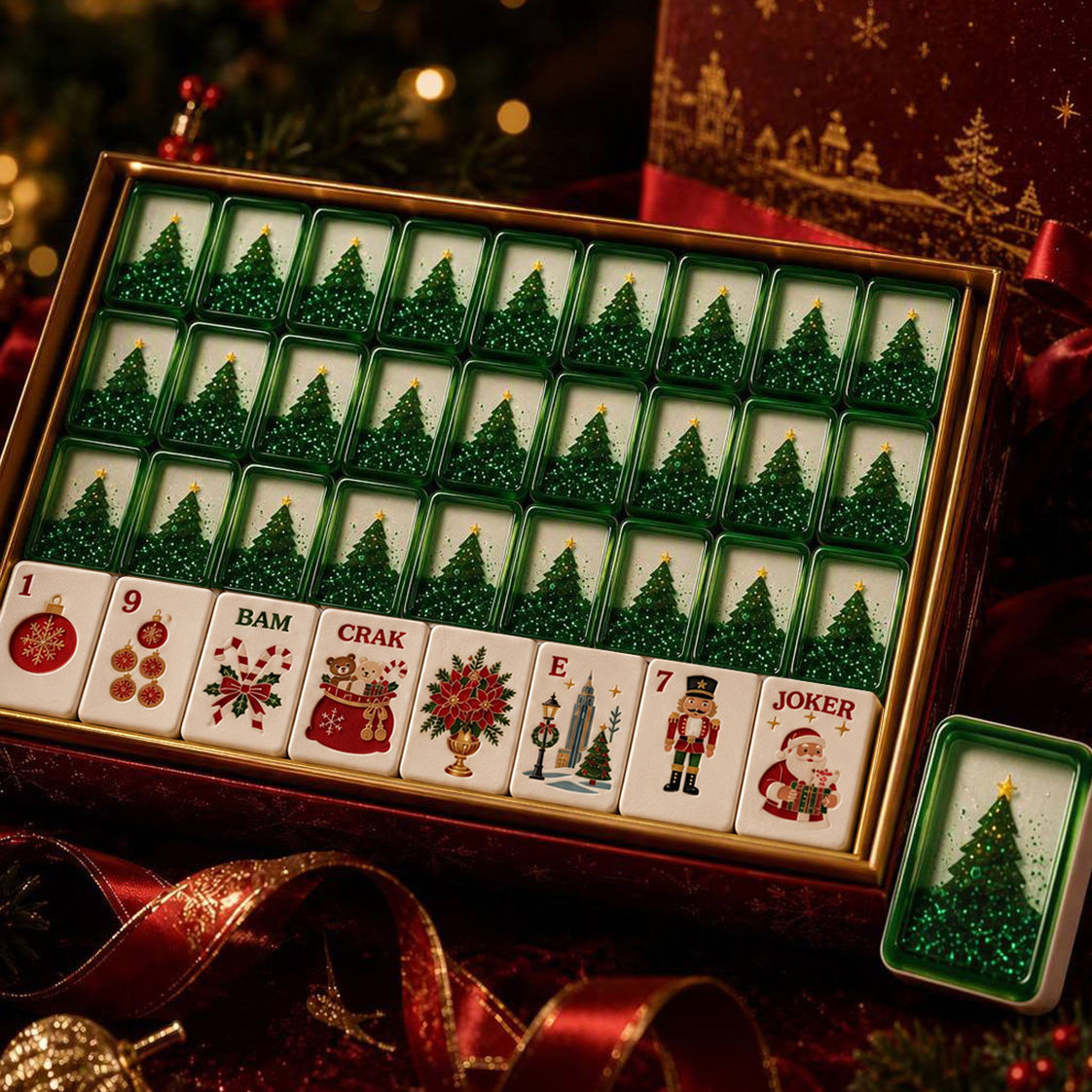
Wright-Patterson mahjong is a localized American variant centered around the Wright-Patterson Air Force Base region. It uses a standard 152-tile American mahjong set with Bams, Craks, Dots, winds, dragons, flowers, and jokers, played with four players over approximately 45–90 minutes per game. The core difference from standard American mahjong lies in hand composition rules and which tiles can be called from other players' discards. Rather than consulting the National Mah Jongg League card each season, Wright-Patterson players follow a fixed hand book specific to their community. Winning hands consist of melds (pungs, kongs, quints, sextets) and pairs, but the valid combinations differ from the seasonal NMJL card. Our weekly group finds this variant demands sharper memorization of local hands upfront, though the fundamental tile mechanics—the Charleston, joker use, and exposure rules—remain identical to American play. Check with your local Wright-Patterson club or players' group to confirm the current hand list, as variants can shift between communities.
Wright-Patterson mahjong brings a distinct regional flavor to the American game we know and love. Unlike the seasonal National Mah Jongg League hands that most of us consult, this variant uses a fixed hand structure developed by and for its core player community near Dayton, Ohio. We'll walk you through the rules, setup, winning hands, and how to transition smoothly if you're coming from standard American mahjong or another variant entirely.
What tiles do you use in Wright-Patterson mahjong?
The tile set is identical to standard American mahjong: 152 playing tiles consisting of Bams, Craks, Dots (numbers 1–9, four copies each), 16 winds (four each of North, East, West, South), 12 dragons (Red, Green, White), 8 flowers, and 8 jokers. You'll need a 160-tile acrylic set that includes the standard 152 tiles plus spare jokers. No differences in tile composition exist between Wright-Patterson and American play—only in which hands win and how you call them.

How does the hand list differ from standard American mahjong?
Standard American mahjong players consult the National Mah Jongg League card, which releases each spring with hundreds of legal hand patterns. Wright-Patterson mahjong instead uses a fixed, community-maintained hand book that doesn't change year to year. The hands still consist of pungs (three identical tiles), kongs (four identical), quints (five), sextets (six), and pairs, but the specific combinations that constitute a winning hand are predetermined in the Wright-Patterson list. For example, a hand marked as a "2-2-2" pattern in Wright-Patterson (two pungs and two quints, for instance) is fixed; you don't look it up seasonally. This means you memorize the hand book rather than learning to read a new card every year. Many players find this steadying—once you know your hands, you know them. We recommend getting the official Wright-Patterson hand list from a local player, club, or community center near the base; online sources are limited, so in-person connection is your best bet.
What's the setup and Charleston process?
Setup mirrors standard American mahjong exactly. All 152 tiles (plus 8 jokers) are shuffled face-down, and each player builds a wall of 38 tiles in front of them (two rows stacked). After removing the flower and season tiles (set to the side, replaced from the wall), the dealer draws 14 tiles and other players draw 13. Then comes the Charleston—the tile-passing ritual where you pass three tiles right, three across, and three left, with an optional second and third Charleston. This is the same in Wright-Patterson as in American play; the difference emerges only after the Charleston is complete and you're reading your hand against the Wright-Patterson hand list instead of the NMJL card.
How do you call and win in Wright-Patterson mahjong?
Calling protocol in Wright-Patterson is where regional practice sometimes diverges most noticeably. You may call pungs, kongs, quints, and sextets from discards (just as in American mahjong), but some Wright-Patterson groups impose stricter rules about which melds can be exposed on the table after claiming a discard. The core rule remains: jokers can never appear in a single tile or a pair, and you must declare your complete hand before "mahjong" (winning). When you believe you hold a winning hand that matches the Wright-Patterson hand book, you expose all melds and your pair, announce "mahjong," and the hand ends. If your hand does not match the book exactly, the hand is dead—you cannot win that round. Scoring follows a points system (often using the NMJL system as a base, though some Wright-Patterson groups adapt it), and a full game typically consists of four rounds (one with each player as dealer).

How does Wright-Patterson mahjong differ from Chinese, Hong Kong, and Riichi variants?
Wright-Patterson is fundamentally an American variant, not a rebranding of Chinese, Hong Kong, or Riichi mahjong. It retains all American features: no sequences (chows), joker-as-wild mechanics, and an English-language hand list. Chinese and Hong Kong mahjong use completely different tile sets (Chinese includes no jokers and features chow sequences), and Riichi mahjong (Japanese) has its own complex hand rankings and scoring. Taiwanese mahjong uses simpler hand structures and is played differently. If you've learned any of those variants, reset your mental model for Wright-Patterson: treat it as American-family play with a local twist, not a pivot toward Asian variants. The game flow, tile counts, and hand logic are all rooted in American mahjong; only the hand book is unique.
🀄 Shop best-selling mahjong sets →
Common mistakes to avoid when switching to Wright-Patterson rules
Consulting the NMJL card instead of the Wright-Patterson hand book. This is the biggest trap. Hands that are legal on the spring NMJL card may not exist in the Wright-Patterson list. Check your local book before you play; if you don't have a copy, ask a group member or contact a community center near Wright-Patterson Air Force Base.
Misremembering hand limits. Wright-Patterson hands are fixed, so you can't rely on pattern-reading the way you might with the NMJL card's sections. Write down your key hands or keep a crib sheet during your first few games.
Forgetting the Charleston is identical. New players sometimes assume the passing ritual differs too. It doesn't. The Charleston in Wright-Patterson plays exactly as it does in standard American mahjong.
Mixing up joker rules. Jokers work the same way: they substitute for any tile in a meld (pung, kong, quint, sextet) but cannot be used in a single tile, a pair, or a joker-only meld. This applies across all American variants, including Wright-Patterson.
Calling hands before comparing to the book. Always verify your complete hand against the Wright-Patterson list before announcing "mahjong." A premature call that doesn't match the book often results in a dead hand and a penalty.
Mistake | Impact | How to Avoid |
Using NMJL card | Hand is dead; round ends | Memorize or reference only the Wright-Patterson book |
Forgetting a hand pattern | You miss winning opportunities | Study the book before game day |
Misplaying the Charleston | Confusion; wasted tiles | Confirm steps with experienced players first |
Joker in a pair | Hand is illegal | Keep jokers only in melds of 3+ identical tiles |
Calling prematurely | Dead hand; penalty | Silently verify all tiles before speaking |
🎁 See our most-loved mahjong sets & accessories →
What to check before you host a Wright-Patterson game
Obtain the official hand list. Contact a local Wright-Patterson mahjong club, a community center near the base, or ask experienced players. Do not assume online sources are current; hand lists can evolve.
Confirm your tile set is complete. You need exactly 152 tiles plus 8 jokers. A 160-tile acrylic set includes spare tiles, which is ideal for hosting—if a tile gets lost, you have replacements.
Set up a play surface and racks. A dedicated mahjong mat keeps tiles organized and prevents spills. Mahjong racks with pushers help players hold and manage tiles cleanly, especially over long sessions.
Brief all players on the hand book. Run through a few legal Wright-Patterson hands before the Charleston begins. Clarify local rules on calling and scoring so nobody's confused mid-game.
Have the hand book visible at the table. Keep a printed or laminated copy in the center; any player can reference it during their turn.
Finding Wright-Patterson mahjong groups and learning resources
Wright-Patterson mahjong thrives in communities near Dayton, Ohio, but players in other regions play it too. To find a group: check community centers and libraries near Wright-Patterson Air Force Base, post on local Meetup or Facebook groups focused on mahjong or base activities, ask at country clubs or senior centers in the area, and network through existing American mahjong circles—someone likely knows a Wright-Patterson player. If you're learning for the first time, arrange a coaching session with an experienced Wright-Patterson player; the hand book alone can be cryptic without someone walking you through it.
✨ Find your Mahstead set — free US shipping →

FAQ
Can I use a standard NMJL mahjong set to play Wright-Patterson?
Yes. Any 152-tile American mahjong set works—the tiles are identical. The only difference is the hand list you consult. Buy or borrow a Wright-Patterson hand book, and you're ready.
Is Wright-Patterson mahjong played with 144 or 152 tiles?
Always 152 tiles, just like standard American mahjong. No regional variant changes this count.
Do I need to learn a new Charleston for Wright-Patterson?
No. The Charleston—three tiles right, three left, three across, plus optional passes—is identical to American mahjong. Only the hands differ.
Where can I find a Wright-Patterson hand book online?
It's hard to find reliably online. Contact local Wright-Patterson clubs, community centers near Dayton, or experienced players directly. Many groups keep copies they share with newcomers.
If a hand doesn't match the Wright-Patterson book, what happens?
Your hand is dead, and you cannot win that round. Always verify silently against the list before calling "mahjong."
Can I switch between Wright-Patterson and standard American mahjong in the same evening?
Theoretically, yes, but we don't recommend it. Keep one hand book per game to avoid confusion. If your group plays both, play one variant per evening.
Do jokers work differently in Wright-Patterson mahjong?
No. Jokers substitute for any tile in a meld (3+ identical tiles) but cannot form a pair, single tile, or joker-only meld—same as American play.
How long does a Wright-Patterson mahjong game take?
Typically 45–90 minutes, depending on how quickly players read the hand book and how many rounds you play (usually four, one per dealer).


View More
View More
View More
