
What Set Do You Need for Mahjong Competition Rules?
Last updated: Nov 23, 2026
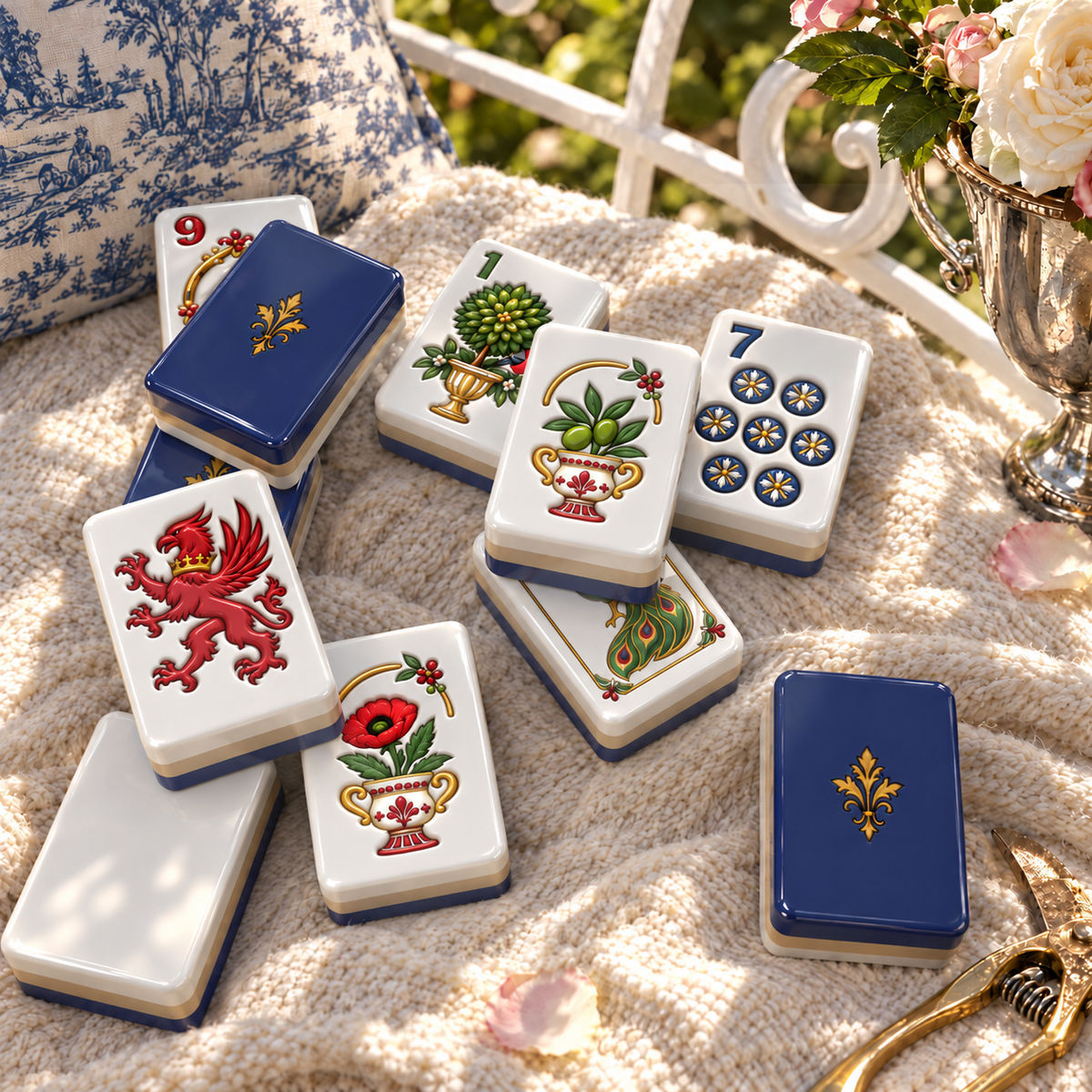
American mahjong competition requires exactly 152 tiles (three suits of 1–9 in four copies, 16 winds, 12 dragons, 8 flowers, 8 jokers) per the National Mah Jongg League rulebook. You play only hands listed on the current year's official card, issued each spring. Tiles must be acrylic or bone with uniform backing and face size so no player gains a cheating advantage. A mat is not mandated by competition rules but is practical for protecting tiles and speeding play. Most tournament players carry their sets in a padded bag or case to avoid damage. Mahstead builds 160-tile acrylic sets (152 playing tiles plus spares) that meet tournament standards and ship free across the US; engraved variants let clubs and groups personalize their equipment without breaking the competition tile count.
American mahjong competition uses exactly 152 tiles (three suits of 1–9 in four copies, 16 winds, 12 dragons, 8 flowers, 8 jokers) per the National Mah Jongg League rulebook. You play only hands listed on the current year's official card, issued each spring. Tiles must be acrylic or bone with uniform backing and face size so no player gains a cheating advantage. A mat is not mandated by competition rules but is practical for protecting tiles and speeding play. Most tournament players carry their sets in a padded bag or case to avoid damage. Our best-selling mahjong sets use acrylic tiles that meet these standards and include spares; engraved variants let clubs and groups personalize their equipment without breaking the competition tile count.
Why does the tile count matter?
The National Mah Jongg League specifies 152 tiles per set—no fewer, no more—because hands are printed and vetted against that exact inventory. Extra tiles (like blanks in 166-tile sets) are never added to play and create confusion if miscounted during a game. You need 8 jokers, not 12 or 16, because the card's hand patterns depend on joker rarity. A single missing or cracked tile mid-tournament can invalidate a hand call. Buy only 152-tile sets intended for American mahjong; sets labeled with different counts follow other regional variants' rules.

What tile material works for tournaments?
Acrylic and bone both meet competition standards; acrylic is more durable and less likely to crack or chip during heavy play. Acrylic tiles also maintain uniform weight and backing, preventing players from identifying tiles by feel alone—a key fairness rule. Plastic or resin tiles wear unevenly and can show age marks that telegraph tile identity. Bamboo-faced tiles on wooden bases are period-correct for collectible sets but slower to handle and prone to splitting. If you're buying once and playing weekly, acrylic is the no-regret choice.
Which equipment beyond the set do tournaments expect?
Competition rules don't mandate a mat, pushers, racks, or bag—but tournament directors and fellow players expect them as a courtesy. A mat protects the playing surface and tiles; mahjong mats also help speed discard reading in dim lighting and reduce shuffling noise. Pushers, sold with racks with pushers, minimize fumbling and keep tile walls upright during draws. A padded bag or case prevents cracks and separates your set from others—essential if multiple games run at the same venue. Dice are required to determine seating and wind assignment; most sets include them. If you're joining a regular tournament or club game, invest in a bag first; a mat and racks can follow.
🀄 Shop best-selling mahjong sets →
How does the National Mah Jongg League card affect what you buy?
The League releases a new official hand card every April; hands change annually, so you cannot use last year's card. You'll need a physical or digital copy of the current card at the table—no memorization is permitted. The card itself (not your set) dictates legal hands, so tile design and back color don't matter for legality. However, clarity matters: if your tiles have small, hard-to-read numbers or symbols, you'll lag during hand-checking. Acrylic tiles with embossed or laser-cut numbers are fastest to read under tournament lighting. Buy a set with legible markings and keep the current year's card nearby when you play.

What does "competition-ready" really mean?
Competition-ready means the set has 152 tiles (not 144 or 166), all tiles are acrylic or bone, tile backs are uniform, no tile is missing or cracked, and the joker count is exactly 8. It also means no tiles are marked, bleached, or worn so unevenly that a player could identify them by touch. Tournament organizers may inspect sets before play starts. If your tiles are loose in an old wooden box or stored in a cloth pouch, they'll jar and crack during shuffles. Mahstead sets ship in protective sleeves and can be engraved or plain; engraved American mahjong sets work equally well for competition, since engraving is on the back and does not affect tile recognition or legality.
Should you buy extra sets or join a club's shared set?
If you host weekly games at home or travel to tournaments, your own set is essential; you control storage, cleanliness, and inventory. If you play casually at a friend's house or a club venue once a month, a shared set usually suffices. Shared sets deteriorate faster because no single person maintains them; tiles get scratched, jokers disappear, and the mat degrades. If you're serious about competition, expect to own your set within six months of starting. A personal set also lets you customize it—engraving a family name, club insignia, or year onto the tiles is legal and useful for identity and pride.
Equipment Checklist: What to Buy First
Item | Why it matters for competition | Essential? | Buy first or later? |
152-tile acrylic set | Required; tiles must meet standard count and uniformity | Yes | First |
Current-year NMJL card | Required; determines legal hands | Yes | First |
Padded bag or case | Prevents tile cracks during transport | No, but highly recommended | First |
Mat | Speeds discard reading; protects table | No, but standard at clubs | Second |
Racks with pushers | Steadies tile wall; reduces fumbling | No, but speeds play | Second or third |
Dice | Required for seating/wind; most sets include | Yes | Included with set |
🎁 See our most-loved mahjong sets & accessories →
What to check before you buy
Tile count: Confirm the set includes exactly 152 playing tiles (plus spare jokers/blanks that never enter play). Don't assume a "160-tile set" means 160 playing tiles; Mahstead sells 160-tile sets with 152 playing tiles and labeled spares.
Material: Verify tiles are acrylic or bone, not plastic or resin. Acrylic tiles maintain uniformity over thousands of shuffles; plastic yellows and warps.
Joker count: Count 8 jokers in the set. If you see 12 or 16, the set is for a variant (Hong Kong or Chinese mahjong), not American tournament play.
Backing uniformity: Shuffle a few tiles and check that all backs are the same color, thickness, and finish. Any variation is a red flag for refurbished or mixed-source tiles.
Legibility: Read the numbers and suit symbols under average room lighting. Small or faint markings slow down hand-checking.
Completeness: Verify the set includes the four wind tiles (North, East, West, South), four of each dragon (Red, Green, White), eight flowers, and all number tiles 1–9 in each suit (Bam, Crak, Dot) in four copies.
Shipping and bag: Check whether the set ships in a protective box or bag. Tiles loose in a box will rattle and risk chipping in transit.
✨ Find your Mahstead set — free US shipping →

FAQ
Can I use a 144-tile or 166-tile set for American mahjong competition?
No. Competition rules require exactly 152 tiles. A 144-tile set (Chinese mahjong) is missing seasons and has different hand logic. A 166-tile set adds extra jokers or blanks that are never used in play and create confusion during counting. Buy a true 152-tile American set.
Do I need to buy the official National Mah Jongg League tiles?
No. The League publishes the card (hands), not the tiles. Any 152-tile acrylic or bone set meets tournament standards. Your set doesn't need a League logo or seal. Mahstead sets are tournament-legal because they meet the tile count, material, and uniformity standards the League expects.
Are engraved tiles legal in competition?
Yes. Engraving on tile backs does not affect gameplay or fairness. Many clubs and groups engrave their sets with club names or years to identify ownership and build pride. Check with your specific tournament director if you're unsure, but standard engraving on backs is universally accepted.
What if I'm missing a tile mid-game?
Stop the game immediately. The hand is invalid. If it's a tournament, report it to the director; they may have a spare tile to substitute or rule the hand a no-win. Always inspect your set before and after play to catch missing or cracked tiles early. Carrying a protective bag and mat prevents most damage.
Do I need to buy a mat and racks to play competitively?
No, but they're standard in most clubs and tournaments. A mat speeds discard reading and protects both tiles and table. Racks keep your wall upright and prevent knocking over tiles during play. If you're joining a regular group, invest in them after your first few weeks; your group will quickly show you how useful they are.
Why do some sets list 160 tiles instead of 152?
A 160-tile set contains 152 playing tiles plus spare jokers and/or blank tiles that never enter the game. The extras are backup replacements if a tile cracks or is lost after purchase. They're never added to the 152 count during play. Mahstead sells 160-tile sets with clear labeling of what goes in play and what stays as spares.


View More
View More
View More
