
How to Play Mahjong: Competition Rules & Game Setup
Last updated: Nov 23, 2026
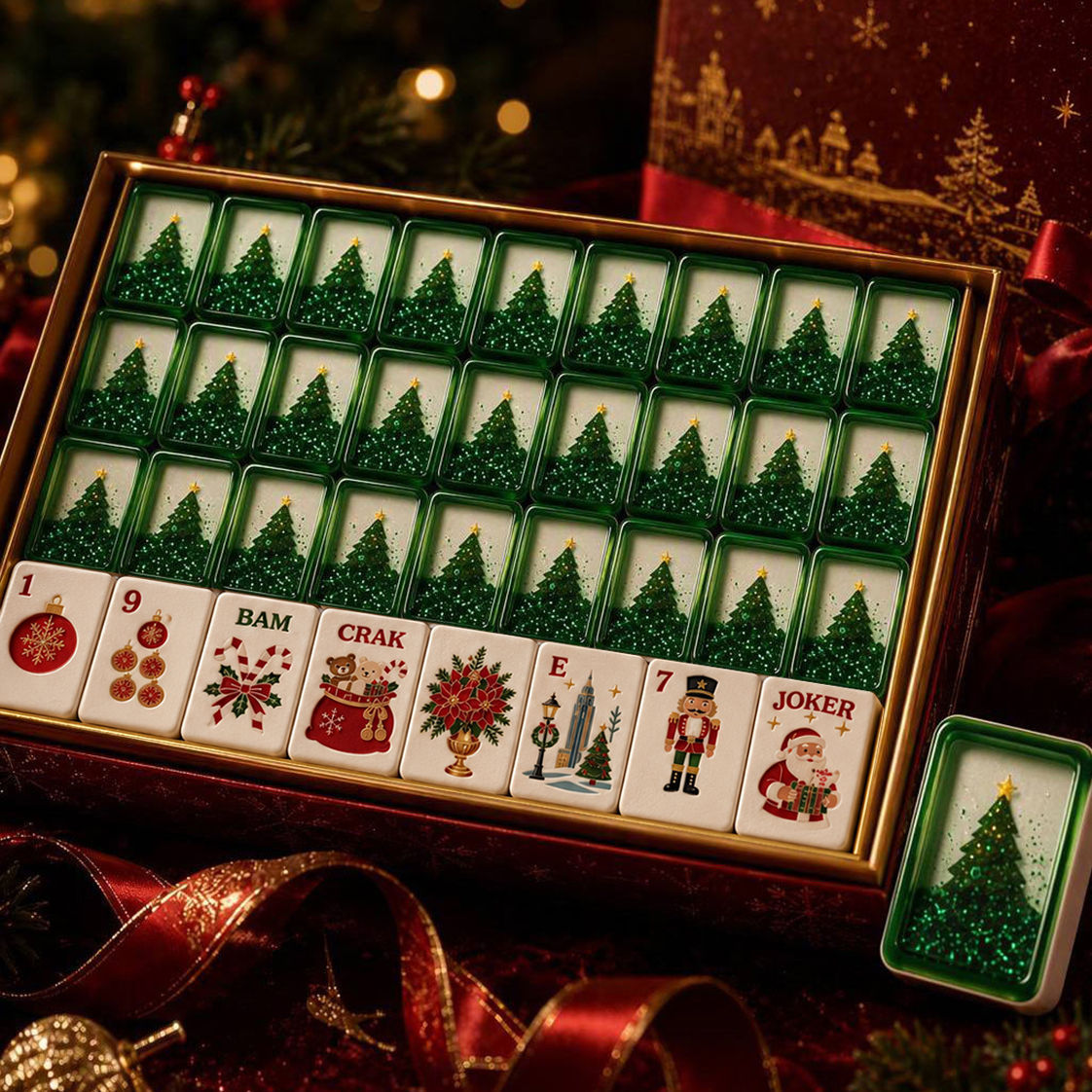
American mahjong competition is governed by the National Mah Jongg League card (issued annually each spring), which defines all legal hands for that year. A standard 152-tile game uses four players, 13 tiles per hand at start, and eight jokers; you draw and discard in turn until someone completes a legal hand from the current card. Jokers can substitute for any tile except pairs and singles. Exposure rules are strict: you may only expose matching sets (pungs of 3, kongs of 4, or larger runs of identical tiles), never sequences like 1-2-3. Scoring varies by hand rarity—the card ranks hands from easiest to hardest. Games typically last 45–90 minutes per round; competitive play requires the Charleston (a formal tile-pass ritual before play begins), a tile rack with pushers to organize your hand, and a mat with player zones to prevent disputes. Competition play enforces silence after discard and forbids tile-grabbing backplay.
Why does competition mahjong use only one card per year?
The National Mah Jongg League publishes a single official hand card each April. Only hands printed on that card are legal in competition. This rule prevents infinite variation and ensures fairness: every player, everywhere, plays from the same menu. The card changes yearly; older cards are invalid. Casual players often mix cards or invent hands, but competition requires exact card adherence. A hand must match the printed pattern perfectly—same tile types, same pung/kong structure, same joker count—to be called.

What are the hard rules for tile exposure and calling?
In American mahjong competition, you can expose only complete, identical sets: a pung (three matching tiles like three 5 Dots), a kong (four matching), a quint (five matching), or a sextet (six matching). You cannot expose sequences, chows, or mixed-number tiles. Jokers can replace any tile in an exposed set except it cannot be the only occupant of a pair or single-tile position. Once you claim a discard, you must expose and place the set immediately—you cannot hold it in hand. If someone calls "mah jongg," all players must discard immediately and reveal their hand; no backplay is allowed. The National Mah Jongg League rulebook specifies exact announcement protocol and penalty for false claims (replay or sit out that hand).
How does the Charleston prepare a competition hand?
The Charleston is a mandatory tile-passing ritual before the first hand of play. Each of the four players passes three tiles face-down to the right, then three to the left, then three across, then up to three back to the right (the "courtesy" pass, optional and face-up). This randomizes the starting tiles and prevents stack-shuffle bias. Players then draw tiles in turn to reach 13 in hand. The Charleston adds ritual and fairness but slows setup; casual games often skip it. Competition requires it. For step-by-step detail on the passes, the courtesy pass, and how to handle short passes, see our Charleston explainer.
What makes a legal hand in competition?
A legal hand consists of 14 tiles (including the one you draw or a discard you claim) arranged as: one pair and four sets. Each set is a pung (3), kong (4), quint (5), or sextet (6) of identical tiles. Melds can mix Bams, Craks, Dots, winds, and dragons, but sequences do not exist in American mahjong—a "set" is always identical tiles, never 1-2-3. The hand must exactly match a pattern printed on the current year's National Mah Jongg League card. Jokers can substitute for any tile in a set except the pair position or a single-tile position. If your hand does not match a card pattern, it is not legal, even if it looks logical. Beginners often assume standard solitaire patterns (like "three in a row") are valid—they are not. Only card-listed hands count.
How does scoring reward hand difficulty in competition?
The National Mah Jongg League card ranks hands from Section 1 (easiest, lowest payout) through higher sections (rarer, higher payout). Hands using mostly low numbers or common tile types score lower; hands using all winds, all flowers, or high-number pairs score higher. Scoring also depends on whether you went out on your own tile (a draw) versus someone else's discard, and how many sets are exposed. The exact point value is written on the card for each hand. Most competitive venues pay out based on hand value—a high-value hand might win double or triple the pool compared to a low-value hand. This incentivizes skill and luck balancing: easy hands payout less even if you reach mah jongg first. To understand point calculations and hand selection strategy, see American mahjong scoring.

What equipment is required for a certified competition game?
Equipment | Purpose | Competition Required? |
152-tile acrylic set with 8 jokers | Standard play | Yes |
Mahjong mat with player zones | Tile visibility, dispute prevention | Yes |
Tile rack with pushers (4 per player) | Hand organization, tile clarity | Yes (recommended) |
Tile box for the wall | Secure, fair tile draw | Yes |
Timer or clock | Enforce turn limits | Optional (casual) |
Scorepad & pen | Record points per hand | Yes |
Current-year card (printed or digital) | Verify legal hands | Yes (absolute) |
Best-selling mahjong sets include acrylic tiles that meet league visibility standards. A mahjong mat with clear zones prevents tiles from shifting during play and signals to observers where each player's discard row ends. Racks with pushers let you sort tiles silently and keep your hand hidden from neighbors—essential in competitive play where tile counting is allowed but hand peeking is not.
🀄 Shop best-selling mahjong sets →
What mistakes do new competition players make?
Calling hands off-card. Beginners see a logical four-set pattern and declare mah jongg—only to learn it is not on this year's card. Always check the card first. Misunderstanding joker placement. Jokers cannot be used as a pair, a single tile, or as a wild replacing all four copies of a tile in one set—they replace one tile per position. Forgetting the Charleston. Competition starts with it; skipping it invalidates the hand. Exposing in the wrong moment. You must claim a discard with "mah jongg" or expose a pung/kong before the next player draws; if you delay, the opportunity passes. Mixing old cards. If you play 2024 hands in a 2026 game, you risk disqualification. Backplay. Reaching into the wall to swap a tile after the player after you draws is forbidden; your turn ended once they drew. Soft reveals. Holding your hand where neighbors can count or see tiles violates competitive etiquette—use racks with pushers to keep tiles vertical and hidden.
Where can I find certified competition venues?
Sanctioned American mahjong tournaments and clubs are hosted through the National Mah Jongg League. Visit the league website to find registered clubs, tournament schedules, and league card sellers in your region. Local options include community centers, libraries, synagogues, country clubs, and senior centers—many offer weekly or monthly games, some competitive and some casual. Ask your local recreation department or search community boards for "mahjong" or "mah jongg" plus your city name. Many regions have Facebook groups dedicated to mahjong; post there to learn about nearby games. If starting your own competitive group, register with the league for rule clarity and to buy official cards in bulk.
🎁 See our most-loved mahjong sets & accessories →
What equipment should I buy to host a home competition game?
If you are hosting weekly competition mahjong at home, invest in a full best-selling mahjong set (acrylic tiles are durable and easy to read under house lighting), a quality mahjong mat with clear player zones, four racks with pushers to keep hands organized, and a travel bag or case for transport and storage. Print or buy the current year's National Mah Jongg League card, laminate it for durability, and keep a backup copy. A timer or phone app helps enforce turn limits. Our best-selling collection includes sets designed for table play—durable acrylic tiles, non-slip bases, and visibility in varied lighting. Many players add a scorepad, pen, and notepad for settlement. If you plan to host monthly tournaments, consider engraved sets or mats with your group's name; see engraved American mahjong sets.
What to check before you buy
Tile count: Competition games use exactly 152 playing tiles plus 8 jokers (160-tile sets include spares). Do not use fewer tiles or add extra jokers to the game.
Current card: Verify that your card matches the current year (2026). Old cards are not legal in competition.
Acrylic vs. bone: Acrylic is durable, lightweight, non-porous (no water staining), and reads clearly under lamp light. Bone tiles are beautiful but heavier and harder to read in dim rooms.
Mat size: Ensure it fits your table and has clear zones for each player's discard row, hand area, and the wall.
Rack height: Pushers should allow you to see your tiles without tipping your hand to neighbors. Test one before buying four.
Set storage: A bag or case protects tiles during transit and prevents loss of jokers or spares.
✨ Find your Mahstead set — free US shipping →

FAQ
Can I use an old mahjong card in a competition game?
No. Only the current year's National Mah Jongg League card (issued each April) is legal. A hand matching an old card is not valid, even if it is identical to a 2026-card hand.
What happens if someone calls mah jongg but their hand is not legal?
The hand is declared false. Penalties vary by house rule and league: typically a replay of that hand, a point deduction, or sitting out one hand. Check your venue's specific penalty rule.
Can jokers be used as a pair?
No. Jokers cannot occupy a pair position or act as the only tile in a single-tile set. They can only replace one tile within a pung, kong, quint, or sextet of identical base tiles.
How many times can you pass during the Charleston?
Exactly four times—three tiles to the right, three to the left, three across, then up to three back to the right (the courtesy pass). If a player passes fewer than three tiles during a pass, they pass what remains.
Is silence required during competitive play?
Communication rules vary by venue. Most competition games allow tile-counting and question answering before you draw, but require silence after you discard to discourage signaling. Confirm your house rules with the group host.
What is the difference between American and Chinese mahjong competition rules?
American mahjong uses a printed card, no sequences (chows), and exposes only complete sets; it plays with exactly 152 tiles. Chinese mahjong allows sequences, uses closed-hand melds, and has different scoring. Hong Kong and Riichi variants add further rules. Competition format varies by region; ask your host which variant and card set applies.
Can four players play on a surface smaller than a standard mahjong table?
Yes, but visibility and dispute prevention suffer. A mat with clear zones (available at Mahstead) is essential on a small table to prevent tile confusion and enforce correct discard rows. Most venues use at least a 3×3-foot mat.
Do I need racks and pushers to play competitive mahjong?
Racks are not legally required but are strongly recommended. They prevent tile-peeking, speed up hand organization, and reduce cheating risk. Most serious venues expect all players to use them.


View More
View More
View More
