
How to Host a Girls Night Mahjong Party
Last updated: Nov 23, 2026
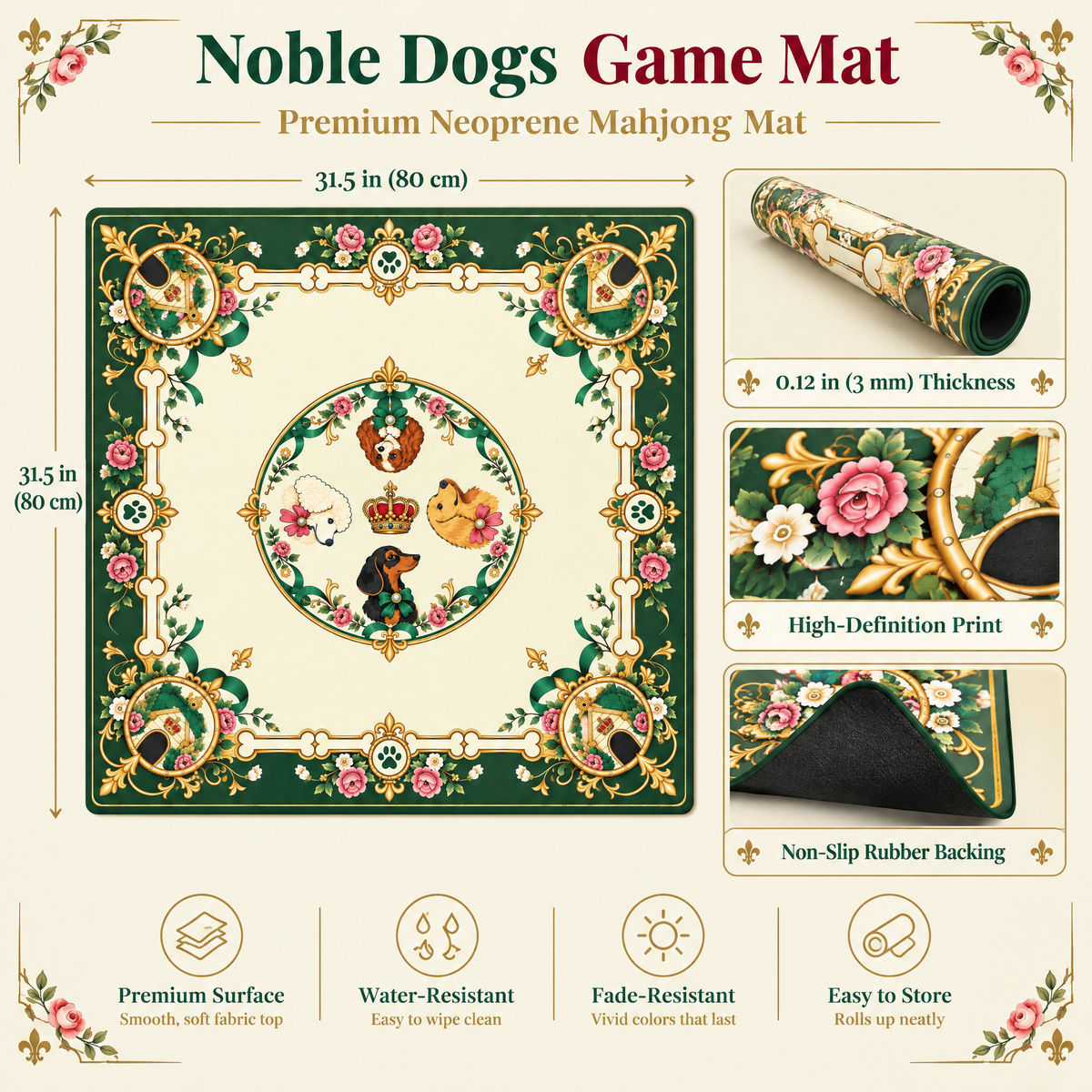
A girls night mahjong party is a casual four-player game hosted at your home, typically lasting 2–4 hours, played with a 152-tile American mahjong set, a mat, and the current year's National Mah Jongg League card. Invite four players (one dealer, three others), set snacks and drinks within arm's reach, and decide beforehand whether you're playing for chips or just for fun. Begin with the Charleston—a tile-passing ritual—then draw and discard in turn, trying to match a hand pattern from that year's card. The winner of each hand becomes the next dealer. You can host this with experienced players or teach beginners together; budget 15 minutes for new players to learn hand-reading basics. Equipment matters: a good best-selling mahjong set with clear tile markings, a mahjong mat for grip and visibility, and racks with pushers so no one strains their hands.
How many players do you actually need?
Mahjong is always a four-player game. If you have fewer players, the game doesn't work—a three-player variant exists but uses different rules and fewer tiles. If you have more than four, rotate players in and out, or host back-to-back tables. For a girls night, four is the magic number; consider inviting five or six friends and running a gentle rotation so everyone plays most of the night and no one watches the whole time.
What's the actual time commitment?
A typical hand takes 10–25 minutes depending on player experience and luck. New players or cautious players run longer. Budget 15–20 minutes per hand for a mixed group. A full night session is usually 4–6 hands, so plan 90 minutes to 3 hours of active play. Add 15–30 minutes for setup, the Charleston, learning (if needed), and snack breaks. Start early enough that play winds down by 10 or 11 p.m. if that matters to your group.
Should beginners join, or keep it experienced-only?
Beginners can absolutely play a girls night. The learning curve is steeper than it looks on first read, but a room full of friends is the best teacher. Here's what helps: print or share the current National Mah Jongg League card in advance (available free online each spring); do one full demo hand together before scoring counts; encourage slow play on the first hand; and keep the rule book or a quick reference sheet visible. Experienced players can quietly mentor by example. However, if your group's strength spans beginner to expert, be honest: the expert will likely win most hands, which is fine if everyone knows the stakes are fun, not ego. Consider splitting into two groups if skill gaps feel too wide.
What equipment setup makes hosting easier?
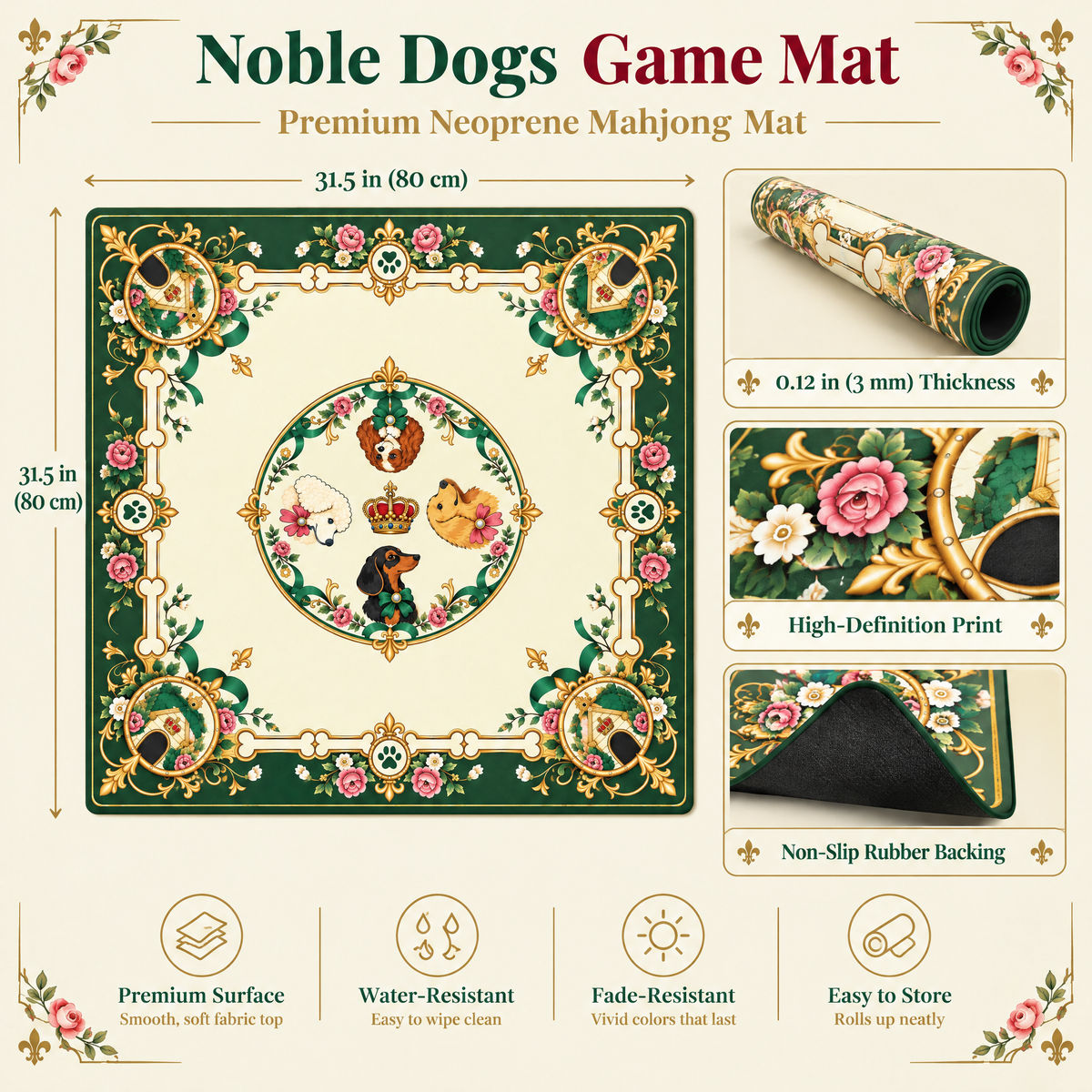
A good setup removes friction. You need: four mahjong racks with pushers (one per player)—they hold tiles at a comfortable angle and let players push tiles forward without dropping them; a mahjong mat that covers your table and has a non-slip surface so tiles don't slide during play; a set of four wind markers (North, East, South, West) to track who's the dealer each hand; a clean, uncluttered table big enough for a 28-inch or larger mat; and your 160-tile mahjong set stored in its case until game time. When tiles spill—and they do—a mat with a lip catches them. Set a dice roller or pair of dice in the center. Have the current-year NMJL card printed or on a phone propped where everyone can see it. Snacks and drinks belong on a side table, not within tile-splash range.
How do you handle money or scoring at a girls night?
American mahjong scoring is point-based, and you have three hosting options. Option 1 (Most fun for casual nights): no money at all—just track points on paper, crown the winner, and celebrate. Option 2 (Low-stakes): assign a chip value (e.g., chips represent points) and settle up at the end—each winner collects a small amount (a dime per point, for example). Option 3 (Chip play only): use chips strictly as counters; no cash changes hands. Decide this before your guests arrive and state it plainly. If anyone feels uncomfortable, scrap money entirely. The game is excellent for laughs and strategy regardless. Keep a pen and paper to track points: the score card from the NMJL shows the point value for each hand type. The winner of a hand scores based on which hand they completed; losers pay into a pool. After four hands (one per wind/dealer position), tally final scores and determine overall winner.
Hosting Approach | Best For | Setup | Why It Works | |
No money, paper scoring | Relaxed friends, learners, low pressure | Pen, paper, NMJL card | Friendship focus; no financial worry | |
Low-stakes chip play ($) | Regular weekly group, light gambling comfort | Chip set, clear rates, cash on hand | Small stakes keep attention high without stress | |
Chip counters only | Mixed comfort levels | Tokens or borrowed chips | Points tracked; no real money | Someone new can play alongside veterans |
🀄 Shop best-selling mahjong sets →

What are the most common hosting mistakes—and how to avoid them?
Mistake 1: Undersized table or mat. Tiles get knocked over, players elbow each other, and tension rises. Fix: use a table at least 36 inches square, ideally 40+. A quality mahjong mat creates a defined play zone and a non-slip surface. Mistake 2: No racks with pushers. Players' hands fatigue, tiles spill, and play slows. Racks keep tiles upright and stable; pushers let players safely move tiles without lifting. Mistake 3: Poor lighting. Squinting at tiny tiles for an hour causes headaches. Use a bright overhead light or desk lamp pointed at the mat; avoid shadows cast by players' bodies. Mistake 4: No printed NMJL card visible. Beginners or players unfamiliar with that year's card will struggle. Print it large or display it on a tablet. Mistake 5: Mixing snacks and tiles. Greasy fingers smudge tiles and wear them faster. Keep snacks on a side table; enforce a quick hand-wipe rule before play resumes. Mistake 6: Starting without a clear dealer/wind system. Confusion about who's East, South, West, North derails scoring. Assign winds before the first hand and rotate clockwise.
How do you teach rules on the fly during a girls night?
Before guests arrive, watch or read one clear resource together (we recommend how to play American mahjong or a 10-minute video). Spend 10 minutes walking through: what a pung, kong, and quint are (sets of identical tiles); how the Charleston works (tile-passing before each game); how jokers substitute in sets but never stand alone; and how to read the NMJL card. Play one full demo hand with no scoring pressure—just motions, discards, and calling. The second hand is live; mistakes happen, rewind gently, and keep moving. Have a rules reference or phone nearby. Most questions resolve in one or two hands. People learn fastest by doing, not by lecture.
🎁 See our most-loved mahjong sets & accessories →
What gift or set choice makes the biggest hosting impression?
If you're buying your first set for hosting, choose one with clear visual contrast: tile markings should be bold and easy to read across a table, especially for players in their 40s+ (eyes matter). Sets with engraved titles, custom themes, or a fun color scheme make conversation starters. Engraved American mahjong sets with witty names ("Girls Night," "Mah Fam," etc.) add personality without being silly. Christmas-themed sets work if hosting during the holidays and you plan to use them annually. Pair whichever set you choose with a mahjong mat and racks; this trio transforms hosting from "I borrowed a set" to "I planned this well." All Mahstead sets ship with free US delivery, so you can order ahead without rush fees.
What to check before you buy?
Tile readability: Dots, Bams, Craks, and winds must be clear from across a table; ask the seller for photo samples.
Set completeness: Confirm the set includes 152 playing tiles (not fewer) plus 8 jokers; a 160-tile set includes the playable tiles plus spares.
Mat surface: Non-slip, washable, and at least 24 × 24 inches (preferably 28+) to fit four racks comfortably.
Racks and pushers: Solid construction, no wobble; tiles should slide smoothly without getting stuck.
Bag or case: If you'll travel between homes or store the set, a padded bag or case prevents tile cracks and loss.
Joker and blank count: Your set needs exactly 8 jokers during play; spares are fine but never added to the game itself.
Price-to-durability ratio: A best-selling set from an established maker costs less over time than one that chips or fades after a season or two.
✨ Find your Mahstead set — free US shipping →

FAQ
What's the actual cost to host a girls night mahjong party?
Zero if friends bring snacks and drinks and someone has a set. If you're buying, see current prices on our product pages; a starter best-selling set with mat and racks is an investment, but sets last years with care. Snacks and drinks scale to your group's appetite.
Do all four players need to be skilled?
No. One expert and three novices is totally playable; the expert usually wins, which is fine if everyone's goal is fun and learning. Mixed groups learn fastest because experienced players model reading the card and calling tiles aloud.
How often should a girls night mahjong group play?
Weekly is common for steady groups; twice monthly or monthly also works. Consistency helps—players remember rules and build real strategy. Irregular play means re-teaching each session.
Can you play mahjong at a cocktail bar or restaurant?
Technically yes, but it's hard. You need a stable table, bright light, and space for a mat and four racks. Most bars are too loud, too dim, and too cramped. Home hosting or a quiet lounge is far better.
What if someone joins mid-season and doesn't know the current card?
Print that year's NMJL card for them in advance, or send it via email. They'll learn the patterns after 2–3 hands. Pair them with a patient player if they're brand new. Most groups welcome newcomers happily.
How do you handle cheating or disputed calls?
House rules matter. Agree beforehand: is a call binding once spoken? Can you retract a discard? Most friendly groups use "look before you touch"—once a tile leaves your rack, you can't take it back. State these clearly at the start. Disputes are rare if play is slow and everyone watches the discard pile.


View More
View More
View More
