
Harbin mahjong tile sets: Chinese variant rules and where to buy
Last updated: Nov 23, 2026
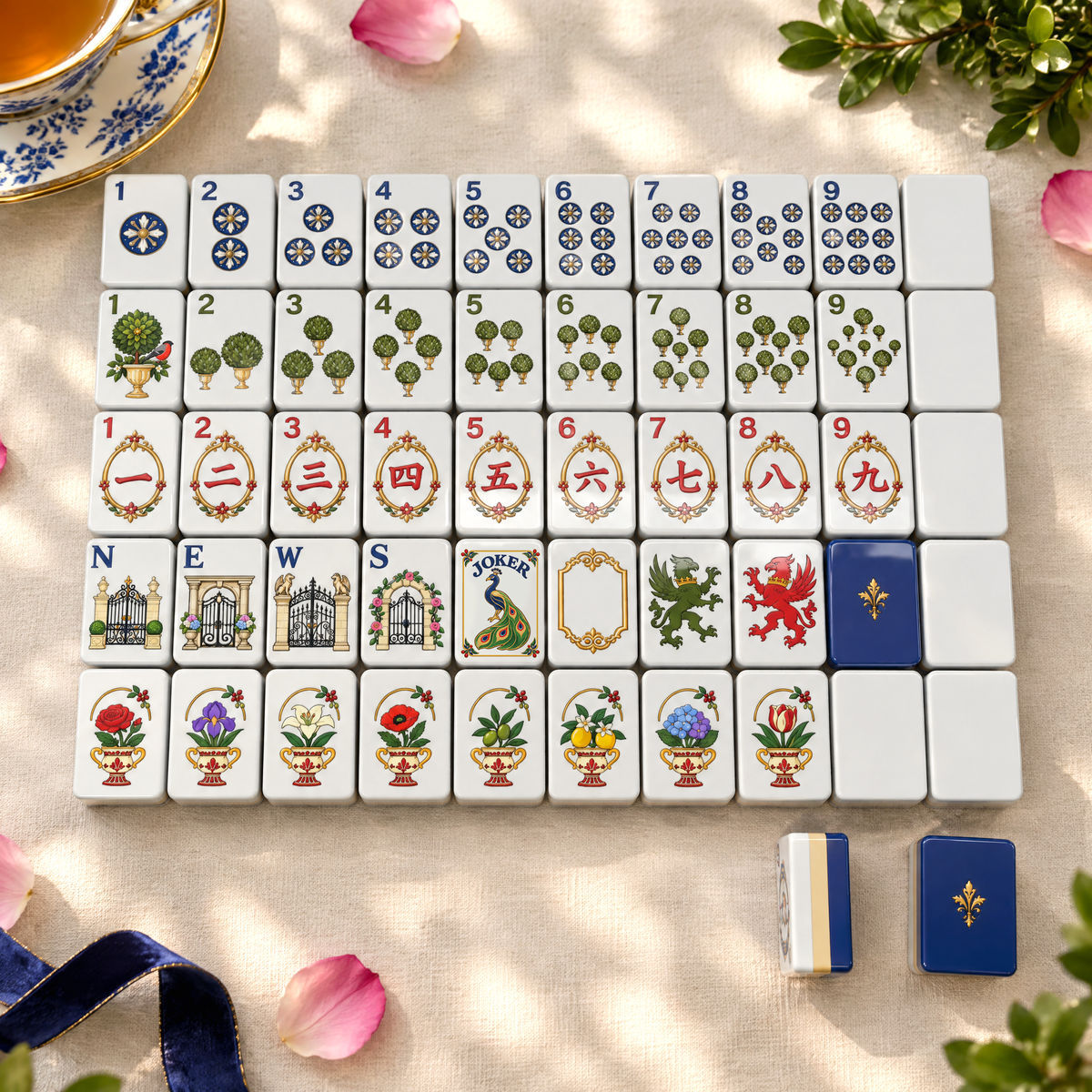
Harbin mahjong is a Chinese regional variant originating from Harbin in Heilongjiang province, played with a standard 108-tile Chinese set (36 Bams, 36 Craks, 36 Dots) plus honours and optional flowers. Unlike American mahjong, Harbin uses a closed hand throughout play—no exposed melds, and you draw and discard each turn in strict sequence. Winning hands are narrower: most legal hands use only simples (no honours), and limit hand types are fewer than in Hong Kong or Taiwanese variants. Rounds run 12–15 minutes. You'll need a Chinese mahjong set (not American), a quiet table, and familiarity with Mandarin hand notation. Most Harbin players learn from local clubs or regional rule books; equipment is widely available online. If you're an American mahjong player, expect to relearn tile composition, hand reading, and the rhythm of play.
Harbin mahjong sits at the speed and structure end of the Chinese mahjong spectrum. It is tighter and faster than Hong Kong play, stricter than Taiwanese, and fundamentally different from American mahjong in tile count, hand types, and how melds work. We'll walk you through the core rules, how to set up a game, what equipment you need, and how to transition if you already play American mahjong.
How does Harbin mahjong differ from American mahjong?
American mahjong and Harbin mahjong are not compatible systems. American mahjong uses 152 playing tiles (plus jokers) across four copies of each number-suit combination, plus winds, dragons, and flowers. Harbin uses 108 tiles—three copies of Bams 1–9, Craks 1–9, and Dots 1–9, plus seven honour tiles (four winds, three dragons, no white "Soap" as zero). American mahjong allows exposed pungs, kongs, and sextets; Harbin is played with a fully concealed hand. American winning hands come from a published seasonal card; Harbin hands follow fixed regional rules and are won by drawing or claiming a discard. An American game lasts 4–8 rounds and can run over an hour; a Harbin round takes 12–15 minutes, and players typically play 8–12 rounds in one session. You cannot move jokers between the two systems, and the mathematics of hand formation—chow (sequence), pung (triple), and kong (quad)—works the same in principle but Harbin limits which hands are legal.

What tiles and honours does a Harbin set contain?
A Harbin mahjong set contains 108 active tiles split into three identical suits. Each suit (Bams, Craks, Dots) has three copies of numbers 1 through 9, giving 27 tiles per suit and 81 tiles total in the main suits. The remaining 27 tiles are honours: four tiles each of the four winds (North, East, South, West), four tiles each of the three dragons (Red, Green, White), and seven bonus flowers or seasons (one through seven, though not all regional variants use all seven—check your local rules). Some Harbin sets include winds and dragons sorted by colour: red for east-facing tiles, green or blue for winds and dragons. Unlike American mahjong, there are no jokers, no blanks, and no 152/160-tile expansions. The set is always 108 tiles, period. A single tile is always unique within its suit and symbol.
How do Harbin players form and win hands?
Harbin hands consist of melds (chows, pungs, kongs) and a pair, all kept in your own hand—no exposure. A chow is three consecutive numbers in the same suit (e.g., 2–3–4 Dots). A pung is three identical tiles. A kong is four identical tiles. You win by drawing or claiming a discard to complete one of these patterns plus a pair. Unlike American mahjong, you cannot call a tile from the dead wall; you draw from the live wall in order. Scoring is typically point-based, with limits on the maximum hand value (common limit is 8 points), which keeps rounds short and hands simple. Honour tiles (winds and dragons) score higher and are used sparingly; most Harbin hands are simple (1–9 number tiles only). Certain hand patterns are illegal: some variants forbid hands with all honours, hands with duplicate chows across suits, or hands that require exactly one winning tile from a narrow pool. Regional rule books (often printed by local associations) specify these limits.
🀄 Shop best-selling mahjong sets →
What equipment do you need to play Harbin mahjong?
You'll need a 108-tile Chinese mahjong set, not an American set. Chinese sets typically feature bamboo, plastic, or bone tiles with simplified characters or symbols; tiles are smaller and thinner than American acrylic tiles. Because Harbin is a closed-hand game with no exposure, you do not need individual tile racks or pushers in the American style. However, many Chinese players use a mahjong mat with four tile wells (one per player) to hold the hand during play. A brush or eraser is helpful for hand notation on paper or a small board; some clubs use score sheets printed with columns for four players. A quiet table, good lighting, and a wall or barrier to conceal your hand from neighbours are standard. A wind chime or bell signals the start of each hand. If you travel between games, a drawstring bag sized for 108 tiles (smaller than American mahjong bags) keeps your set protected. Regional clubs often loan sets to newcomers, so you may not need to buy immediately.

Should you buy a Chinese or American mahjong set if you play both?
If you play both American and Harbin mahjong, you need two separate sets. Buying a best-selling collection of American mahjong equipment will not work for Harbin, because the tile counts, honour symbols, and sizes are incompatible. An American set will sit idle during Harbin sessions. The financial choice depends on your frequency: if you play Harbin once a month and American mahjong weekly, buy American first and borrow a Chinese set for Harbin nights. If you alternate evenly, invest in both. Chinese sets are available from East Asian import retailers, local community associations, and online sellers; American acrylic sets offer durability and engraving options. A comparison table helps clarify your needs:
Aspect | American Mahjong Set | Chinese Harbin Set |
Tile count | 152 (game) + 8 jokers | 108 (fixed) |
Suits | 3 (Bam, Crak, Dot) | 3 (same names) |
Honour types | Winds, dragons, flowers | Winds, dragons, seasons |
Exposed melds | Yes (pung, kong) | None (closed hand) |
Material | Acrylic, bone, bamboo | Bamboo, plastic, bone |
Tile size | Larger (~32 mm) | Smaller (~30 mm) |
Jokers/blanks | Always included | Never included |
Typical cost | Mid to premium range | Budget to mid range |
Best for | Weekly social play, leagues | Regional club play, travel |
If you're serious about both games, store each set in its own bag to avoid mixing tiles, and label the bags clearly.
Where can you buy Harbin mahjong sets and learn to play?
Harbin mahjong sets are most readily available from East Asian retailers online, local Chinese community centers, libraries, or cultural associations in areas with large Chinese populations. Search for "Chinese mahjong set" rather than "Harbin set" specifically, since regional names are often omitted in listings. To learn the rules, join a local mahjong club (ask at community centres, libraries, country clubs, or meetup boards in your city) or find a Mandarin-language rule guide online. Many clubs teach newcomers in exchange for a modest annual membership or per-game fee. If you're transitioning from American mahjong, attend a club session as an observer first: watch two or three hands to absorb the rhythm before playing. Harbin clubs are often most active in autumn and winter months. Online video tutorials exist, but many assume baseline Chinese mahjong knowledge; a live teacher is far more efficient.
✨ Find your Mahstead set — free US shipping →
What to check before you buy a Harbin mahjong set
Tile count: Confirm the set contains exactly 108 tiles. Some sets advertise "Chinese mahjong" but include extra tiles or jokers; these are not standard Harbin sets.
Tile size: Measure or compare photos. Harbin tiles are typically 29–30 mm. Very large tiles suggest a set designed for a different variant.
Character clarity: Check that all characters (suit symbols, wind names, dragon markers) are legible and consistent. Worn or faded tiles lead to play errors.
Regional rules: Ask the seller or a local club which regional rule set the tiles are calibrated for (Harbin, Tianjin, or Beijing rules differ slightly). Buy a rule book or print guide at the same time.
Set completeness: Verify that seven or nine honour tiles are included (depending on whether seasons/flowers are used in your local rules). Some budget sets cut corners here.
Tile material: Plastic sets are lightweight and affordable; bone or bamboo sets last longer but cost more. For occasional play, plastic is fine.
Reorder availability: If you fall in love with a particular set, check whether the seller can restock it or match you for replacements. Losing a single honour tile can halt a game.

FAQ
Can I use my American mahjong set to play Harbin?
No. American sets have 152 tiles, jokers, and different honour configurations. Harbin requires exactly 108 tiles with no jokers. You'll be missing tiles and have too many of others.
Is Harbin mahjong harder than American mahjong?
Neither is objectively harder. Harbin is faster and stricter (closed hand, fewer legal hands, tighter time per round). American allows exposure and uses a printed seasonal hand card. Pick based on your local game availability and social circle.
How long does a Harbin game take?
One hand typically lasts 12–15 minutes. A full session of 8–12 hands takes 2–3 hours, including breaks and socializing. American mahjong rounds run similar length but with fewer hands per session.
Do I need a special mat or rack to play Harbin?
A mahjong mat with four tile wells is helpful but not required. Harbin is a closed-hand game, so individual pushers are less essential than in American mahjong. A cloth or mat is enough to keep tiles organized.
Where can I find Harbin mahjong rules in English?
Regional Chinese mahjong rule guides exist online and through club websites; search "Harbin mahjong rules English translation" or join a local club for printed materials. No single standardized rule book exists across all Harbin clubs, so always confirm local house rules before playing.
What's the minimum number of players for Harbin mahjong?
Four is standard. Two and three player variants exist but are less common; always ask a club or group before bringing a non-standard player count.
Can beginners learn Harbin mahjong without prior mahjong experience?
Yes, but prior Chinese or American mahjong experience makes the transition faster. If you're new to mahjong altogether, expect 4–6 club sessions before you play fluidly. Join a beginner-friendly group if available.


View More
View More
View More
