
How to Deal in Wright-Patterson Mahjong: Rules & Setup
Last updated: Nov 23, 2026
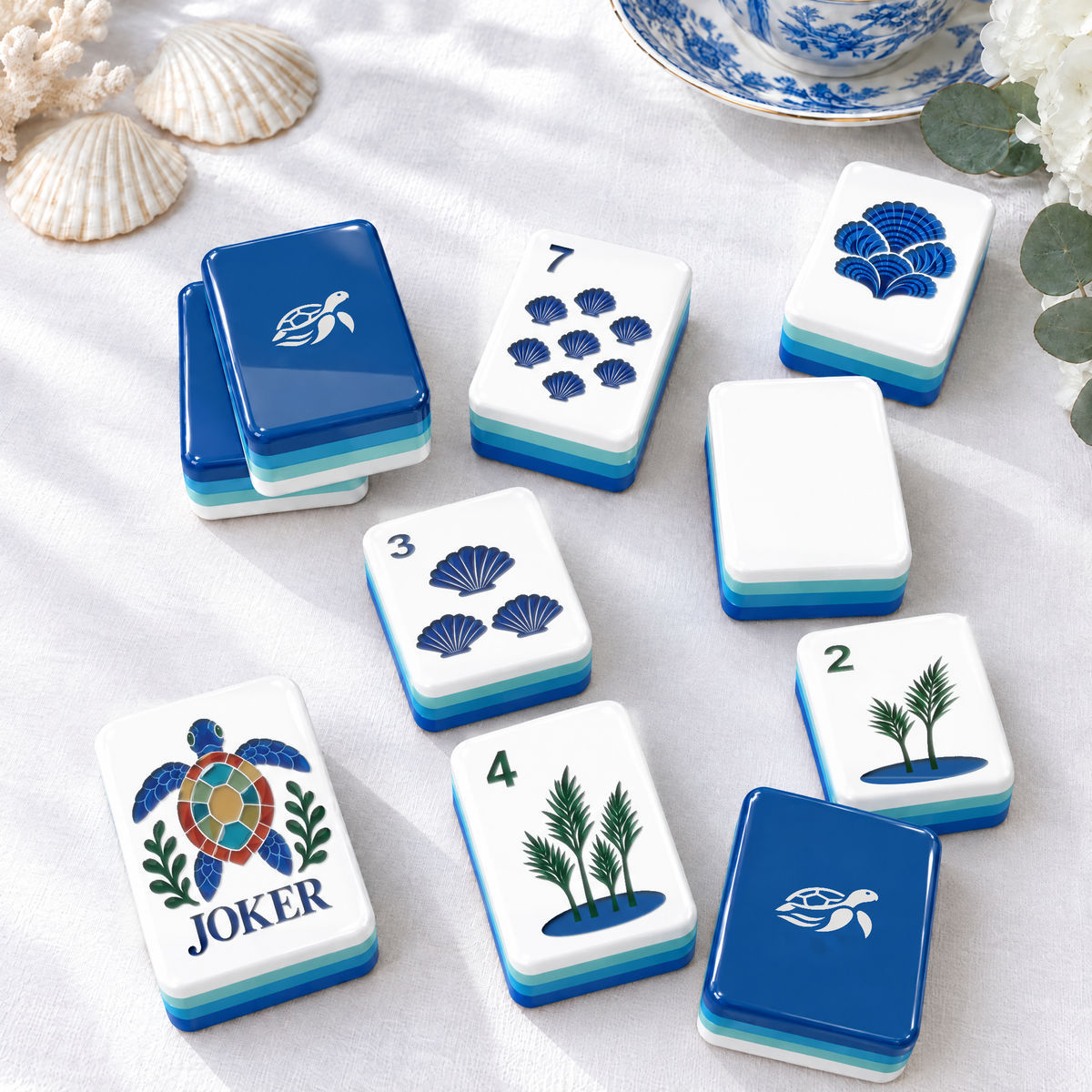
Wright-Patterson mahjong is an American variant where dealing and the initial hand assembly differ from standard American play. In Wright-Patterson, the dealer draws tiles in a specific pattern—typically drawing four tiles at a time in rounds, rather than the one-at-a-time sequence of standard American mahjong—until each player holds 13 tiles and the dealer holds 14. The variant takes its name from Wright-Patterson Air Force Base in Ohio, where it developed among military players. Setup takes 10–15 minutes including the Charleston (tile-passing ritual). The game uses the same 152 American mahjong tiles (three suits, winds, dragons, flowers, and jokers) and hands come from the current year's National Mah Jongg League card. Most groups play Wright-Patterson in casual settings where the rhythm of group dealing adds social energy; it works best with best-selling mahjong sets and clear racks so everyone tracks the draw clearly.
What exactly is the Wright-Patterson dealing pattern?
Wright-Patterson changes when and how tiles enter your hand during the deal. Instead of drawing one tile at a time after the Charleston, the dealer distributes tiles in rounds of four to each player in turn order (usually East, South, West, North), going around the table multiple times until 13 tiles sit in front of each player and 14 in the dealer's hand. Some groups draw in two-tile rounds instead. The key difference: tiles land in your rack all at once, building anticipation and team energy before anyone calls a hand.

How do you physically set up for the deal?
Start with all 152 playing tiles face-down in the center of your mat. The dealer sits East (or rotates East each hand). Decide your group's draw method—four tiles per turn is standard, though two tiles per turn slows the pace. The Charleston happens first: each player passes 3 tiles right, then 3 left, then 1 left. After the Charleston is complete and tiles are pulled back into racks, one player (often North) calls out "ready," and the dealer begins distributing in order: East gets 4, South gets 4, West gets 4, North gets 4, then the cycle repeats until all players have 13 and the dealer (East) has 14. Use a mahjong mat with a centered tile well—it keeps the draw organized and prevents accidental collisions.
🀄 Shop best-selling mahjong sets →
What's the hand-building timing in Wright-Patterson?
Once the deal is complete, all four players have a chance to examine their tiles and the National Mah Jongg League card simultaneously—no one draws or discards yet. This is called the "closed hand" phase. Players identify whether they have a winning hand (a pung, kong, or quint in their rack plus a hand pattern from the card, with jokers substituting as needed). The first player to call "mahjong" stops the hand; if no one calls within about 30 seconds, East draws one tile from the well and discards one face-up, starting active play. Wright-Patterson's advantage: the group deal builds equal excitement and no one feels disadvantaged by drawing later.
Aspect | Standard American | Wright-Patterson |
Draw method | One tile per turn after Charleston | Four (or two) tiles per turn per player |
When each player has 13 tiles | After 3–4 rounds of active play | After the deal closes, before anyone discards |
Who calls first | East draws one tile; then active play begins | Any player can call "mahjong" if they spot a hand on the card |
Pressure feeling | Gradual (tiles come in as play unfolds) | Front-loaded (all tiles dealt upfront, decision time at once) |
Best for groups | Slower-paced, newer players | Social, balanced, energetic tables |

How do you avoid common Wright-Patterson dealing mistakes?
Count tiles aloud. Before the deal, one player counts all 152 playing tiles in groups of ten—if anyone loses focus, the count gets thrown off and hands won't match. Track the draw rotation. Assign a dealer or scorekeeper to call out which player receives the next batch of four. Agree on the tile-draw rhythm beforehand. Some groups pause between rounds to let everyone settle; others flow continuously. Never skip the Charleston. The pass must complete before dealing starts, or the hand feels unfair. Check that East ends with 14. A common slip: the dealer pulls 13 instead of 14, leaving one tile in the well. Count East's rack aloud at the end. Keep mahjong racks with pushers standing upright during the deal so tiles don't slide into the center accidentally.
Does Wright-Patterson work with the standard mahjong card and scoring?
Yes. Wright-Patterson uses the exact same National Mah Jongg League card (issued each spring) and the same American mahjong hand patterns—pungs (three identical tiles), kongs (four identical), quints (five), and sextets (six), no chows or sequences allowed. Scoring is identical: your points depend on the hand pattern on the card and whether you won by drawing from the well ("self-draw") or catching an opponent's discard ("robbing the discard"). The only difference is the dealing rhythm and the closed-hand timing. How jokers work is the same too—jokers substitute for any tile except a single or a pair.
🎁 See our most-loved mahjong sets & accessories →
What to check before you buy a set for Wright-Patterson play
Set size: A standard 152-tile American mahjong set is all you need—the extra jokers in a 160-tile set are spares, never added to play.
Tile visibility: Buy a set with clear, large numbers and suit symbols. During the closed-hand phase, all four players study their racks at once; if tiles are small or unclear, people squint and the game slows.
Rack stability:Mahjong racks with pushers make the deal faster and cleaner. Tiles stay standing and don't spill when you pull the rack forward to examine your hand.
Tile material: Acrylic and resin tiles feel smooth when shuffled in the well during the deal; bamboo racks prevent tiles from sliding during East's distribution.
Mat for organization: A mahjong mat with a centered tile well keeps all 152 tiles corralled and visible, reducing deal errors.
Storage: After a Wright-Patterson session, you're shuffling 152 tiles plus two or three sets' worth—use a mahjong bag or case to keep everything organized for your next game.
✨ Find your Mahstead set — free US shipping →
Comparison: When to choose Wright-Patterson dealing over standard American
Your group wants… | Wright-Patterson? | Standard? | Why? |
Fast-paced, continuous play | No | Yes | Standard lets draw-and-discard rhythm move quickly |
Equal dealing time for all players | Yes | No | Wright-Patterson distributes tiles fairly to each seat at once |
Social, group-focused energy | Yes | No | The group deal builds collective anticipation |
Calm, methodical game | No | Yes | Standard's one-at-a-time draw feels less rushed |
Tournament or club settings | Mostly No | Yes | Most clubs play standard; check your group's rules |
Family or military game night | Yes | Either | Wright-Patterson's symmetry suits casual, balanced play |
Real-world Wright-Patterson timing example
Setup: 5 minutes (tiles laid out, hands exchanged, tiles pulled back, everyone settles).
Deal: 6–8 minutes. Dealer distributes four tiles to each player, four times in rotation, pausing 10–15 seconds between rounds so players don't lose track.
Closed-hand review: 20–45 seconds. All four players open their racks, grab the National Mah Jongg League card, and scan for a matching hand.
Call or pass: One player calls "mahjong" (hand found), or East draws one tile and discards to begin active play (5–20 minutes).
Total from deal to hand-end: 12–25 minutes per hand.
Getting started with Wright-Patterson
Confirm your group plays Wright-Patterson (some casual groups mix variants hand-to-hand).
Lay out all 152 tiles in the well and verify the count.
Seat players East, South, West, North in order.
Conduct the Charleston (pass right, pass left, pass left).
Dealer announces "dealing" and distributes four tiles at a time to each player in rotation, four complete rounds.
Dealer draws one extra tile to hold 14; other players hold 13.
All players examine their closed hands simultaneously.
First player to call "mahjong" (or East draws one tile and discards if no call) begins the hand.
Play continues with standard American rules until someone wins.

FAQ
Does Wright-Patterson require a special mahjong set?
No. Any standard 152-tile American mahjong set works. The variant changes how you deal, not what tiles you use. Look for sets with clear symbols and sturdy racks for smooth dealing.
Can I play Wright-Patterson in a tournament?
Check your local club or tournament rules first. Most competitive play uses standard American dealing. Wright-Patterson is popular in casual military, family, and regional groups.
What if I deal all 13 tiles to each player and there's a tile left in the well?
You miscounted or dealt unevenly. East should always end with 14. Count again before starting the closed-hand phase. Use a scorekeeper or countor to verify each round.
Is the Charleston different in Wright-Patterson?
No. The Charleston is identical: three tiles right, three left, one more left. It happens before the deal starts, just like in standard American mahjong.
How long does a Wright-Patterson hand take from start to finish?
Deal and setup take 10–15 minutes. Closed-hand review takes 30–45 seconds. Active play (draw-discard cycles) usually runs 5–20 minutes. Total: roughly 15–35 minutes per hand, depending on pace and skill.
Can jokers be used in the dealing phase or closed-hand phase?
No. Jokers work the same way in Wright-Patterson as standard: they substitute only for tiles in pungs, kongs, quints, or sextets during active play, never for singles or pairs. No joker tile is ever used before the hand is called.
If someone calls "mahjong" during the closed-hand phase, does play stop immediately?
Yes. The hand ends; scoring and the next deal begin. This is one reason Wright-Patterson feels energetic—players all examine simultaneously, so a call can come at any moment.


View More
View More
View More
