
How to Choose a Mahjong Travel Set: Portability vs. Play
Last updated: Nov 23, 2026
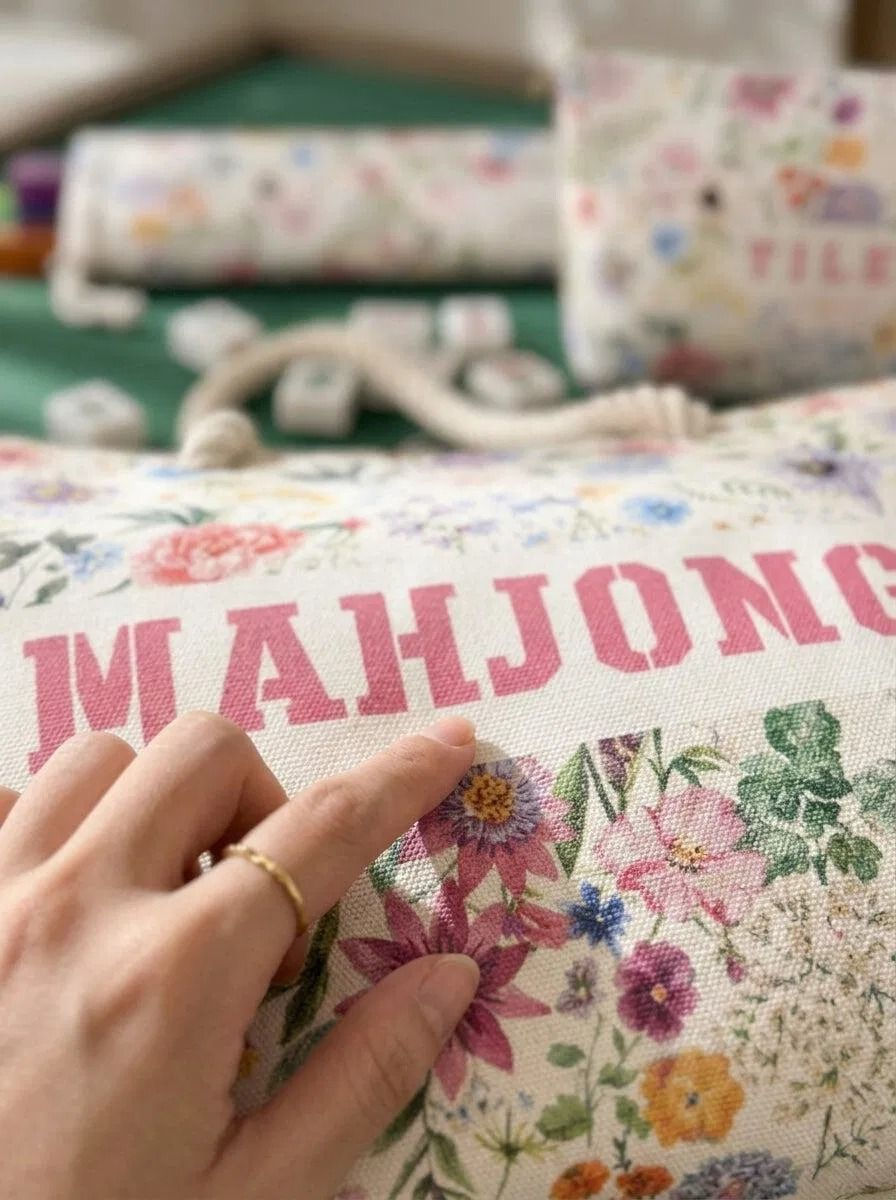
A mahjong travel set is a 152-tile American set (or spare tiles included) housed in a slim, reinforced carrying case designed for car trips, vacations, or weekend visits. Acrylic sets are standard for travel because they weigh less than bone-and-bamboo but still offer the tactile feedback serious players need. Most travel cases measure 10–12 inches across and fit comfortably in a tote or closet. Mahstead's travel collections feature acrylic tiles with engraved designs, durable carrying bags, and free US shipping; choose based on case type (soft pouch vs. hard shell), tile color and engravings you love, and whether you want a mat and racks bundled with your set or bought separately.
A portable mahjong set means you can host a game at a cabin, bring your tiles to a friend's house, or pack everything for a family reunion without worrying that airport baggage handlers will crack your precious set. But "travel-friendly" doesn't mean flimsy. The tiles themselves—152 acrylic pieces plus 8 jokers—weigh far less than bone-and-bamboo yet still deliver the satisfying snap and heft that makes each draw, claim, and meld feel intentional. The real work is choosing a case sturdy enough to protect your tiles, compact enough to actually fit in your life, and designed so you can grab it and go.
What size and weight should I look for in a travel case?
Most players pack a travel set in one of two container styles: a soft padded pouch (zippered, fits in a gym bag or car door) or a hard-sided box case (stackable, sits neatly on a shelf). Soft pouches typically measure 10–12 inches long by 6–8 inches wide and weigh 3–5 pounds when loaded; hard cases run slightly bulkier but protect tiles better during rough handling. For car trips under three hours, a soft pouch works fine; for airline travel or storage in a trunk alongside other gear, hard cases prevent tile shifts and corner damage. Measure your target storage spot (duffel pocket, car console, coat closet shelf) before ordering, because a case that won't actually go in the space defeats the purpose. Browse our travel bag collection to compare dimensions and how they nest into standard luggage.
🀄 Shop best-selling mahjong sets →

Should I choose acrylic or bamboo tiles for travel?
Acrylic is the clear winner for travel sets. Bone-and-bamboo tiles—traditional, beautiful, heavy—chip easily when tiles tumble inside a jostled case, and repairs are expensive or impossible. Acrylic tiles are injection-molded in one piece, so they're nearly indestructible; a tile dropped on a hard floor will bounce, not crack. They weigh roughly 40–50 percent less than bone-bamboo, which matters when you're carrying a bag from car to cottage. The trade-off: acrylic tiles sound slightly higher-pitched when they stack and play across a mat, and they don't feel quite as substantial in your hand. For most travel players, that's a fair exchange for peace of mind. Mahstead's acrylic travel sets come in colorful engraved designs and solid colors, so you don't sacrifice style for durability.
What's the difference between soft pouches and hard cases?
Case Type | Best For | Pros | Cons |
Soft padded pouch | Car trips, cabin weekends, shared storage | Lightweight, squeezes into tight spaces, handles often included | Tiles can shift; less protection in trunk jostling |
Hard-sided shell | Airline travel, long-term storage, frequent moves | Stacks securely, tiles stay locked in place, looks professional | Takes up more shelf room, heavier to carry |
Soft zippered bag with dividers | Balanced portability + modest protection | Separates tile racks and mats, fits most car trunks | Moderate weight, less rigid than hard cases |
Choose soft if you host games at one or two regular venues and only move your set a few times per year. Choose hard if you travel by plane, pack your tiles with other luggage, or want your set to survive a decade of weekend trips. Many players buy both: a soft pouch for casual jaunts and a hard case for long-term storage or a big travel event.

How do I know if tiles and accessories fit inside a case together?
The typical 160-tile acrylic set (152 playing tiles + spare jokers) occupies roughly 4–5 liters of space when packed flat in its original tray. A travel case with interior compartments should have one main tile section and separate slots for your NMJL card, dice, and racks with pushers. If you're adding a felt mat, the case must be tall enough to fold the mat or it won't close; some cases hold a rolled mat on a side pocket. Before ordering, measure the case's interior depth and width against your mat's folded size. Many players store the mat separately—in a tube, rolled in a linen bag, or left at home—and carry only tiles, racks, and accessories. This keeps your travel set light and leaves mat space for snacks or a second rack if a fifth player shows up.
🎁 See our most-loved mahjong sets & accessories →
What tile color and design work best for travel play?
Acrylic tiles come in solid colors (white, cream, jade, black) and engraved designs. For travel, white or cream tiles are easiest to read quickly under varied lighting—hotel rooms, patios, dim cabins. Engraved tiles (featuring scoreboard layouts, whimsical titles like "Mahjong Trouble," or custom etchings) add personality and make your set instantly recognizable in a pile of similar cases. Black or dark-jade tiles look sleek but tire your eyes faster in low light and show scratches more visibly after a few years of travel wear. If you're playing outdoors at a cottage or cabin, white tiles reflect sunlight better and remain legible longer. Choose a design you'll enjoy seeing every time you open the case—a travel set is one you want to pack—and verify the engraving is deep enough that it won't fade under the nail of a player checking for wear.
What should I check before ordering a travel set?
Before you click "Buy," confirm these details:
Case dimensions: Open-case depth must be ≥2 inches to hold tile racks lying flat; if you're packing a mat, add 1–2 inches.
Interior dividers or compartments: Loose tiles shift during transport; compartments keep each suit, winds, and dragons in their own section, so setup takes 90 seconds instead of ten minutes.
Carry handle or shoulder strap: You'll use it. A padded handle is worth the small extra cost.
Tile finish: Matte acrylic is grip-friendly and doesn't glare; glossy tiles look sharper but slide faster on a mat.
Spare parts included: The case should include spare jokers; confirm how many before unpacking.
Case closure mechanism: Zippers are faster than latches; if using latches, test them in the product image to ensure they're smooth and not prone to jamming.
Weight when loaded: Under 6 pounds is ideal for one-handed carry; over 8 pounds and you'll start resenting how heavy it feels after a 20-minute walk.
✨ Find your Mahstead set — free US shipping →
Many players also pair a travel set with a lightweight portable mat (folds into a pouch) and a roll of compact racks with pushers to turn any flat surface—a kitchen table, hotel desk, or outdoor picnic table—into a ready game space. Mahstead's travel collections often bundle these; compare the all-in-one prices against buying tiles, case, and mat separately to see if a bundle saves you money and hassle.

FAQ
Can I travel with a mahjong set on an airplane?
Yes. A mahjong set is not hazardous; TSA permits it in both carry-on and checked luggage. Hard-sided cases protect tiles from the baggage handler's rough treatment better than soft pouches. Remove loose jokers from the case during packing so a tile doesn't rattle and startle baggage scanners.
What's the actual weight of a full mahjong travel set in its case?
A 160-tile acrylic set in a soft padded pouch weighs roughly 4–6 pounds. A hard-sided case typically adds 1–2 pounds. Compare specific product weights on each case page before ordering.
Do I need to buy a mat and racks separately, or are they included with travel sets?
Most travel cases include only tiles, the carrying case, and spare jokers. Mats and racks are sold separately; Mahstead's travel collection offers bundle options that pair a set with a compact mat or rack set at a bundled price.
How do I keep tiles organized inside a soft pouch during travel?
Use the original tile tray (the plastic insert that holds each suit and winds in rows). Place the tray inside the pouch, zip it shut, and tiles won't shift even if the case tumbles in a car trunk. If your case didn't include a tray, consider buying replacement dividers or wrapping tiles in cloth bundles per suit.
What's the difference between a travel set and a standard home set?
Functionally, none. A travel set is identical to any 160-tile American mahjong set—same 152 tiles plus 8 jokers. The difference is the carrying case: travel cases prioritize portability, durability, and compact storage. You can use a travel set at home, and a home set for travel; the case design is what makes a set "travel-ready."
Is acrylic durable enough for years of regular travel?
Yes. Acrylic tiles resist cracking and don't develop chips from repeated play and transport. A well-packed travel set will outlast most soft cases; if a case wears out after five years, you can buy a new case and keep your original tiles.


View More
View More
View More
