
Mahjong Bag for Seniors: Choosing Comfort & Durability
Last updated: Nov 23, 2026
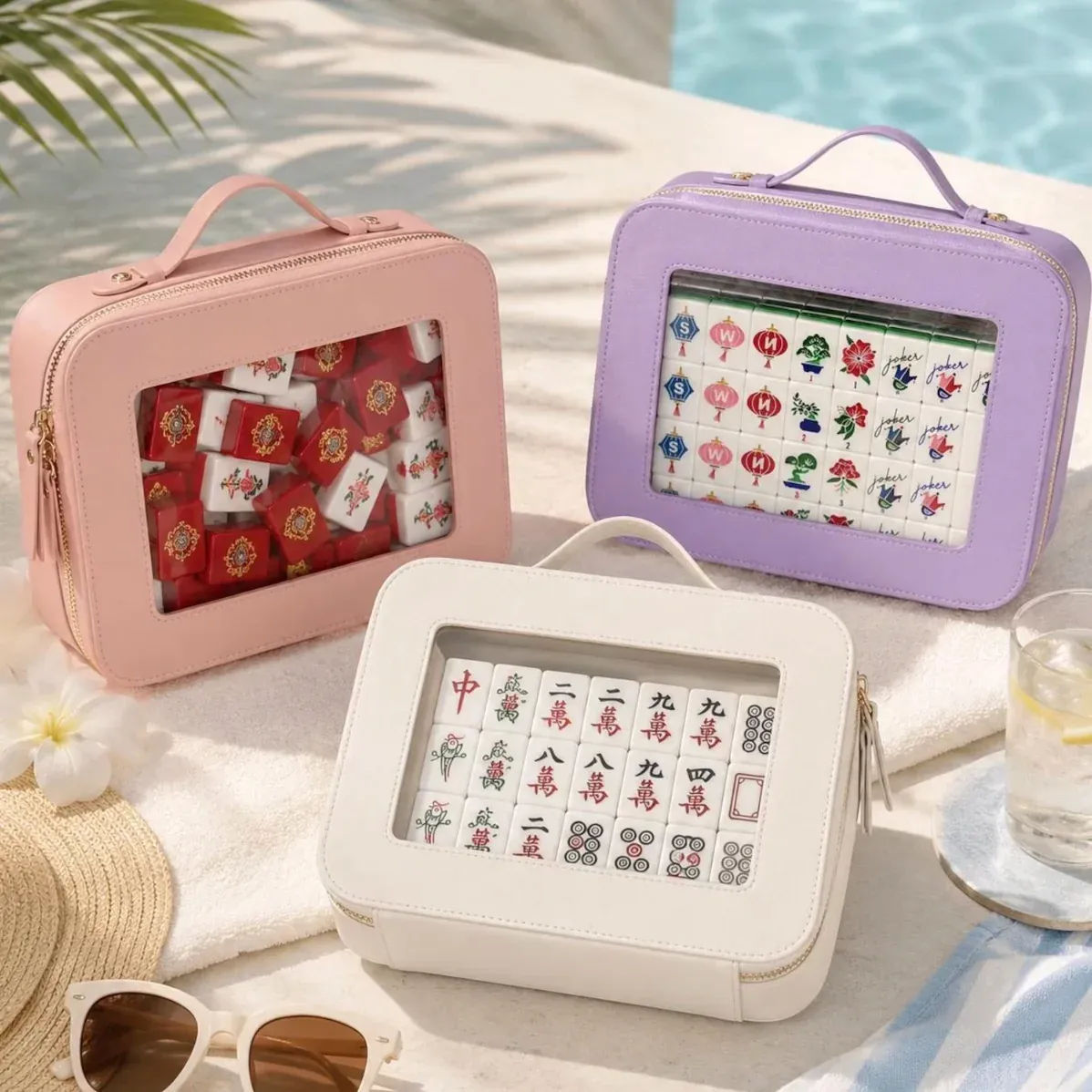
Mahjong bags for seniors come in two main types: soft travel cases that hold just the set and tiles, and larger padded carriers that fit a set, mat, and accessories together. Soft bags are lightweight and fit under an arm; larger carriers often have handles or shoulder straps for comfortable carrying. Most senior players prefer a bag that fits inside a car trunk or sits on a lap without strain. Our travel bag collection includes options designed for players who transport their set weekly but value simplicity over portability into a restaurant or friend's living room. Before ordering, check the interior dimensions—a standard 160-tile set needs roughly 12" × 8" of flat space—and whether you want room for a mat and scoring chips too. Weight matters most for seniors: prioritize bags under 3 pounds when empty. 🀄 Shop best-selling mahjong sets →
What size bag do seniors actually need?
Most senior players transport a set, a mat, and a scorepad together. A soft case holding tiles alone weighs around 2–3 pounds empty; adding a rolled mat pushes it to 4–5 pounds. If you're walking from a car into a friend's home or community center, a bag that zips closed and has comfortable handles beats one you have to cradle. Check the bag's interior dimensions (usually listed as length × width × depth) and compare them to your mat rolled up—rolled mats are roughly 2 inches in diameter when tightly wound. A bag claiming to fit a full set and mat should have at least 16 inches of length and 10 inches of width inside.

Soft bag vs. hard case: Which works for seniors?
Soft padded cases protect tiles adequately during car rides and are easier to store at home; hard cases survive drops but weigh more and take up closet space. Most senior groups meet weekly at the same venue, so a soft case suits the habit better. Hard cases make sense if you travel far, use public transit, or move your set between two homes frequently. Soft bags fold when empty; hard cases stay rigid. For weekly local play, a well-padded soft travel bag with reinforced corners and cushioned straps will serve a senior player for years without the portability trade-off.
Bag Type | Best For | Weight Empty | Durability | Storage |
Soft padded case | Set only, weekly local play | 1–2 lbs | 3–5 years | Folds flat |
Soft carrier with handles | Set + mat + accessories | 2–3 lbs | 4–6 years | Folds flat |
Hard shell case | Frequent travel, public transit | 3–5 lbs | 7–10+ years | Rigid, bulky |
Tote-style bag | Casual players, no long trips | 1–1.5 lbs | 2–3 years | Folds flat |
Should a senior player carry extras in the bag?
Yes, but only what fits without bulging. Carry the set, one mat, a scorepad, and a pencil. Jokers, pushers, and the current year's NMJL card go in a small pouch inside the main compartment. Dice travel loose or in a cloth bag to prevent noise. Leave rack pushers at home—they add weight and break easily in transit. A set of mahjong racks with pushers stays at the venue or host's home. Many senior groups rotate whose home hosts the game, so keeping duplicate sets and mats in two or three homes eliminates the need to lug everything every week.
Handles, straps, or both for carrying comfort?
Senior players with arthritis or limited grip strength benefit most from a bag with both padded handles and an optional shoulder strap. Padded handles reduce pressure on palms during a car walk; a strap lets you free your hands in the parking lot or let the bag rest on your shoulder while unlocking a door. Avoid bags with thin cotton straps—they dig into shoulders. Neoprene or foam-padded handles and straps are worth the small extra cost. If the bag is lighter than 3 pounds, even basic handles work; if it approaches 5 pounds, padding becomes essential.

What to check before you buy
Interior dimensions: Measure your mat rolled up; compare length, width, and depth to the bag listing.
Handle and strap padding: Feel or read reviews describing whether handles are thick enough for 15-minute walks.
Compartments: Soft inside pockets keep tiles from sliding against a mat; prefer bags with a divider or sleeve.
Zipper quality: Heavy-duty zippers last; cheap zippers jam or crack within two seasons.
Weight capacity: Ensure the bag is rated for at least 8 pounds—sets weigh 3–4 pounds, mats 1–2 pounds, and you may add dice or extra tiles.
Fabric: Wipe-clean nylon or vinyl beats canvas, which stains and holds odors.
Bottom reinforcement: Look for thick stitching or a rigid base panel so the bag doesn't collapse when set down.
🎁 See our most-loved mahjong sets & accessories →
Where to find the right bag for your game style
Senior mahjong groups tend to be stable—the same players meet weekly at the same time and place for years. That makes a lightweight, durable soft carrier ideal: it can live in your car trunk or closet and requires no fussing. If your group plays at a restaurant or club that provides tables, confirm whether you need to carry a mat or if the venue supplies one; that changes your bag needs. Check whether the host rotates around the group—if so, you might store your set there rather than transport it weekly. Visit our complete travel bag collection to compare options sized for standard 160-tile sets and 27" × 27" mats. Look for bags with at least one interior pocket, padded handles, and a color or pattern you'll recognize instantly if left at a friend's house.
Matching your bag to your set's design
If you've invested in an engraved mahjong set or a best-selling set with a personal name or favorite design, protect it in a bag that reflects the same care. A beautiful acrylic set deserves a bag with clean seams and quality zippers—cheap bags with fraying edges look careless. Neutral colors (black, gray, navy) hide wear; lighter colors show dirt and scuffs faster. Many senior players keep their set and mat in the same bag for 5+ years, so pick a neutral tone and a durable fabric you won't tire of seeing every week.
✨ Find your Mahstead set — free US shipping →
FAQ
Can I use a regular tote bag instead of a mahjong-specific bag?
A sturdy canvas or nylon tote works short-term, but mahjong bags have padded interiors and reinforced bottoms that protect tiles from cracking if the bag tips or is set down hard. After one or two seasons, tiles rattle loose in a regular tote. A padded carrier lasts much longer.
How often should I replace my mahjong bag?
A well-made soft bag lasts 4–6 years with weekly use. Replace it sooner if zippers stick, handles tear, or padding compresses so tiles shift inside. Hard cases can last 10+ years but may become unnecessary if you stay in one play group.
What's the difference between a travel bag and a case?
A travel bag (soft, often with straps) prioritizes portability and fits in a car or under a seat. A case (usually hard or rigid) prioritizes protection during plane or public-transit travel. For local weekly play, a soft travel bag is standard.
Should I store my set in the bag at home?
Yes. A sealed padded bag keeps dust and humidity off tiles better than an open shelf. Store it in a cool, dry closet, not a damp basement or hot attic. Keep the bag zipped to prevent jokers or bonus tiles from rolling away.
Are shoulder straps necessary for seniors?
They're helpful if you walk more than a few minutes from your car or have limited hand strength. Test a bag with handles only first; if it strains your wrists or hands during a 10-minute walk, add a strap or choose a lighter set or mat.


View More
View More
View More
