
Siamese Mahjong Strategy: Tile Reading & Hand Selection
Last updated: Nov 23, 2026
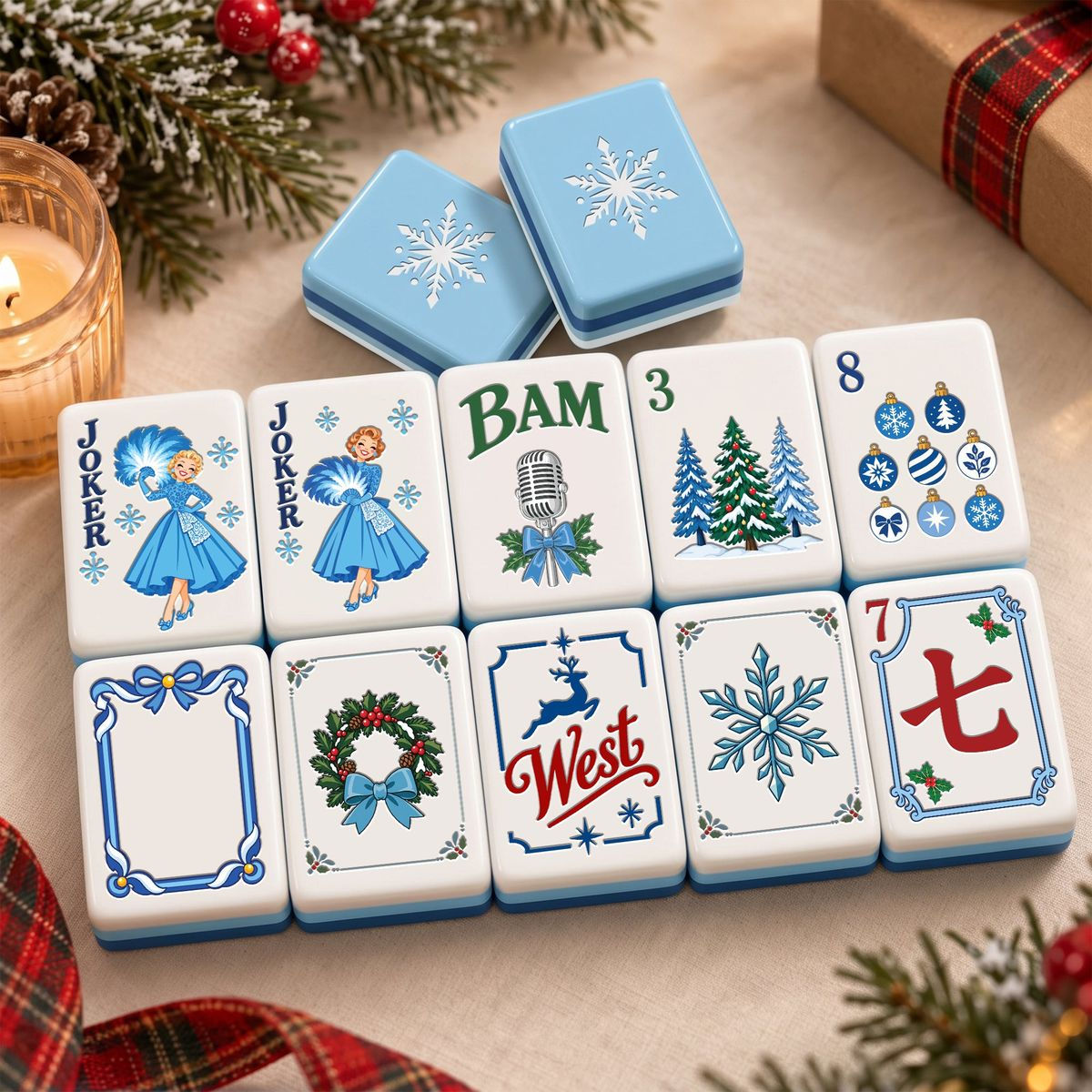
Siamese mahjong (also called Thai mahjong) is a fast-paced variant played with 108 tiles—one complete suit removed—using two players per seat. Hands are selected from a shorter, simplified card; the dealer draws first and keeps a larger hand, paying and receiving at different rates. Strategy centres on recognizing which tiles your opponents need most, discarding safely early, and managing your hand size strategically: keeping pairs loose to stay flexible and reading the discard pile to infer opponent holdings. Unlike American mahjong, which locks plays into rigid patterns from the annual card, Siamese play flows continuously, rewarding real-time pattern spotting and psychological observation. A single game lasts 10–15 minutes. Cost varies by region; our best-selling mahjong sets work for practice, though Siamese players often prefer plastic tile sets optimized for speed.
🀄 Shop best-selling mahjong sets →
How does Siamese mahjong differ from American or Chinese play?
Siamese mahjong removes one entire suit (usually Craks), leaving 108 tiles, and uses a simplified hand card with fewer patterns. The dealer advantage is massive: the dealer draws 14 tiles and keeps paying at 2:1, while non-dealers draw 13 and receive 1:1. Discards happen faster—there is no Charleston passing phase—and tiles move quickly off the table. Unlike American mahjong's strict exposure rules (only pungs and kongs), Siamese play allows chow sequences and penalizes exposed melds with lower payouts, encouraging concealment. Games conclude in 10–15 minutes per hand, compared to 30+ minutes in American play. The rhythm rewards quick reading and intuition over memorized card patterns.

What tile-reading skills separate winning from losing players?
Watch the discard pile first. The discarding order and tile type reveal opponent strategies: honor tiles early suggest players are hunting for a specific suit; consecutive number discards show someone is building sequences. Count what your opponents hold. If three players each discard one Bam in rounds two through four, the fourth Bam is either in the wall (safe to discard) or held by one player (risky). Track which ranks have been fully discarded: if all four 3-Dots are gone by round five, nobody is chasing Dots anymore—safe to discard. Read the dealer's face-up tile—the dealer draws first and immediately discards; that tile signals which hand type they've rejected, allowing you to adjust your own plan. Defensive players discard edge tiles (1s and 9s) and unrelated honors early to avoid feeding the dealer. Aggressive players discard low-value tiles and keep pairs to call quickly, trusting luck.
How should you manage your hand size and timing?
Keep your hand loose for the first six draws. Hold two or three incomplete patterns (two 5-Dots, a 7-Crak, three Greens) rather than committing to one. Siamese speed punishes commitment: if you lock into "I need three 8-Dots," you'll hold dead tiles while the draw flies past. Call (expose) a pung when you have two more tiles toward winning, not sooner. Early calls telegraph your plan and give opponents time to block. The dealer pays double, so if you have 14 tiles and a half-formed hand, calling one pung early can force the dealer to discard defensively, slowing their speed. Non-dealers should delay calling until their hand is nearly ready: one exposed pung plus four concealed pairs and a winning pattern ready to drop. Watch the wall. In Siamese play, the wall shrinks visibly. Once 20 tiles remain, play tightens: fewer draws mean fewer chances to improve, so defensive players hold safer tiles and aggressive players push harder. Position matters: sitting to the dealer's left forces you to play after seeing their discard (advantage) but pay the dealer every hand you lose (cost). Sitting right requires early discarding choices blind, but you get paid more often by the dealer.
What are the most dangerous discard mistakes?
Discarding jokers or flower tiles early is fatal. In Siamese play, jokers and flowers (where used) are call tokens—holding them signals you are close. Discard them mid-hand when you've committed to a pattern, never round one. Never discard a tile your left-hand opponent has just drawn. If Player A draws and discards a 6-Crak, Player B (you) shouldn't discard a 6-Crak three tiles later—you've just fed them a matching piece or confirmed it's safe. Discarding honor tiles out of sequence is a red flag. If you discard North, South, West in rounds two, four, and six, opponents know East is either in your hand (dangerous for them) or the wall (safe to discard). Spread your honor discards or play them in clusters. The biggest trap: matching your dealer's discard too late. If the dealer plays a 5-Dot and you play a 5-Dot two turns later, they know you drew it—and you've just shown your suit. Hold dissimilar ranks and discard randomly to keep opponents guessing.
Siamese Play Angle | American Mahjong | Siamese Mahjong | Why It Changes Strategy |
Tile count | 152 tiles (4 suits) | 108 tiles (3 suits) | Fewer options = tighter draws = faster calling |
Hand selection | Annual card; rigid patterns | Simplified card; flexible melds | Read opponent play, not just the card |
Dealer role | Draws 14, pays/receives 1:1 | Draws 14, pays 2:1 to all; receives 1:1 | Dealer bleeds money quickly if defensive |
Exposure rules | Only pungs/kongs safe; chows hidden | Chows allowed but penalized if exposed | Keep sequences hidden until winning |
Game length | 30+ minutes per hand | 10–15 minutes per hand | Psychological pressure and snap decisions |
Charleston phase | Mandatory 3-pass tile exchange | None; draw immediately | No time to plan; react to wall and discards |

When should you change strategy mid-game?
If you lose the first hand as non-dealer, the same player remains dealer. Switch to ultra-defensive play: discard only tiles that have been fully played (all four seen in the discard pile). Don't hunt; hold a loose pair and wait for a draw to land on your hand naturally. If you're ahead as dealer going into hand four of a four-hand round, play ultra-aggressive: call early and accept the risk. The payoff (2:1 from three opponents) outweighs the probability loss. If three players have called melds and you're the only concealed hand, play passive. Your only advantage is secrecy. Keep your hand length at 13–14 tiles (never 11–12) to avoid appearing close; opponents will discard defensively instead of feeding your hidden pattern. If the wall is down to 15 tiles and you have two patterns ready, call immediately—the dealer has fewer draws left, and calling now locks your hand against wall exhaustion. If the wall hits 10 tiles and nobody has called, the hand is likely headed for a draw. Discard your safest tiles and prepare to reshuffle.
🎁 See our most-loved mahjong sets & accessories →
How does the dealer mechanic create a payoff cascade?
The dealer wins the most on their hand (collected at 2:1 from all three opponents) but also pays the most if they lose (1:1 to all three). Over four hands with rotating dealer seats, the dealer seat is worth roughly 30–50 percent more money in both wins and losses. This creates a momentum effect: if you're dealer going into hand three with a lead, you can afford to play aggressive and extend your advantage. If you're behind as dealer, the hand is financially risky—one loss as dealer erases several non-dealer wins. Strategic players exploit this: they play safe when dealer with a lead (locking the lead) but loose and aggressive when non-dealer trailing (banking on doubling a non-dealer win to erase the gap faster than waiting for dealer seat again). The dealer's first discard is also their weakness; they drew 14 and must reduce to 13, so their opening discard is often the weakest tile in a random draw—many strong players watch and mirror: if the dealer discards an honor, honor discards become safer for you that round.
✨ Find your Mahstead set — free US shipping →
What to check before you buy a set for Siamese play
Siamese mahjong works best with sets designed for speed. Look for smooth, lightweight tiles—acrylic sets with clean edges avoid jamming when you're moving fast. Verify the set includes 108 playable tiles (or 104 if one suit is genuinely removed in your regional rules) plus jokers or flowers per your region's card. Check that racks or tile holders, if included, can be shuffled quickly without tiles scattering—bamboo or plastic racks with raised edges prevent spillage during the accelerated pace. Mats are less critical for Siamese play than for American (no Charleston setup to lay out), but a padded mat protects tiles during travel and provides a stable draw surface. If you play weekly or host games, invest in a travel-friendly bag or case that keeps tiles organized by suit and protects jokers or flowers from damage; loose tiles slow play and invite disputes.

FAQ
Is Siamese mahjong easier to learn than American mahjong?
Yes, initially. Fewer tiles and a simpler card lower the barrier. However, Siamese strategy is harder: it rewards psychological reading and fast decision-making. American mahjong is harder to learn but easier to play mechanically once you know the card.
Can I use an American mahjong set to play Siamese?
Yes, with modification. Remove all tiles from one suit (usually Craks) and any blanks. Use the American set's jokers as Siamese jokers or flower tokens per your regional rules. The tiles are identical in size and weight.
How many players do I need for Siamese mahjong?
Four players, arranged in two pairs with a dealer. Three-player Siamese exists but is rare and uses house rules. Two-player Siamese is non-standard.
What's the typical payoff for a Siamese hand win?
Payoff varies by region and bet size. As dealer, you typically collect double what non-dealers collect. Exact amounts depend on hand value, house rules, and whether you called or won concealed.
How does reading the discard pile help in Siamese more than other variants?
Siamese speed means the discard pile is your only history. You have no Charleston phase and fewer draws, so tracking what's gone and what pattern each player is chasing is the entire game. In American mahjong, the card governs; in Siamese, the discards do.
Should I play Siamese or American if I'm new to mahjong?
Start with American mahjong fundamentals. American teaches you tile values, exposure rules, and hand structure. Then move to Siamese for strategy and speed. Learning both makes you a stronger player overall.


View More
View More
View More
