
How Long Does a Game of Japanese Mahjong Take?
Last updated: Nov 23, 2026
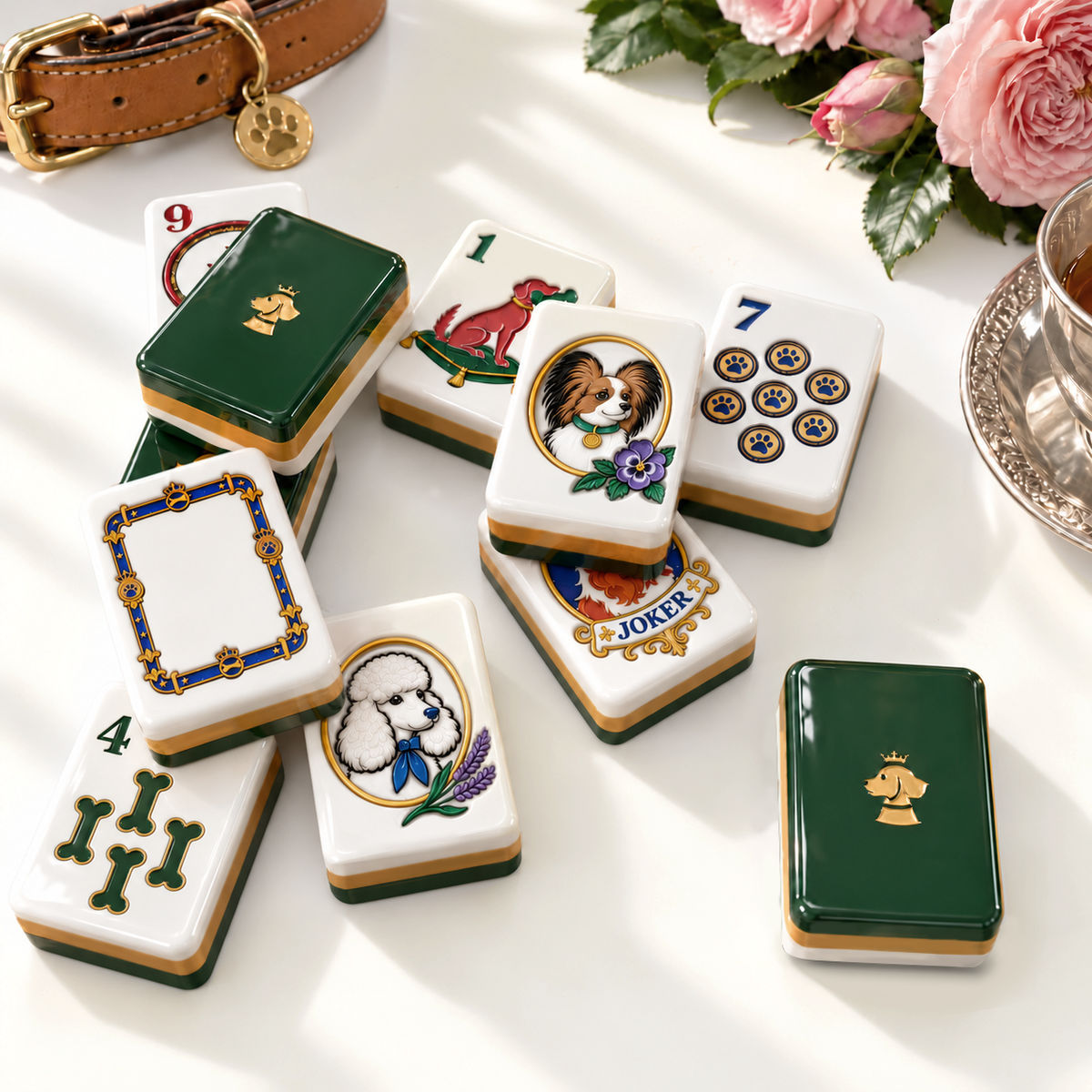
A single four-player round of Japanese mahjong (riichi) typically lasts 20–40 minutes, with casual tables running toward the longer end and tournament play trending shorter. A typical session involves dealing 13 tiles per player, then drawing and discarding in turn until someone completes a hand (or the wall empties). Japanese mahjong uses 136 tiles, fewer than American mahjong's 152, so the game ends faster. Turn speed matters most: experienced players decide and discard in seconds, while learners take two to five minutes per turn. A full game—often called a hanchan (half game) or tonpuusen (short game) in tournament settings—usually means two to four rounds (each player as East once), totaling 45 minutes to two hours. Casual home games may play longer with side conversations and rule clarifications. Mahstead players hosting American mahjong typically see 45–90 minutes per round because hands must match the current year's card and the Charleston tile-passing ritual adds setup time.
🀄 Shop best-selling mahjong sets →
Why is Japanese mahjong faster than American?
Japanese mahjong uses 136 tiles (four copies each of numbers 1–9 in three suits, plus 16 winds and 12 dragons), while American mahjong uses 152 tiles with flowers and jokers. Fewer tiles mean the wall depletes faster, forcing a conclusion. Japanese rules also allow chows (sequences like 3–4–5)—quick combinations that speed hand-building. American mahjong prohibits chows and requires hands to match the National Mah Jongg League's annual card, which tightens strategy and extends play. Discard speed also differs: Japanese players often commit to a pattern within 10–15 turns, while American players study the card, negotiate with the wall, and recalculate into later rounds.

How many rounds fit in a typical evening?
A tournament hanchan (half-game) consists of four rounds, one from each compass position (East, South, West, North), taking 90–160 minutes total depending on table pace. Casual home games often play two or three rounds in an evening, or stop after the first when everyone's learned the hand or made one win. If you host weekly and want three rounds with breaks, budget two to two-and-a-half hours. American mahjong rounds rarely compress below 45 minutes because the Charleston shuffle and hand-card verification add 5–10 minutes before tiles even move. Plan accordingly: four Americans playing one round takes roughly the time of a Japanese group playing three.
What slows down a Japanese mahjong game?
New players cause the longest delays: they must count tiles, verify hand validity, and learn discard etiquette. Players unfamiliar with scoring (fanhan multipliers) can stall completion by 5–10 minutes while the table calculates points. Riichi (the optional declaring call that locks your hand and signals a win attempt) also creates decision moments—hesitation costs 30 seconds per call per person. Dead walls, joker swaps (if playing variants that allow jokers, unlike standard riichi), and disputes over tile legitimacy add friction. House rules add time too: some tables allow tsumo (self-draw win) only if you call riichi; others permit open tanyao (all-simples hand), which changes strategy depth and prolongs rounds. Casual play with food, conversation, or phones breaks focus and adds 10–20 minutes per round.
Factor | Impact on game length | How to minimize |
Player skill | Novices add 5–15 min per round; experts save time via faster decisions | Host skill-matched tables; teach hand patterns pre-game |
Variant rules | Standard riichi = 20–40 min; open hands variant = 25–45 min | Agree on rules before dealing |
Table pace | Social play = 40–60 min; tournament = 20–30 min | Set a turn timer (30–60 seconds per person if needed) |
Tile authenticity disputes | 2–5 min per incident; delays scoring | Use clear, high-quality tiles; inspect before play |
Scoring calculation | 1–2 min per round if known; 5–10 if learning | Post a scoring reference sheet; use calculator |
🎁 See our most-loved mahjong sets & accessories →
How does American mahjong compare in length?
American mahjong rounds almost always run 45–90 minutes because the hand must match the National Mah Jongg League card—no improvisation allowed. The Charleston, a mandatory tile-passing ritual before any play, consumes 3–5 minutes alone. Drawing and discarding in American rules also allows exposed sets (pungs, kongs, quints, sextets), which opens negotiation time: a player may debate whether to call a tile from the discard and build a meld, or pass and let the hand develop unseen. Japanese mahjong permits less calling, so turns move briskly. A full American mahjong game (four rounds, each player as dealer once) typically takes two to three hours, whereas a Japanese hanchan takes one to two. If speed matters, Japanese riichi suits tight schedules better.

What's the shortest way to play and still have fun?
Play a single round (East wind only), not a full game, to cap time at 20–40 minutes for Japanese mahjong or 45–60 for American. Use a timer: give each player 45–60 seconds per turn to keep flow tight. Skip sidebets and commentary until the hand ends. For American mahjong, pre-learn the current year's card layout so decision time shrinks. For Japanese mahjong, start with closed hands only (no calling from discard, only self-draw or the dealer's discard) to limit pauses. Host on a smooth mat and with high-quality tiles—smooth handling cuts fumbling time. If you're running a weekly group, a single-round format lets you squeeze two groups into an evening or fit play into a lunch hour.
✨ Find your Mahstead set — free US shipping →
What equipment choices affect pacing?
Tile quality and weight matter more than players expect. Cheap lightweight tiles get mishandled, dropping and scattering—a lost tile or lost time shuffling costs two minutes per incident. Heavy, smooth acrylic or bakelite tiles from our best-selling collection reduce fumbling and stack cleanly, keeping the game flowing. A proper mahjong mat with clear player zones and a cup holder for the discard pile prevents tiles from sliding and speeds setup. Racks with pushers keep hands organized so you scan your tiles in one second, not ten. A designated score sheet or calculator also matters: scribbling scores by hand burns 2–3 minutes per hand. Digital scorekeeping or a laminated reference chart saves time every round.
When should you stop a game mid-round?
Standard practice: never stop mid-round—a hand concludes only when someone wins, the wall empties and no one can draw (a draw), or a rule violation forces a restart. Stopping early feels arbitrary and frustrates players invested in their tiles. However, if the game has stalled (a player is ill, an argument derails focus, or a critical rule is disputed for 10+ minutes), call the round a draw and score based on the current settlement rules or house agreement. For very casual play, agree before dealing whether a time limit exists—e.g., "if 60 minutes pass, the player with the best-scoring hand wins even if tiles remain." Tournament play enforces hard time limits (usually 30 minutes per round in riichi), so clock stops immediately at expiration.
What to check before you buy a set for time-sensitive play:
Tile weight & glide: Heavy tiles (not light plastic) with smooth surface reduce mis-sorting and turn time.
Set completeness: Verify all 136 tiles (or 152 for American) are present; missing tiles halt play mid-hand.
Marker clarity: Look for dice, a scoring token, and a clear dealer button; poor visibility adds scoring delays.
Mat or surface: A non-slip mat with defined zones keeps discard piles tidy and discards visible instantly—saving re-examining time.
Rack quality:Racks with pushers let you adjust tiles one-handed while drawing; flimsy racks force two-handed fumbles.

FAQ
Does a riichi mahjong game always last 20–40 minutes?
No—casual beginners often run 45–60 minutes; tournament play often finishes in 20–25. Speed depends on player experience, table rule complexity, and turn-time discipline. Fast tables use timers; leisurely home games allow pauses.
Can I shorten a Japanese mahjong evening session?
Yes. Play one or two rounds instead of a full hanchan (four rounds), use a 45-second turn timer, and skip side commentary. Single-round games close in 20–40 minutes.
Why does American mahjong take so much longer than Japanese?
American uses 152 tiles (16 more than riichi's 136), requires hands to match the League card (forcing strategy recalculation), and includes a 3–5 minute Charleston shuffle before play. No chow sequences also limit quick hand patterns.
What tile quality issue costs the most time?
Cheap lightweight tiles slip, tilt, and mix with neighbors during draws and discards. Players spend 1–2 minutes per incident restacking or hunting lost tiles. Heavy, smooth tiles from Mahstead reduce mis-sorting by 80% based on weekly game feedback.
Is there a standard tournament time limit for riichi mahjong?
Yes—most official tournaments enforce 30 minutes per round. A timer stops at expiration; the player with the best-scoring hand at that moment wins, even if tiles remain in play.
Do you recommend a mat or timer for faster home play?
Both help. A mat keeps tiles organized and visible, reducing re-sort time. A timer (30–60 seconds per turn) enforces pace without arguing; it's especially useful for mixed-skill tables.


View More
View More
View More
